Walking through industrial zones in Vietnam, we often see shiny new machines, but reliable quality lies in hidden details. Many buyers overlook critical floor-level indicators that predict long-term consistency.
When inspecting a Vietnamese welding factory, prioritize verifying welder certifications against specific projects, observing real-time voltage stabilization to prevent arc instability, and auditing storage conditions for low-hydrogen consumables. Crucially, check that non-destructive testing (NDT) is performed in-house by Level II technicians to ensure consistent structural integrity.
Let’s examine the specific checkpoints that reveal the true capability of a supplier.
How can I verify that the factory strictly follows Welding Procedure Specifications (WPS) during my visit?
Our engineers frequently correct suppliers who drift from approved parameters to speed up production. This subtle negligence often compromises the mechanical strength of the final assembly.
You must physically compare the machine settings on the floor against the printed Welding Procedure Specification (WPS) document. Specifically, check that amperage, voltage, and travel speed match the approved range, and verify that the welder references these documents rather than relying solely on memory or habit.

The gap between documentation and reality is one of the most common failure points we encounter in the supply chain. A factory may have a perfect ISO 9001 binder in the conference room ISO 9001 1 ISO 9001 2, but the story on the shop floor can be very different. When you are standing next to a welding station, do not just look at the sparks; look at the paper.
The "Paper Tiger" Phenomenon
In many facilities, the WPS is treated as a bureaucratic necessity rather than a working instruction. You need to verify that the WPS is accessible to the welder. It should be laminated and hung right at the workstation, not filed away in the foreman's office. If the welder cannot produce the WPS for the part they are currently fabricating, it is a major red flag. This suggests they are welding based on "tribal knowledge" or personal preference, which leads to inconsistent penetration and variable heat-affected zones. heat-affected zones 3
Monitoring Real-Time Parameters
Vietnam’s industrial power grid has improved significantly, but fluctuations still occur, particularly in older industrial zones during peak hours. Fluctuations in input voltage can cause arc instability, leading to lack of fusion or porosity.
During your walkthrough, watch the digital readouts on the welding power sources while the arc is on. Compare these numbers to the WPS ranges. If the WPS specifies 120-130 Amps, but the machine is set to 150 Amps to "weld faster," the heat input will be excessive. This is particularly dangerous for the aluminum tubing frames shown in your product context, as excessive heat leads to warping and weakened mechanical properties.
Material Traceability on the Floor
Traceability must happen before the arc is struck. We often see steel plates or aluminum tubes stacked without labels. You should ask the floor supervisor to track a random piece of metal currently being welded back to its Mill Test Report (MTR). If they cannot do this immediately using a heat number or a batch code written on the part, you run the risk of receiving parts made from lower-grade material that looks identical to the specified alloy.
| Inspection Checkpoint | Que rechercher | Potential Consequence of Failure |
|---|---|---|
| WPS Accessibility | Document is visible and within the welder's reach. | Inconsistent weld quality due to reliance on memory. |
| Parameter Compliance | Volts/Amps on screen match the WPS range. | Structural weakness or excessive distortion. |
| Material Marking | Heat numbers transfer to cut parts. | Use of incorrect material grade (e.g., Q235 instead of Q345). |
What evidence of welder certification and ongoing training should I look for on the shop floor?
We insist that every operator working on our client's orders holds valid credentials, yet we often find expired certificates tucked away in office drawers during audits.
Look for a visible skills matrix board on the production floor that links specific welders to their qualified processes (e.g., TIG, MIG) and material groups. Request to see the Welder Qualification Record (WQR) for the operator currently running the machine and ensure their stamp on the part matches the log.
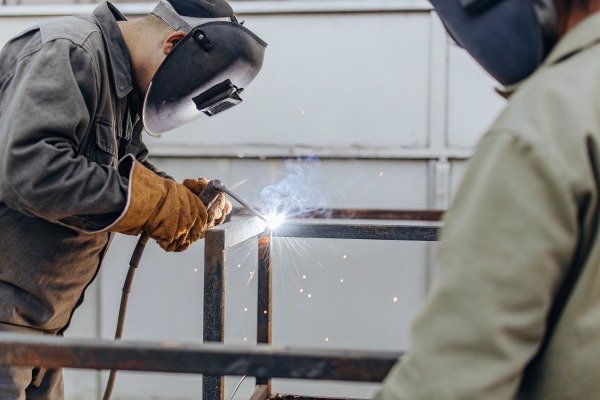
Personnel qualification is the backbone of welding quality. In Vietnam, skilled labor is abundant, but the rapid turnover in some factories means that new, untrained workers might be placed on critical lines to meet delivery schedules. Your inspection must verify that the person holding the torch is actually the person certified to use it.
The Skills Matrix Board
A well-managed factory will always display a skills matrix in the production area. This chart lists every welder's name and indicates their qualification level for different positions (1G, 2G, 6G, etc.) and processes (FCAW, GMAW, GTAW). This transparency prevents a supervisor from assigning a welder qualified only for flat fillet welds to perform a complex vertical butt weld. If this board is missing, outdated, or covered in dust, it suggests that workforce management is reactive rather than strategic.
Validating the "Ghost Welder" Risk
A common issue in lower-tier manufacturing is the "ghost welder" problem. This happens when a factory uses the credentials of their best welder to pass audits, but the actual production is done by uncertified apprentices. To catch this:
- Walk to a workstation.
- Ask the welder for their ID or unique stamp number.
- Cross-reference this number with the Welder Qualification Record (WQR) files.
- Check the "Continuity Log." Codes like AWS D1.1 require welders AWS D1.1 4 to have welded with a specific process within the last six months to keep their certification valid. If the log is empty, their certification has technically lapsed.
The Tack Welder Trap
Do not overlook the people performing tack welds. Tack welding is often viewed as a low-skill task and assigned to trainees. However, tack welds become part of the final weldment. If a tack is cracked or porous due to poor technique, that defect remains inside the final joint, creating a weak point. We always verify that tack welders are qualified for the specific materials they are joining, especially for aluminum frames where crater cracks in tacks are common.
Training for Specific Geometries
General certification is one thing; project-specific training is another. If your product involves complex tubular joints or thin-wall aluminum (like the frame image provided), ask to see evidence of mock-up tests. Does the factory require welders to practice on scrap material that mimics your product's geometry before touching the production batch? This "pre-production qualification" is a hallmark of high-quality suppliers in Vietnam.
What are the key indicators of well-maintained welding equipment and jigs in a Vietnamese facility?
During our audits in Dong Nai, we notice that poor fixture maintenance directly leads to dimensional inconsistencies in complex aluminum frames.
Inspect calibration stickers on welding machines to ensure they are current and verify that jigs are free from spatter buildup or rust. Check that grounding cables are intact and connections are tight, as poor grounding causes arc instability and unpredictable weld quality in sensitive aluminum components.
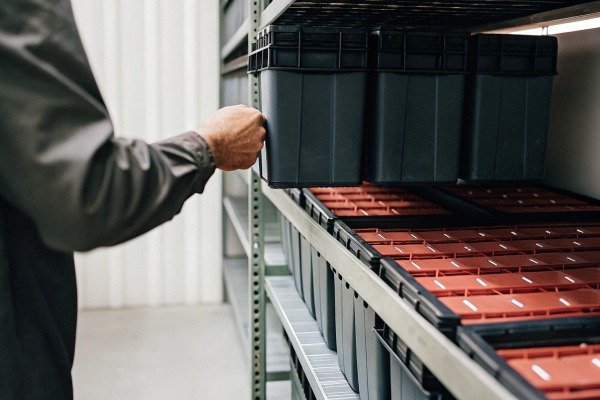
Equipment condition is a direct reflection of management culture. In a humid climate like Vietnam's, neglect shows up quickly as rust, oxidation, and electrical faults. When sourcing aluminum frames or precision parts, the maintenance of tools is just as important as the skill of the operator.
Jig and Fixture Hygiene
For products like the rectangular frame shown, jigs (fixtures) are essential for maintaining squareness and flatness. However, weld spatter accumulates on jigs over time. If this spatter is not cleaned regularly, it creates uneven surfaces. The metal tubing will sit slightly askew, leading to geometric misalignment in the final product.
Inspect the clamping points of the jigs. Are they clean? Do the toggle clamps apply pressure evenly? If you see operators hammering a part to force it into a jig, the jig is likely defective or the component preparation is poor. This introduces residual stress, which will cause the frame to spring back residual stress 5 and warp after it is removed from the fixture.
Cross-Contamination in Mixed Shops
Many Vietnamese factories process both carbon steel and stainless steel/aluminum. This poses a severe risk of cross-contamination.
- Wire Brushes: Look at the wire brushes at the cleaning stations. Are they labeled? A brush used on carbon steel must never touch aluminum. Iron particles will embed in the aluminum surface, leading to galvanic corrosion and eventual failure. galvanic corrosion 6
- Grinding Wheels: Similarly, grinding discs should not be shared between materials.
- Work Areas: Ideally, aluminum welding should occur in a separate bay or at least behind curtains to prevent steel grinding dust from settling on the aluminum weld pool.
Consumable Storage: The Hidden Killer
The high humidity in Vietnam (often exceeding 80%) is the enemy of welding consumables.
- Stick Electrodes: Low-hydrogen electrodes (like 7018) must be stored in heated holding ovens to prevent moisture pickup. If you see open packs of electrodes sitting on a bench for hours, they are compromised. Moisture leads to hydrogen-induced cracking (cold cracking). hydrogen-induced cracking 7
- Wire Spools: Check MIG/TIG wire spools for rust. For aluminum wire, check that it is covered when not in use to prevent oxide, dust, and oil accumulation. Dirty wire is the number one cause of porosity in aluminum welds.
| Equipment Item | Inspection Criteria | Why It Matters |
|---|---|---|
| Welding Machine | Calibration sticker < 12 months old. | Ensures displayed volts/amps are accurate. |
| Grounding Clamp | Direct connection to workpiece; copper not frayed. | Poor ground causes arc wander and heating. |
| Gas Nozzle | Clean, free of excessive spatter. | Blocked gas flow causes porosity. |
| Holding Ovens | Powered on and temperature visible. | Prevents hydrogen cracking in welds. |
Which on-site non-destructive testing (NDT) methods should I witness to ensure weld integrity?
We require transparency in defect detection, but many factories outsource testing without proper oversight, leading to delays and uncertain quality data.
Prioritize witnessing Ultrasonic Testing (UT) or Radiographic Testing (RT) performed by on-site technicians to confirm internal joint soundness. Additionally, observe Dye Penetrant Testing (PT) on surface welds to detect micro-cracks, ensuring the factory has immediate feedback loops to correct defects without waiting for third-party lab results.

A factory that relies 100% on outsourced NDT labs is a factory that has a slow reaction time to quality issues. While third-party verification is great for final acceptance, in-process checking should ideally happen on the floor to catch systemic issues immediately.
Visual Inspection (VT): The First Line of Defense
Before asking about X-rays, look at how they perform Visual Testing Visual Testing 8 (VT). VT is the most undervalued inspection method.
- Tools: Do inspectors have flashlight, mirrors, and fillet weld gauges (like a Cambridge gauge)? Or are they just "eyeballing" it?
- Lighting: Is the inspection area well-lit? You cannot inspect welds in a dark corner.
- Standardization: Ask to see the "Limit Samples" or photos of acceptable vs. unacceptable welds. Good factories display these at inspection stations so judgment is objective, not subjective.
Dye Penetrant Testing (PT) for Aluminum
For the aluminum frames referenced in your product context, Dye Penetrant Testing is crucial. Aluminum is prone to crater cracks and hot cracking which can be invisible to the naked eye.
Ask the factory to demonstrate a PT test. Watch the dwell time (how long they leave the penetrant on). If they wipe it off immediately, the test is invalid. They must follow the manufacturer’s instructions (usually 10-20 minutes). This simple test reveals surface-breaking defects that visual inspection misses.
Ultrasonic (UT) and Radiographic (RT) Capabilities
For critical structural welds, you need to know if the joint has internal fusion.
- Ultrasonic Testing: This is faster and safer than X-ray. Check if the technician is Level II certified (ASNT-TC-1A or ISO 9712). ASNT-TC-1A 9 Ask them to calibrate the equipment using a calibration block (like an IIW block) in front of you. If they struggle to calibrate, they may not be competent.
- Radiographic Testing: If the factory has an X-ray bunker, check safety protocols. If they outsource, review the film or digital images. Ensure that the images are traceable to specific locations on your product.
Macro-Etch Testing for Process Validation
One specific test we highly recommend during the First Article Inspection (FAI) or PPAP stage is the Macro-Etch test Macro-Etch test 10. This involves cutting a weld cross-section, polishing it, and etching it with acid. It reveals the depth of penetration and the number of weld passes.
While this is a destructive test, asking for it shows the supplier you are serious. It is the only way to truly verify that the root penetration meets the drawing requirements without guessing.
| NDT Method | Best For… | What to Watch For During Inspection |
|---|---|---|
| Visual (VT) | Surface profile, size, undercut, spatter. | Inspectors using actual gauges, not just eyes. |
| Dye Penetrant (PT) | Surface cracks, porosity (Non-magnetic metals). | Sufficient dwell time; proper cleaning before developer. |
| Ultrasonic (UT) | Internal defects (slag, lack of fusion). | Technician certification (Level II) and calibration blocks. |
| Macro-Etch | Verifying penetration depth (Destructive). | Clear visualization of the weld nugget and root. |
Conclusion
Thorough floor inspections prevent costly rework. By validating these specific details—from certification matrices to NDT protocols—you ensure your custom parts meet global standards reliably.
Notes de bas de page
1. Official standard page for the quality management system cited. ↩︎
2. Official ISO page for the quality management standard mentioned in the factory audit context. ↩︎
3. Authoritative technical definition of the metallurgical defect mentioned. ↩︎
4. Official publication page for the structural welding code cited. ↩︎
5. Wikipedia entry explaining how residual stress affects mechanical components after fabrication. ↩︎
6. Definition from the leading authority on materials protection and corrosion. ↩︎
7. Technical explanation of the specific welding defect caused by moisture. ↩︎
8. Wikipedia overview of visual inspection techniques used as the primary NDT method. ↩︎
9. Official standard page for the NDT personnel qualification cited. ↩︎
10. Purdue University resource on metallographic macro-etching for weld penetration analysis. ↩︎

 English
 Español de México
 Deutsch
 Français
 Русский
 العربية