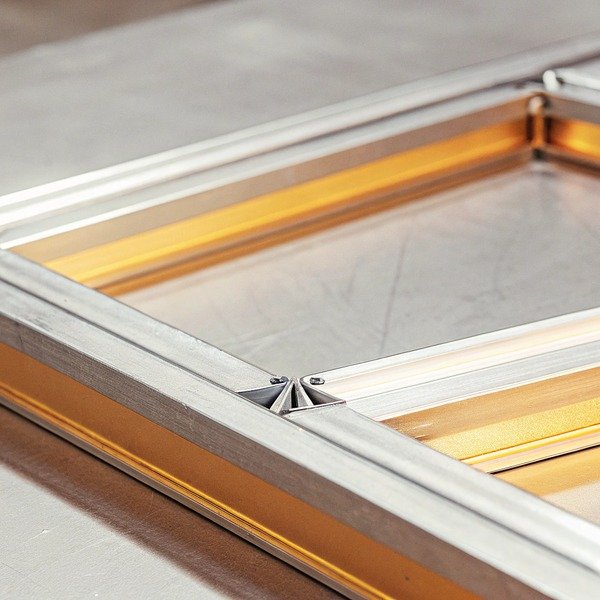
We often notice that procurement managers struggle to validate procurement managers 1 the true capabilities of overseas welding partners before signing a contract. You face the risk of delayed shipments or receiving parts that fail to meet strict US specifications.
To vet a supplier effectively, you must request specific references that demonstrate adherence to AWS standards and proof of successful complex assemblies AWS D1.1 2. You should also demand case studies with quantifiable data on on-time delivery rates and testimonials verifying their engineering team’s ability to communicate proactively and solve technical issues.
Let’s look at the exact evidence you need to gather to ensure your supply chain remains robust and reliable.
How do I ensure their provided case studies prove compliance with US welding standards?
In our experience preparing documentation for American clients, we know that claiming quality is easy, but proving it requires a paper trail. Simply seeing a finished part in a photo does not tell you if the weld penetration meets the code.
You must demand case studies that explicitly list adherence to AWS D1.1 or D1.2 standards, accompanied by Procedure Qualification Records (PQRs) and Welding Procedure Specifications (WPSs). Verify these documents against third-party inspection reports to confirm the supplier consistently meets American quality requirements for every production batch.

When you review a supplier's case study, you need to look past the marketing language. A reputable supplier should provide a "quality packet" from a previous project that mirrors what you need. In the United States, the American Welding Society (AWS) sets the benchmark. American Welding Society (AWS) 3 American Welding Society 4 If a supplier cannot show you a past project where they met AWS D1.1 (for structural steel) or AWS D1.2 (for aluminum), they may not understand the rigor required for your parts.
The Trinity of Welding Documentation
You should ask to see three specific documents referenced in their case studies. These documents prove that the supplier does not just guess at settings but follows a qualified scientific process.
- WPS (Welding Procedure Specification): This is the recipe. It tells the welder exactly what amps, volts, and travel speed to use.
- PQR (Procedure Qualification Record): This is the proof the recipe works. It records the actual values used during a test weld and the results of the destructive testing on that weld.
- WPQ (Welder Performance Qualification): This proves the specific person welding your parts has passed a test using that specific method.
Material Traceability is Key
Compliance is not just about the weld; it is about the metal. A strong case study will mention Material Test Reports (MTRs). We always trace our raw materials back to the mill. If a supplier's reference project does not mention tracking heat numbers or raw material sources, you risk receiving steel or aluminum that cracks under stress.
Verification Checklist
Use this table to evaluate the compliance evidence in a supplier's case study.
| Document / Evidence | What It Proves | Red Flag in Case Study |
|---|---|---|
| AWS D1.1 / D1.2 Certification | The process meets US structural codes. | Mentions "GB" (Chinese) standards only or generic "International Standards." |
| 3rd Party NDT Reports | An independent lab verified the weld quality (X-ray/Ultrasonic). | Internal inspection reports only, with no external validation. |
| Mill Test Reports (MTRs) | Chemical and physical properties of the raw metal are known. | No mention of material sourcing or tracking heat numbers. |
| ISO 9001 Certificate | The factory has a consistent quality management system. | Certificate is expired or covers a different business scope. |
Do their references confirm they can handle complex custom assemblies without frequent rework?
We routinely build complex geometric frames where even a millimeter of heat distortion can ruin the final fit. heat distortion 5 Managing heat input and sequence is critical to getting the part right the first time.
Request references that specifically mention the supplier’s ability to manage high-tolerance geometric structures and multi-tiered assemblies. Look for case studies detailing their use of custom fixtures or robotic welding to minimize distortion, along with client feedback confirming low rejection rates and minimal post-weld adjustments.
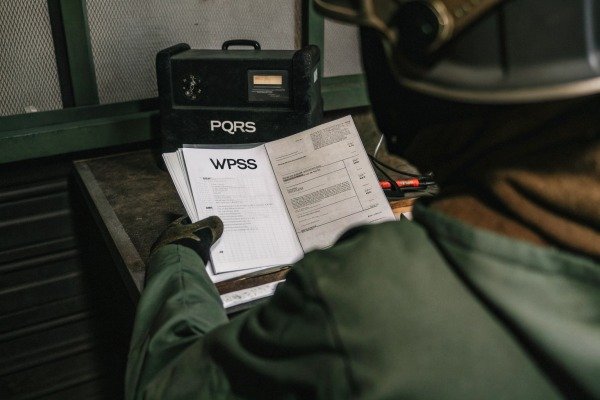
Complex assemblies, like the silver aluminum frame mentioned in our product context, require more than just a steady hand. They require engineering strategy. Aluminum conducts heat very fast and expands significantly. If a supplier welds a grid-like base without a plan, the frame will twist. When you request references, you are looking for proof of "Process Control."
Look for Custom Fixturing
Ask the supplier to show a case study where they designed a specific jig or fixture for a US client. A fixture holds the pieces in place rigidly while welding.
- Why it matters: Without fixtures, manual measurements vary from part to part.
- The evidence: The case study should show photos of the tooling, not just the finished part. It should mention "repeatability" or "consistency."
Non-Destructive Testing (NDT) Records
For complex parts, visual inspection is not enough. You want to see references where the supplier used Dye Penetrant Inspection (DPI) Dye Penetrant Inspection 6 Dye Penetrant Inspection 7 or Magnetic Particle Inspection (MPI) to check for surface cracks.
- DPI: Uses a colored dye to reveal hairline cracks in aluminum or stainless steel.
- MPI: Uses magnetic fields to find defects in ferromagnetic materials like steel.
If a supplier's reference mentions these tests, it means they check their work before it ships, saving you from receiving bad parts.
Evaluating Rework Capabilities
No factory is perfect. However, a good reference will explain how they handle errors. Did they hide them? or did they fix them properly? You want a partner who measures their "First Pass Yield" (FPY)—the percentage of parts that are good immediately without rework.
| Feature | Low-Risk Supplier Reference | High-Risk Supplier Reference |
|---|---|---|
| distortion Control | Mentions "pre-heating," "pulsed welding," or "clamping fixtures." | No mention of how they prevent warping or bending. |
| Assembly Logic | Shows a step-by-step welding sequence to balance heat. | Implies they just weld everything at once. |
| Tolerances | Quotes specific tolerances (e.g., +/- 0.5mm) achieved. | Uses vague terms like "high precision" or "good fit." |
| Finish Quality | Mentions post-weld grinding, polishing, or anodizing prep. | Shows rough welds with spatter or burn marks. |
What evidence of on-time delivery performance should I look for in their past project examples?
Our logistics team constantly monitors shipping routes because we know that a great product is useless if it arrives two weeks late. Delays in Asia can shut down your assembly line in the US.
Prioritize case studies that provide a timeline comparison between the quoted schedule and the actual delivery date for US shipments. Ask for references that highlight the supplier’s proactive communication during supply chain disruptions and their success in maintaining lead times using inventory management or expedited logistics.
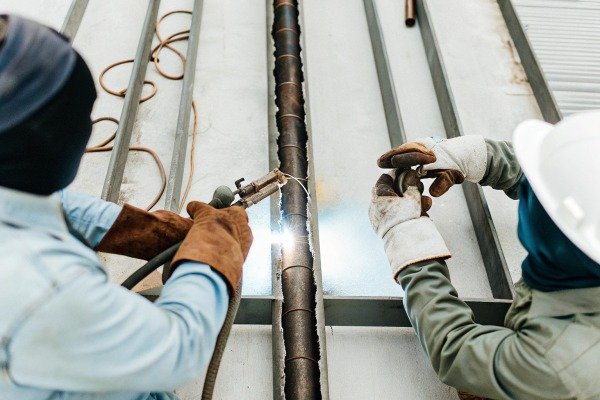
On-time delivery (OTD) is a hard metric. It is either on time, or it is not. When vetting a supplier, you need references that discuss logistics, not just manufacturing. Shipping from Vietnam or China to the US involves customs, ocean freight, and inland trucking. A supplier experienced with US clients will have case studies that reflect this complexity.
The "Door-to-Door" Capability
Look for references where the supplier handled DDP (Delivered Duty Paid) terms. Delivered Duty Paid 8 This means the supplier took responsibility for the entire journey until the goods reached the client's warehouse.
- Case Study Evidence: Look for phrases like "handled customs clearance," "arranged inland freight," or "managed container loading."
- Why it helps: It proves they understand Incoterms and US import regulations.
Inventory and Buffer Stock
Smart suppliers often hold safety stock for their regular US clients.
- Ask for this: "Do you have a reference where you managed a Kanban system or held buffer stock for a client?"
- The benefit: This protects you from supply chain shocks. If a reference confirms the supplier kept parts on the shelf to smooth out demand spikes, that is a huge plus.
Handling Delays
The best reference is sometimes a story of a problem solved. Did a raw material shortage happen? How did they fix it? A case study that says, "We aired 10% of the order to keep the line running while the rest went by sea," shows commitment.
Delivery Performance Checklist
When reading a testimonial or project summary, check for these specific logistics markers.
| Logistics Marker | What to Look For in the Reference |
|---|---|
| Lead Time Accuracy | "Delivered within the 45-day quoted window." |
| Crisis Management | "Proactively alerted us to port congestion and offered solutions." |
| Packaging Quality | "Parts arrived with no transit damage due to custom crating." |
| Documentation | "Commercial invoices and packing lists were accurate and timely." |
How can I use previous client feedback to assess their engineering and communication skills?
Our engineers often find errors in client drawings before we cut a single piece of metal, saving everyone money. We believe a supplier should be a technical partner, not just a silent factory.
Seek feedback focusing on the supplier’s responsiveness to engineering change orders and their willingness to offer Design for Manufacturing (DfM) improvements. Positive references should describe a collaborative partnership where the supplier acts as a technical advisor rather than just an order taker, preventing costly design errors.
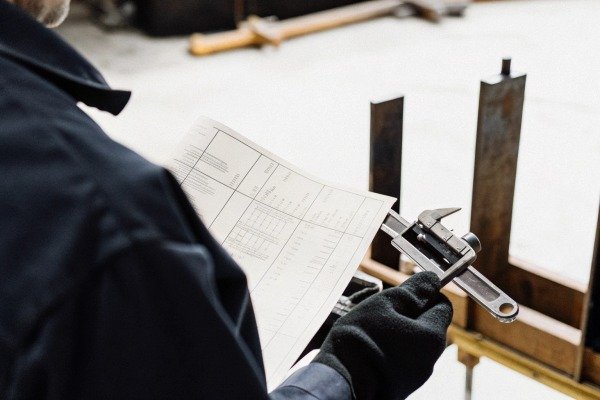
Communication is the number one failure point in international sourcing. You are sending technical drawings across time zones and language barriers. You need references that verify the supplier's engineering team speaks English well and understands technical nuances.
Design for Manufacturing (DfM)
The most valuable feedback you can find is a client saying, "The supplier suggested a change that saved us money."
- Example: A supplier might suggest changing a weld joint design to make it easier for a robot to access robot to access 9, reducing labor costs.
- The Reference Check: Ask specifically, "Did this supplier ever push back on a design feature to improve manufacturability?" If the answer is yes, they are thinking critically.
Handling Engineering Change Orders (ECOs)
In custom manufacturing, designs change. You need a supplier who handles these changes without chaos.
- Look for: References that mention "flexibility" or "rapid adaptation" to new revisions.
- Red Flag: If a reference says the supplier ignored revision B and kept making revision A, avoid them.
Proactive vs. Reactive Communication
You want a supplier who emails you before you have to email them.
- Weekly Reports: A good case study will mention that the supplier provided weekly progress photos and Gantt charts.
- Video Calls: Look for references that mention regular Zoom or Teams meetings to resolve technical queries. This shows they are comfortable with direct, real-time communication.
Conclusion
Sourcing custom welding parts requires more than just finding the lowest price. welding parts 10 By demanding specific US references that prove AWS compliance, process control for complex assemblies, and reliable logistics, you protect your business. Verify their claims with data, and you will build a supply chain that delivers quality right the first time.
Notes de bas de page
1. Official government statistics and role definition for procurement managers. ↩︎
2. Direct link to the specific structural steel welding standard cited. ↩︎
3. Official website of the standard-setting organization mentioned. ↩︎
4. The primary authority for welding standards and certifications in the United States. ↩︎
5. Academic research context on managing thermal effects during precision metal manufacturing. ↩︎
6. General overview of the liquid penetrant inspection method for detecting surface defects. ↩︎
7. Technical definition from The Welding Institute, a global authority. ↩︎
8. Official US government guide to Incoterms and trade definitions. ↩︎
9. Technical documentation from a leading manufacturer on industrial robot applications and design. ↩︎
10. Official OSHA safety standards and regulations for welding and cutting operations. ↩︎

 English
 Español de México
 Deutsch
 Français
 Русский
 العربية