We often see shipments delayed at U.S. ports simply because U.S. ports 1 the packaging labels missed a single regulatory detail. At our Singapore headquarters, we emphasize that compliant labeling is just as critical as the physical quality of the welding components we export.
To comply with U.S. regulations, welding parts packaging labels must include the specific product identity, manufacturer name and address, Country of Origin (COO), OSHA-compliant hazard Hazard Communication Standard 2 warnings (GHS pictograms), ANSI Z49.1 safety instructions, California Prop 65 warnings for toxic metals, and traceable batch codes.
Let’s break down the specific requirements to ensure your supply chain remains uninterrupted and legally sound.
How do I correctly mark the Country of Origin on my imported welding parts?
In our experience exporting custom metal components to the U.S., Customs and Border Protection (CBP) officers are Customs and Border Protection (CBP) 3 incredibly strict about origin transparency 19 CFR Part 134 4. We always advise clients to clarify this during the initial design phase to avoid costly hold-ups.
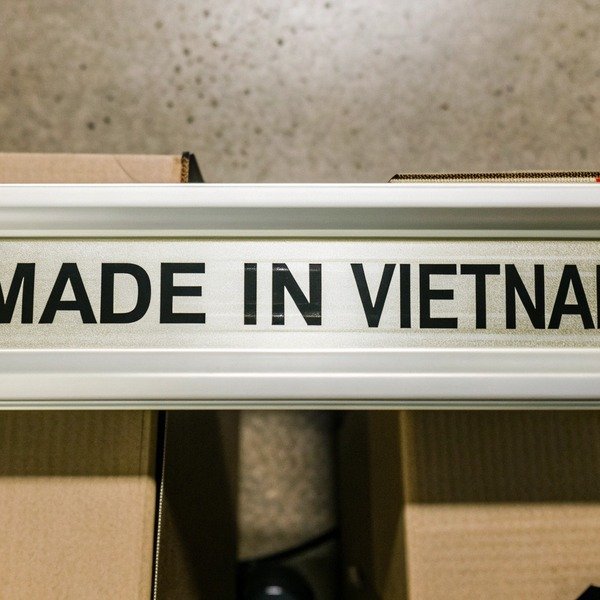
You must mark the Country of Origin (COO) in a legible, permanent, and conspicuous place using the English name of the country of manufacture. This marking must be visible to the ultimate purchaser, such as "Made in Vietnam," to prevent shipment seizure or the imposition of a 10% marking duty.
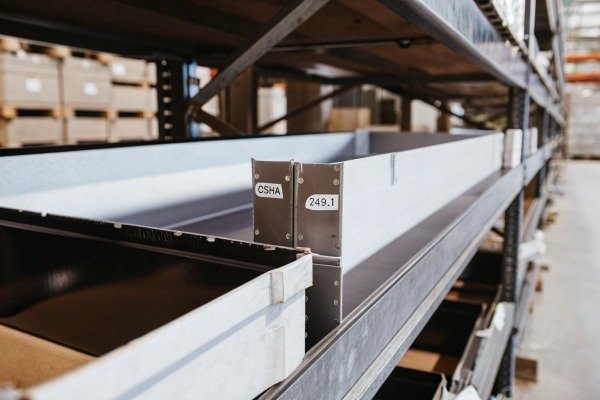
When dealing with welding parts or custom aluminum frames, the Country of Origin (COO) is not a suggestion; it is a federal mandate under 19 CFR Part 134. The goal is simple: the end-user in the United States must know where the article was made before they buy or use it Proposition 65 5.
Acceptable Marking Methods
The method you choose depends on the nature of the part. For hard goods like metallic frames or welding equipment, the marking must survive the journey from our factory in Asia to your warehouse in the US.
- Die-Stamping or Engraving: This is the most permanent method. We often use this for unpainted metal surfaces.
- Adhesive Labels: These are acceptable if they are strong enough to remain affixed until the product reaches the ultimate purchaser.
- Tags: For parts where stenciling or sticking labels might damage the surface, a securely attached tag is permitted.
Common Pitfalls to Avoid
A common mistake we see is "hiding" the origin. The text cannot be obscured by other packaging elements. If the welding parts are packaged in a sealed box, the box itself must also bear the COO marking. If you import a master carton containing 50 individually wrapped units, both the master carton and the individual units typically need marking unless specific exemptions apply.
Below is a comparison of marking methods we use based on the product type:
| Marking Method | Best Application | Durability | Cost Impact |
|---|---|---|---|
| Die-Stamping | Solid metal parts, tools, equipment frames | High (Permanent) | Moderate (Tooling required) |
| Laser Etching | Precision parts, aluminum extrusions | High (Permanent) | Low to Moderate |
| Adhesive Label | Consumer packaging, plastic housings | Medium (Removable) | Faible |
| Hang Tag | Delicate surfaces, wire coils | Low (Easily detached) | Faible |
Failure to comply results in a Notice to Mark and/or Redelivery. This means your goods are held at the port until every single item is manually marked, often at significant overtime labor rates.
What specific ANSI or OSHA safety warnings must I include on welding product packaging?
Our engineering team constantly reviews updated safety standards to protect end-users from potential liability. We know that a missing warning label on a welding consumable can lead to lawsuits far more damaging than a delayed shipment.
Welding product packaging must include OSHA-mandated GHS pictograms and ANSI Z49.1 safety warnings addressing risks like electric shock, fumes, and arc rays. Labels require appropriate signal words like "DANGER" or "WARNING" based on hazard severity, alongside precautionary statements regarding ventilation and eye protection.
Safety labeling for welding parts is governed by two main bodies: the Occupational Safety and Health Administration (OSHA) and Occupational Safety and Health Administration (OSHA) 6 the American National Standards Institute (ANSI). Specifically, OSHA’s Hazard Communication Standard (HCS) aligns with the Globally Globally Harmonized System 7 Harmonized System (GHS), while ANSI Z49.1 focuses specifically on welding and cutting processes.
Signal Words and Hierarchy
The core of your safety label is the signal word. You cannot choose these randomly. They indicate the level of risk associated with the welding part or consumable (like electrodes or flux).
- DANGER: Used for the most severe hazards where death or serious injury will occur if the hazard is not avoided.
- WARNING: Used where death or serious injury could occur.
- CAUTION: Used for minor or moderate injury risks.
Mandatory Label Elements
For welding consumables (electrodes, wires, fluxes), the label must prominently display:
- Product Identifier: The trade name or chemical name.
- Supplier Identification: Name, address, and phone number of the manufacturer or importer.
- Hazard Pictograms: Diamond-shaped symbols (red border) indicating specific risks (e.g., Health Hazard for carcinogens, Exclamation Mark for irritants).
- Hazard Statements: Phrases that describe the nature of the hazard (e.g., "May cause cancer due to welding fumes").
- Precautionary Statements: Instructions on how to minimize risk (e.g., "Use only with adequate ventilation").
Specific Welding Warnings
According to ANSI Z49.1, standard warning text must address ANSI Z49.1 8:
- Fumes and Gases: Warning that breathing these can be hazardous to health.
- Arc Rays: Warning that rays can injure eyes and burn skin.
- Electric Shock: Warning that live electrical parts can kill.
| Signal Word | Text Color | Background Color | Hazard Severity |
|---|---|---|---|
| DANGER | White | Red | Immediate threat; Will result in death/serious injury. |
| WARNING | Black | Orange | Potential threat; Could result in death/serious injury. |
| CAUTION | Black | Yellow | Potential threat; May result in minor/moderate injury. |
Ignoring these standards is not just a regulatory breach; it places your company at significant risk of litigation if an operator is injured while using parts sourced through you.
Do my welding component labels need to feature California Prop 65 warnings?
We frequently field questions from purchasing managers about whether their specific metal parts require "that cancer warning." Our stance is always conservative: if your distribution reaches California, compliance is non-negotiable.
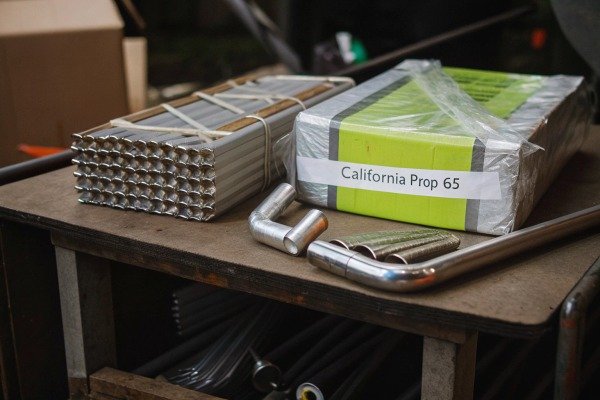
Yes, labels must feature California Prop 65 warnings if the welding parts contain listed chemicals like nickel, chromium, or lead above safe harbor levels. The label must display the triangular warning symbol and clearly state that the product can expose users to chemicals known to cause cancer or reproductive harm.
The Safe Drinking Water and Toxic Enforcement Act of 1986, better known as Proposition 65, requires businesses to provide warnings to Californians about significant exposures to chemicals that cause cancer, birth defects, or other reproductive harm.
Why Welding Parts Are Targeted
Many welding components naturally contain chemicals on the Prop 65 list. Prop 65 list 9 For example:
- Stainless Steel & Alloys: Often contain Nickel (metallic) and Chromium. During welding, Hexavalent Chromium is generated, which is a known carcinogen.
- Soldering/Braziery: May contain Lead.
- Coatings: Paints or protective oils on aluminum frames might contain listed solvents.
The "Safe Harbor" Concept
You might think your product is safe, but "Safe Harbor" levels are incredibly low. If the daily exposure level exceeds the threshold established by California’s Office of Environmental Health Hazard Assessment (OEHHA), a warning is required. Since calculating exact exposure from welding fumes is complex and variable, most manufacturers opt to label the product to avoid "bounty hunter" lawsuits.
Labeling Requirements
A compliant "Short-Form" warning on the product packaging generally looks like this:
- Symbol: A yellow (or black/white) triangle with an exclamation mark.
- Word: "WARNING" in bold and all caps.
- Text: "Cancer and Reproductive Harm – www.P65Warnings.ca.gov."
If you are selling B2B, you can pass this obligation down by providing notice and warning materials to your authorized agent or retail seller, but the safest bet for a manufacturer is to print it directly on the immediate container.
Risk of Non-Compliance
Private citizens and law firms in California can sue companies for failing to warn. Settlements often reach tens of thousands of dollars per violation, not including legal fees. It is far cheaper to print a sticker than to fight a Prop 65 lawsuit.
How should I format batch codes on labels to ensure traceability for my welding supplies?
During our internal audits, we verify that every production lot can be traced back to the raw material ingot. We view traceability not just as a rule, but as an essential insurance policy for both our factory and your brand.
Format batch codes using a standardized alphanumeric sequence that identifies the manufacturing date, raw material lot, and production line. These codes should be printed directly on the packaging and linked to a barcode or QR code to facilitate rapid traceability and effective recall management.

Traceability is the ability to track every part of the manufacturing process ability to track 10, from the moment raw material arrives at our facility in Vietnam or China to the moment it is used by a welder in the US. In the welding industry, where a bad batch of electrodes can cause structural failure, this is vital.
Components of a Robust Batch Code
A random number is not enough. A good batch code tells a story. We recommend a format that includes:
- Date Code: Julian date or YYYYMMDD format.
- Lot Number: Links to the specific raw material certification (MTR).
- Line Identifier: Which machine or production line made the part.
- Shift Code: Which team was working (helps in isolating human error).
Digital Integration (Barcodes & QR)
Modern supply chains rely on automation. The human-readable batch code should be paired with a machine-readable barcode (like Code 128 or a Data Matrix). This allows distributors to scan inventory upon arrival and lets end-users quickly access Material Test Reports (MTRs) by scanning a QR code.
Example Structure
Here is how we typically structure a batch code for high-compliance industrial parts:
| Segment | Example Data | Meaning | Objectif |
|---|---|---|---|
| Prefix | DW | Manufacturer ID (DEWIN) | Identifies the source factory. |
| Year/Month | 2405 | May 2024 | Production timeframe. |
| Material Lot | AL7075 | Aluminum Grade/Heat No. | Links to raw material mill certs. |
| Sequence | 0042 | Batch sequence | Isolates specific production run. |
Full Code on Label: DW-2405-AL7075-0042
Why This Matters for You
Imagine a scenario where a specific alloy mixture was incorrect. With a proper batch code, you can recall only the 500 units affected. Without it, you might have to recall three months' worth of shipments, damaging your reputation and costing a fortune. Effective labeling turns a potential crisis into a manageable logistics task.
Conclusion
Designing a compliant packaging label for the US market requires balancing multiple regulatory frameworks, from CBP’s origin rules to OSHA’s safety mandates. By integrating clear Country of Origin markings, ANSI-compliant safety warnings, Prop 65 notifications, and robust traceability codes, you protect your business from customs seizures and liability. At DEWIN, we handle these details daily, ensuring that when your parts arrive, they are ready for distribution without delay.
Notes de bas de page
1. Official government information on US ports of entry. ↩︎
2. OSHA’s standard for chemical hazard communication and GHS alignment. ↩︎
3. Official website of the US Customs and Border Protection agency. ↩︎
4. Official US regulation for Country of Origin marking requirements. ↩︎
5. Official California site for chemical exposure warning requirements. ↩︎
6. Official federal agency governing workplace safety regulations. ↩︎
7. Background on the international standard for chemical classification. ↩︎
8. Official source for the ANSI Z49.1 welding safety standard. ↩︎
9. Official government list of chemicals regulated under Proposition 65. ↩︎
10. International standard context for manufacturing identification and traceability. ↩︎

 English
 Español de México
 Deutsch
 Français
 Русский
 العربية