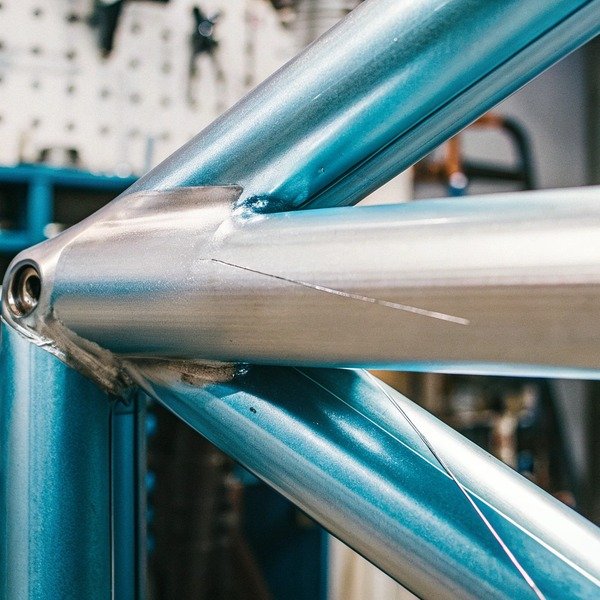
When our engineers in Vietnam receive a silver aluminum frame that cracks under load, frustration spikes immediately. silver aluminum frame 1 You need reliable parts, but vague complaints only lead to more delays and wasted costs.
To improve failing welding Welding parameters 2 samples, submit a formal Corrective Action Request (CAR) detailing the specific defect against AWS or ISO standards. Provide high-resolution photos, request a root cause analysis, and demand a revised Welding Procedure Specification (WPS) to ensure the Vietnamese supplier adjusts their process parameters effectively.
Let’s look at the exact steps to turn a failed sample into a production-ready success.
What specific technical details should I include in my welding defect report to ensure the supplier understands the issue?
We often see clients say “it looks bad,” but our shop floor teams need precise data to adjust the welding robots or manual torch settings. welding robots 3 Vague feedback halts production.
Your report must reference the specific standard, such as AWS D1.2 for aluminum, and identify the exact defect type like porosity or lack of fusion. Include side-by-side photos of the failure versus the technical drawing requirements to bridge language barriers and clarify acceptance criteria.
When you are sourcing complex geometric structures, like a silver-colored aluminum frame, precision is non-negotiable. If you simply tell a supplier that the "weld is weak," they may increase the current, which could burn through the thin rectangular tubing. Instead, you must be technically specific to bridge the gap between your design office and the factory floor in Vietnam.
Define the Defect According to Standards
Your feedback document must move away from subjective language. In our daily operations, we rely heavily on international codes. For aluminum structures, you should reference AWS D1.2 (Structural Welding Code – Aluminum) or ISO 10042 (Arc-welded joints in aluminum). Identifying the standard removes ambiguity.
For example, if the upright section of your frame failed a stress test, check the fracture surface. Did it break in the weld or the base metal? If it broke in the weld, look for porosity (gas bubbles) or lack of fusion. Vietnam has high humidity, which is a major enemy of aluminum welding. If the argon gas shielding was insufficient, hydrogen from the humid air creates porosity.
Visual Evidence and Annotations
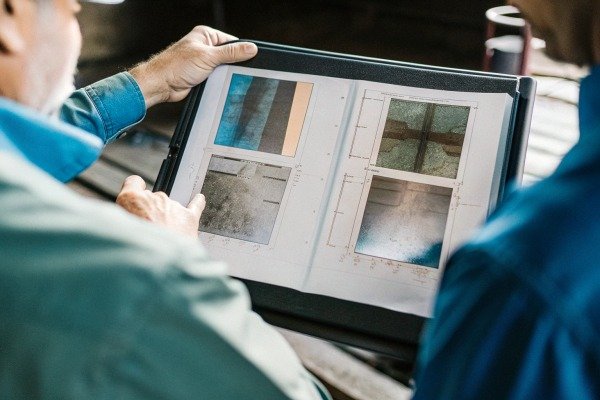
Vietnamese engineers are skilled, but language barriers can cause misunderstandings. We always recommend creating a visual inspection report. Take a high-resolution photo of the failed area on the sample. Next to it, place a screenshot of the CAD drawing showing the required weld symbol weld symbol 4. Use red arrows to point exactly to where the bead profile is irregular or where the crater crack initiated.
We use a standardized checklist to categorize these issues. You can use the table below to structure your feedback email or formal report.
| Defect Type | Common Cause in Aluminum | Technical Feedback Example |
|---|---|---|
| Porosity | Trapped gas, dirty base metal, or high humidity. | "Rejected due to surface porosity exceeding AWS D1.2 Table 6.1 limits. Check gas flow and clean oxide layer." |
| Lack of Fusion | Low heat input or fast travel speed. | "Cold lap detected at the T-joint connection. Please verify amperage and pre-heat settings per WPS." |
| Undercut | Excessive current or poor torch angle. | "Undercut depth >0.5mm on the vertical support beam. Adjust travel speed to prevent base metal reduction." |
| Crater Cracks | Stopping the arc too abruptly. | "Star cracks found at weld termination. Enable crater fill function on the welding power source." |
By using this level of detail, you force the supplier to look at their machine settings rather than just guessing. It transforms the conversation from "try harder" to "adjust parameter X."
How can I request a formal root cause analysis to guarantee the welding problems are fixed in the next batch?
In our Vietnam facility, simply fixing one part isn’t enough; we need to ensure the entire process is corrected to prevent recurrence. A band-aid fix invites future disaster.
Demand a 5 Whys analysis or Fishbone diagram to trace the failure back to raw materials, welder qualification, or shielding gas quality. Require the supplier to update their Procedure Qualification Record (PQR) and implement specific process controls, such as humidity monitoring, before producing the next sample.
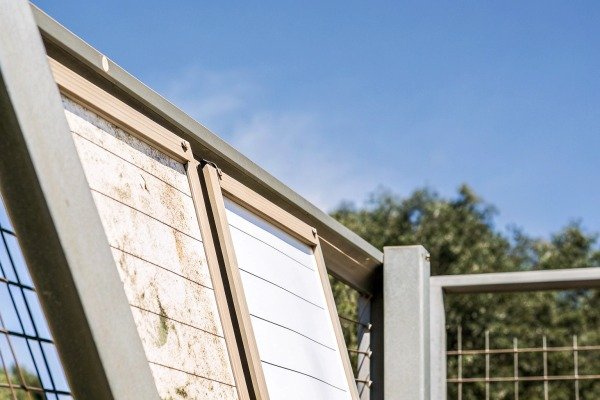
Requesting a second sample without understanding why the first one failed is gambling. When we manage projects, we enforce a strict Root Cause Analysis (RCA) process. You should not accept a generic apology like "we will be more careful next time." Careful does not fix a cold weld; physics does.
The "5 Whys" Methodology
Challenge your supplier to use the "5 Whys" method. If the silver aluminum frame had a crack in the heat-affected zone (HAZ), the conversation should go deeper than just the welder's skill.
- Why did the weld crack? Because there was too much heat input.
- Why was there too much heat? The welder moved too slowly.
- Why did he move slowly? He was trying to fill a large gap in the fit-up.
- Why was there a large gap? The cutting machine for the rectangular tubing was not calibrated.
- Root Cause: The saw cutting process needs calibration, not just the welder.
If you don't dig this deep, the supplier will just fire the welder, and the next welder will face the same bad gap and make the same mistake.
Reviewing the Welding Procedure Specification (WPS)
Ask the supplier to send you the Welding Procedure Specification (WPS) they used for the failed sample. This document is the recipe for the weld. It lists the amps, volts, travel speed, and filler wire type (e.g., ER4043 or ER5356).
If the sample failed, the recipe might be wrong. Ask them to modify the WPS and support it with a Procedure Qualification Record (PQR). This proves they welded a test coupon using the new settings and destroyed it to prove it works. In Vietnam, smaller shops might skip this paperwork. Insisting on it separates professional factories from roadside workshops.
Environmental Factors in Vietnam
Never underestimate the local environment. Aluminum is highly reactive. If your supplier stores the tubing outside or in a non-climate-controlled area, the oxide layer absorbs moisture oxide layer absorbs moisture 5. We often require a "pre-weld checklist" to ensure material is cleaned with acetone and stainless steel wire brushes immediately before welding.
| RCA Category | Specific Check Points for Aluminum Frames | Corrective Action Request |
|---|---|---|
| Matériau | Is the filler wire compatible with the base metal? | Provide Mill Test Certificates (MTR) for the specific batch of filler wire. |
| Machine | Is the TIG/MIG machine calibrated? | Submit calibration records for voltage and wire feed speed. |
| Method | Was the joint design correct? | Review the fit-up tolerance for the complex geometric arrangement. |
| Environment | Was the humidity too high? | Log ambient humidity during welding; require pre-heating to drive off moisture. |
What is the most effective communication style to use when discussing sample failures with Vietnamese manufacturers?
Our local team in Ho Chi Minh City knows that aggressive shouting causes suppliers to hide problems rather than solve them. You need the truth, not just polite agreement.
Adopt a collaborative, face-saving approach that frames the failure as a shared technical challenge rather than personal incompetence. Use clear, simplified English in written emails, backed by visual aids, and encourage open dialogue to ensure the supplier feels safe reporting true production constraints.

Cultural nuance is the hidden variable in supply supply chain management 6 chain management supply chain management 7. In Vietnam, the concept of "face" is critical. If you send an angry email in all caps shouting that the product is "garbage," the supplier may feel humiliated. Once they feel attacked, they often shut down communication or hide the severity of the problem to avoid further embarrassment.
The Partnership Approach
When we communicate defects, we frame it as a mutual problem to solve. Instead of saying, "You made a mistake," try saying, "The test results show the weld strength is lower than we need. weld strength 8 How can we adjust the process to hit the target?" This invites them to be the expert. It gives them a path to redeem themselves by showing their technical knowledge.
We have found that asking open-ended questions works best. If you ask, "Do you understand?" they will almost always say "Yes" out of politeness, even if they are confused. Instead, ask, "What specific changes will you make to the voltage settings voltage settings 9 for the next batch?" Their answer will tell you if they truly understand the fix.
Simplify Your Language
Even if the supplier's sales rep speaks English, the technical manager or the floor supervisor might not. Complex sentence structures lead to errors. Use Plain English.
- Bad: "It is imperative that the amelioration of the porosity issue is expedited."
- Good: "Please stop the porosity. Clean the aluminum before welding. Send photos of the cleaning process."
Visual and Video Feedback
Since you are dealing with a complex geometric arrangement of beams, text is often insufficient. We frequently use video calls (Zoom or Zalo, which is popular in Vietnam) to discuss failures. Showing the failed part on camera allows you to rotate it and point to the specific joint.
Furthermore, ask the supplier to send you a video of their production trial. Watch how they handle the silver tubing. Are they wearing gloves? Are they cleaning the surface? Video evidence reveals truths that documentation might hide.
| Communication Goal | "Face-Saving" Strategy | Direct/Aggressive Approach (Avoid) |
|---|---|---|
| Report a Failure | "We found an issue with the sample during testing. Let's look at the data together." | "This sample is terrible. Why can't you get it right?" |
| Request Changes | "Can you check if a different filler wire would improve strength?" | "You used the wrong wire. Switch it now." |
| Verify Understanding | "Please explain the new process steps you will use." | "Do you understand what I said?" |
How should I adjust my project timeline and manage costs when requesting a second round of welding samples?
We know deadlines are tight, but rushing the second sample without adjusting the schedule usually leads to a second failure. Realistic planning saves money in the long run.
Allocate at least two extra weeks for the supplier to procure new material and recalibrate equipment. Negotiate for the supplier to cover material costs for the second round while you cover shipping, ensuring shared accountability without straining the relationship or your project budget.

A rejected sample is a financial and temporal speed bump. The biggest mistake we see buyers make is demanding a new sample "tomorrow." Welding parameters take time to dial in Welding parameters 10, especially for aluminum which requires strict cleaning and preparation. If you rush the factory, they will skip the root cause analysis, and you will get another bad part.
Adjusting the Timeline
For a complex silver-colored frame structure, you must factor in:
- Material Procurement: Does the supplier have extra aluminum rectangular tubing in stock? If they need to order a new batch, that is 3–7 days.
- Tooling/Jig Adjustment: If the failure was caused by poor fit-up, they need to modify the welding jig. This takes 2–4 days.
- Welding and Testing: Actual production and internal QC take another 2–3 days.
- Shipping: Express couriers from Vietnam to the US take 3–5 days.
Realistically, a sample failure adds 14 to 21 days to your timeline. You need to inform your downstream stakeholders immediately. It is better to announce a delay now than to deliver a defective product later.
Managing Costs and Accountability
Who pays for the second sample? This is a delicate negotiation.
- Supplier Pays: If the failure was a clear deviation from the drawing or agreed standards (e.g., visible cracks, wrong dimensions), the supplier should bear the cost of rework and materials. This is their "tuition fee" for quality.
- Buyer Pays: If the failure occurred because your design was flawed (e.g., the wall thickness was too thin for the load) or you changed the specs, you must pay.
- Split Costs: A common "partnership" compromise is that the supplier covers the manufacturing and material costs to show commitment, while you cover the air freight shipping. This shows you are invested in helping them succeed, not just punishing them.
We recommend tracking these costs in a simple ledger. If a supplier fails three times, the cost of re-sampling might exceed the cost of switching to a new vendor.
Conclusion
Turning a failed welding sample into a success requires more than just a rejection email. By providing technical feedback based on standards like AWS D1.2, demanding a formal root cause analysis, and communicating with cultural respect, you empower your Vietnamese partner to improve. Quality sourcing is not about finding a perfect supplier; it is about building a process that creates perfection.
Notes de bas de page
1. Background on aluminum alloys used in manufacturing. ↩︎
2. Global standards for setting and qualifying welding parameters. ↩︎
3. Technical documentation for industrial welding robots. ↩︎
4. Links to the official ISO standard for welding symbols referenced in the text. ↩︎
5. Authoritative explanation of how oxide layers and moisture cause porosity in aluminum welding. ↩︎
6. General definition of the supply chain management field. ↩︎
7. Reference to the leading professional association for supply chain management. ↩︎
8. Official standards for testing and qualifying weld strength. ↩︎
9. Technical resource from a major industry leader explaining voltage in welding. ↩︎
10. Manufacturer guide detailing specific welding parameters for aluminum. ↩︎

 English
 Español de México
 Deutsch
 Français
 Русский
 العربية