We often see clients frustrated by parts that fail inspection despite having a “compliant” paper trail ISO 5817 1. In our engineering meetings, we frequently analyze competitor bids that look attractive on price but completely ignore the physical reality of the manufacturing process.
To identify ambiguity traps, cross-reference the quotation against specific dimensional tolerances, NDT inspection percentages, and material grade certifications like ASTM or AISI. Ambiguous quotes often omit joint preparation details, surface finish Ra values, and post-weld heat treatment specs, which signals potential quality failures.
Here are the specific technical parameters you must scrutinize to avoid costly misunderstandings.
How can I tell if the supplier has ignored specific welding procedure specifications (WPS) in their cost breakdown?
When our team reviews incoming drawing packages for complex frames, we immediately calculate the time required for strict code compliance. Unfortunately, many low-cost bidders skip these calculations, resulting in quotes that are technically impossible to fulfill correctly.
You can detect ignored WPS requirements if the quotation lacks line items for pre-weld joint preparation, specific shielding gas mixtures, or interpass temperature monitoring. A low-cost bid that omits these essential process steps indicates the factory intends to use generic, unverified parameters rather than your specified code.

The Hidden Costs of Compliance
A Welding Procedure Specification (WPS) is not just a document; it is a recipe that dictates cost. Welding Procedure Specification 2 Welding Procedure Specification (WPS) 3 When we quote a project involving a geometric structure of interconnected rectangular tubes, the WPS tells us exactly how to manage heat input to prevent distortion. If a supplier ignores the WPS, they are ignoring the labor and consumables required to follow that recipe.
You should look for specific cost drivers in the quotation that align with your WPS. For example, if your specification requires a specific shielding gas mixture (like 98% Argon / 2% CO2) shielding gas mixture 4 to ensure a clean finish on stainless steel, but the supplier’s overhead calculation is based on cheaper 100% CO2, the weld quality will suffer. The beads will likely have excessive spatter, which ruins the brushed silver finish you require.
Line Item Analysis
A transparent quotation should reflect the steps mandated by the WPS. If you see a single lump sum for "Welding," be very suspicious. Professional fabricators usually break down costs or at least account for distinct phases.
Common WPS Omissions in Quotes:
- Joint Preparation: Does the quote account for beveling the edges of the rectangular tubes? If they plan to just butt the tubes together and weld without a bevel, penetration will be poor.
- Interpass Temperature Control: For strict structural codes, we must wait for the metal to cool between passes. This adds idle time to the labor cost. If the quoted labor hours seem impossibly low, they are likely continuous welding, which overheats the material.
- Consumables: High-quality filler rods that match the base metal color (essential for your brushed finish) cost more than generic rods.
Comparing Quote Structures
To help you visualize this, we have compared what a compliant breakdown looks like versus a dangerous "ambiguity trap" quote.
| Cost Component | Ambiguous Quote (Trap) | Compliant Quote (Safe) |
|---|---|---|
| Welding Labor | "Standard Welding Rate" (Low hours) | Includes setup, pre-heat, and interpass cooling time. |
| Consumables | "Shop Supplies" (Generic) | Specific AWS Class Filler Metal (e.g., ER308L). |
| Gas | Unspecified or included in overhead | Specific Mix (e.g., Argon/Helium) listed for quality. |
| Preparation | Zero cost allocated | Machining/Grinding for bevel angles included. |
If the factory has misunderstood the WPS, they are quoting a "best effort" weld rather than a "code-compliant" weld. This distinction is the difference between a frame that holds a load and one that fails under stress.
What vague descriptions of filler metals and base materials should raise an immediate red flag?
We always insist on reviewing Material Test Reports (MTRs) before production begins, yet we constantly see other suppliers attempting to use leftover stock. In our supply chain audits, we find that vague material descriptions are the leading cause of cosmetic and structural inconsistencies.
Red flags include generic terms like “mild steel” or “stainless” instead of specific grades such as ASTM A36 or AISI 316L. Additionally, quotes missing filler metal classifications (e.g., ER70S-6) or explicit “equivalent material” approval clauses suggest the supplier plans to substitute cheaper, untested alternatives.
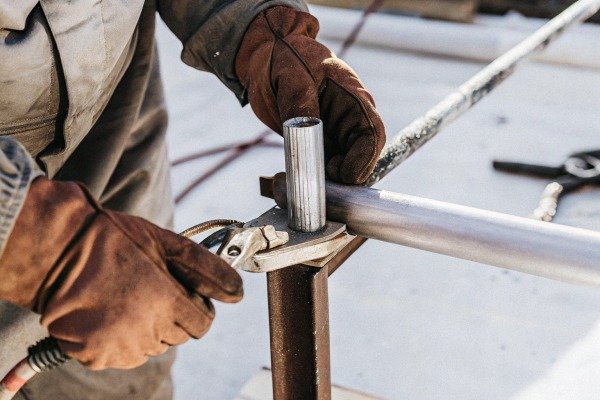
The "Or Equivalent" Trap
In the world of metal fabrication, there is no such thing as "generic" metal. When a quotation simply says "Stainless Steel Tube," it leaves the door open for the factory to use the cheapest available grade. For a product with a brushed silver finish, the difference between Grade 304 and Grade 201 is invisible when new, but Grade 201 will corrode much faster in the field.
We often see suppliers use the phrase "Material: Steel or equivalent." This is a massive ambiguity trap. In our procurement process, "equivalent" must be defined by chemistry and mechanical properties, not just appearance. If the quote does not specify the exact standard (e.g., ASTM A554 for ornamental tubing vs. ASTM A269 ASTM A554 5 for sanitary tubing) ASTM A554 6, you are relying on the factory's luck rather than their engineering.
Filler Metal and Color Matching
For your specific product context—a complex structure with a visible brushed silver finish—the filler metal is just as critical as the base material. If the supplier uses a filler rod with a slightly different chemical composition, the weld seams may rust or discolor after the finishing process.
For example, welding 304 stainless steel with a 308 filler is standard. 304 stainless steel 7 However, if the factory tries to save money by using a generic rod or a "universal" rod that is not chemically matched, the weld bead might polish out to a different shade of grey than the surrounding tube. This creates a visual defect that cannot be fixed without scrapping the part.
Checklist for Material Clarity
When you review the "Materials" section of the quotation, look for these specific identifiers. If they are missing, the supplier has not committed to the right specs.
- Standard Definition: Does it say
AISI 304(US Standard) orSUS 304(Japanese Standard)? Or just "304"? - Form Factor: Does it specify the manufacturing method of the tube? (e.g., "Seamless" vs. "Welded").
- Filler Metal: Is the specific AWS classification listed (e.g.,
ER70S-6orER316L)?
Material Grade Risk Matrix
Use this table to identify high-risk descriptions in your incoming quotes.
| Quote Description | Ambiguity Level | Potential Risk |
|---|---|---|
| "Stainless Steel" | High (Dangerous) | Supplier uses Grade 201 (prone to rust) instead of 304/316. |
| "Alloy Steel" | High (Dangerous) | Inconsistent hardness; welding may cause cracking. |
| "AISI 304" | Low (Safe) | Clear chemical definition; standard corrosion resistance. |
| "Commercial Quality" | Moyen | Surface defects likely; requires heavy polishing labor. |
How do I verify if the quotation actually covers the required NDT inspection methods and acceptance criteria?
Our quality engineers have learned the hard way that “visual inspection” is a subjective term that varies wildly between factories. We emphasize strict testing protocols because we know that hidden internal defects in a welded frame can lead to catastrophic failure once the product is in use.
Verify NDT coverage by ensuring the quote lists specific testing methods like ultrasonic or radiographic inspection alongside the exact percentage of welds to be tested. If the quotation only mentions “standard quality control” without citing acceptance standards like AWS D1.1 or ISO 5817, the required inspections are likely excluded.

The Cost of Non-Destructive Testing (NDT)
NDT is not free. It requires specialized equipment and certified technicians. If your technical drawing asks for "10% Ultrasonic Testing (UT)" on critical joints, but the supplier's quote is surprisingly low, they have almost certainly ignored this requirement.
In our production lines, we treat NDT as a separate process step. It consumes time and often halts production while the inspector works. A quotation that buries inspection costs inside the general "overhead" is a major red flag. It implies that inspection will be cursory at best—likely just a quick visual check by the welder, rather than an independent audit.
Defining Acceptance Criteria
The biggest ambiguity trap regarding quality is the lack of a defined standard. A quote might say "Includes Inspection," but inspection against what criteria?
- ISO 5817 Level B: Stringent criteria for high-quality welds.
- ISO 5817 Level D: Looser criteria, allowing for some pores and undercuts.
- "Factory Standard": Usually means "if it doesn't fall apart, it passes."
For a product with a brushed silver finish, surface porosity is unacceptable. Even if the weld is structurally sound, a pinhole will trap polishing compound and look like a black dot on the silver frame. Your quote must explicitly reference the cosmetic acceptance criteria.
Visual vs. Instrumental Inspection
You must clarify if the quote covers only visual checks or instrumental checks. For the complex geometric structure you described, dye penetrant testing (PT) is often a cost-effective way to ensure there are no surface cracks that will propagate later.
If the supplier has quoted for PT, you should see a line item for consumables (penetrant, developer, cleaner). If those costs are absent, they are not planning to do it.
NDT Method Cost Indicators
| NDT Method | Typical Application | What to Look for in the Quote |
|---|---|---|
| Visual (VT) | All welds | Often included in labor, but should reference a standard (e.g., AWS D1.1). AWS D1.1 8 |
| Dye Penetrant (PT) | Surface cracks | Specific line item for PT chemicals and inspector time. |
| Ultrasonic (UT) | Internal defects | High cost; requires certified Level II technician hours. |
| Radiographic (RT) | Deep penetration | Very high cost; usually outsourced. Look for "Third Party Lab" fees. |
Which common discrepancies in weld tolerance standards indicate the factory misunderstood my technical drawings?
When we fabricate interconnected rectangular tube frames, managing thermal distortion is our biggest challenge. We often see competitors provide quotes that assume standard linear tolerances, completely failing to account for the warping that naturally occurs during the welding process.
Discrepancies occur when a factory applies standard linear tolerances to complex welded assemblies without accounting for thermal distortion. If the quote does not include costs for post-weld straightening, machining, or fixturing to achieve the final geometric definition, they have likely misunderstood the difficulty of holding your specified tolerances.
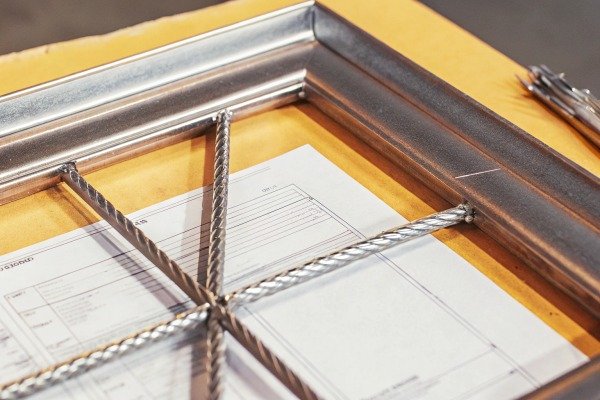
The Distortion Trap in Geometric Structures
Your product is a structure of interconnected rectangular tubes. When you weld a frame like this, the heat creates internal stress. As the metal cools, it pulls and twists. A perfectly cut tube will not result in a square frame after welding unless specific countermeasures are taken.
The ambiguity trap here is in the "General Tolerances." If your drawing specifies a tolerance of ±0.5mm across the entire base of the frame, simply cutting the tubes to that tolerance is not enough. The welding process itself might introduce 2mm or 3mm of distortion.
Checking for Fixturing Costs
A factory that understands your drawing will quote for Jigs and Fixtures. These are heavy steel frames that hold your parts in place during welding to minimize movement.
- The Trap: The quote lists "Tooling: $0" or a very low number. This means they plan to free-hand weld or use basic clamps.
- The Reality: For a complex geometric frame, specialized fixtures are mandatory to maintain alignment. If the quote lacks a significant tooling budget, the factory is underestimating the complexity.
Post-Weld Operations
Furthermore, look for line items regarding post-weld correction. Even with good fixtures, some movement occurs.
- Mechanical Straightening: Using heat and force to bend the frame back into tolerance.
- Post-Weld Machining: Welding the frame slightly oversized and then milling the critical surfaces down to the final dimension.
If the supplier ignores these steps in the quote, they will likely deliver a frame that "rocks" on a flat floor or doesn't fit the elevated components correctly.
Tolerance Class Discrepancies
Suppliers often default to ISO 13920 (General tolerances for welded constructions), which is much looser ISO 13920 9 than ISO 2768 ISO 13920 10 (General tolerances for machined parts).
If your drawing demands ISO 2768-m (medium) precision, but the supplier quotes based on ISO 13920-B, they are giving themselves a much wider margin of error. You might expect a gap of 0.2mm, while they consider a 2.0mm gap acceptable. You must verify which standard governs the quotation.
Tolerance Standard Comparison
| Feature | Machining Standard (ISO 2768-m) | Welding Standard (ISO 13920-B) | Implication |
|---|---|---|---|
| Linear Dimension (1000mm) | ±0.3 mm | ±3 mm | A welded frame could be 3mm too long and still "pass" inspection. |
| Flatness | Strict | Loose | The base might wobble if the stricter standard isn't enforced. |
| Angularity | Precise | Flexible | Rectangular tubes may not be perfectly 90 degrees. |
Conclusion
Identifying ambiguity traps in a welding quotation requires looking beyond the bottom-line price. By scrutinizing the details of WPS compliance, material specificity, NDT costs, and tolerance standards, you can distinguish between a supplier who understands your product and one who is merely guessing. A detailed, transparent quote is the first step toward a successful manufacturing partnership.
Notes de bas de page
1. Official ISO standard page defining quality levels for arc-welded joints. ↩︎
2. Overview of the formal document describing welding procedures and quality control. ↩︎
3. Authoritative definition from The Welding Institute regarding procedure specifications. ↩︎
4. Industry leader Lincoln Electric explains gas selection for specific metals. ↩︎
5. Official ASTM standard page for welded stainless steel mechanical tubing. ↩︎
6. Official industry standard for ornamental stainless steel tubing specifications. ↩︎
7. Technical background on the properties and corrosion resistance of 304 grade steel. ↩︎
8. Official American Welding Society page for the Structural Welding Code. ↩︎
9. Official ISO standard page for general tolerances for welded constructions. ↩︎
10. International standard for general tolerances of welded structures and dimensions. ↩︎

 English
 Español de México
 Deutsch
 Français
 Русский
 العربية