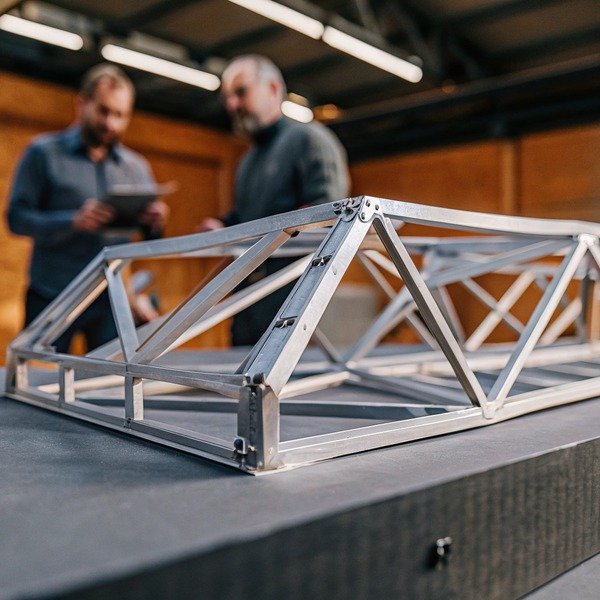
We often see projects stall because initial sample requests lacked clarity regarding the complex geometric arrangements required. This leads to wasted weeks and budget overruns on our production lines.
To request welding part samples effectively, you must submit a detailed Request for Quote (RFQ) that includes CAD drawings, material grades like 6061 aluminum, and specific welding standards. Always specify the sample quantity, usually five units per tool, and define inspection protocols such as tensile testing or leak verification upfront.
Here is exactly how we handle sample requests to ensure production readiness.
What technical specifications and welding standards must I clarify before requesting a sample?
Our engineering team frequently rejects samples simply because the initial specs were too vague regarding the beam connections. This causes unnecessary friction and delays in the supply chain.
You must clarify the specific material alloy, dimensional tolerances, and welding method, such as TIG or MIG, before ordering. Explicitly state the required surface finish and any post-weld treatments like heat treating or anodizing to ensure the supplier provides a sample that truly represents the final production quality.
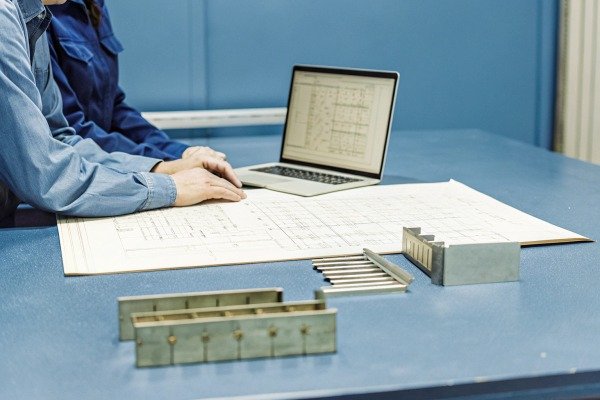
Defining your technical requirements is the foundation of a successful sample request. In our daily operations helping US clients source from Asia, we find that ambiguity is the biggest enemy of quality. You cannot simply ask for "aluminum welding" and expect a precision component. You must be specific about the physical properties and the cosmetic expectations of the silver-colored frame structure.
Specifying Material Grades and Conditions
When we develop custom parts, we never rely on generic terms. If your frame requires aluminum, specify the exact grade, such as Aluminum 6061-T6 or 5052-H32 Aluminum 6061-T6 1. The "T6" or "H32" refers to the temper, which significantly affects how the material reacts to heat during welding. If a supplier uses a softer alloy for your sample, the upright section of the frame may bend under load, leading to a false failure during your testing.
You should also clarify the condition of the raw material. For complex geometric arrangements of beams, we often request that the supplier uses "clean" material free from heavy oxidation. This reduces porosity in the welds. We recommend including a "Bill of Materials" (BOM) even for a single sample assembly. This document lists every tube, beam, and support piece with its specific dimensions and material standard.
Defining Welding Processes and Standards
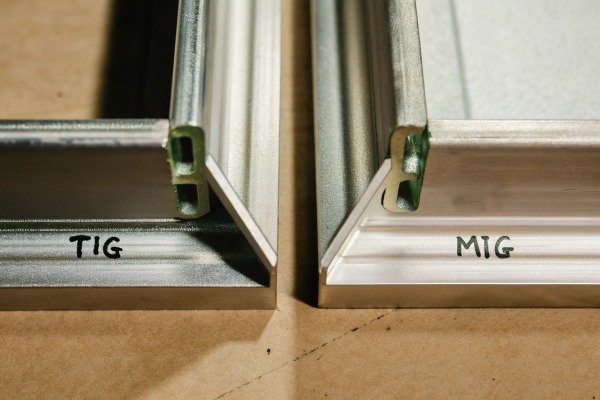
Different welding methods produce different results. For a silver-colored frame where aesthetics matter, TIG (GTAW) welding is often preferred over MIG (GMAW) because it produces a cleaner, more precise bead with no spatter. If you do not specify this, a supplier might use MIG to save time, resulting in a messy look that requires expensive grinding and polishing later.
We also strictly reference industry standards. In our contracts, we cite standards like AWS D1.2 (Structural Welding Code – Aluminum) or ISO 9606. AWS D1.2 2 This gives the supplier a clear rulebook. If the sample arrives with undercutting or lack of fusion, we can point to the specific clause in the standard that they failed to meet. This removes subjectivity from the conversation.
Tolerance Strategy for Complex Geometries
Welding introduces heat, and heat causes distortion. Welding introduces heat 3 For a structure with interconnected beams, a small warp in one corner can misalign the prominent upright section at the other end. You must define tolerances for the final assembly, not just the individual cut parts. We use Geometric Dimensioning and Tolerancing (GD&T) to tell the supplier Geometric Dimensioning and Tolerancing (GD&T) 4 which dimensions are critical.
For example, we might allow a variation of ±1mm on the length of a support beam, but the perpendicularity of the upright section relative to the base might need to be within 0.5 degrees. Providing a STEP file or a 3D CAD model alongside 2D PDF drawings ensures the supplier understands the spatial relationship of all components.
Sample Quantity Requirements
Industry standards often dictate more than just one sample. Following guidelines similar to ElringKlinger, we typically request a minimum of 5 sample parts per cavity or tool. This is not arbitrary. One good part could be a fluke; five good parts indicate a stable process. If the supplier is running multiple process streams (e.g., two different welding stations), we require samples from each stream to ensure consistency across the board.
| Specification Category | What to Define | Why It Matters |
|---|---|---|
| Matériau | Grade (e.g., Al 6061), Temper (T6), Shape (Rectangular Tubing) | Ensures structural integrity and weld compatibility. |
| Welding Process | Method (TIG/MIG), Filler Wire Grade (e.g., 4043 or 5356) | Determines visual appearance and joint strength. |
| Standards | AWS D1.2, ISO 5817 Level B, ISO 9606 | Provides an objective pass/fail criteria for disputes. |
| Geometry | GD&T for flatness, perpendicularity, and overall positioning | Prevents assembly issues caused by heat distortion. |
| Finishing | Mechanical polishing, anodizing, or raw silver finish | Ensures the cosmetic look matches the design intent. |
Do I need to pay for custom tooling and shipping when ordering welding part prototypes?
We find that confusing payment terms for prototypes often sours relationships early. This ambiguity can prevent suppliers from prioritizing your urgent project needs over other paying customers.
Yes, buyers typically pay for custom tooling and shipping costs for welding prototypes, especially for complex aluminum frames requiring specific fixtures. However, you can often negotiate to have the sample unit cost deducted from future high-volume orders, incentivizing the supplier to deliver high-quality initial parts.
The question of cost is always sensitive, but in custom manufacturing, free samples are a myth unless you are purchasing off-the-shelf items like screws. For custom welding parts, significant engineering hours go into the first unit.
Understanding Tooling Costs
For a frame with a complex geometric arrangement, the supplier cannot just hold the pieces together by hand and weld them. They must build a "welding fixture" or "jig." This is a dedicated tool that holds the rectangular tubing in the exact right position while it is welded. This fixture ensures that the prominent upright section stays at 90 degrees (or your specified angle) during the cooling process.
We always advise our clients to pay for this tooling upfront. By paying for the tooling, you own it. If the supplier fails to deliver quality parts, we can physically move that tooling to another factory in Vietnam or China. If you try to get the supplier to absorb this cost, they will amortize it into the piece price, and you will lose leverage and portability.
Shipping and Logistics
Shipping prototypes is rarely free. Metal parts are heavy and bulky. For air freight, which is standard for samples to save time, the cost is calculated by "volumetric weight." A frame structure takes up a lot of space even if it is light aluminum.
We typically organize logistics on a DDP (Delivered Duty Paid) basis for our clients DDP (Delivered Duty Paid) 5 to avoid customs headaches, but for the sample phase, Ex Works (EXW) is common. This means you provide your DHL or FedEx account number, and the supplier ships it on your dime. This gives you control over the speed of delivery. If you ask the supplier to prepay shipping, they may choose the cheapest, slowest carrier, delaying your testing phase by weeks.
Negotiation Strategies for Amortization
While you should expect to pay upfront, you do not have to lose that money forever. We frequently negotiate a "refund on production" clause. The agreement states that if the samples are approved and you place a purchase order (PO) for a specific quantity (e.g., 1,000 units), the sample fees will be credited back to you.
This strategy aligns incentives. The supplier knows that if they make a perfect sample, they get a large order. If they make a bad sample, they keep the sample fee but lose the big business. This motivates them to put their best welders on your prototype.
The Cost of "No-Quote"
If you demand free samples and free tooling, many capable suppliers will simply "no-quote" you. They will view your business as low-margin and high-maintenance. In the current global supply chain, capacity is valuable. By offering to cover reasonable costs, we signal that we are serious buyers. This often results in faster communication and better engineering support from the factory floor.
| Cost Item | Typical Payer | Standard Practice | Negotiation Tip |
|---|---|---|---|
| Welding Fixtures/Jigs | Buyer | 100% upfront payment before work begins. | Ask for this to be a one-time fee; ensure you own the fixture. |
| Sample Units | Buyer | 2x – 3x the production unit price. | Request refund of this premium upon first mass production order. |
| Shipping (Air Freight) | Buyer | Buyer provides courier account (FedEx/DHL). | None; pay for speed to keep the project moving. |
| Raw Material | Buyer | Included in sample unit cost. | Ask for material certs to prove you got what you paid for. |
How should I define the inspection criteria to ensure the samples meet my quality requirements?
Our quality control inspectors routinely fail parts that look fine visually but fail structural tests. Without clear criteria, you risk approving a defective design that could fail in the field.
Define inspection criteria by establishing specific pass/fail metrics for dimensions, weld penetration, and visual appearance using standards like ISO 5817. You should require First Article Inspection (FAI) reports and request destructive test units to verify internal weld integrity before approving any samples for mass production.

Sending a sample request without inspection criteria is like shooting in the dark. You might get a frame that looks like silver-colored aluminum, but without testing, you don't know if it will hold up. We implement a rigorous "First Article Inspection" (FAI) process for every new part we source.
The First Article Inspection (FAI)
An FAI is not just a quick look at the part. It is a complete verification of every single dimension on your drawing. If your drawing has 50 dimensions, the FAI report must list 50 measurements. FAI report 6 We require the supplier to number the drawing (ballooning) and provide a corresponding spreadsheet showing the "Target," "Tolerance," and "Actual" measurement for each number.
For the geometric arrangement of beams, this report proves that the supplier's fixture is working correctly. If the upright section is leaning by 2 degrees, the FAI will catch it. We often use Coordinate Measuring Machines (CMM) for these inspections Coordinate Measuring Machines (CMM) 7 because they can map the complex 3D space of the frame more accurately than hand tools.
Destructive vs. Non-Destructive Testing
Visual inspection is necessary but not sufficient. You cannot see inside a weld. For critical structural parts, we often request "destructive test units." These are extra samples made in the same batch specifically to be destroyed.
We might cut the weld in half (cross-sectioning) and etch it with acid to see the penetration profile. We check for lack of fusion at the root of the weld. If we cannot destroy the part, we use non-destructive testing (NDT) methods like dye penetrant testing. This involves spraying a red dye on the weld, wiping it off, and applying a developer. The dye remains in any microscopic cracks, making them visible. For aluminum, this is crucial as it is prone to "hot cracking."
Visual Standards and Limits
Beauty is subjective, but quality is not. We use "limit samples" to define visual standards. We might ask the supplier to provide photos of a "minimum acceptable" weld and a "perfect" weld. Once agreed upon, these become the standard.
For a silver-colored frame without painting, the surface finish is the final finish. scratches from handling or burn marks from the welding torch are unacceptable. We define strict criteria: "No visible spatter," "No arc strikes outside the weld zone," and "Uniform weld ripple appearance." If the frame is anodized later, any surface surface defects will be magnified, so the raw sample must be pristine. frame is anodized 8
Functional Testing
Beyond dimensions, does the part work? We often design a simple load test for the sample. For example, we might hang a specific weight from the interconnected beams to see if they deflect more than allowed. We communicate this test protocol to the supplier so they can perform it internally before shipping. This saves time; if it fails their test, they shouldn't bother shipping it to us.
| Inspection Method | Objectif | When to Apply |
|---|---|---|
| Dimensional Check (CMM) | Verifies geometry, hole positions, and beam alignment. | 100% of all samples. |
| Visual Inspection (ISO 5817) | Checks for surface defects, spatter, undercut, and finish. | 100% of all samples. |
| Cross-Sectioning (Etch) | Checks internal weld penetration and root fusion. | On 1-2 extra "destructive" units. |
| Dye Penetrant (PT) | Detects surface-breaking cracks and porosity. | Random sampling or critical weld joints. |
| Load Testing | Verifies the structural strength of the assembly. | Dependent on design requirements. |
What documentation and material certificates should I ask the supplier to provide with the samples?
We refuse to accept shipments that arrive without proper paperwork at our Vietnam facility. Missing certifications can lead to severe compliance issues and expensive recalls down the line.
You must request a Material Test Report (MTR) to verify chemical composition and a Certificate of Conformance (CoC) confirming adherence to specifications. Additionally, ask for a dimensional inspection report and welding procedure specifications (WPS) to ensure the manufacturing process is documented, traceable, and repeatable for future runs.
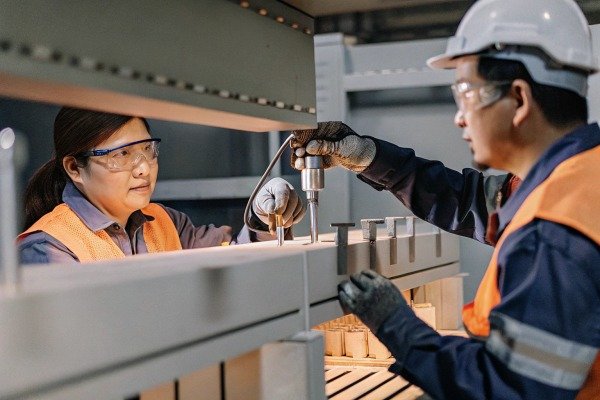
Paperwork is as important as the metal itself. In international trade, documentation is the only proof we have that the material is what the supplier claims it is. Without it, you are relying on trust, which is not a strategy.
Essential Material Certificates (MTR/Mill Certs)
For every batch of aluminum tubing used, we require a Material Test Report (MTR), also known as a Mill Certificate. This document comes from the company that originally made the raw aluminum (the mill). It lists the chemical composition (how much Silicon, Magnesium, Iron, etc.) and the mechanical properties (Tensile Strength, Yield Strength).
Crucially, we check the "Heat Number" or "Lot Number" on the MTR and ensure it matches the tags on the sample parts. This traceability ensures that the 6061-T6 aluminum specified is actually what was used. If a supplier cannot provide this, they likely bought cheap, scrap metal from an unknown source.
Welding Procedure Specifications (WPS)
How do we know the welder knew what they were doing? We ask for the Welding Procedure Specification (WPS) Welding Procedure Specification (WPS) 9. This is a recipe card for the weld. It details the voltage, amperage, travel speed, shielding gas flow rate, and filler wire type used for your part.
Along with the WPS, we ask for the Procedure Qualification Record (PQR), which proves that this specific recipe actually produces a strong weld. This documentation ensures that if the welder leaves the company, the knowledge of how to make your part doesn't leave with them. It ensures repeatability for the next 10,000 units.
Traceability and Labeling
When we receive five samples, they should not be loose in a box. Each part should be tagged. We follow standards where samples are separated and numbered according to the cavity or tool they came from. The delivery note must explicitly state "Initial Sample" and reference the Purchase Order number. Purchase Order 10
For the silver-colored frames, we require that the labels are attached with non-residue tape or plastic ties, so we don't damage the finish when removing them. We also ask for a "bubble drawing" – a copy of the blueprint where every dimension is numbered, corresponding to the dimensional report. This makes it easy for our engineers to cross-reference the data.
Digital Documentation Trends
We are moving away from handwritten reports. We encourage suppliers to provide software-generated documentation. CMM machines can output PDF reports automatically. This reduces human error (or intentional manipulation) where an inspector might "fudge" a number to make it pass. We treat these digital records as part of the product deliverable. If the email with the PDF doesn't arrive, the physical box is not opened.
The Value of the CoC
Finally, the Certificate of Conformance (CoC) is a legal declaration signed by an authorized representative of the supplier. It states, "We certify that these parts meet all requirements of the drawing and purchase order." While it seems like just a piece of paper, in a legal dispute or insurance claim, the CoC is vital evidence that you exercised due diligence in your sourcing process.
Conclusion
Requesting samples is the bridge between a design concept and a viable product. By specifying clear technical standards, investing in tooling costs, enforcing strict inspection protocols, and demanding comprehensive documentation, you protect your business from costly failures. We navigate these complexities daily to ensure our clients receive parts that are right the first time.
Notes de bas de page
1. Authoritative technical data sheet for the specified material grade. ↩︎
2. The American Welding Society standard specifically covering structural aluminum welding requirements. ↩︎
3. OSHA safety guidelines regarding thermal hazards and safety protocols associated with welding operations. ↩︎
4. Official page for the ASME Y14.5 standard referenced. ↩︎
5. Official International Chamber of Commerce definitions for Incoterms. ↩︎
6. Industry standard defining the requirements for First Article Inspection reports in manufacturing. ↩︎
7. Government authority page explaining the measurement technology. ↩︎
8. Overview of the anodizing process used to finish and protect aluminum surfaces. ↩︎
9. Official ISO standard defining requirements for welding procedures. ↩︎
10. General background on the function and legal importance of purchase orders in procurement. ↩︎

 English
 Español de México
 Deutsch
 Français
 Русский
 العربية