
Production downtime destroys profit margins instantly high-amperage MIG 1. When a critical aluminum frame fails aluminum frame 2, waiting weeks for a replacement is not an option for our clients facing strict deadlines.
To evaluate expedition capability, verify the supplier maintains 24/7 labor flexibility and equipment redundancy to handle immediate surges. They must possess in-house secondary processing, such as heat treating or machining, and hold a strategic safety stock of raw materials to bypass standard procurement lead times.
Here is how you can systematically assess a vendor to ensure they deliver when pressure is highest.
What signs of flexible production capacity should I look for to handle sudden surges in welding volume?
Rigid production schedules cause bottlenecks during crises. We constantly adjust our shift patterns in Vietnam to accommodate the unpredictable demand spikes typical of custom manufacturing projects.
Look for suppliers who operate at 70-80% capacity during normal operations, leaving a distinct buffer for emergencies. They should demonstrate a mix of robotic automation for volume and manual welding stations for versatility, allowing them to instantly reassign cross-trained personnel to urgent tasks without retraining.

The Importance of Equipment Redundancy
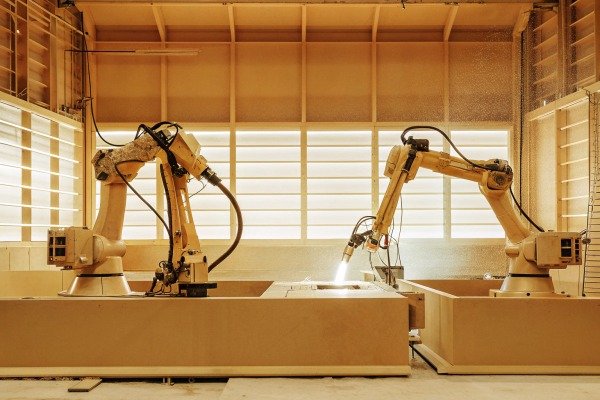
In the world of custom manufacturing, reliance on a single machine is a recipe for disaster. When we audit potential partners or manage our own floors, we look for "N+1" redundancy. This means that for every critical welding process—whether it is TIG welding for precise TIG welding 3 aluminum frames or high-amperage MIG for structural steel—there must be backup equipment ready to go.
If a supplier relies on a single robotic welding cell for your entire product line, a single mechanical failure can halt your emergency order indefinitely. You need to verify that they have manual welding stations that can take over if the automation fails. While manual welding might be slower than a robot, it provides an essential fail-safe mechanism that ensures production continues. This is particularly vital for complex rectilinear structures where joint accessibility might be tricky for a robot without extensive reprogramming time.
Labor Flexibility and Shift Management
Machinery is only half the equation; the human element is often the bottleneck. A truly flexible supplier does not just have extra machines; they have a "bench" of skilled talent. During your evaluation, ask about their shift structure. A standard 9-to-5 operation is ill-equipped for emergencies.
You want a partner who utilizes a rolling shift system or has a pre-agreed overtime protocol with their staff. In our facilities, we cross-train our welders. A specialist in aluminum square tubing should also be competent in steel plate welding. This cross-training allows the shop floor manager to pull workers from less critical non-urgent jobs and swarm them onto your emergency expedite order.
Digital Visibility and Real-Time Decisions
The modern factory floor must be digital. If a supplier manages their production queue on a whiteboard or a spreadsheet that is updated once a week, they cannot handle an emergency effectively. You should look for suppliers utilizing IIoT (Industrial Internet of Things) Industrial Internet of Things 4 or real-time ERP systems.
These tools allow management to see exactly which machines are free and which jobs can be paused. When you call with a crisis, they shouldn't say, "Let me check with the floor and call you back tomorrow." They should be able to look at a screen and say, "We can slot you in at Station 4 starting at 2:00 PM."
Capacity Evaluation Matrix
Use this table to score potential suppliers on their flexibility.
| Feature | Low Flexibility (High Risk) | High Flexibility (Ideal Partner) |
|---|---|---|
| Equipment Utilization | Runs at 95-100% capacity constantly. | Maintains 75-85% capacity to absorb surges. |
| Labor Model | Single shift, rigid job descriptions. | Multiple shifts, cross-trained "floater" staff. |
| Automation | 100% manual or 100% robotic (no backup). | Hybrid model: Robots for speed, manual for backup. |
| Queue Management | First-In-First-Out (FIFO) strictly. | Dynamic prioritization based on client urgency. |
| Temps de réponse | > 24 hours to confirm slot availability. | < 4 hours to confirm slot availability. |
How can I verify that strict quality control protocols remain in place during expedited welding production?
Speed often invites errors, leading to weld failures that cost more than the downtime itself. Our engineering team insists that “rushed” never implies skipping critical validation steps.
Verify that the supplier mandates a “stop-and-check” protocol specifically for rush orders. They must perform in-house non-destructive testing (NDT), such as dye penetrant or ultrasonic inspection, to validate weld integrity immediately without the delay of shipping parts to third-party testing labs.
The Trap of "Visual Only" Inspection
In emergency scenarios, the temptation to rely solely on visual inspection is immense. A welder might look at a bead, decide it "looks good," and send it to shipping. For cosmetic parts, this might be acceptable. For structural components, like the interconnected aluminum bars in the product image, internal porosity or lack of fusion can be catastrophic.
Visual inspection fails to detect subsurface defects. When evaluating a supplier, demand to see their "Expedited QC Protocol." This document should explicitly state that speed does not authorize the removal of hold points. A hold point is a stage in manufacturing where production must stop until a quality check is passed. In a rush order, these checks must happen faster, not be removed entirely.
In-House Testing Capabilities
The biggest bottleneck in quality control is logistics. If your supplier has to ship a welded frame to a separate facility for X-ray or ultrasonic testing, you lose days. An expedite-capable supplier must have these capabilities under their own roof.
For aluminum structures, Dye Penetrant Inspection (DPI) is a minimum Dye Penetrant Inspection 5 Dye Penetrant Inspection (DPI) 6 requirement for detecting surface cracks. It is fast, cheap, and can be done right at the welding station. For deeper assurance, ultrasonic testing capability is a major plus. When we manage projects, we ensure that the specific gauges and fixtures needed to check dimensions are prepared alongside the raw materials. You cannot afford to wait for a custom gauge to be machined while your production line is down.
Documentation and Traceability
Even in a panic, paperwork matters. If a part fails later, you need to know exactly who welded it and what parameters were used. A robust supplier uses digital tablets or workstations where welders log their completion in real-time.
This creates a "digital thread" that follows the part. If an emergency part arrives at your facility and doesn't fit, the "he said, she said" game begins. With proper documentation, the supplier can send you a photo of the part with calipers on it, taken just before it went into the box. This level of transparency builds trust and saves hours of troubleshooting on the receiving end.
QC Checklist for Expedited Orders
Ensure your supplier agrees to these checks before you sign a contract.
| QC Checkpoint | Standard Order Procedure | Expedited Order Procedure |
|---|---|---|
| Weld Inspection | Random sampling (AQL Level II). | 100% Visual + 20% NDT on critical joints. |
| Dimensional Check | Final inspection room queue. | In-process checks at the welding station. |
| Material Certs | Provided with final shipment. | Verified and emailed before cutting begins. |
| Reporting | Standard PDF report. | Real-time photos/video sent via instant message. |
Does the manufacturer have a robust raw material supply chain to support immediate emergency fabrication?
Skilled welders are useless without the correct metal alloys on hand. We learned early on that relying on single-source aluminum providers creates unacceptable risks for time-sensitive projects.
Confirm the supplier maintains a safety stock of standard profiles and has active accounts with multiple local metal service centers. They must demonstrate visibility into Tier 2 suppliers to ensure consumables like welding wire and shielding gas do not become bottlenecks during a crisis.
The Risk of specialized Alloys
Standard carbon steel is easy to find. However, if your product relies on specific grades of aluminum—like 6061-T6 square tubing 6061-T6 7 6061-T6 square tubing 8 with a specific wall thickness—availability becomes a major constraint. In the product image shown, the structure uses various sizes of tubing. If just one of those sizes is out of stock, the entire weldment is delayed.
We advise clients to analyze their Bill of Materials (BOM) and identify "long-lead" items. You should then require your supplier to hold a physical buffer stock of these specific raw materials. Paying a small carrying cost for this inventory is significantly cheaper than the cost of line-down situations.
Diversified Tier 2 Networks
Your direct supplier (Tier 1) buys from mills or distributors (Tier 2). If your Tier 1 supplier only has credit or a relationship with one distributor, they are vulnerable. We have seen instances where a local distributor closes for a holiday or runs out of stock, paralyzing the manufacturer.
A robust supplier maintains active trading accounts with at least three different metal service centers. This allows them to "triangulate" material availability instantly. If Distributor A is out of 2-inch tubing, they can call Distributor B immediately. Furthermore, they must stock ample welding consumables. Running out of the specific filler wire required for an exotic alloy during a night shift is a common but preventable failure mode.
Material Certification Speed
In regulated industries, you cannot weld metal until you have the Mill Test Report (MTR) Mill Test Report 9 Mill Test Report (MTR) 10 verifying its chemical composition. Often, the metal arrives, but the paperwork follows days later. In an emergency, this administrative lag is fatal.
Competent suppliers have digital access to their suppliers' MTR databases. They can download the certs the moment the truck leaves the depot. Ask your supplier: "If I order emergency fabrication tonight, can you email me the material certs before the first arc is struck?" Their answer will tell you a lot about their administrative agility.
Supply Chain Resilience Audit
| Supply Chain Factor | Warning Sign | Positive Indicator |
|---|---|---|
| Stocking Strategy | Just-in-Time (zero inventory). | Safety stock for critical/common profiles. |
| Distributor Network | Single source for main materials. | 3+ active sources for every material type. |
| Consumables | Ordered as needed. | 2 weeks' worth of gas/wire always on floor. |
| Logistics | Relies on standard couriers. | Owns trucks or has dedicated hot-shot partners. |
What questions should I ask about past rush order performance to gauge their reliability under pressure?
Sales teams often overpromise during pitches, only to underdeliver when reality hits. We encourage clients to review our historical project logs to verify actual turnaround times against initial promises.
Request specific case studies detailing actual versus promised dispatch times and defect rates on expedited projects. Ask for references from clients who faced similar outages and inquire if the supplier offers Service Level Agreements (SLAs) with pre-negotiated penalty clauses for missed deadlines.

Moving Beyond Generic Promises
Every supplier claims they have "great service." To cut through the noise, you need data. Do not ask "Can you handle rush orders?" Instead, ask "What was your on-time delivery rate for expedite requests last year?"
Specifics matter. Ask them to walk you through a recent emergency. What went wrong? No emergency goes perfectly. A supplier who claims they have never had an issue is likely lying. A trustworthy partner will say, "We had a rush order where the material was delayed, so we split the shift and worked through the weekend to catch up." This shows problem-solving resilience.
The Role of Service Level Agreements (SLAs)
Emergency service should not be negotiated during an emergency. By the time a machine is down, you have no leverage. You need to establish an SLA before a crisis occurs.
An effective SLA for welding parts defines the "premium" costs clearly. For example, a 30% surcharge for 48-hour turnaround. It should also define the penalty if they miss that deadline. If a supplier refuses to sign an SLA with penalties, they do not have confidence in their own expedite capabilities.
Communication During Crisis
How a supplier communicates under pressure is as important as how they weld. During a "fire drill" situation, you do not want to chase people for updates.
Ask about their communication protocol. Do they assign a dedicated project manager for the duration of the emergency? Do they provide a direct mobile number, or are you stuck calling a general office line? We find that setting up a temporary instant messaging group (WhatsApp, WeChat, Slack) with the client's engineers and our shop floor lead creates the necessary speed of information flow.
Verification Questions Checklist
| Question Category | Specific Question to Ask | What You Want to Hear |
|---|---|---|
| History | "Can you share a case study of a failed expedite and how you fixed it?" | Honest admission of a challenge and the specific operational fix applied. |
| Capacity | "If I call at 4 PM Friday, who picks up the phone?" | "Our on-call manager, not a voicemail box." |
| Financials | "Do you have the cash flow to pay overtime/air freight upfront?" | "Yes, we have a credit line specifically for operational surges." |
| Pricing | "What is your formula for rush fees?" | A clear, fixed percentage (e.g., +25%), not "we'll quote you then." |
Conclusion
Evaluating emergency capacity requires auditing equipment redundancy, supply chain depth, and verified historical performance.
Notes de bas de page
1. Technical overview of the MIG welding process from a leading industry institute. ↩︎
2. The Aluminum Association is the primary industry authority for aluminum standards and applications. ↩︎
3. Authoritative technical definition and process details from The Welding Institute. ↩︎
4. Official government standards and research on IIoT in manufacturing. ↩︎
5. Overview of this non-destructive testing method. ↩︎
6. Detailed explanation of the DPI testing method from an industry leader. ↩︎
7. General background on this specific aluminum alloy. ↩︎
8. Comprehensive overview of the specific aluminum alloy properties and standards. ↩︎
9. Major supplier explanation of material quality documentation. ↩︎
10. Industry-standard definition and requirements for material certification documents. ↩︎

 English
 Español de México
 Deutsch
 Français
 Русский
 العربية