In our Vietnam facility, we treat material verification as the foundation of structural safety, knowing that even perfect welds fail on substandard alloys AWS D1.1 1. We have seen projects suffer costly delays when documentation gaps halted US customs clearance US customs clearance 2.
To confirm compliance with US standards, you must request a Mill Test Report (MTR) linking the material heat number to specific ASTM or AWS specifications. Additionally, enforce on-site Positive Material Identification (PMI) and verify the supplier’s ISO 9001 certification to ensure rigorous chain-of-custody protocols preventing substitution.
Here is exactly how we secure material integrity and traceability for our partners.
What specific documents, such as Mill Test Reports, should I request to verify material composition?
Receiving a batch of steel without paperwork is a nightmare for liability. We insist on full traceability for every project we manage to prevent rejection, ensuring every beam matches the print.
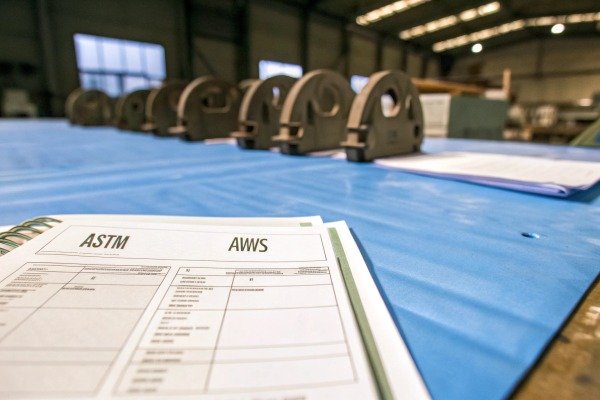
You should request a Mill Test Report (MTR) that documents chemical composition, mechanical properties, and heat numbers traceable to the melt source. Also, demand a Certificate of Conformance (CoC) stating adherence to specific standards like AWS D1.1 or ASTM A36 to validate the material’s legitimacy.
When you source custom welded parts, the paperwork is just as critical as the metal itself. Without the correct documentation, you have no legal or technical proof that the material can handle the design loads. A supplier might claim they used "standard steel," but "standard" varies wildly between regions. To protect your supply chain, you need to audit supply chain 3 the paper trail before the metal even reaches the cutting saw.
Decoding the Mill Test Report (MTR)
The Mill Test Report (MTR) is the birth certificate of the metal. Mill Test Report 4 It comes directly from the mill where the raw material was melted and rolled. When we review MTRs for our clients, we look for three non-negotiable sections: chemical analysis, mechanical properties, and the heat number. The chemical analysis confirms the percentage of elements like carbon, manganese, and sulfur. If these are off, your weldability drops significantly.
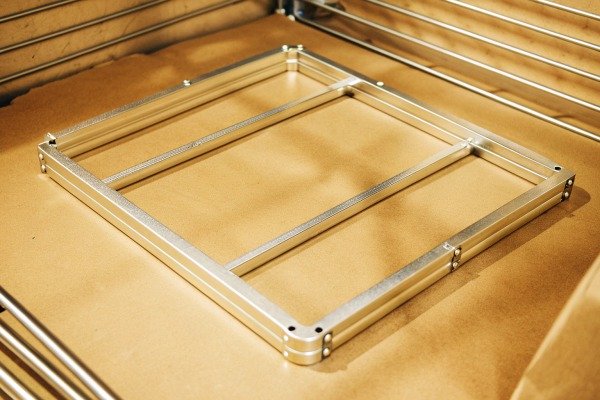
The mechanical properties section is equally vital mechanical properties 5. It lists the yield strength, tensile strength, and elongation. For a structural frame like the one shown in the product image, if the yield strength is lower than the design requirement, the frame could buckle under load. Finally, the heat number on the document must match the number stamped or stenciled on the raw material stock. If they do not match, the document is useless.
The Role of the Certificate of Conformance
While the MTR provides the raw data, the Certificate of Conformance (CoC) is the supplier's sworn statement that the parts meet your specific order requirements. This document should explicitly reference the applicable US standards, such as AWS D1.1 for structural steel or AWS D1.2 for aluminum. It ties the raw material data to your finished part.
Below is a breakdown of the essential data points you must verify on every MTR:
| Document Section | Key Data Point | Why It Matters for Welding |
|---|---|---|
| Material Identification | Heat Number | Links the physical metal to the test results; critical for traceability. |
| Chemical Analysis | Carbon Equivalent (CE) | Determines if preheating is required to prevent cracking during welding. |
| Mechanical Tests | Yield & Tensile Strength | Ensures the base metal can support the structural loads defined in the design. |
| Specification | ASTM/AISI Grade | Confirms the material was manufactured to a recognized US standard (e.g., ASTM A36). |
How do I determine if local Asian material grades are truly equivalent to ASTM or AISI standards?
Confusion over “equivalent” grades often leads to weaker welds and structural failures. Our engineers rigorously compare local Asian steel properties against US specs before cutting a single piece of metal.
Determine equivalence by comparing specific chemical limits and mechanical yield strengths in the data sheets, not just the grade names. Consult cross-reference standards like ISO/TR 20172 or use third-party lab testing to confirm that the local Asian grade meets or exceeds all ASTM or AISI performance requirements.

One of the most common challenges in offshore sourcing is the "equivalent material" trap. Suppliers may offer a local grade, claiming it is "the same as" the requested US grade to save cost or time. For example, a supplier might suggest Chinese grade Q235B as a direct substitute for American ASTM A36. While they are similar, they are not identical. Understanding the nuances ensures that the material you receive behaves exactly as your design engineers intended.
Chemical Composition vs. Mechanical Performance
Equivalence is not about matching the name; it is about matching the performance. We focus on two main areas: chemistry and mechanics. The chemical composition dictates weldability weldability 6. If a local grade has a higher sulfur or phosphorus content than the US standard allows, it can lead to hot cracking during the welding process. This is often where "cheap" steel fails—it looks fine, but the impurities compromise the weld joint.
Mechanically, the yield strength is the priority. If you are building a load-bearing frame, the local material must meet the minimum yield strength of the specified US grade. Sometimes, local grades have a wider tolerance range. A specific batch might pass the test, but the grade definition itself allows for lower quality material. We always verify that the specific heat number provided meets the stricter of the two standards.
Common Substitutions in Asian Markets
In our daily operations across Vietnam and China, we encounter specific substitutions regularly. It is vital to know which ones are safe and which require caution. For instance, in stainless steel, substituting AISI 304 with a generic "200 series" stainless steel is a common cost-cutting tactic AISI 304 7 that disastrously reduces corrosion resistance.
To help you navigate these substitutions, we have compiled a comparison of common structural grades we handle:
| US Standard (ASTM) | Common Chinese Equivalent | Key Differences / Risks |
|---|---|---|
| ASTM A36 (Carbon Steel) | Q235B | Q235B is generally acceptable but verify yield strength; Q235A should be avoided as it lacks impact testing. |
| ASTM A572 Gr. 50 | Q355B (formerly Q345B) | Q355B is a strong match, often exceeding A572 requirements, but check Carbon Equivalent for welding. |
| AISI 304 (Stainless) | 06Cr19Ni10 | Chemically very similar. Ensure the nickel content is fully 8.0-10.5% to maintain corrosion resistance. |
| Al 6061-T6 | 6061-T6 (GB/T) | Usually identical in chemistry; verify the heat treatment process (T6) was performed correctly to ensure hardness. |
Is Positive Material Identification (PMI) testing necessary to ensure the steel grade matches my specifications?
Trusting a label is risky when structural integrity is at stake. We utilize handheld analyzers in our warehouse to instantly catch any mix-ups before production begins, protecting your investment.
Yes, PMI testing is necessary for critical applications to verify the alloy composition non-destructively. It detects accidental material substitution by analyzing the elemental makeup using X-ray Fluorescence (XRF), ensuring the metal on the shop floor matches the documentation provided in the Mill Test Reports.
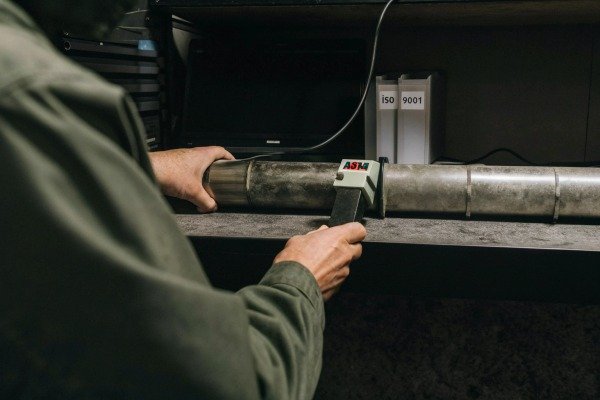
Paperwork can be faked, or more commonly, simply mismatched due to clerical error. Positive Material Identification (PMI) is the physical "truth serum" for metal. Positive Material Identification 8 It cuts through the administrative noise and tells you exactly what the metal is made of. In our experience, reliance solely on certificates is a gamble, especially when multiple alloy types are present in the same factory.
How PMI Technology Works
The most common form of PMI uses handheld X-ray Fluorescence (XRF) guns. X-ray Fluorescence 9 The operator places the device against the metal surface and pulls the trigger. The device emits X-rays that excite the atoms in the metal, which then emit a unique energy signature. The analyzer reads this signature to determine the elemental composition—how much chromium, nickel, molybdenum, etc., is present.
Within seconds, the screen displays the alloy grade (e.g., "SS 316"). If the readout says "SS 304" when you ordered "SS 316," you have immediately prevented a future corrosion failure. This method is non-destructive, meaning it leaves no mark on the part, making it perfect for finished goods inspection.
When to Implement PMI
We recommend implementing PMI at two critical stages. First, at Incoming Quality Control (IQC). When the raw material truck arrives, we scan samples from different bundles to ensure the supplier sent the right stock. Second, at Final Inspection. Before the goods are crated for shipment to the US, a random audit ensures that no material mix-ups occurred during the fabrication process. This is particularly crucial for welded assemblies where a wrong filler rod or a swapped structural beam could compromise the entire unit.
The Cost of Skipping Verification
Skipping this step to save a few dollars on inspection fees is a false economy. If a non-compliant material makes it into a welded frame that supports heavy machinery, the potential for liability claims, recalls, and reputational damage is massive. For high-value custom parts, PMI is an inexpensive insurance policy.
What inspection steps can I implement during production to prevent material substitution or non-conformance?
Discovering the wrong material after welding means scrapping the whole lot. Our team implements checkpoints at cutting and welding stations to stop errors immediately, ensuring “right first time” results.
Implement a strict chain of custody that requires heat number transfer markings on every cut piece of metal. Conduct random spot checks during fabrication and mandate a hold point for material verification before welding begins to prevent the use of uncertified scrap or non-conforming inventory.
Material substitution often happens not out of malice, but out of disorganization. In a busy shop floor, a worker might grab a piece of off-cut scrap that "looks right" but lacks the necessary strength. Preventing this requires a systematic approach to production control. We build our processes around the philosophy that traceability must be maintained physically on the part, not just in a file folder.
Managing the Chain of Custody
The most critical moment for material control is the cutting stage. When a large 20-foot beam is cut into smaller components, the original mill stamp is often cut away or remains on the remnant. We enforce a "transfer marking" protocol. Before a cut is made, the heat number must be transferred (using a paint marker or hard stamp) to the new piece. This ensures that every individual component in the welding jig can still be traced back to its MTR.
If you walk through a factory and see piles of cut metal with no markings, that is a major red flag. It means the link to the certification has been broken. We audit our sub-suppliers to ensure they maintain this discipline. Certification ISO 9001 10
Implementing Hold Points
A "Hold Point" is a mandatory pause in production where an inspector must verify quality before the process continues. We recommend inserting a hold point right before the welding begins. An inspector checks the fit-up and verifies that the material markings match the job traveler (the production order).
This is also where the filler metal is checked. A welder might accidentally load a carbon steel wire into the machine when welding stainless steel. A pre-weld inspection catches this error. By catching these issues upstream, we avoid the massive cost of reworking or scrapping a fully welded frame.
Here is a checklist of inspection steps to enforce during production:
| Production Stage | Inspection Action | Goal |
|---|---|---|
| Raw Material Receipt | Verify MTR vs. physical markings & PMI scan. | Confirm correct material entered the building. |
| Sawing / Cutting | Verify transfer of Heat Numbers to cut parts. | Maintain traceability on smaller components. |
| Pre-Weld Assembly | Hold Point: Check base metal markings & filler wire type. | Prevent mixing incompatible materials. |
| Final Inspection | Random PMI spot check on finished welds/frames. | Final validation before shipping to the US. |
Conclusion
Ensuring your welding parts meet US standards requires more than just trust; it demands rigorous verification. By insisting on valid Mill Test Reports, understanding material equivalency, and enforcing PMI testing and shop-floor traceability, we guarantee that the metal entering your supply chain is safe, compliant, and built to last.
Notes de bas de page
1. Official American Welding Society standard for structural steel. ↩︎
2. Official US government portal for customs and trade regulations. ↩︎
3. Authoritative resource on supply chain management standards. ↩︎
4. Example of MTR documentation from a major US steel producer. ↩︎
5. Academic overview of mechanical properties in materials science. ↩︎
6. Definition from a leading welding institute. ↩︎
7. Background information on the properties of 304 stainless steel. ↩︎
8. Technical documentation on PMI applications from a leading manufacturer. ↩︎
9. General background on the technology used in PMI testing. ↩︎
10. Official ISO page for the quality management standard mentioned. ↩︎

 English
 Español de México
 Deutsch
 Français
 Русский
 العربية