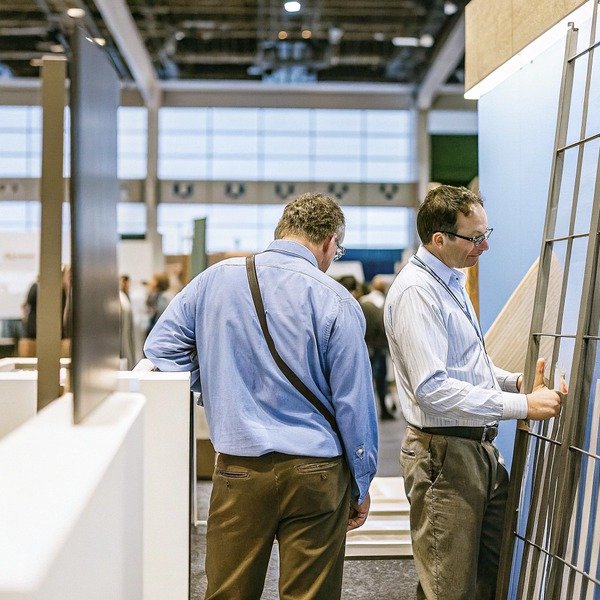
Walking the floor at trade shows like Metal & Weld or Vinamac Expo Vinamac Expo 1, we often see US buyers overwhelmed by the sheer number of booths. You need custom parts, but filtering through trading companies to find a reliable factory is exhausting ISO 9001 2. One wrong choice during these initial meetings can lead to delayed shipments and costly rework back home.
To identify capable Vietnamese welding suppliers, ask three critical questions focusing on quality certification validity, specific technical comprehension of your drawings, and verified production capacity. These inquiries reveal whether a supplier controls their manufacturing process or outsources critical steps, ensuring your custom parts meet strict export standards.
Here is how to effectively vet potential partners face-to-face.
How do I verify their welding certifications and quality control standards on the spot?
During our factory audits in Dong Nai, we frequently encounter paperwork that looks perfect on the surface but fails in practice. Relying solely on a framed certificate at a booth often leads to receiving batches of metal parts with weak joints and cosmetic defects.
Ask the supplier to explain their specific Welding Procedure Specification (WPS) and request immediate examples of Procedure Qualification Records (PQR) for your material type. A genuine manufacturer can detail their internal testing methods, while a trading company will struggle to explain how they validate welder performance against international standards.

When you are standing at a booth, it is easy for a sales representative to point to an ISO 9001 logo on the wall ISO 9001 3. However, ISO 9001 is a general management standard, not a technical one for welding. To truly understand if a supplier can handle your project, you need to dig deeper into their technical discipline.
You should shift the conversation from general quality to specific process controls. Welding is a special process where the quality of the final product cannot always be verified by just looking at it. You need to know that the process itself is sound.
Distinguishing Process from Paperwork
A real manufacturer does not just have a certificate; they have a "recipe" for every weld. This is the Welding Procedure Specification (WPS). If they cannot explain how they develop a WPS for a new product, they likely do not control the process.
Ask them about their NDT (Non-Destructive Testing) capabilities. Non-Destructive Testing 4 Do they do it in-house, or do they hire a third party? For structural parts, relying entirely on visual inspection is a red flag.
The "Golden Sample" Trap
Trade show samples are often "Golden Samples"—the best parts they have ever made, specifically polished for the show. Do not just look at the shiny finish. Look closely at the weld beads on their display samples. Are they consistent? Do you see tiny holes (porosity) or undercutting where the metal is weak? These small details tell the real story of their daily production quality.
Evaluating Supplier Responses
Use the table below to judge the quality of their answers immediately.
| Assessment Criteria | Reliable Manufacturer Response | Red Flag / Trading Company Response |
|---|---|---|
| WPS Availability | "We create a specific WPS for every joint configuration based on AWS D1.1 or D1.2 standards." | "We have ISO 9001, so our quality is guaranteed." |
| Welder Qualification | "Our welders are re-certified every 6 months, and we keep their qualification records (WPQ) on file." | "Our workers are very experienced; they have been welding for 10 years." |
| Defect Management | "We track weld rejection rates weekly and use root cause analysis to adjust machine settings." | "We inspect 100% of parts, so we have zero defects." |
What should I ask to ensure they truly understand my technical drawings and specifications?
We have seen countless projects fail because a supplier nodded “yes” to complex aluminum structure prints without actually reading the GD&T requirements. This communication gap usually results in containers full of useless scrap arriving at your warehouse weeks late.
Challenge the supplier to identify the most difficult fabrication feature on your drawing and explain their proposed manufacturing method. If they point out potential distortion risks or suggest specific fixturing strategies to maintain tolerances, they understand the engineering; silence or immediate agreement indicates they have not analyzed the technical requirements.
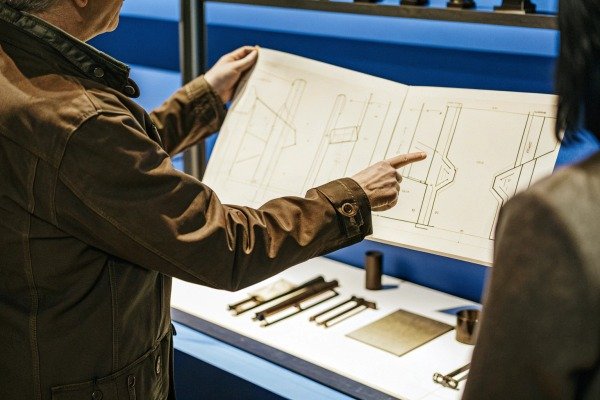
In Vietnam, there is often a cultural tendency to avoid saying "no" or admitting that a design is difficult. This "Yes culture" is dangerous for engineering projects. You need a partner who will push back and offer engineering solutions, not just an order taker.
Testing Technical Comprehension
When you present a drawing of a complex structure—like the rectilinear aluminum frames with interconnected bars mentioned in product designs—do not ask "Can you make this?" The answer will always be yes.
Instead, ask: "How will you prevent the square tubing from warping during the welding process?"
Aluminum expands and contracts significantly when heated. Aluminum expands and contracts 5 If they do not mention specific fixtures, jigs, or welding sequences (like skip welding), they will likely deliver twisted parts that do not fit your assembly.
Geometric Dimensioning and Tolerancing (GD&T)
Many suppliers ignore GD&T symbols on drawings and focus only on linear dimensions. Point to a flatness or perpendicularity symbol on your print. Ask them how they measure that specific tolerance in their factory. If they do not have a CMM (Coordinate Measuring Machine) or specific checking fixtures Coordinate Measuring Machine 6, they cannot guarantee the part meets the spec.
Surface Finish Expectations
For parts like the silver-grey aluminum structures that require a clean, raw, or brushed look, the post-welding process is critical. Ask about their cleaning methods. Do they use acid washing or mechanical brushing? How do they remove the heat tint from the weld zone without damaging the surrounding profile?
Key Technical Questions Checklist
| Technical Area | Question to Ask | What You Want to Hear |
|---|---|---|
| Distortion Control | "What is your fixture design strategy for this frame?" | Detailed explanation of clamping and heat dissipation. |
| Tolerances | "How do you verify the perpendicularity of these vertical bars?" | Mention of squareness gauges, jigs, or CMM reports. |
| Material Handling | "How do you prevent contamination on aluminum parts?" | "We have a dedicated area for aluminum to avoid iron dust cross-contamination." |
How can I assess their production capacity to avoid potential delivery delays?
Our logistics team in Ho Chi Minh City constantly battles with factories that overbook their production lines during peak seasons. If you accept a generic lead time promise without verifying their machine availability, you risk missing your own critical assembly deadlines.
Request a detailed breakdown of their current machine utilization rates and ask how they handle surge capacity for existing clients. You must determine if they prioritize export orders over domestic demand and if they own the necessary equipment or rely on unreliable subcontractors to meet volume requirements.

Capacity is not just about the number of machines; it is about available hours and labor stability. Vietnamese manufacturing is booming, and good welders are in high demand. A factory might have 20 welding stations, but if they only have 10 skilled welders, their real capacity is half of what they claim.
The Subcontracting Risk
A common issue we see is unauthorized subcontracting. When a factory gets too busy, they often farm out work to smaller, cheaper workshops nearby. These workshops usually lack the quality standards you approved.
Ask the supplier directly: "Which processes are done under this roof, and which are sent out?" Specifically, ask about cutting, machining, and surface treatment. If they outsource the cutting of the tubes, delays at the cutter will stop the entire welding line.
Seasonal Fluctuations
You must ask about the Lunar New Year (Tet holiday). Lunar New Year (Tet holiday) 7 In Vietnam, factories close for two weeks or more, and workers often leave early and return late.
Ask them: "How do you plan production around Tet?" A professional supplier will have a pre-holiday production ramp-up plan. If they say "we just work harder," they are not planning properly.
Scalability and Equipment
Look at their equipment list. Do they use manual welding or robotic welding?
- Manual Welding: Great for low volume and complex custom parts, but hard to scale up quickly because you need to hire and train more people.
- Robotic Welding: Excellent for high volume and consistency, but requires high upfront setup time for jigs.
If your volume is high, asking about their automation roadmap is essential. A supplier investing in robotics is planning for long-term growth and stability.
What questions help me confirm the origin and traceability of their raw materials?
We strictly monitor material sources because using unverified metal often causes catastrophic structural failures in custom parts. Buying cheap welding components without tracing the steel or aluminum origin exposes your company to tariff risks and serious safety liabilities.
Inquire about their mill certificate management process and ask to see a sample Material Test Report (MTR) linking a specific heat number to a finished product. Verified material origin is essential for compliance with trade agreements and ensures the physical properties match your engineering calculations for structural integrity.

In the current trade environment, knowing where your metal comes from is as important as the quality of the weld. For Vietnam, the proximity to China is a major factor. You need to ensure you are not accidentally buying transshipped goods that could be hit with anti-dumping duties or fail to qualify droits antidumping 8 droits antidumping 9 for free trade benefits.
The Mill Test Certificate (MTC)
The MTC is your birth certificate for the metal. However, simply receiving a PDF is not enough. You need to verify the link between the paper and the physical part.
Ask the supplier: "How do you maintain traceability from the raw bar to the finished welded frame?"
They should explain their system of transfer markings. When they cut a 6-meter bar into smaller pieces, do they stamp or tag the heat number onto the new pieces? If they lose that number, the material becomes mystery metal.
Material Substitution Risks
Sometimes suppliers will substitute a cheaper grade of aluminum or steel hoping you will not notice. For example, using AL6063 instead of AL6061. They look the same, but AL6061 is much stronger.
Ask them if they have an internal PMI (Positive Material Identification) gun Positive Material Identification 10 (an X-ray handheld analyzer). If they can test incoming material on the spot to verify the alloy, they are serious about quality.
Validating the Source
Vietnam has excellent domestic steel and aluminum producers, but many special alloys are still imported. If they import raw material, ask which country it comes from. For US buyers, this is critical for customs compliance.
Elements of a Valid Material Report
| Document Element | Why It Matters |
|---|---|
| Heat/Lot Number | Links the specific batch of metal to the chemical analysis. |
| Chemical Composition | Proves the percentage of alloying elements (Mg, Si, etc.) meets the standard. |
| Mechanical Properties | Verifies yield strength and tensile strength. |
| Country of Origin | Essential for tariff classification and trade agreement compliance. |
Conclusion
Finding the right welding partner in Vietnam is about asking the tough questions upfront. By verifying their process controls, challenging their engineering understanding, checking their true capacity, and auditing their material traceability, you protect your supply chain from the start. A trade show is just the introduction; your rigorous questioning determines if the relationship will last.
Notes de bas de page
1. Official website of the specific trade show mentioned in the introduction. ↩︎
2. Official page for the international quality management standard discussed. ↩︎
3. Official overview of the quality management standard from the International Organization for Standardization. ↩︎
4. The American Society for Nondestructive Testing provides standards and resources for NDT. ↩︎
5. Educational resource explaining the physics of thermal expansion in metals. ↩︎
6. Authoritative government resource explaining the metrology equipment mentioned. ↩︎
7. General background information on the Vietnamese holiday that impacts production schedules. ↩︎
8. Official US Customs information regarding trade compliance and duties. ↩︎
9. Official US government information regarding trade remedies and duties. ↩︎
10. Manufacturer application note explaining how PMI technology verifies metal alloys. ↩︎

 English
 Español de México
 Deutsch
 Français
 Русский
 العربية