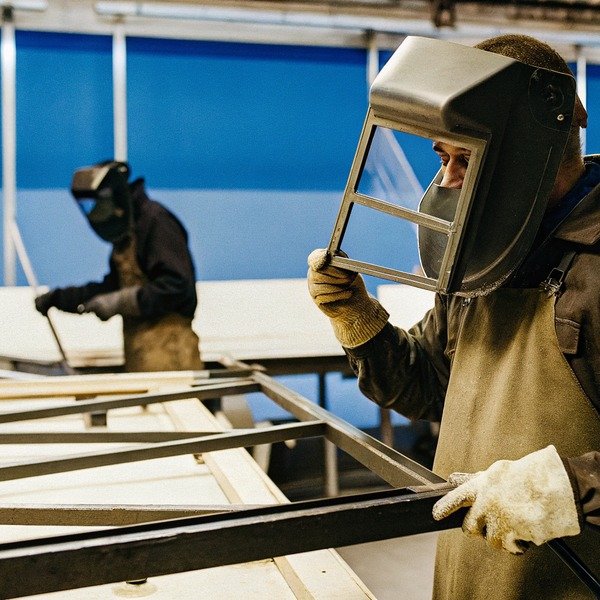
We have seen too many buyers lose leverage because they finalized the contract before securing their financial safety net. When our engineering team reviews a new project, we look for clarity, but vague payment terms signal risk for everyone involved.
To protect your capital with a new supplier, you must insist on a 30% deposit upfront and the remaining 70% paid only after a successful third-party inspection. This structure balances the factory’s need to buy raw materials with your requirement to verify quality before releasing full funds.
Let’s examine the specific clauses and strategies you need to secure your supply chain.
What is the safest payment structure for custom welding orders to minimize my risk?
When we procure aluminum extrusions for our own production lines in Vietnam, we know that paying everything in advance destroys our bargaining power. You face the same reality when sourcing custom frames from overseas.
The safest structure for a pilot order is a 30% initial deposit to cover material costs, with the final 70% balance due strictly upon presentation of a “Pass” result from an independent quality inspection report, rather than upon shipment or delivery.

Balancing Leverage and Production Costs
In the custom manufacturing industry, particularly with complex geometric structures like silver-colored aluminum frames, "standard" terms can be misleading. A supplier will often ask for 50% or even 100% upfront. Do not accept this.
From our perspective on the factory floor, a 30% deposit is usually sufficient to purchase the specific rectangular tubing and build the necessary welding jigs. By paying 30%, you show good faith. However, the critical negotiation point is the remaining 70%. Many suppliers want the balance against the Bill of Lading (B/L) Bill of Lading 1—meaning the goods are already on the boat.
This is risky for you. If the container arrives in the U.S. and the aluminum frames are warped due to heat distortion during welding, you have already paid. Instead, you must link the final payment to a Pre-Shipment Inspection (PSI).
The Power of the "Holdback"
For a first-time supplier, you need a financial "holdback." This is money that sits in your bank account (or an escrow service) until the product is proven correct. This is not about being difficult; it is about alignment. If we know that we don't get paid until the welds meet AWS D1.2 standards AWS D1.2 standards 2 (for aluminum) AWS D1.2 standards 3, our welders pay more attention to the porosity and penetration depth.
Avoiding the 100% Upfront Trap
New suppliers often claim they need 100% payment for small orders (under $5,000) to avoid bank fees. While bank fees are real, the risk of total loss is higher. If you must pay 100% upfront for a sample or trial run, treat that money as a sunk cost you are willing to lose. For any production run, stick to the 30/70 split.
Payment Structure Risk Matrix
The following table breaks down the risk levels associated with common payment terms for welding parts.
| Terme de paiement | Buyer Risk Level | Supplier Incentive to Fix Defects | Recommended For |
|---|---|---|---|
| 100% T/T in Advance | Critical | None. They have your money. | Samples only (< $500). |
| 50% Deposit / 50% Before Ship | Élevé | Low. They cover costs with the deposit. | Established trust (2nd or 3rd order). |
| 30% Deposit / 70% Post-Inspection | Low (Optimal) | High. They need the 70% to profit. | First-time suppliers. |
| 100% Net 30 Days | Zero | Maximum. They want repeat business. | Long-term partners (Year 2+). |
Can I negotiate net 60 terms with a manufacturer I have never used before?
Our finance department reviews credit applications weekly, and we rarely approve open terms for a partner we have just met. Trust is a two-way street that requires a history of on-time payments and consistent volume.
You generally cannot negotiate Net 60 terms for a first order because manufacturers view new international clients as high credit risks. However, you can propose a “credit ladder” plan, moving from deposit-based terms to Net 30 and then Net 60 after three to five successful transactions.
The Supplier's Perspective on Credit
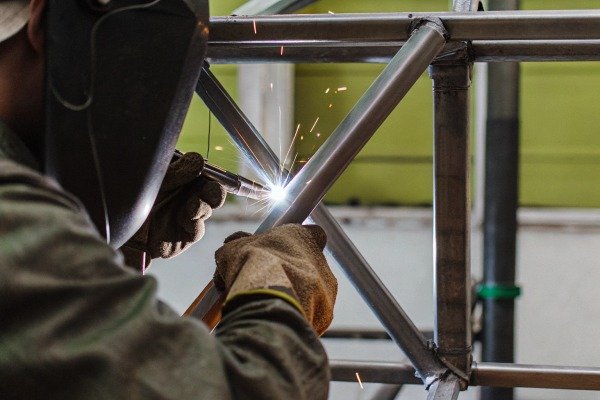
Why do manufacturers say no? When we export custom parts, we pay for materials, labor, and electricity months before the product reaches you. If we offer Net 60 terms, we are essentially acting as your bank, financing your inventory for two months after delivery. For a new client, we have no data to predict if you will pay.
In Asia, credit insurance (like Sinosure in China) helps factories Sinosure 4 insure their receivables, but obtaining coverage for a new U.S. buyer takes time and audited financial statements. If you demand Net 60 on day one, many capable suppliers will simply decline to quote, leaving you with desperate suppliers who might cut corners on quality.
The Strategy: The "Credit Ladder"
Instead of demanding Net 60 immediately, propose a roadmap. This shows you are a professional organization looking for a long-term partnership, not just a one-off deal.
- Orders 1-3: 30% Deposit, 70% Balance upon Inspection.
- Orders 4-6: 0% Deposit, 100% Balance upon B/L (Bill of Lading).
- Order 7+: Net 30 Days after B/L date.
- Year 2+: Net 60 Days.
Using Trade References
If you absolutely need credit terms to manage your cash flow, provide a robust credit sheet upfront. List three other international suppliers you currently pay on Net terms. Allow the new supplier to contact them.
At DEWIN, when a potential client provides verifiable references from other reputable manufacturers, our risk assessment changes. We might not jump straight to Net 60, but we might waive the deposit, asking only for payment upon delivery. This preserves your cash flow while mitigating our risk.
Financial Credibility Checklist
To speed up the transition to Net terms, ensure you have the following ready to share with your new supplier:
- Bank Reference Letter: A simple letter from your bank confirming good standing.
- Audited Financials: If your company is large enough, the previous year's balance sheet helps.
- Trade References: Contact details for 3-5 existing vendors.
- DUNS Number: Ensure your Dun & Bradstreet profile is up to date Dun & Bradstreet 5.
Roadmap to Net Terms
| Milestone | Typical Payment Term | Negotiation Lever |
|---|---|---|
| First Trial Order | 30% T/T Deposit, 70% Pre-Shipment | "I cover material costs, you cover performance." |
| Proven Reliability | 100% T/T against Copy of B/L | "I pay when goods are on the water." |
| Volume Growth | Net 30 Days post-B/L | "I need cash flow to increase order volume." |
| Strategic Partner | Net 60 Days | "We are integrating supply chains." |
How do I tie the final payment to passing specific welding quality inspections?
We often see technical drawings that lack clear acceptance criteria, which leads to disputes when the invoice arrives. Without a defined quality standard, your “defective” part is the supplier’s “acceptable” variance. quality standard 6
You must include a clause in your Purchase Order stating that the final 70% payment is contingent upon a “Pass” report from a third-party inspector verifying critical dimensions and weld integrity. Explicitly reference standards like AWS D1.2 to remove ambiguity.

Defining "Acceptance" in the Contract
Simply saying "good quality" is dangerous. For an aluminum frame with a complex geometric arrangement, "good" is subjective. You must quantify it. Your payment terms should legally reference the technical specifications.
The clause in your PO should read:
"Balance payment of 70% to be released within 5 business days of Buyer's receipt of a satisfactory Third-Party Inspection Report confirming compliance with Drawing Rev. B and AWS D1.2 standards."
The Importance of Specific Testing
Since your product is a silver-colored aluminum structure, visual inspection isn't enough. Aluminum welding is prone to porosity (air bubbles) and cracking. If the frame is structural, you need more than a visual check.
- Visual Check: Finish consistency, no scratches on the silver surface, weld bead uniformity.
- Dimensional Check: The "upright section" must be perpendicular. Geometric beams must align. Heat from welding causes aluminum to warp. If the supplier doesn't use proper fixtures, the frame won't fit your assembly.
- NDT (Non-Destructive Testing): For critical joints, require Dye Penetrant inspection to check for surface cracks Dye Penetrant inspection 7.
Who Pays for the Inspection?
The standard practice is:
- First Inspection: You (the buyer) pay the third-party agency (e.g., SGS, Intertek SGS 8, or a specialized agent). This costs roughly $300-$500 per man-day.
- Re-Inspection: If the goods fail the first inspection, the supplier must pay for the re-inspection.
This creates a powerful financial incentive. If we know that failing the inspection means we have to pay $500 for a re-test et delay our final payment, we will triple-check the quality before the inspector arrives.
Common Welding Defects and Payment Triggers
This table outlines what defects should trigger a "Do Not Pay" status during inspection.
| Defect Type | Description | Acceptance Criteria (AWS D1.2) | Payment Action |
|---|---|---|---|
| Porosity | Gas bubbles inside the weld. | Max diameter 1/32" (depending on class). | Hold Payment |
| Undercut | Groove melted into the base metal. | Not exceeding 0.01" depth. | Hold Payment |
| Spatter | Metal droplets on the frame. | Must be fully removed/cleaned. | Conditional (Rework on site) |
| Distortion | Frame is warped/twisted. | Tolerances per print (e.g., ±1mm). | Reject Lot |
| Discoloration | Halo effect around welds. | Allowed if cleaned/silver finish uniform. | Accept (Cosmetic) |
Should I use a Letter of Credit instead of T/T for the first shipment?
Our export team handles documentation daily, and while we prefer the speed of wire transfers, we respect the security a Letter of Credit offers new buyers. Letter of Credit 9 It removes the need for trust by substituting it with bank verification.
You should strongly consider using an Irrevocable Letter of Credit (L/C) if your first order exceeds $50,000. While it carries higher bank fees, it guarantees that funds are only released when the supplier presents compliant shipping and quality documents.

When the L/C is Worth the Cost
A Letter of Credit is essentially a contract between banks. Your bank promises to pay our bank if and only if we submit the exact documents you requested. If we fail to ship on time, or if the inspection certificate is missing, the bank does not pay.
For orders under $30,000, the bank fees (often $500–$1,000 on both sides) make L/Cs too expensive. In those cases, the "30% Deposit / 70% Post-Inspection" method via T/T (Telegraphic Transfer/Wire) is more efficient. However, for high-value orders of custom aluminum frames, the L/C is the gold standard of protection.
The "At Sight" Clause
For a first-time supplier, use an Irrevocable L/C at Sight. "Irrevocable" means we cannot change the terms without your permission. "At Sight" means we get paid once the bank verifies the documents.
Crucially, you can list the "Third-Party Inspection Certificate" as a mandatory document in the L/C. This means the bank will physically check to see if that certificate exists and is signed by the authorized inspector before releasing a cent.
Reducing L/C Complexity
Many buyers fear L/Cs are too complicated. They can be simplified by focusing on the key documents:
- Commercial Invoice & Packing List: Proof of quantity.
- Bill of Lading: Proof of shipment.
- Certificate of Quality/Inspection: Proof of compliance.
- Mill Test Certificate: Proof that the aluminum material matches the alloy grade (e.g., 6061-T6) 6061-T6 10.
The "Metallurgical Compliance Retention" Hybrid
If you find an L/C too cumbersome but T/T too risky, consider a hybrid approach for the first order:
- 30% Deposit via T/T.
- 60% Payment via T/T after Inspection.
- 10% Retention held for 30 days after arrival.
This 10% "Metallurgical Compliance Retention" protects you against latent defects that an inspector might miss, such as internal weld cracking that only appears under load, or incorrect alloy tempering that makes the frame soft. We don't like this as suppliers, but for a new, skeptical buyer, we often agree to it to win the business.
Conclusion
Securing the right payment terms is just as critical as the engineering design. By insisting on a deposit structure tied to inspection (30/70), referencing specific quality standards in your PO, and having a clear roadmap to net terms, you protect your business from the inherent risks of first-time global sourcing.
Notes de bas de page
1. Standard definition and legal function of a Bill of Lading in international trade. ↩︎
2. Official structural welding code for aluminum, ensuring technical compliance and safety standards. ↩︎
3. Official page for the Structural Welding Code – Aluminum referenced in the text. ↩︎
4. Official website of the China Export & Credit Insurance Corporation mentioned. ↩︎
5. Official website of the business data and analytics company. ↩︎
6. Official page for ISO 9001, the international standard for quality management systems. ↩︎
7. Technical explanation of the testing method from The Welding Institute. ↩︎
8. Official website of the global inspection and certification company. ↩︎
9. Comprehensive overview of the financial mechanics and types of Letters of Credit. ↩︎
10. Standard material data sheet for the specific aluminum alloy mentioned. ↩︎

 English
 Español de México
 Deutsch
 Français
 Русский
 العربية