Sourcing precision metal components often feels like a gamble. At our Vietnam facility, we see how specific qualifications prevent costly production failures for US clients. You need a partner, not just a vendor, to ensure your supply chain remains resilient.
To select the right stamping supplier in Vietnam, prioritize ISO 9001 and IATF 16949 certifications for quality assurance. Verify press tonnage capabilities between 25 and 600 tons to match your part size, and audit their in-house tooling maintenance protocols to ensure consistent, long-term production stability.
Let's break down the specific criteria you need to evaluate to secure a reliable manufacturing partner.
How can I verify the ISO quality certifications of Vietnamese stamping factories?
Fake certificates are a nightmare for procurement managers. When we prepare for our own audits, we know exactly what documentation proves genuine compliance versus what is merely a wall decoration.
Verify certifications by requesting the certificate number and checking it against the issuing body's online database. Ensure the scope of registration covers metal stamping specifically, not just trading, and confirm the expiration date is valid to guarantee current adherence to international quality standards.

The Importance of the "Scope of Registration"
When we evaluate potential partners or sub-suppliers, the first thing we look at is not just the logo on the certificate, but the fine print. A common pitfall for buyers sourcing from Asia is accepting a certificate without reading the "Scope of Registration."
Many companies in Vietnam act as trading houses. Their ISO certificate might be valid, but the scope might read "Trading of Mechanical Parts" rather than "Manufacturing of Metal Stamping Parts." This is a critical distinction. If the scope is trading, the quality management system (QMS) applies to their office paperwork, not the production floor. You need a supplier whose QMS governs the actual stamping, deburring, and inspection processes.
Differentiating Between ISO 9001 and IATF 16949
For general industrial parts, ISO 9001:2015 is the baseline standard. It tells us that the factory has a consistent process. However, if you are sourcing automotive components or parts requiring high precision, we strongly recommend looking for IATF 16949.
In our experience, factories with IATF 16949 have a completely different mindset regarding risk management and process control. They utilize tools like FMEA (Failure Mode and Effects Analysis) and Control Plans much more effectively than standard ISO 9001 shops.
Failure Mode and Effects Analysis 1
How to Perform a Verification Check
Never take a PDF at face value. Photoshop is easy to use. Here is the process our quality team follows to verify legitimacy:
- Identify the Registrar: Look for names like SGS, TUV, BSI, or Bureau Veritas.
- Locate the Certificate Number: This is usually a unique alphanumeric code.
- Visit the Registrar's Website: Most major registrars have a "Client Directory" or "Certificate Search."
- Check the Status: It must be "Active" or "Valid."
Comparison of Key Certifications
To help you decide which certification matters for your project, we have compiled this comparison based on our operational standards.
| Certification | Primary Focus | Idéal pour | Verification Difficulty |
|---|---|---|---|
| ISO 9001:2015 | General Quality Management | General brackets, enclosures, consumer goods | Faible |
| IATF 16949 | Defect Prevention & Reduction | Automotive parts, safety-critical components | Élevé |
| ISO 14001 | Environmental Management | Brands with strict ESG/Sustainability goals | Moyen |
| ISO 13485 | Medical Devices | Medical instruments, surgical components | Élevé |
Critical Thinking: Is the Certificate Enough?
A certificate gets the supplier through the door, but it does not guarantee the part will fit. We have seen certified factories that still have messy floors and poor discipline. The certificate proves they have a system, but it does not prove they follow it every day. This is why we treat the certificate as a prerequisite, not a guarantee. You must combine this verification with a physical or virtual audit of their actual process controls.
What specific press tonnage and tooling capabilities do I need to check for in Vietnam?
Mismatched equipment leads to delays and defects. Our engineers always match press capacity to material yield strength before accepting any project to ensure we don't overstress our machines or your parts.
yield strength 2
You must confirm the supplier possesses a press tonnage range from 25 to 600 tons to handle various part geometries. Additionally, evaluate their in-house tooling capabilities, specifically their ability to design and maintain progressive dies, which is crucial for high-volume efficiency and precision.
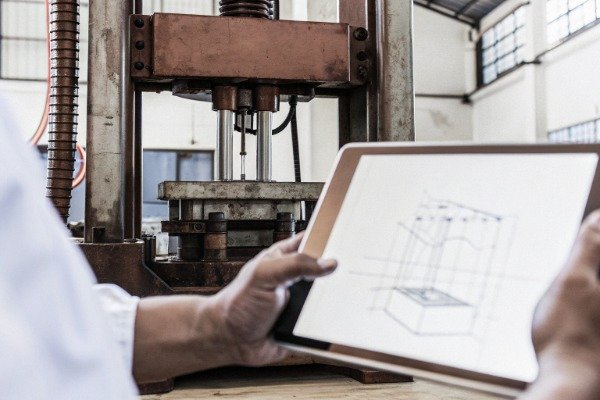
Matching Tonnage to Your Project Needs
The "tonnage" of a press refers to the amount of force the machine can exert on the metal. If you select a supplier with only small presses (e.g., under 100 tons), they cannot stamp thick steel or large automotive panels. Conversely, running a tiny bracket on a 600-ton press is inefficient and costly.
In Vietnam, the stamping industry is maturing. Ten years ago, finding presses over 200 tons was difficult. Today, reliable suppliers like us and our partners operate hydraulic and mechanical presses ranging up to 600 or even 800 tons.
- Low Tonnage (25T – 80T): Ideal for small clips, electrical contacts, and thin brackets.
- Medium Tonnage (110T – 250T): The workhorse range. Good for computer cases, appliance parts, and general hardware.
- High Tonnage (300T – 600T+): Required for thick structural parts, automotive chassis components, and deep-drawn parts.
The Critical Role of In-House Tooling
The die (tooling) is the heart of the stamping process. If the die breaks, production stops. We often see buyers overlook this aspect, focusing only on the piece price.
We strongly advise prioritizing suppliers who have in-house tool shops. Why?
- Speed of Repair: If a punch breaks during a production run, an in-house team can grind a new one and get the machine running in hours. If they outsource, you might wait days.
- Design Control: In-house engineers understand their specific machines. They design dies that fit their press beds and stroke lengths perfectly.
- Cost: While the initial tooling fee might be similar, maintenance costs are usually absorbed by the supplier if they build the tool in-house.
Progressive Dies vs. Single Stage Dies
You need to check if the supplier is capable of Progressive Die Stamping. This is a method where a continuous strip of metal is fed through the press, and multiple operations (cutting, bending, punching) happen simultaneously.
For high-volume orders (e.g., 50,000+ units/year), progressive dies are essential. They reduce labor costs significantly because one operator can manage the machine, rather than having five operators moving parts between five single-stage presses.
Equipment Capability Checklist
When we audit a partner's technical capacity, we use a checklist similar to this. You can use this to query potential suppliers.
| Feature | Requirement | Pourquoi c'est important |
|---|---|---|
| Press Tonnage | 25T – 600T | Ensures capacity for both small precision parts and heavy-duty components. |
| Die Type | Progressive & Single Stage | Progressive for volume/speed; Single for low volume/complex shapes. |
| Bed Size | Up to 3000mm length | Allows for large parts or long progressive dies with many stations. |
| Feeder Type | Servo Feeder | Essential for high precision. Air feeders are less accurate. |
| Tool Room | CNC, Wire EDM, Grinding | Proves they can build and repair dies on-site without delays. |
Secondary Operations
Stamping is rarely the final step. Does the supplier have welding robots? Do they have tapping machines for adding threads? Can they handle deburring? A supplier that can only stamp forces you to move parts to a second location for finishing, which adds logistics costs and quality risks. We prefer to keep these processes under one roof to control the final output quality.
How do I ensure the supplier has a reliable raw material supply chain for metal stamping?
Material shortages can shut down your assembly line. We mitigate this by maintaining safety stock and vetting multiple mills for every alloy we use to prevent supply chain disruptions.
Ensure the supplier has established relationships with reputable material mills and can provide Mill Test Certificates (MTC) for every batch. Ask for their contingency plans regarding raw material shortages and verify their ability to source specific grades like stainless steel or aluminum locally.

The "China Plus One" Impact on Materials
Vietnam is a beneficiary of the "China Plus One" strategy, but it still relies on imports for certain raw materials. While Vietnam has domestic steel production (like Hoa Phat Group), specialized alloys often come from Japan, Korea, Taiwan, or China.
When we source custom parts, we must verify where the raw material originates. If a supplier claims they can get "cheap" Stainless Steel 304, we need to be careful. Is it real 304, or is it low-nickel 201 sold as 304? This fraud is common in lower-tier supply chains.
Mill Test Certificates (MTC) are Non-Negotiable
You must insist on receiving an MTC with every shipment. An MTC is a document from the steel mill that details the chemical composition and mechanical properties (yield strength, tensile strength, elongation) of that specific coil of metal.
Our Process:
- We receive the coil.
- We check the Heat Number on the coil tag against the MTC.
- For critical parts, we cut a sample and send it to a third-party lab to verify the MTC data.
If a supplier hesitates to provide an MTC, or if the MTC looks generic and illegible, walk away.
Material Sourcing Table
Understanding where Vietnam typically sources materials helps you assess lead time risks.
| Material Type | Common Sources for Vietnam Factories | Facteur de risque | Notes |
|---|---|---|---|
| Cold Rolled Steel (SPCC) | Vietnam, China, Korea | Faible | Readily available locally. |
| Stainless Steel (304/316) | Vietnam (Posco), Taiwan, China | Low/Medium | High-grade finishes may need imports. |
| Aluminum (5052/6061) | China, Korea, Vietnam | Moyen | Local extrusion is good; sheet/plate often imported. |
| Copper / Brass | Taiwan, China | Moyen | Price fluctuates heavily with global markets. |
| High Tensile Steel | Japan, Korea | Élevé | Long lead times (2-3 months) for specialized automotive grades. |
Supply Chain Resilience
Ask the supplier: "What happens if your primary steel vendor runs out of stock?"
A professional supplier will have at least two validated sources for every critical material. At DEWIN, we also look at their warehouse. Do they store coils properly? Are they kept off the floor to prevent moisture and rust? Are they tagged clearly?
Rusty material leads to surface defects and can damage stamping dies. Proper material storage is a sign of a supplier who respects the process and the product. Furthermore, check if they offer "Open Account" or credit terms. Suppliers with strong cash flow can buy material in bulk to lock in prices, whereas cash-poor suppliers buy hand-to-mouth, exposing you to price spikes.
What are the red flags to watch out for when auditing a stamping facility in Vietnam?
A clean website doesn't guarantee a clean factory. During our site visits, we look for disorganized floors and poor scrap management as immediate warning signs of deeper systemic issues.
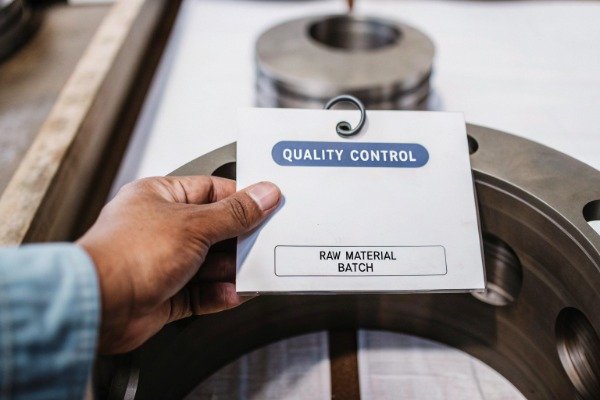
Watch out for disorganized shop floors, lack of clear work instructions at operator stations, and poor scrap material segregation. A major red flag is the inability to demonstrate a documented First Article Inspection (FAI) process or trace a finished part back to its raw material batch.
Coordinate Measuring Machine 3
The "Show Room" vs. The "Real Factory"
We have visited factories where the conference room is pristine, but the production floor is a disaster zone. Do not be distracted by a nice PowerPoint presentation. You need to walk the line.
China Plus One 4
Red Flag #1: Poor 5S and Housekeeping
In metal stamping, scrap metal (slugs) and oil are everywhere. If the floor is slippery with oil, or if sharp scrap metal is scattered around the walkways, it shows a lack of discipline. If they cannot keep the floor clean, they cannot keep your parts within tolerance.
Red Flag #2: No Work Instructions
Walk up to a press operator. Is there a laminated sheet of paper nearby showing the drawing, the critical dimensions to check, and the "Go/No-Go" gauge instructions? If the operator is working from memory, that is a critical failure. Human memory is fallible; documented standards are not.
Traceability Gaps
Pick up a box of finished parts ready for shipping. Ask the manager: "Can you show me the raw material certificate for the steel used in this specific box?"
Wire EDM 5
A good supplier can look at the batch code on the box label, go to their computer, and pull up the specific MTC and the inspection report for that day's production. A bad supplier will struggle to make the connection. Without traceability, if a part fails in the field, you have no way of knowing how many other bad parts are out there.
Progressive Die Stamping 6
Tooling Maintenance Records
Ask to see the maintenance log for a specific die. Stamping dies need sharpening after a certain number of "shots" (hits).
ISO 13485 7
- Good Sign: A logbook or software record showing: "Die #123 sharpened on Oct 15th after 50,000 hits."
- Red Flag: "We just sharpen it when the parts look bad." This is reactive maintenance, and it guarantees that you will receive burred, out-of-spec parts before they notice the problem.
Quality Control Equipment
Finally, look at the QC room. Do they have a CMM (Coordinate Measuring Machine)? Is it turned on and being used, or is it covered in dust?
ISO 14001 8
We often see factories buy a CMM just to show clients during tours. Ask them to measure a part for you right then and there. If the staff doesn't know how to operate it, or if the machine is not calibrated, it is a red flag.
IATF 16949 9
Audit Checklist Summary
| Area | Que rechercher | Red Flag |
|---|---|---|
| Material Storage | Tagged, off the ground, dry. | Rusty coils, no labels, mixed grades. |
| Press Maintenance | No oil leaks, safety guards in place. | Leaking oil, bypassed safety sensors. |
| In-Process QC | Hourly inspection logs at the machine. | No records, operator not checking parts. |
| Scrap Management | Segregated bins for different metals. | Mixed scrap (contaminates recycling value). |
| Tool Room | Organized racks, numbered dies. | Dies on the floor, rusty tooling. |
Conclusion
Selecting a Vietnamese partner requires strict vetting. Focus on verified certs, equipment fit, and material control to ensure your supply chain remains robust and efficient.
ISO 9001 10
Notes de bas de page
1. Authoritative resource explaining this systematic method for evaluating processes. ↩︎
2. Defines the mechanical property limit where material begins to deform plastically. ↩︎
3. Wikipedia article describing the device used for measuring physical geometrical characteristics. ↩︎
4. Explains the business strategy of diversifying supply chains beyond China. ↩︎
5. Explains the electrical discharge machining process used for precision tooling. ↩︎
6. Detailed explanation of the metalworking method for high-volume production. ↩︎
7. Official standard for medical device quality management systems. ↩︎
8. Official standard for environmental management systems. ↩︎
9. Wikipedia entry for the technical specification for automotive sector quality management. ↩︎
10. Official page for the international standard for quality management systems. ↩︎

 English
 Español de México
 Deutsch
 Français
 Русский
 العربية