When we first expanded our supply chain operations into Vietnam technical specs alone don’t secure the best deals 1, we quickly realized that technical specs alone don’t secure the best deals; relationships do.
To succeed in Vietnamese welding procurement, you must prioritize relationship-building (“Tình cảm”) over immediate transaction efficiency. Respect strict hierarchical structures by addressing senior leaders first, practice “saving face” by delivering feedback indirectly, and invest time in social rituals like dining to establish the trust necessary for long-term contract stability.
Below, we break down the specific cultural mechanics that have helped our team secure reliable partnerships.
How does the concept of saving face impact how I negotiate pricing and quality standards?
Our quality control engineers often find that blunt criticism of a welding sample causes suppliers to shut down rather than improve.
Saving face requires you to avoid direct rejection or public criticism of a supplier’s pricing or workmanship. You must frame negotiations as a collaborative effort to meet external “market demands” rather than personal dissatisfaction, ensuring the supplier retains their dignity while you guide them toward your required targets.

The concept of "Face" (Thể diện) is the currency of social interaction in Vietnam. In our years of sourcing custom parts, we have seen promising negotiations collapse simply because a buyer aggressively pointed out a flaw in a prototype during a group meeting. In a Western context, this is efficiency; in Vietnam, it is a humiliation that damages the relationship permanently.
The Art of Indirect Criticism
When we deal with welding suppliers—especially for complex aluminum frames where precision is non-negotiable—defects happen. aluminum frames 2 However, you cannot simply say, "This weld is porous and unacceptable." This attacks the supplier's competence directly.
Instead, we use a "third-party" blame strategy. We might say, "The US market regulations are incredibly strict on porosity for this frame. We are worried that if we send this current version, the inspectors will reject it, and it will cause trouble for both of us. Can we work together to adjust the gas flow settings to satisfy them?"
By shifting the "bad guy" role to an invisible third party (the market, the government, or the end-user), you allow the supplier to align with you against the problem, rather than making the problem about their failure.
Negotiating Price Without Insulting Value
Price negotiation is equally sensitive. A low-ball offer can be seen as an insult to the supplier's quality. When our procurement team negotiates costs for custom rectangular tubing structures, we never demand a discount based on the idea that the product is "too expensive."
We frame it around volume and partnership. We emphasize that a better price now unlocks a long-term strategic alliance. Vietnamese suppliers prefer a steady, "loyal friend" over a high-margin, one-time buyer. We show them that helping us hit a target price is an investment in their own future stability.
Key Phrases for Face-Saving Negotiations
Using the right language is critical. We have compiled a list of phrasings that help maintain harmony while getting what you need.
| Situation | Aggressive Approach (Avoid) | Face-Saving Approach (Recommended) |
|---|---|---|
| Rejecting a Quote | "Your price is too high. We can't pay this." | "We really want to work with you, but our budget target from headquarters is lower. How can we adjust the specs to meet this together?" |
| Quality Defect | "These welds are messy. You need to redo them." | "The finish on these joints is different from the sample. We are concerned the client might not understand this style. Can we match the previous standard?" |
| Missed Deadline | "Why are you late? This is unprofessional." | "We are under pressure from our shipping schedule. Is there any obstacle we can help remove to speed up the process?" |
By mastering these nuances, you protect the supplier's dignity. In return, they will often work harder to solve your problems because they view you as a partner who respects them, rather than a critic who judges them.
What are the unwritten rules of business dining and drinking that I need to follow in Vietnam?
We advise every client visiting our Vietnam offices that the real contract terms are often finalized over dinner, not in the boardroom.
Business dining is mandatory for building trust, involving specific seating protocols and frequent toasting rituals that signify respect and brotherhood. You must wait for the host to start, participate enthusiastically in “cheers” (Dzô), and view these meals as character evaluations where your behavior determines your reliability as a partner.
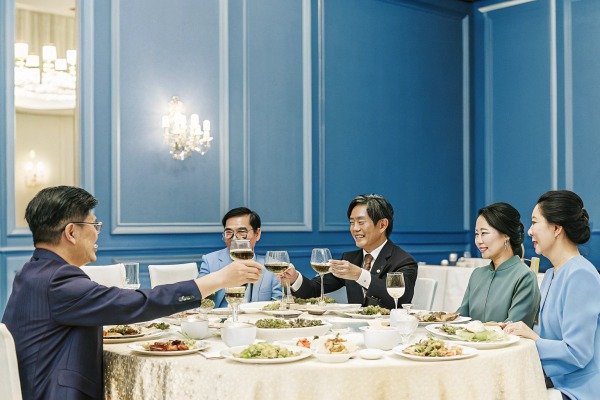
In Vietnam, the saying "work is discussed at the table" is literal. work is discussed at the table 3 The formal meeting at the factory verifies your technical requirements, but the dinner (and often the karaoke that follows) verifies you. Suppliers want to know if you are a person they can struggle through hard times with.
The Seating Protocol
When we host US clients, we always brief them on seating before entering the restaurant. Hierarchy dictates the table arrangement. table arrangement 4 The host (usually the supplier's Director) sits at the "head" of the table, typically facing the entrance.
The guest of honor (you, the buyer) sits to the right of the host. Your second-in-command sits to your right or across from you. Never just grab a chair. Stand by the table and wait to be directed to your seat. This small pause shows you respect their organization and hospitality.
The Toasting Ritual: "Mot, Hai, Ba, Yo!"
Drinking is a communal activity. You should rarely drink alone. If you lift your glass, catch someone's eye, smile, and toast. The most common chant is "Một, hai, ba, dzô!" (One, two, three, in!).
- Social Verification: We have observed that suppliers watch how a buyer handles alcohol. Are they happy? Do they get aggressive? Do they refuse to participate? Refusing to drink can be seen as refusing the friendship, although modern excuses like "medical reasons" are accepted if stated politely at the start.
- The 100% Rule: Often, you will hear "Tram Phan Tram" (100%). This means bottom’s up. If you cannot finish, you must apologize with a smile and ask for "50%".
- Pouring: Never pour your own drink if your glass is empty. Pour for your neighbor first. They will notice and pour for you. This reciprocity is symbolic of the business relationship: I take care of you, you take care of me.
Who Pays the Bill?
If the supplier invites you to dinner to welcome you, they will pay. It is a matter of pride and hospitality. Do not fight aggressively to pay the bill, as this can rob the host of their "face" as a generous provider.
However, reciprocity is key. If they pay for dinner, you should invite them for "Second Round" (drinks/coffee) or bring a thoughtful gift. If we stay for a week, we usually host a "Thank You" dinner on the final night to balance the ledger of favors.
Dining Etiquette Checklist
| Action | Do | Don't |
|---|---|---|
| Starting the Meal | Wait for the eldest member to lift their chopsticks. | Start eating as soon as the food arrives. |
| Chopsticks | Place them on the rest or across the bowl when paused. | Stick them vertically into the rice bowl (resembles incense for the dead). |
| Conversation | Discuss family, food, travel, and general hobbies. | Discuss politics, the Vietnam War, or push hard on contract details immediately. |
| Serving Food | Use the clean end of your chopsticks or a serving spoon to pick up food for others. | Pick through a communal dish to find the best piece for yourself. |
How should I address hierarchy and seniority to show proper respect during factory visits?
During our supplier audits, we ensure our team greets the factory owner first, even if the English-speaking sales rep is the one approaching us.
You must adhere to strict hierarchical protocols by always greeting the oldest or highest-ranking person first with a formal title and handshake. In meetings, direct your attention and key questions to the senior leader, even if a translator or junior staff member is doing the actual talking.
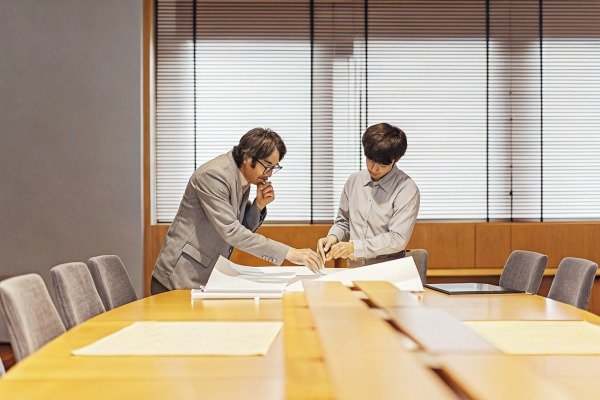
Vietnam is a Confucian society where age and rank command absolute respect. age and rank command absolute respect 5 In the US, we might value the "whiz kid" engineer who knows the software best. In Vietnam, that engineer will stay silent unless the Director gives them permission to speak. Ignoring the Director to talk to the engineer is a major insult.
The Greeting Order
When our team arrives at a welding facility in Dong Nai or Haiphong, we scan the group waiting for us. The Director is usually in the center, often dressed slightly more formally, or sometimes standing just a step ahead.
- Identify the Leader: Shake their hand first. Use both hands for the handshake if you want to show extra respect.
- Use Titles: Address them as "Director [Last Name]" or "Mr. [Last Name]." Never use first names until they explicitly tell you to, which might take months.
- The Business Card Exchange: This is a ritual. Present your card with both hands, text facing them. When you receive their card, take it with two hands, read it carefully for 10-15 seconds, and place it on the table in front of you. Never shove it directly into your back pocket; that signifies you are sitting on their name.
Decision Making Dynamics
You might ask a technical question about the aluminum grade: "Is this 6061-T6 or 5052?"
The English-speaking sales assistant knows the answer. However, they will look at the Director. The Director might speak in Vietnamese, and then the assistant will translate the answer to you.
We often see Western buyers make the mistake of ignoring the Director because he doesn't speak English. They focus their eye contact on the translator. This is a mistake. You must look at the Director while asking the question and while listening to the translation. You are speaking to him, through the translator.
Managing Disagreement in the Hierarchy
If the Director says something incorrect—for example, claiming a welding certification that you know they don't have—do not correct him in front of his staff.
If you prove the boss wrong publicly, he loses authority. Instead, we suggest writing it down and bringing it up later in a smaller group or via email to the sales lead, phrased as a "clarification."
Hierarchy in the Conference Room
| Role | Position in Room | Your Interaction Strategy |
|---|---|---|
| Director / Owner | Head of table or center seat. | Focus 80% of eye contact here. Address all major proposals to him. |
| Senior Manager | Flanking the Director. | Acknowledge them, ask for their "expert opinion" to validate the Director's views. |
| Sales / Translator | Edges or opposite you. | Treat them as the conduit, not the decision-maker. Be patient with translation pauses. |
| Junior Engineer | Back of room or far end. | Do not ask them direct questions unless the Director introduces them to answer. |
Is gift-giving customary for business meetings, and what types of gifts should I prepare?
We always pack a suitcase of small, branded items or local Singaporean snacks when we travel to visit our partners.
Gift-giving is a customary gesture of goodwill and reciprocity, typically performed at the conclusion of a meeting to signify a successful future partnership. You should prepare high-quality but modest gifts, such as premium alcohol, regional specialties from your home country, or quality office items, wrapping them nicely to show thoughtfulness.
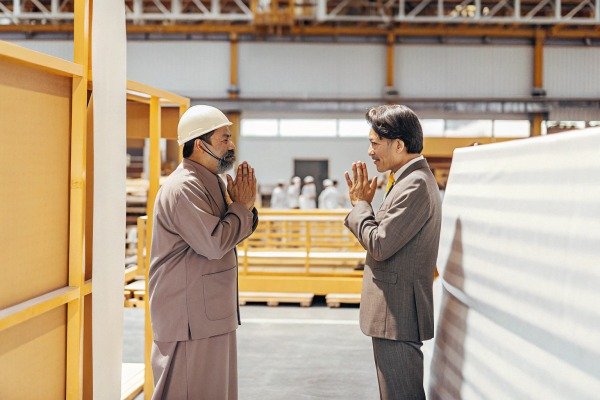
In Western procurement, gifts can raise red flags regarding compliance or bribery. In Vietnam, a small gift is not a bribe; it is a souvenir small gift is not a bribe 6 of the relationship. It balances the "debt" of hospitality if they have hosted you at their factory.
The Timing and Presentation
We never present gifts at the beginning of a meeting. It can look transactional, like we are trying to buy their favor before we start.
The best time is at the very end of the visit, just as hands are being shaken to leave, or at the end of a dinner. We present the gift to the highest-ranking person, using both hands. We usually say something like, "A small token from our home to thank you for your time."
Important: Do not expect them to open the gift in front of you. It is considered rude to appear greedy or to compare gifts in public. They will likely set it aside and open it later.
What to Give (and What to Avoid)
The value should be symbolic. If the gift is too expensive (like a Rolex or cash), it creates an uncomfortable burden of debt for the receiver, or looks like a bribe. If it is too cheap (cheap plastic keychains), it looks like you don't value them.
For our US clients, we recommend items that tell a story about where you are from.
- Regional Specialties: If you are from Texas, a high-quality leather notebook cover or a bottle of good bourbon (alcohol is very acceptable). If from California, perhaps premium nuts or chocolates.
- Company Swag: High-quality metal pens, insulated tumblers, or jackets with your logo are good, provided they are of high quality.
- Fruit: A large, decorative basket of imported fruit is a very safe and respected gift for the whole office.
Taboos to Avoid
There are cultural superstitions regarding gifts that we must respect to avoid accidental offense.
| Item Category | Good Gift Examples | Bad Gift Examples (Taboo) | Reason for Taboo |
|---|---|---|---|
| Office Items | High-quality Parker pen, Leather planner. | Scissors, Letter openers, Knives. | Sharp objects symbolize severing the relationship. Sharp objects symbolize severing the relationship 7 |
| Personal Items | Tie, Scarf (for women), Cufflinks. | Handkerchiefs. | Handkerchiefs are associated with crying and funerals. Handkerchiefs are associated with crying 8 |
| Numbers/Sets | A set of 2, 6, or 8 items. | A set of 4 items. | The number 4 sounds like the word for "death" in Vietnamese/Chinese culture. number 4 sounds like the word for "death" 9 |
| Wrapping | Red, Gold, or Bright Blue paper. | Black or White paper. | Black and white are the colors of mourning and death. |
By bringing a thoughtful gift, we signal that we view the supplier not just as a vending machine for parts, but as a human partner. This small investment often smooths over the inevitable bumps that occur during product development and shipping. product development 10
Conclusion
Successfully sourcing welding parts in Vietnam requires shifting your mindset from transactional speed to relational depth. By respecting hierarchy, protecting your partner's "face" during quality negotiations, and participating in the essential rituals of dining and gift-giving, you build a foundation of trust. In our experience, this patience results in suppliers who are loyal, transparent, and committed to your long-term success.
Notes de bas de page
1. Official US government guide highlighting that relationships often outweigh technical specs in Vietnam. ↩︎
2. American Welding Society standards for structural welding, relevant to aluminum frame quality. ↩︎
3. Industry source confirming that business discussions often happen during dining. ↩︎
4. General background on Asian business etiquette and seating arrangements. ↩︎
5. Trade portal explaining the Confucian influence on hierarchy and respect in Vietnam. ↩︎
6. Government trade site distinguishing between cultural gift-giving and bribery in Vietnam. ↩︎
7. Cultural guide explaining the symbolism of sharp objects in Vietnamese gift etiquette. ↩︎
8. News article detailing Asian gift taboos such as handkerchiefs. ↩︎
9. General background on the linguistic root of the number four superstition. ↩︎
10. News coverage of global manufacturing trends affecting supply chain product development. ↩︎

 English
 Español de México
 Deutsch
 Français
 Русский
 العربية