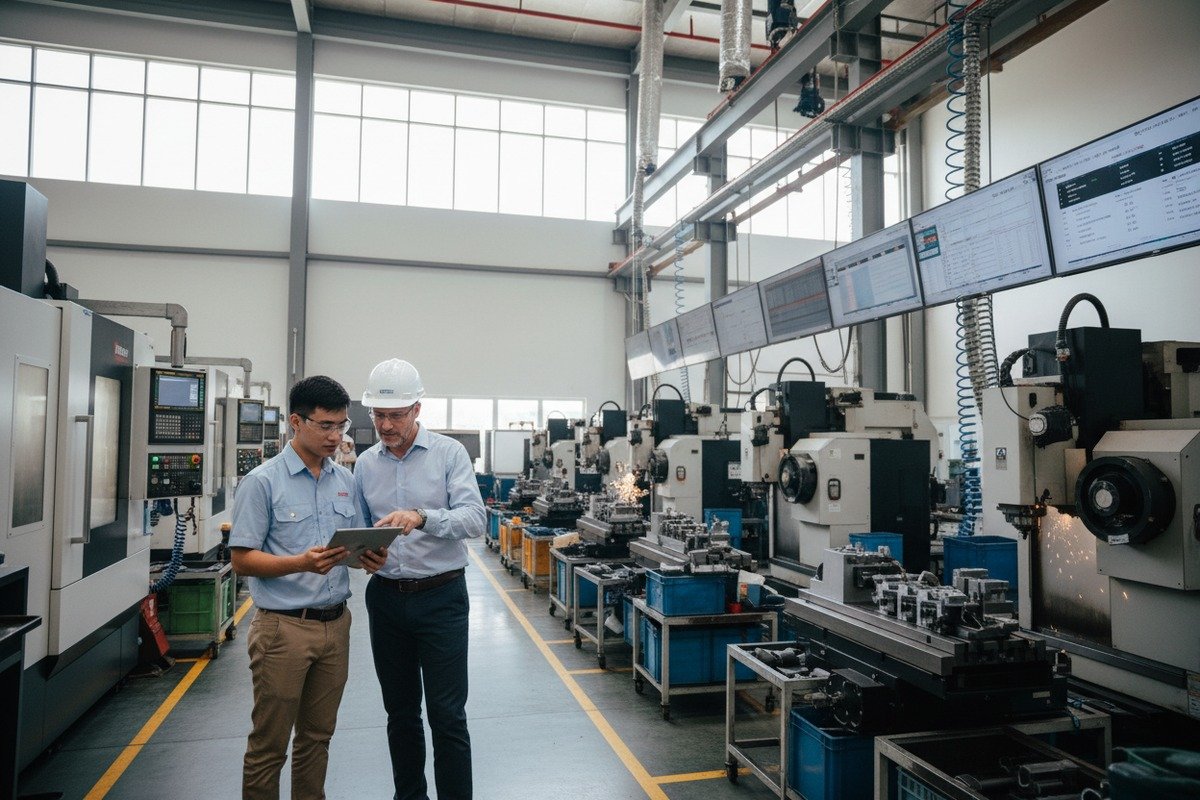
Running production lines for custom industrial parts has taught our team one hard truth: doing everything in-house is expensive, slow, and risky. Contract manufacturing services 1
Contract manufacturing services help industrial equipment companies reduce production costs by 20–50%, accelerate time-to-market, access specialized expertise and advanced equipment, improve scalability, and maintain strict quality standards — all without heavy capital investment in facilities, machinery, or labor.
In this article, we break down the specific ways contract manufacturing solves the biggest headaches for industrial equipment companies. Whether you are struggling with rising costs, inconsistent quality, or late deliveries, the answers below will help you make a smarter sourcing decision.
How can contract manufacturing help me lower production costs and improve my cash flow?
When we quote custom machined parts for our U.S. clients, the conversation almost always starts with cost. Production budgets are tight, and every dollar tied up in equipment or inventory is a dollar not working for your business.
Contract manufacturing lowers production costs by eliminating capital expenditures on equipment, facilities, and full-time labor. It converts fixed costs into variable per-unit pricing, frees up working capital, and improves cash flow through flexible payment terms like 60–90 day open accounts.

Where the savings actually come from
The biggest cost advantage is simple: you do not buy machines. A single CNC machining center can cost $150,000–$500,000. Add tooling, maintenance, floor space, and operators, and the total investment climbs fast. A contract manufacturer already owns that equipment. You only pay for the parts you need.
Labor is the second major saving. Skilled machinists and welders in the U.S. command high wages plus benefits. In Vietnam, our team of trained technicians delivers the same precision work at a fraction of the cost. This does not mean low quality. It means lower overhead applied to the same tolerances and materials.
Fixed costs vs. variable costs
Here is how the cost structure changes when you move from in-house to contract manufacturing:
| Catégorie de coût | In-House Production | Contract Manufacturing |
|---|---|---|
| Equipment purchase | $150K–$500K per machine | $0 (included in unit price) |
| Facility lease & maintenance | $5K–$20K/month | $0 |
| Full-time labor (per operator) | $45K–$75K/year + benefits | $0 (built into per-unit cost) |
| Raw material procurement | You buy and store | Supplier handles sourcing |
| Tooling & fixtures | $2K–$50K per project | Often amortized across orders |
| Cost model | Fixed (pay regardless of volume) | Variable (pay per part produced) |
This shift from fixed to variable costs is critical for cash flow. You stop paying for idle machines during slow months. You stop carrying excess inventory. Your spending matches your actual orders.
How payment terms protect your cash flow
Most contract manufacturers require deposits or payment on shipment. That still ties up cash. We offer open account terms of 60–90 days to qualified clients. This means you receive the parts, sell them or assemble them into your equipment, and pay later. Your cash keeps moving instead of sitting in a supplier's bank account.
For industrial equipment companies with long sales cycles, this matters. If your customer pays you in 45 days but your supplier demands payment upfront, you carry that gap. Flexible payment terms close it.
Lean manufacturing reduces waste
Good contract manufacturers use lean methods. Lean manufacturing 2 They optimize material usage, reduce scrap rates, and streamline setups. Industry data shows lean techniques cut material waste by 15–30%. That saving passes through to your unit price. It also supports sustainability goals, which more industrial buyers now require from their supply chains.
How do I ensure my custom industrial parts meet strict quality standards without constant oversight?
Our engineers review hundreds of technical drawings every year, and we have seen what happens when a supplier misses a critical tolerance or skips an inspection step — rejected parts, costly rework, and angry end customers.
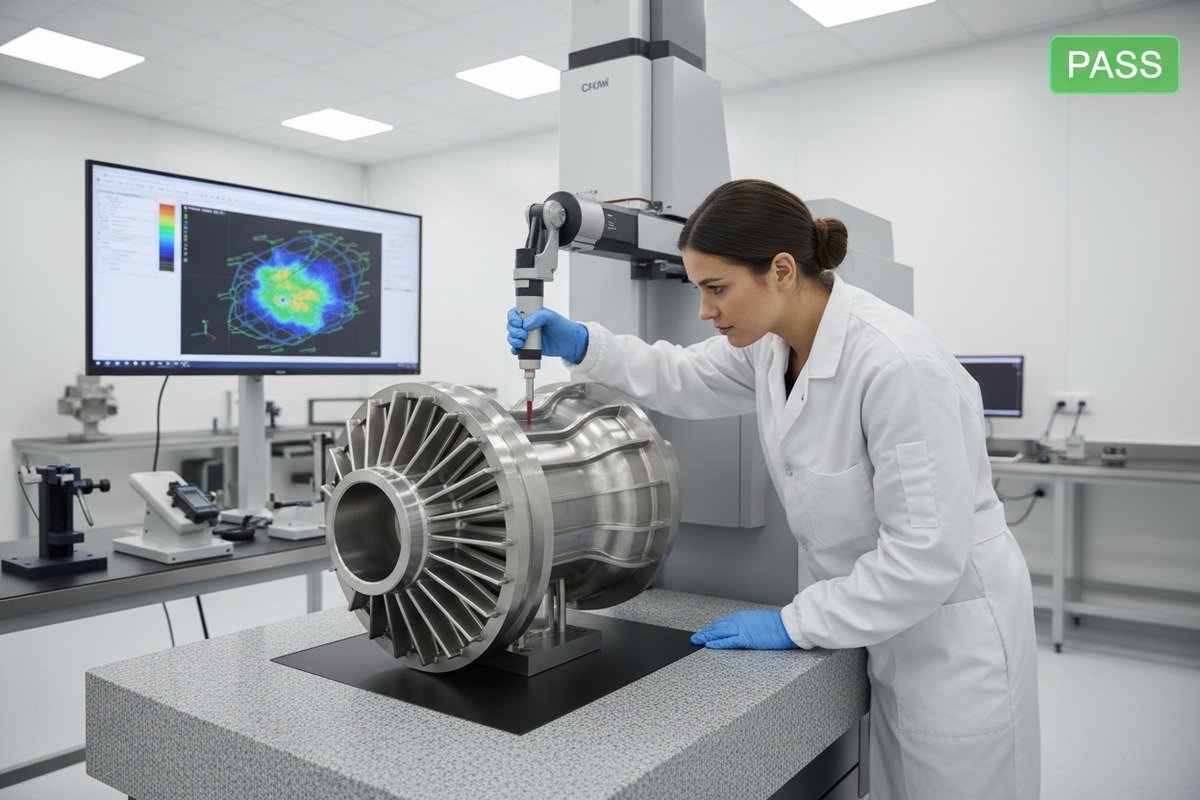
You ensure quality without constant oversight by partnering with a contract manufacturer that follows structured quality systems like PPAP, uses documented process controls, performs in-process and final inspections, and provides full traceability reports for every shipment.
Why quality problems happen in the first place
Most quality failures in contract manufacturing trace back to three root causes. First, the supplier does not fully review the drawing before production starts. They miss notes about surface finish, material certifications, or geometric tolerances. Second, there is no in-process inspection. Problems only show up at the end, when it is too late. Third, there is no formal first article approval. The supplier assumes their interpretation is correct and runs the full batch.
These are not equipment problems. They are process problems. And they are preventable.
The quality framework that works
A reliable contract manufacturer follows a structured quality process from order to shipment. Here is what that looks like:
| Quality Stage | Ce qui se passe | Pourquoi c'est important |
|---|---|---|
| Drawing review (DFM) | Engineers review every dimension, note, and tolerance before quoting | Catches errors and ambiguities before production starts |
| PPAP 4 (Production Part Approval Process) | First articles are measured, documented, and approved by the customer | Confirms the process can produce conforming parts repeatedly |
| Inspection en cours | Operators check critical dimensions during production runs | Catches drift or tool wear before it creates scrap |
| Inspection finale | QC team inspects finished parts against the drawing using calibrated instruments | Ensures every shipment meets specifications |
| Material traceability | Mill certs, heat lot numbers, and test reports are linked to each order | Provides full traceability for regulatory or customer audits |
When we manage a project, every one of these steps is documented. Our clients receive inspection reports, photos, and measurement data with each shipment. They do not need to fly to the factory to check quality. The data speaks for itself.
Getting it right the first time
The concept of "right first time" is not just a slogan. It is a measurable goal. Every rework cycle adds cost and delays delivery. Our approach is to invest more time upfront in the DFM review and PPAP phase. We ask questions. We flag risks. We confirm material specs before cutting metal.
This front-loaded process costs a little more time at the start. But it saves weeks of rework later. For purchasing managers who have been burned by suppliers who "just start cutting," this difference is significant.
Certifications to look for
Not all contract manufacturers hold the same certifications. For industrial equipment parts, look for ISO 9001 5 at minimum. If you serve automotive, ask for IATF 16949 6. For aerospace, AS9100 is the standard. These certifications are not just badges. They require documented procedures, internal audits, and continuous improvement — all of which reduce your risk.
What are the strategic advantages of moving my part production to a contract manufacturer in Vietnam?
Over the past few years, our Vietnam office has grown from two people to seven, and the reason is straightforward: more U.S. industrial companies are looking for reliable production outside of China.
Moving part production to Vietnam offers strategic advantages including lower labor and overhead costs, reduced exposure to China-specific tariffs, access to a growing skilled workforce, favorable trade agreements, and geographic diversification that strengthens your supply chain against geopolitical disruption.
The tariff and trade policy factor
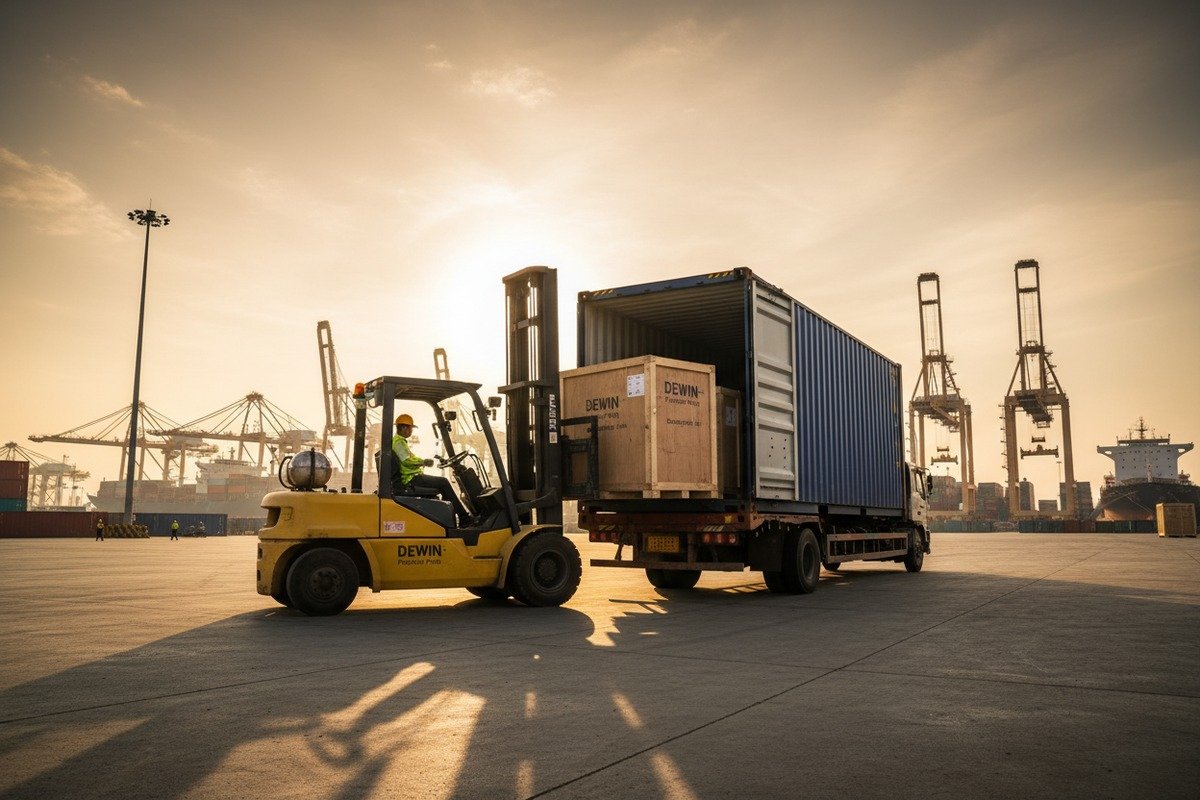
Since 2018, U.S. tariffs on Chinese-made goods 7 have reshaped sourcing decisions for industrial equipment companies. Many custom parts — machined components, castings, fabricated assemblies — now carry significant additional duties when imported from China. Vietnam is not subject to the same tariff structure. This alone can shift the landed cost calculation by 10–25%, depending on the product category.
Vietnam also benefits from multiple accords de libre-échange 8, including the CPTPP and the EU-Vietnam FTA. These agreements reduce or eliminate import duties for goods moving between member countries. For companies selling into both the U.S. and Europe, Vietnam offers a dual-market advantage.
Cost comparison: Vietnam vs. China vs. U.S.
| Facteur | Vietnam | Chine | États-Unis |
|---|---|---|---|
| Skilled labor cost | Faible | Faible–Moyen | Élevé |
| Tariff exposure (U.S. imports) | Faible | High (Section 301) | Aucun |
| Manufacturing maturity | Growing rapidly | Very mature | Very mature |
| Infrastructure quality | En amélioration | Fort | Fort |
| Geopolitical risk for U.S. buyers | Faible | Elevated | Aucun |
| Lead time to U.S. (ocean freight) | 25–35 jours | 20–30 days | 3–7 days domestic |
| Accords de libre-échange | CPTPP, EVFTA, RCEP | RCEP | ACEUM |
Vietnam is not a perfect replacement for China in every category. China still has deeper supply chains for certain materials and processes. But for many custom machined and fabricated parts, Vietnam now offers a competitive alternative with lower political risk.
Workforce and capability growth
Vietnam's manufacturing sector has grown steadily. The country has invested in technical training programs, and a young workforce is entering the industry with CNC machining, welding, and quality inspection skills. Our local team in Vietnam manages supplier relationships, conducts factory audits, and oversees production on the ground. This local presence is critical. It means we catch problems early, verify capacity before placing orders, and maintain direct communication with factory management.
Supply chain diversification
Relying on a single country for all your parts is risky. Supply chain diversification 9 Trade policy changes, port closures, or regional disruptions can halt your supply overnight. Adding Vietnam as a second sourcing location gives you a backup. If one supply line is disrupted, the other keeps running. For industrial equipment companies that cannot afford production stoppages, this diversification is not optional — it is essential.
The trend toward "China plus one" sourcing strategies has accelerated since 2020. Vietnam is the most common "plus one" destination for custom parts in Southeast Asia, and the infrastructure to support it improves every year.
How can a contract manufacturing partner help me eliminate communication gaps and delivery delays?
When we onboard a new client, the first thing we hear about is their past frustrations — emails that go unanswered for days, shipments that arrive two weeks late, and parts that do not match the drawing because nobody asked the right questions.
A strong contract manufacturing partner eliminates communication gaps and delivery delays by assigning dedicated project managers, establishing clear timelines with milestone tracking, conducting proactive drawing reviews before production, and providing regular status updates throughout the manufacturing and shipping process.

Why communication breaks down
The root cause of most delivery and quality problems is not technical. It is communication. Here is what typically goes wrong:
A buyer sends a drawing to a supplier. The supplier quotes it quickly without asking questions. Production starts. Halfway through, the factory realizes a tolerance is tighter than expected or a material is hard to source. They do not tell the buyer. They try to figure it out themselves. Days pass. The delivery date slips. When the parts finally arrive, something is wrong.
This pattern repeats across the industry. It is not unique to any one country or supplier. It happens whenever there is no structured communication process.
What proactive communication looks like
We built our workflow around preventing these gaps. Here is how it works in practice:
After receiving a drawing, our engineering team conducts a full DFM review. They flag anything unclear — ambiguous tolerances, missing material specs, conflicting notes. These questions go to the client before we quote. This takes a little longer upfront, but it prevents surprises later.
Once production starts, our project managers 10 send updates at key milestones: material received, first article completed, production in progress, final inspection done, shipment booked. The client always knows where their order stands.
The real cost of late deliveries
Late deliveries do not just inconvenience you. They cost real money. If your production line is waiting for parts, your workers are idle. If your customer is waiting for equipment, you risk losing the order. Penalties, expedited freight charges, and damaged relationships add up fast.
We track on-time delivery as a key performance metric. When a delay risk appears — a material shortage, a machine breakdown, a shipping disruption — we notify the client immediately and present options. Sometimes that means splitting a shipment. Sometimes it means sourcing from an alternate factory. The point is that the client is never surprised.
Dedicated project management vs. generic sales contacts
Many suppliers route all communication through a single sales representative who handles dozens of accounts. That person may not understand your technical requirements. They may not follow up with the factory floor. A dedicated project manager, on the other hand, owns your order from start to finish. They understand your drawings, know your quality expectations, and have direct access to the production team.
This is the model we use. Each client project has a named point of contact who manages the timeline, coordinates inspections, and handles logistics. When you send an email, you get a response from someone who knows your project — not a generic inbox.
Time zone and language considerations
Working with Asian suppliers means navigating time zone differences and potential language barriers. Our Singapore headquarters bridges the gap between U.S. business hours and Asian factory schedules. Our team communicates in English at a professional level, and our local staff in Vietnam and China translate technical requirements directly to factory teams. This layered communication structure reduces the chance of misinterpretation that causes non-conforming parts.
Conclusion
Contract manufacturing gives industrial equipment companies a clear path to lower costs, better quality, supply chain resilience, and reliable delivery — when you choose the right partner with
Notes de bas de page
1. Defines contract manufacturing and its benefits for businesses. ↩︎
2. Wikipedia provides a broad and authoritative overview. ↩︎
3. Explains what capital expenditures are and their role in business finance. ↩︎
4. Provides a comprehensive overview of the Production Part Approval Process (PPAP) in quality assurance. ↩︎
5. Describes the ISO 9001 standard for quality management systems and its certification. ↩︎
6. Explains the IATF 16949 standard for automotive quality management systems. ↩︎
7. Discusses the U.S.-China trade relationship and the impact of tariffs. ↩︎
8. Highly authoritative legal definition from Cornell Law School. ↩︎
9. Highlights the importance and reasons for implementing supply chain diversification strategies. ↩︎
10. Wikipedia provides a comprehensive and widely accepted definition. ↩︎

 English
 Español de México
 Deutsch
 Français
 Русский
 العربية