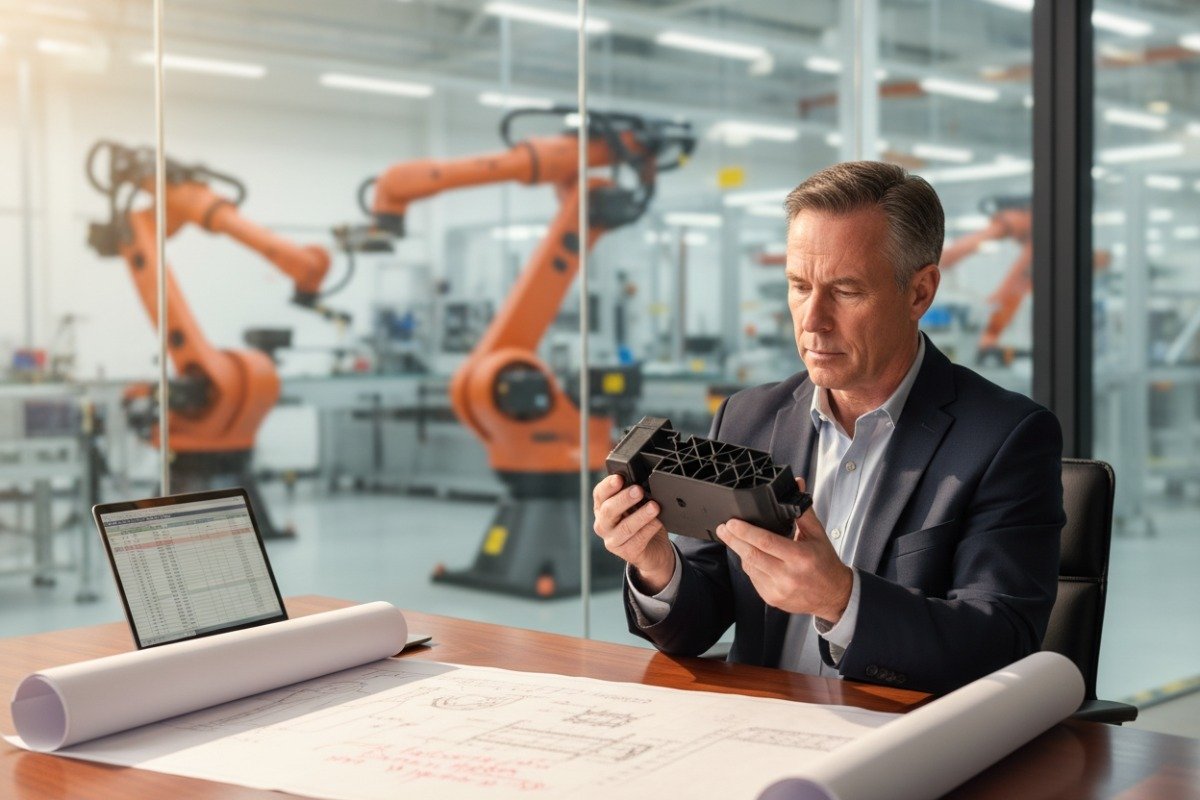
Every year, our team in China manages dozens of thermoplastic injection molding 1 projects for U.S. clients—and the number one reason projects fail is poor preparation before the first quote even goes out.
Sourcing thermoplastic injection molding from China starts with defining precise technical specifications, vetting suppliers through certifications and factory audits, negotiating transparent contracts, and implementing third-party quality inspections. Done right, buyers typically save 40–50% on total landed costs compared to domestic manufacturing.
The process is not complicated, but it demands discipline at every step ISO 9001 certifications 2. Below, we break it down into four clear phases: finding the right supplier, locking in quality, reducing costs smartly, and communicating your specs so nothing gets lost in translation. Let's walk through each one.
How Do I Find a Reliable Thermoplastic Injection Molding Supplier in China?
Our sourcing office in Shenzhen screens new injection molding factories every month, and we reject roughly 70% of them during the first round of vetting alone ASME Y14.5 3.
To find a reliable thermoplastic injection molding supplier in China, use B2B platforms like Alibaba and Global Sources to shortlist candidates, verify ISO 9001 certifications, request detailed quotes from at least three to five factories, and conduct virtual or in-person factory audits before placing any order.
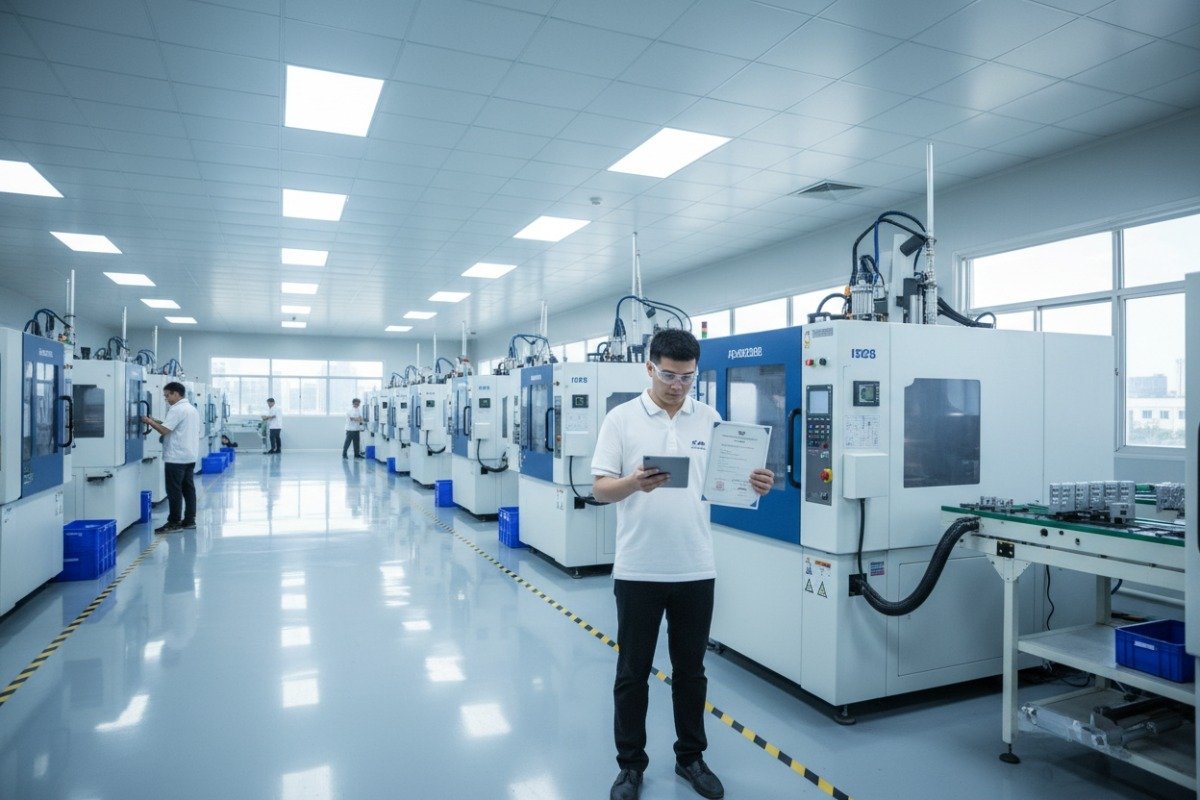
Où commencer votre recherche
Most buyers begin on B2B platforms. Alibaba has the largest network. Global Sources focuses on verified, higher-tier manufacturers. Made-in-China is another option for China-focused listings. Each platform lets you filter by certification, production capacity, and export history.
But platforms are just the starting point. Direct Google searches can surface manufacturer websites that never list on marketplaces. Trade shows like Chinaplas, Canton Fair, and the China International Mould and Die Expo let you meet factory owners face to face. Industry referrals from peers or procurement agencies also help.
What to Look for in a Supplier
Not every factory that looks good online performs well in practice. Here is a scorecard we use internally when evaluating new injection molding partners:
| Critères d'évaluation | Que vérifier | Signal d'alarme |
|---|---|---|
| Certifications | ISO 9001, IATF 16949 4 (automotive) | Aucune certification ou certificats expirés |
| Temps de réponse | Replies within 24–48 hours with detailed answers | Vague, generic responses after days of silence |
| Sample Quality | Willing to produce T1 samples 5 before mass production | Refuses samples or charges excessive fees |
| Client References | Provides 2–3 verifiable references from U.S./EU buyers | Cannot name a single past export client |
| Factory Capacity | Shows real equipment list, molding machines, and CMM lab | Stock photos, no verifiable equipment details |
| Mold Steel Grade | Specifies steel type (e.g., H13, S136, P20) in quotes | Does not mention steel grade at all |
| Tooling Lifespan | Guarantees cycle life (e.g., 500K or 1M shots) | No lifespan commitment in writing |
How Many Suppliers Should You Compare?
We recommend requesting quotes from at least three to five factories. This gives you a realistic price range and reveals outliers. If one quote is 40% cheaper than the rest, that is not a bargain—it is a warning sign. They may be cutting corners on steel, skipping heat treatment, or underestimating cycle times.
Le rôle des agents d'approvisionnement
If you have never sourced from China before, a sourcing agent can bridge the gap. They handle translation, factory visits, negotiation, and oversight. Our team in China does exactly this for our U.S. clients—we sit inside the factories during critical production milestones so you don't have to fly over for every project.
Recent data shows that 70% of sourcing failures come from poor supplier vetting. But when buyers follow a structured evaluation process, on-time delivery rates climb to 95%. The effort you put into finding the right partner pays for itself many times over.
What Steps Should I Take to Ensure the Quality of My Molded Parts?
When we run first-article inspections at our partner factories, we catch dimensional issues on roughly 15% of initial samples—problems that would have reached the client's warehouse without a structured QC process.
To ensure quality, request pre-production samples (T1 and T2 trials), define clear inspection criteria covering dimensions, warpage, and material certification, and hire third-party inspection firms like SGS for in-process and pre-shipment audits. A phased approach—starting with small orders—builds confidence before scaling up.
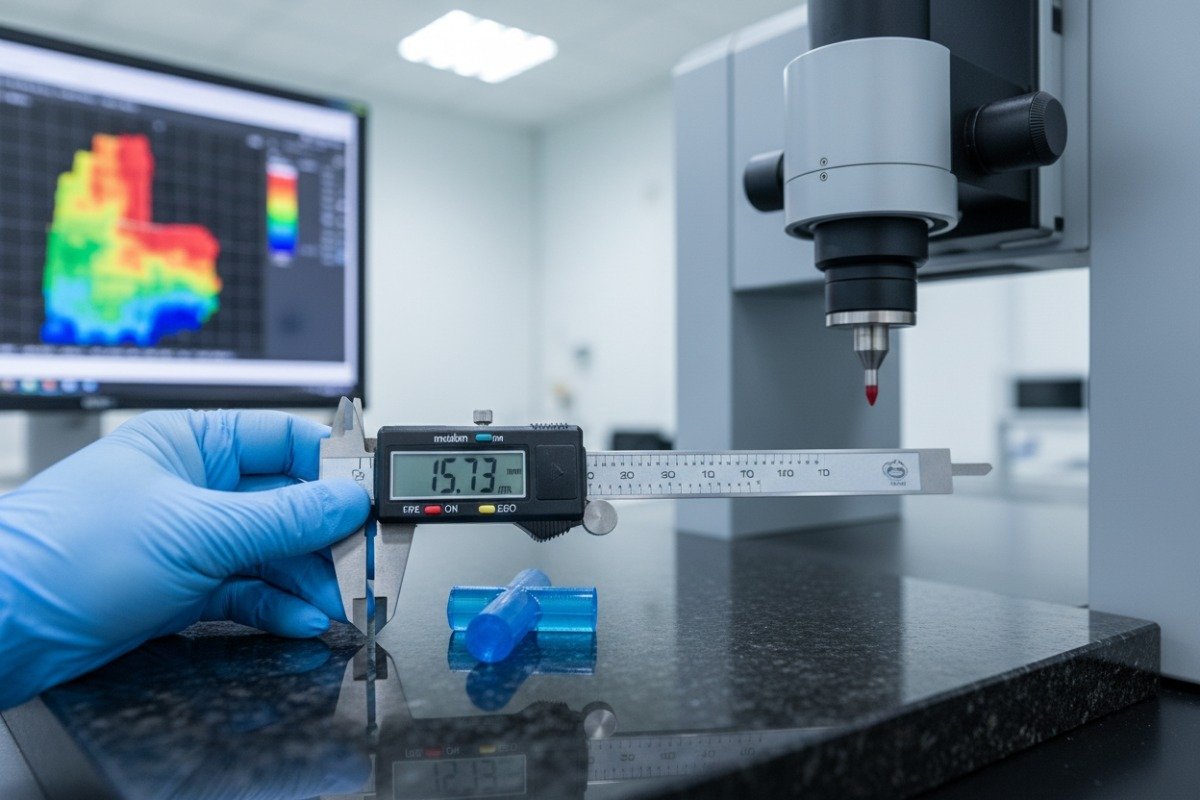
Build a Quality Control Plan Before Production Starts
Quality does not happen by accident. It requires a written plan that both you and the factory agree on before any steel is cut. Your QC plan should cover:
- Certification des matériaux: Require COA (Certificate of Analysis) for every resin batch.
- Dimensional inspection: Define which critical dimensions get 100% inspection versus sampling.
- Visual standards: Provide limit samples or photos showing acceptable versus rejected surface conditions.
- Functional testing: If the part must snap-fit, seal, or withstand heat, specify the test method and pass/fail criteria.
The Sample Approval Process
Most injection molding projects follow a trial sequence: T0 (first shot), T1 (first adjustment), and T2 (final approval). Do not skip this. Each trial gives you a chance to catch issues before thousands of parts ship.
Here is a typical sample approval timeline:
| Stade | Ce qui se passe | Durée typique |
|---|---|---|
| T0 Trial | First shots off the new mold; expect cosmetic and dimensional issues | Week 5–6 after mold start |
| T1 Trial | Mold adjusted based on T0 feedback; parts closer to spec | Semaine 7–8 |
| T2 Trial | Final adjustments; parts should meet all drawing requirements | Week 8–9 |
| Soumission PPAP | Full documentation package including dimensional report, material cert, process capability | Week 9–10 |
| Production de masse | Approved parts produced at agreed cycle time and volume | Week 11+ |
Inspections par des tiers
Even with a good factory, independent verification matters. Firms like SGS 6, Bureau Veritas, or TÜV can perform in-process inspections (during production) and pre-shipment inspections (before containers are loaded). Our China team conducts these inspections directly, which saves our clients the cost of hiring external agencies for every shipment.
Common Quality Pitfalls
Some Western firms report 20–30% rejection rates when they skip third-party inspections entirely. The most common defects we see are short shots (incomplete filling), sink marks near thick wall sections, and flash along parting lines. These are preventable with proper mold design review and process parameter control.
Top Chinese factories are now adopting digital twins and IoT-monitored production lines. These technologies reduce defect rates by 15–25%. But smaller shops still rely on manual checks, so your QC plan must account for the factory's actual capability level.
Start with a smaller, less critical project when working with a new supplier. This lets you evaluate their real performance before committing to a high-volume production run. It is the single best risk-reduction strategy we recommend to every new client.
How Can I Lower My Manufacturing Costs Without Sacrificing Part Quality?
Our engineering team reviews client designs for manufacturability before we even send an RFQ to the factory—and in about half of all projects, we find changes that cut tooling cost by 10–20% without touching part performance.
Lower your injection molding costs by optimizing part design for manufacturability (DFM), selecting cost-effective resin grades that still meet performance needs, consolidating parts to reduce mold count, and calculating total landed cost—including shipping, duties, and inspection—rather than focusing on unit price alone.

Conception pour la fabrication (DFM)
DFM is the single biggest lever for cost reduction. Small design changes—uniform wall thickness, proper draft angles, eliminating undercuts—simplify the mold and shorten cycle times. A simpler mold costs less to build and lasts longer.
Work with your manufacturer's engineering team early. Share 3D CAD files in STEP or IGES format so they can run l'analyse de la fluidité du moule 7. This simulation predicts fill patterns, weld lines, and cooling behavior before any steel is machined. Catching a problem in simulation costs nothing. Catching it after the mold is built costs thousands.
Material Selection Matters
Choosing the right thermoplastic resin balances performance and price. Here is a comparison of common options:
| Resin | Cas d'utilisation typique | Coût relatif | Propriétés clés |
|---|---|---|---|
| PP (Polypropylène) | Packaging, containers, automotive interior | Faible | Chemical resistant, lightweight, flexible |
| ABS | Consumer electronics housings, toys | Moyen | Good impact strength, easy to paint/plate |
| PC (Polycarbonate) | Lenses, medical devices, safety equipment | Élevé | Transparent, haute résistance aux chocs, résistant à la chaleur |
| Nylon (PA6/PA66) | Gears, structural brackets, under-hood auto parts | Moyen-élevé | Strong, wear resistant, absorbs moisture |
| POM (Acetal) | Precision gears, bearings, clips | Moyen-élevé | Low friction, dimensionally stable |
If your part does not need the heat resistance of PC, switching to ABS can cut resin cost by 30–40%. But never downgrade material just to save money if it compromises the part's function or safety.
Coût total débarqué : Le vrai chiffre
Many buyers fixate on the per-unit price from the factory. That is a mistake. The real number is your total landed cost, which includes:
- Amortissement des outillages
- Unit production cost
- Packaging
- Sea freight or air freight
- Customs duties (currently averaging 3–6% for most thermoplastic parts)
- Third-party inspection fees
- Inventory holding cost
Data from recent sourcing projects shows U.S. and EU companies save 50–70% on mold costs when sourcing from China, but face 10–20% higher shipping and logistics fees. The net savings typically land at 40–50% when managed properly. That is still substantial—but only if you plan for every line item upfront.
Négociez intelligemment, pas durement
Structure your payment terms to protect both sides. A common arrangement is 30% deposit, 50% upon sample approval, and 20% upon shipment. This keeps the factory motivated to hit quality targets before receiving full payment. Our clients often use 60–90 day open account terms through us, which eases cash flow pressure significantly.
Avoid squeezing the factory on price to the point where they cut corners. A mold built with inferior P20 steel might save you $2,000 upfront but fail at 400,000 cycles instead of lasting 1 million. The replacement mold and lost production time will cost far more.
What Is the Best Way to Communicate My Technical Specifications to a Chinese Factory?
Over the past decade, our engineers in China have reviewed thousands of drawing packages from American clients—and the most common cause of first-article failures is not bad manufacturing. It is incomplete or ambiguous specifications.
Communicate technical specifications by providing complete 2D drawings with GD&T callouts, 3D CAD files in STEP or IGES format, written material and surface finish requirements, and a tolerance table highlighting critical dimensions. Use written communication channels, confirm understanding in writing, and consider a bilingual liaison to prevent misinterpretation.
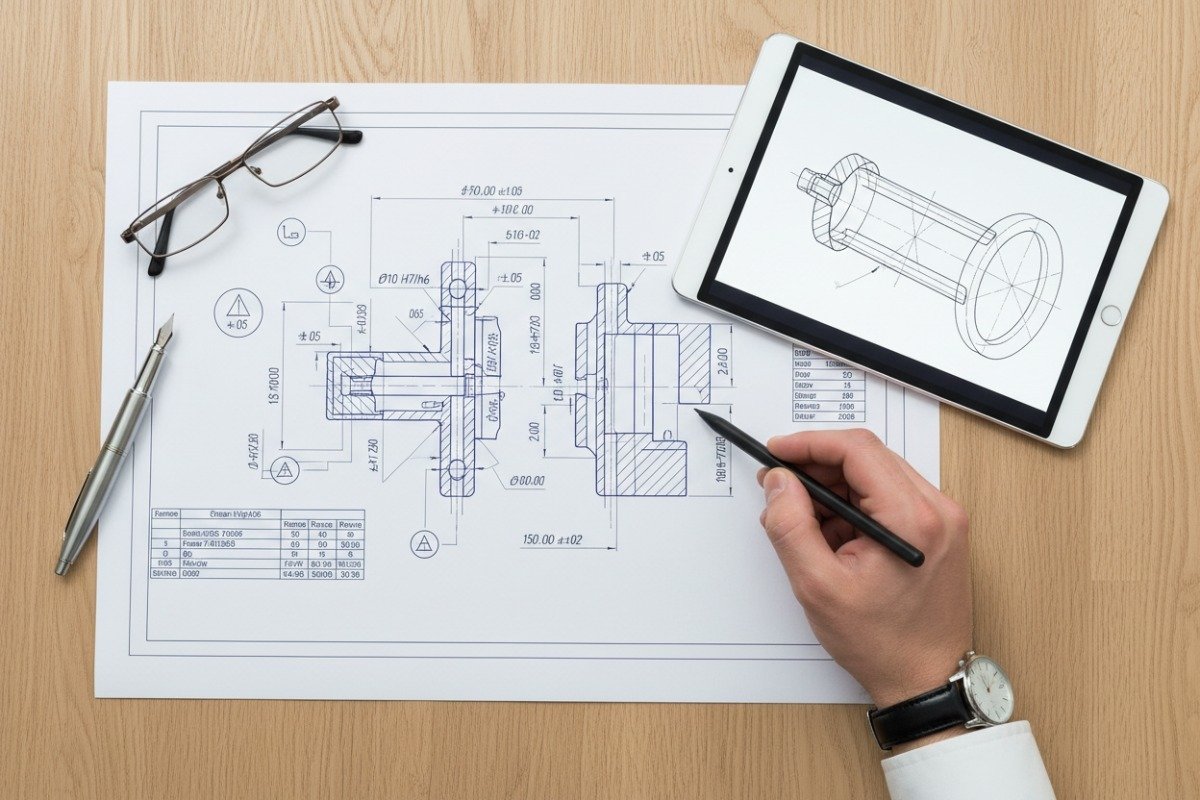
What Your Drawing Package Must Include
A complete drawing package eliminates guesswork. At minimum, send the factory:
- 2D engineering drawings avec GD&T (Cotation et Tolérancement Géométriques) 9 per ASME Y14.5.
- Fichiers CAO 3D in STEP (.stp) or IGES (.igs) format. Native files (SolidWorks, Creo) are a bonus but not always readable by every factory.
- Spécification du matériau with full grade designation (e.g., "ABS Chimei PA-757" not just "ABS").
- Exigences de finition de surface en utilisant SPI or VDI standards 10 (e.g., SPI A-2 for high-gloss, VDI 3400 Ref 30 for textured).
- Color specification using RAL or Pantone codes.
- Critical-to-quality (CTQ) dimensions clearly marked on the drawing.
- Assembly context: If the part mates with other components, share the assembly drawing or mating part dimensions.
How to Prevent Miscommunication
Language barriers are real, but they are manageable. Here are practical steps:
- Always communicate in writing. Email or shared documents create a record. Verbal agreements over phone calls get forgotten or misunderstood.
- Use simple, direct English. Avoid idioms, slang, or ambiguous phrases. Instead of "make it look nice," write "surface finish SPI B-1, no visible gate marks on A-side."
- Confirm understanding. After sending specs, ask the factory to summarize the key requirements back to you. If their summary does not match your intent, clarify immediately.
- Use visual references. Photos of acceptable and unacceptable parts are worth more than paragraphs of text.
- Leverage a bilingual liaison. Our team in China translates not just language but engineering intent. A sourcing agent or local representative who understands both cultures prevents the small misunderstandings that snowball into costly errors.
Protégez votre propriété intellectuelle
Before sharing any drawings, have the factory sign a Non-Disclosure Agreement (NDA). Specify in your contract that you own the mold and all design rights. Include a clause that the factory cannot produce your parts for any other buyer. IP theft in injection molding is rare when proper NDAs are in place—data suggests it affects fewer than 5% of deals with vetted suppliers—but prevention is always better than litigation.
Timing Your Communication
Do not dump all specifications at once and disappear. Engage in a back-and-forth DFM review. The factory's mold designer may suggest changes—thicker ribs, relocated gates, adjusted draft angles—that improve moldability without changing your part's function. This collaborative phase typically takes one to two weeks and saves far more time than it costs.
During production, request weekly updates with photos and dimensional data. Tools like WeChat work well for quick exchanges with Chinese factory contacts. But always follow up important decisions with a formal email so there is a clear written record.
Communication is not a one-time event. It is an ongoing process that runs from first contact through final shipment. The buyers who invest time in clear, structured communication are the ones who get parts right the first time.
Conclusion
Sourcing thermoplastic injection molding from China works when you prepare thoroughly, vet suppliers rigorously, control quality at every stage, and communicate specifications with absolute clarity. Start small, build trust, and scale with confidence.
Notes de bas de page
1. Provides a comprehensive definition and overview of thermoplastic injection molding. ↩︎
2. Official site for verifying ISO 9001 certifications and understanding its importance. ↩︎
3. Official ASME page for the Y14.5 standard, the authoritative guideline for GD&T. ↩︎
4. Explains the IATF 16949 standard for quality management systems in the automotive sector. ↩︎
5. Details the purpose and significance of T1 samples in the injection molding process. ↩︎
6. Official website of SGS, a leading inspection, verification, testing, and certification company. ↩︎
7. Explains mold flow analysis as a simulation tool for optimizing injection molding processes. ↩︎
8. Comprehensive guide to DFM, explaining its principles and benefits in product design. ↩︎
9. Introduces GD&T as a symbolic language for communicating design intent and tolerances. ↩︎
10. Compares SPI and VDI standards for injection molding surface finishes and their applications. ↩︎

 English
 Español de México
 Deutsch
 Français
 Русский
 العربية