
Over the past three years, our team in Vietnam has helped dozens of U.S. buyers navigate the CNC sourcing landscape there — and we have seen both great wins and costly mistakes processus de contrôle qualité 1.
Vietnam offers 30–50% cost savings on CNC machining compared to China or the US, but sourcing reliably requires thorough supplier qualification, on-site audits, verified ISO certifications, clear technical communication, strict quality control processes, and proactive intellectual property protection through NDAs and cybersecurity protocols.
Vietnam's manufacturing sector is booming. The country's PMI hit 52.5 in late 2025, signaling steady expansion. Shops like CNCTech, TDB, and Matec Vietnam now export precision parts to the US, EU, Japan, and Australia. But a low quote does not mean a reliable supplier. Let's walk through the critical steps to get this right.
How Do I Evaluate the Technical Capabilities and Equipment of a CNC Shop in Vietnam?
When we first set up our Vietnam office in Ho Chi Minh City, we visited over forty CNC shops in the first six months. The gap between top-tier facilities and backyard operations was staggering.
To evaluate a Vietnamese CNC shop, review their equipment list for 3-to-5-axis CNC mills and turning centers, verify tolerances down to ±0.001 mm, inspect machine brands and maintenance logs, assess operator training records, and request a detailed portfolio of past projects relevant to your industry.
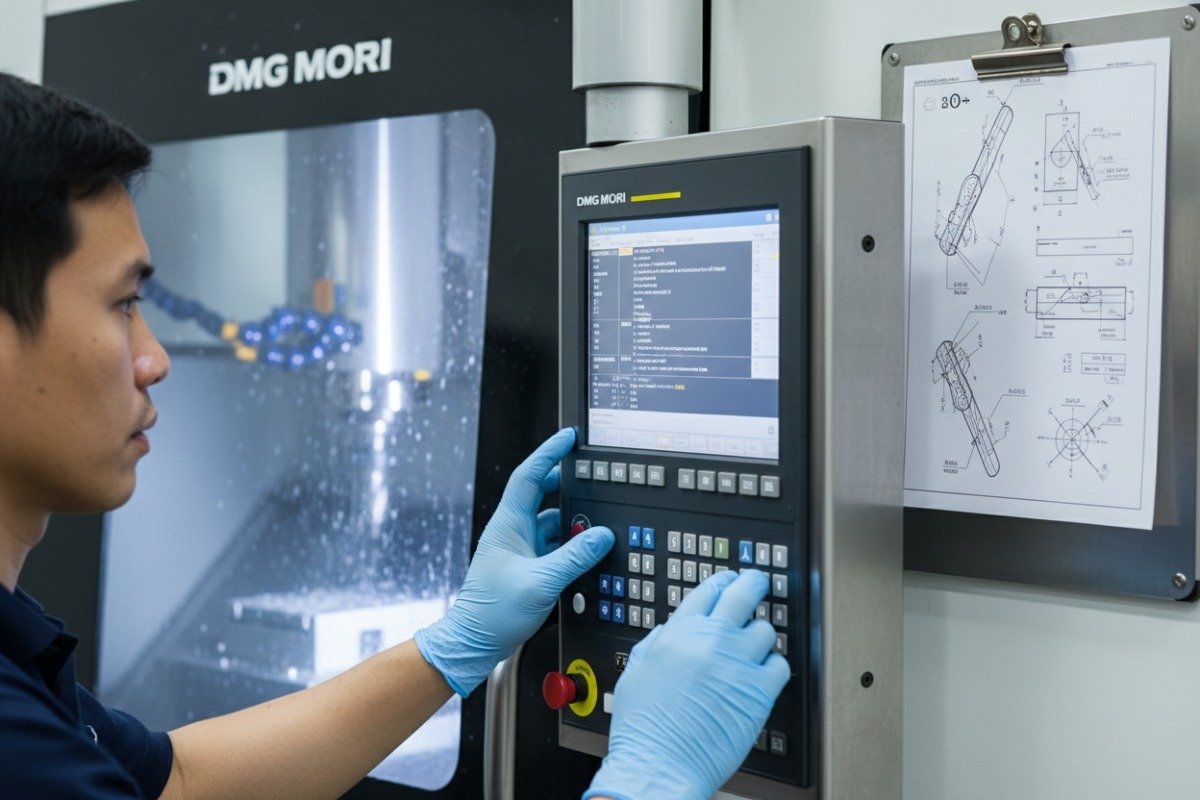
Start With the Equipment List
The first thing we ask for is a complete equipment list. A reliable shop will share this without hesitation. Look for recognized machine brands — Mazak, Fanuc, Haas, DMG Mori, or Brother. These brands signal investment in quality. If a shop only runs no-name machines, proceed with caution.
Pay attention to the range of capabilities. Can they do 3-axis milling? 4-axis? 5-axis? Do they have turning centers, Swiss-type lathes, or wire EDM? 5-axis CNC mills 2 The broader the capability, the fewer supply chain steps you need.
Check Tolerances and Accuracy
Ask what tolerances they can hold — and then verify it with a sample order. Many shops in Vietnam can hold ±0.01 mm on standard work. Fewer can consistently hold ±0.005 mm or tighter. If your parts demand aerospace-grade precision, you need proof, not promises.
| Capacité | Basic Shop | Mid-Tier Shop | Advanced Shop |
|---|---|---|---|
| CNC Axes | 3-axis only | 3- and 4-axis | 3-, 4-, and 5-axis |
| Tolérance typique | ±0,05 mm | ±0.01 mm | ±0.005 mm or tighter |
| Machine Brands | Local/Chinese | Mix of imported | Mazak, Fanuc, DMG Mori |
| In-House Inspection | Calipers, micrometers | CMM available | CMM, optical comparator, roundness tester |
| Certifications | Aucun | ISO 9001 | ISO 9001, AS9100, IATF 16949 3 |
Assess Operator Training and Workforce Quality
Machines are only as good as the people running them. Vietnam has a young, increasingly skilled workforce. Firms like TDB boast over 30 skilled technicians. Ask about training programs, retention rates, and whether operators can read and interpret engineering drawings — including les tolérances GD&T 4.
During our factory audits, we always spend time on the shop floor talking directly to operators. We look at how they handle parts, whether workstations are organized, and if they follow documented procedures. A clean, orderly shop floor tells you a lot.
Look for Value-Added Services
The best shops offer more than just cutting metal. Surface finishing, anodizing, heat treatment, welding, and assembly services reduce your supply chain complexity. If one shop can machine, finish, and assemble your parts, you save time, shipping costs, and coordination headaches.
Some advanced Vietnamese shops now use digital twin technology to simulate machining processes before cutting. This minimizes errors and material waste. Ask whether your prospective supplier uses CAM simulation or virtual validation — it is a strong indicator of technical maturity.
Request a Relevant Portfolio
A shop that has made hydraulic manifolds for ten years may struggle with thin-wall medical components. Ask for case studies, photos, and part examples from your specific industry. If they have made parts similar to yours, the learning curve is shorter and the risk is lower.
What Steps Should I Take to Verify the Quality Control Processes of My Vietnamese Supplier?
Our quality team in Vietnam has rejected entire shipments from suppliers who looked great on paper but had no real QC system in place. Verification is not optional — it is essential.
Verify your Vietnamese supplier's quality control by conducting on-site audits, confirming ISO 9001 certification through third-party bodies like SGS or Bureau Veritas, reviewing their inspection equipment and procedures, requesting PPAP documentation, and running a trial order with full dimensional reports before committing to production volumes.
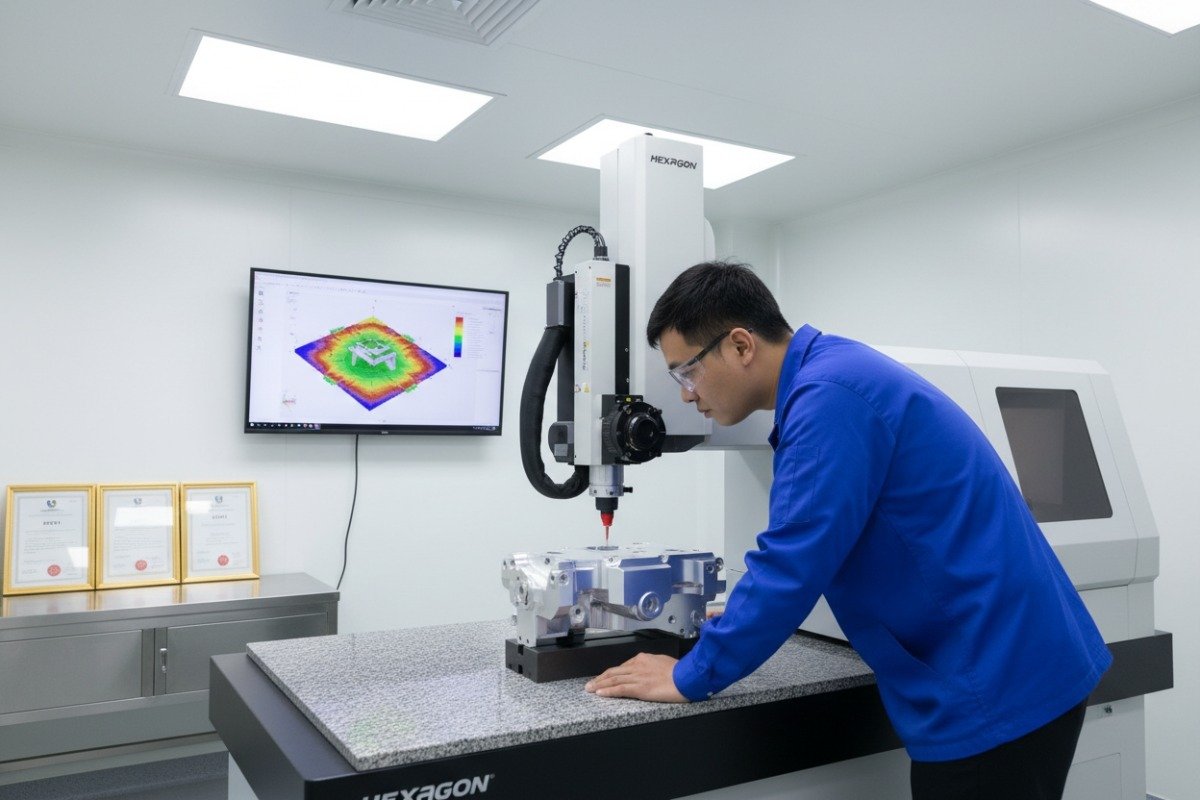
Verify Certifications Independently
Certification ISO 9001 5 is the baseline. But counterfeiting of ISO certificates does happen in the region. Do not accept a scanned PDF at face value. Verify directly with the issuing body. Organizations like SGS, Bureau Veritas, and TÜV maintain searchable databases. If a shop claims AS9100 (aerospace) or IATF 16949 (automotive), verify those too.
Our rule is simple: if we cannot verify it, we do not trust it.
Mener un audit d'usine
Nothing replaces an on-site visit. If you cannot go yourself, hire a third-party auditing firm or work with a sourcing partner who has local staff — like our team in Vietnam. During the audit, look at these areas:
| Zone d'audit | Que rechercher | Signal d'alarme |
|---|---|---|
| Inspection des matériaux entrants | Material certs checked, MTRs on file | No incoming inspection at all |
| Inspection en cours de fabrication | First article inspection, SPC data, operator self-checks | No documented checkpoints |
| Inspection finale | CMM reports, go/no-go gauges, visual checks | Only visual inspection, no data |
| Dossiers d'étalonnage | Equipment calibrated on schedule, stickers current | Expired or missing calibration |
| Nonconformance Handling | NCR system in place, root cause analysis documented | No corrective action process |
| Traçabilité | Lot tracking, material traceability to raw stock | Parts mixed, no lot identification |
Demand a Documentation Package
For every shipment, you should receive a documentation package. At minimum, this includes:
- Certificat de Conformité (CoC)
- Rapport d'inspection dimensionnelle
- Rapports d'essai de matériaux (MTR)
- First Article Inspection Report (FAIR) for new parts
If the shop cannot provide these, they are not ready for serious B2B work. Our team always defines the documentation requirements in the purchase order so there is no ambiguity.
Run a Trial Order
Before you commit to thousands of pieces, order 5–10 parts as a trial. Measure them yourself or send them to an independent lab. Compare the results against the supplier's inspection report. If the numbers match, that is a good sign. If they do not, you have a problem.
We also evaluate packaging quality during the trial. Are parts protected from damage in transit? Are they labeled correctly? These details matter when parts travel 8,000 miles to reach your warehouse.
Look for Advanced QC Practices
The best Vietnamese CNC shops are adopting AI-driven predictive maintenance. This means they monitor machine health in real time and fix issues before they cause defects. They also use le contrôle statistique des processus 6 (SPC) to track trends and catch drift early. Ask your supplier if they use any of these tools. If they do, they are ahead of the curve.
How Can I Ensure My Intellectual Property Remains Protected During the Sourcing Process?
When we onboard a new client, IP protection is one of the first conversations we have. We have seen cases where proprietary designs ended up at competing suppliers. It happens, and the consequences are serious.
Protect your intellectual property by requiring signed NDAs before sharing any drawings, using watermarked files, limiting design access to essential personnel only, verifying the supplier's cybersecurity protocols, and registering your IP in Vietnam under local law to gain enforceable legal protection in case of disputes.

Sign NDAs Before Sharing Anything
This sounds obvious, but many buyers skip this step during the quoting phase. They send full 3D STEP files to five shops without any agreement in place. That is a risk.
We always execute a Accord de non-divulgation 7 before sharing any proprietary information. The NDA should be bilingual — English and Vietnamese — and enforceable under Vietnamese law. Have it reviewed by a lawyer who understands IP law in Southeast Asia.
Control File Access
Not everyone at the supplier needs to see your full design. Share only what is necessary for quoting and production. Use watermarked PDFs for initial quotes. Send native CAD files only after the NDA is signed and the supplier is selected.
Our approach is to use a secure file-sharing platform with access controls. We track who downloads what and when. If your supplier asks you to email STEP files as attachments with no security, that is a concern.
Assess Cybersecurity Measures
This is an emerging area that most buyers overlook. Ask your supplier:
- Do they use encrypted file storage?
- Are their networks protected by firewalls?
- Do they have a data protection policy?
- Who has access to customer design files?
Advanced shops in Vietnam are beginning to adopt formal cybersecurity protocols. This is especially important if you work in defense, aerospace, or medical devices.
| IP Protection Measure | Basic Level | Recommended Level | Meilleure pratique |
|---|---|---|---|
| NDA | Verbal agreement | Signed English NDA | Bilingual NDA, locally enforceable |
| File Sharing | Email attachments | Password-protected files | Secure platform with access logs |
| Design Access | Entire shop floor | Production manager only | Need-to-know basis, tracked |
| Cybersecurity | No formal policy | Basic firewall and antivirus | Encrypted storage, access controls, audit trail |
| Legal Registration | Aucun | Trademark in home country | IP registered in Vietnam |
Register Your IP in Vietnam
Vietnam's IP protection framework has improved, but it still lags behind the US and EU. If your designs are valuable, register them locally. Vietnam is a member of the Madrid Protocol 8, so you can extend international trademark registrations. For patents and industrial designs, file directly with the National Office of Intellectual Property of Vietnam 9 (NOIP).
This gives you legal standing to pursue enforcement if something goes wrong. Without registration, your options are limited.
Use a Trusted Intermediary
Working through a sourcing partner with local presence adds a layer of protection. Our Vietnam team manages supplier relationships directly. We control what information the supplier receives, and we ensure compliance with the NDA. This structure reduces the risk of IP leakage significantly.
What Are the Best Practices for Managing Communication and Lead Times with My Vietnam-Based Partner?
Our experience managing projects between US clients and Vietnamese factories has taught us one thing clearly: most quality failures are actually communication failures. The part was wrong because the drawing note was missed or the revision was outdated.
Best practices include providing complete RFQ packages with 2D drawings, 3D models, and CTQ callouts, establishing a single point of contact, using weekly status updates with photos, defining lead times contractually, and building buffer time into your schedule to account for shipping, holidays, and potential rework cycles.

Provide Crystal-Clear Technical Documentation
Ambiguity kills projects. Your RFQ package should include:
- 2D drawings with GD&T callouts
- 3D STEP or IGES files
- Material specifications with grade and standard (e.g., ASTM A36, 6061-T6)
- Surface finish requirements (Ra values, not just "smooth")
- Critical to Quality (CTQ) features clearly marked
- Revision history and revision control numbers
If your drawing says "deburr all edges," define what that means. A Vietnamese machinist may interpret "deburr" differently than an American one. Be specific. Use numbers whenever possible.
Établir un point de contact unique
Do not send emails to three different people at the supplier. Designate one project manager on each side. This person is responsible for all communication, document control, and schedule tracking. It reduces confusion and ensures accountability.
At our company, every project has a dedicated project coordinator in Vietnam who speaks both English and Vietnamese. This person bridges the gap between the client's engineering team and the shop floor.
Set Realistic Lead Times
Vietnam's CNC shops can typically deliver prototypes in 2–4 weeks and production runs in 4–8 weeks, depending on complexity and volume. But these timelines assume everything goes smoothly. Add buffer time for:
- Material procurement (specialty alloys may take longer)
- First article approval cycles
- Rework if needed
- Shipping and customs (sea freight to the US West Coast is 18–25 days)
| Phase | Typical Timeline | Buffer to Add |
|---|---|---|
| RFQ and Quoting | 2–5 days | 1–2 jours |
| Approvisionnement en matériaux | 5–15 days | 5–7 days for specialty materials |
| Prototype Production | 10–20 jours | 3–5 jours |
| First Article Approval | 3–7 jours | 2–3 jours |
| Production Run | 15–40 days | 5–10 jours |
| Final Inspection and Packing | 2–5 days | 1–2 jours |
| Sea Freight to US | 18–25 days | 5–7 jours |
Use Weekly Status Reports
We send our clients a weekly update for every active project. It includes current production status, photos of parts in process, any issues encountered, and the updated timeline. This keeps everyone aligned and catches problems early.
Ask your supplier to provide similar updates. If they resist transparency, that is a warning sign. Good suppliers welcome communication because it reduces the chance of costly mistakes later.
Account for Cultural and Seasonal Factors
Vietnam has several national holidays — Tet (Lunar New Year) is the biggest, and most factories shut down for 1–2 weeks. Plan your orders around these periods. Typhoon season (August–November) can also disrupt logistics in central Vietnam.
Communication style matters too. Vietnamese suppliers may be reluctant to say "no" directly. If you ask "Can you hold ±0.005 mm?" they might say "We will try" — which can mean "probably not." Push for clear commitments. Ask them to confirm in writing what they can and cannot do.
Leverage Technology for Real-Time Tracking
Some advanced suppliers offer ERP integration or shared dashboards where you can monitor production progress in real time. If your supplier does not have this, a shared Google Sheet or simple project tracker works too. The point is visibility. You should never be guessing where your order stands.
Conclusion
Sourcing Usinage CNC 10 from Vietnam is a smart move — but only if you do the homework. Verify equipment, audit quality systems, protect your IP, and communicate with precision. The savings are real when the process is managed right.
Notes de bas de page
1. Explains the importance and benefits of quality control processes in manufacturing. ↩︎
2. Explains how 5-axis milling machines work, their components, and applications. ↩︎
3. Defines quality management system requirements for the global automotive industry. ↩︎
4. Provides a comprehensive overview of Geometric Dimensioning and Tolerancing (GD&T) and its purpose. ↩︎
5. Provides an official overview of the ISO 9001:2015 standard and its requirements. ↩︎
6. Defines Statistical Process Control (SPC) and its application in monitoring process quality. ↩︎
7. Explains what a Non-Disclosure Agreement (NDA) is and its purpose in protecting confidential information. ↩︎
8. Official information on the Madrid System for international trademark registration. ↩︎
9. Official website of Vietnam’s national intellectual property office. ↩︎
10. Replaced with a Wikipedia article for an authoritative and comprehensive overview of CNC machining. ↩︎

 English
 Español de México
 Deutsch
 Français
 Русский
 العربية