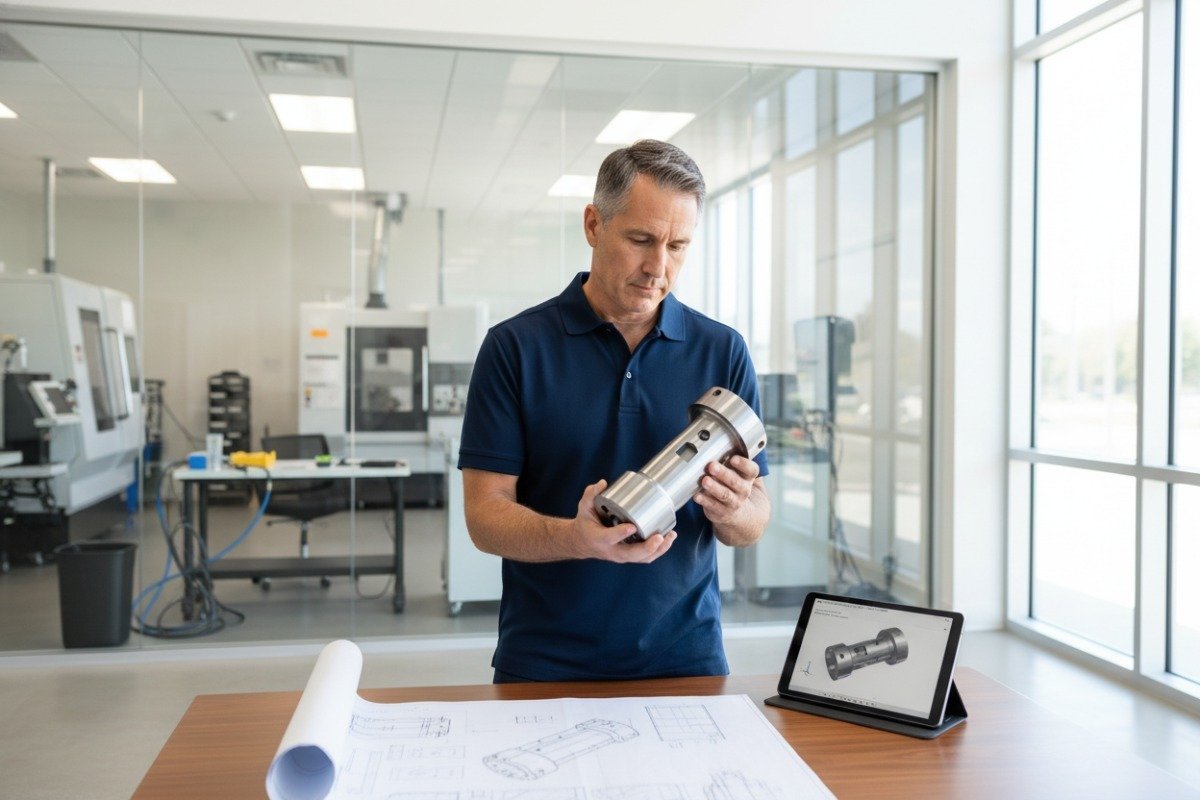
Every week, our project managers review new custom part inquiries from U.S. buyers. The number one complaint we hear? Previous suppliers got it wrong the first time — wrong dimensions, wrong material, wrong finish les tolérances GD&T 1. That rework costs time and money nobody can afford.
To source high-quality made-to-order parts, you need to thoroughly vet manufacturer capabilities, define clear quality control standards, ensure your technical drawings are interpreted correctly, and actively manage lead times and production risks throughout the entire order cycle.
The truth is, sourcing custom parts from overseas is not the same as buying off-the-shelf products. Every order is unique. Every specification matters. And every missed detail can snowball into a costly problem. Below, we break down the key steps to get it right — from vetting your manufacturer to managing delivery timelines.
How Do I Effectively Vet a Manufacturer's Capabilities for My Specific Custom Parts?
Our team in Vietnam and China has audited hundreds of factories over the years. One thing we have learned the hard way is that a factory's website rarely tells the full story. What matters is what happens on the shop floor.
To effectively vet a manufacturer, you should assess their equipment, certifications, past project experience, engineering team depth, and communication responsiveness. Request facility audits, review sample parts, and verify their ability to handle your specific material and tolerance requirements.
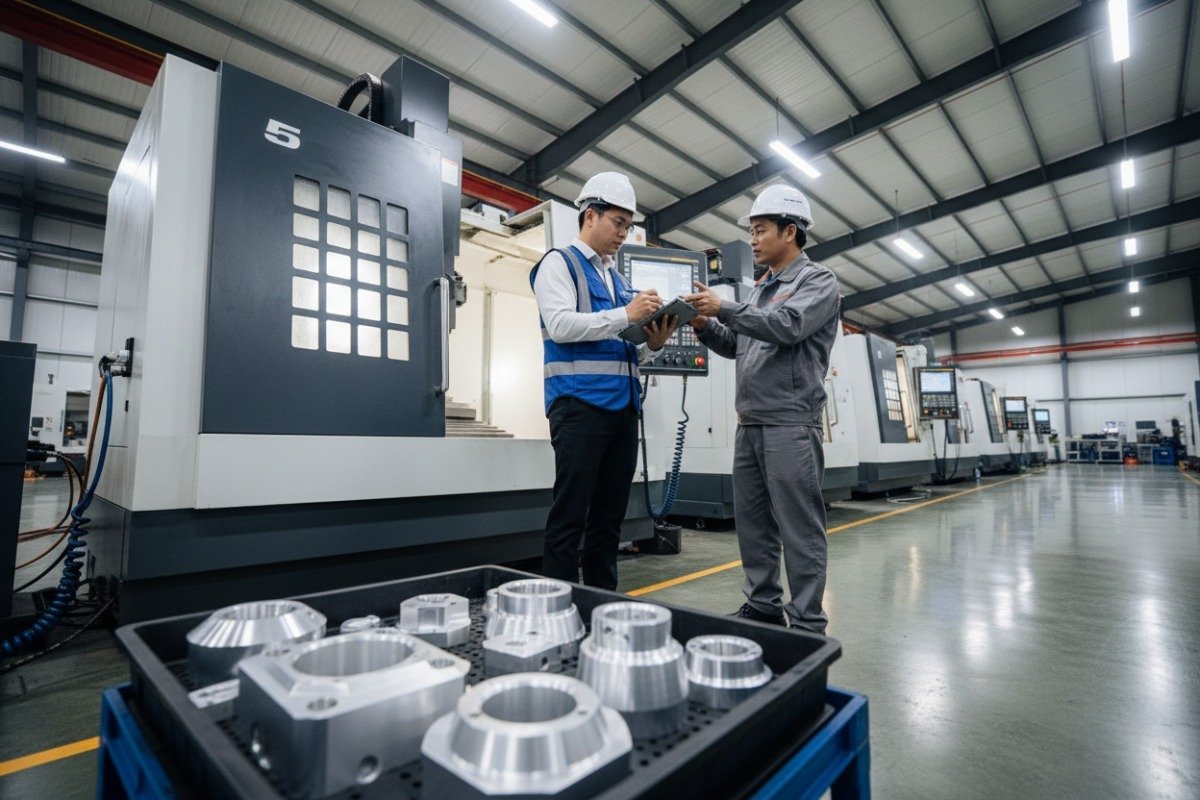
Vetting a manufacturer is not a one-step task. It requires a structured approach. Let us walk through what actually works.
Start with Certifications and Equipment
Certifications tell you the baseline. ISO 9001 2 is the minimum. If you are in automotive, look for IATF 16949 3. For aerospace, AS9100. But certifications alone are not enough. You also need to know what machines the factory runs. A CNC shop with 3-axis machines cannot do what a 5-axis shop can.
Ask for a full equipment list. Ask about machine age and maintenance schedules. Old, poorly maintained equipment produces inconsistent parts.
Evaluate Engineering Team Depth
A good factory does not just follow your drawing blindly. They ask smart questions. They flag potential issues before production starts. This is what we call Conception pour la fabricabilité 4 (DFM) feedback.
When we onboard a new supplier for our clients, we send a moderately complex drawing and watch how the factory responds. Do they ask about tolerances that seem tight? Do they suggest material alternatives that perform better? Or do they just say "yes, we can do it" to everything? The factories that ask no questions are usually the ones that cause problems later.
Check Track Record and References
Ask for references from buyers in your industry. Better yet, ask for sample parts from similar projects. You can measure them, inspect finishes, and verify if the factory truly delivers what it promises.
| Vetting Criteria | Ce qu'il faut demander | Signaux d'alarme |
|---|---|---|
| Certifications | ISO 9001, IATF 16949, AS9100 5 | No certifications or expired certificates |
| Équipement | Full machine list with specifications | Reluctance to share equipment details |
| Engineering Team | DFM feedback on your drawing | No questions asked about your specs |
| Past Projects | Sample parts, reference contacts | No samples available, vague references |
| Communication | Response time, English proficiency | Slow replies, frequent misunderstandings |
Mener un audit d'usine
If the order value justifies it, visit the factory or hire a third-party auditor. Our China office conducts supplier audits regularly. We check production flow, raw material storage, worker training records, and quality inspection stations. Photos and videos can supplement, but nothing replaces seeing the factory in person.
Test with a Small Order First
Before committing to a large production run, place a small trial order. This lets you evaluate quality, communication, packaging, and delivery performance without significant financial risk. It also gives you real data to compare against the factory's promises.
What Quality Control Standards Should I Look for When Sourcing My Made-to-Order Components?
When we set up processus de contrôle qualité 6 for a new project, the first thing our QC team does is define what "acceptable" looks like — before a single part is made. Too many buyers skip this step and then argue with the supplier after shipment arrives.
Look for manufacturers who follow a structured QC process including incoming material inspection, in-process checks, first article inspection (FAI), final inspection with documented reports, and PPAP documentation. These standards ensure consistent quality across every production batch.
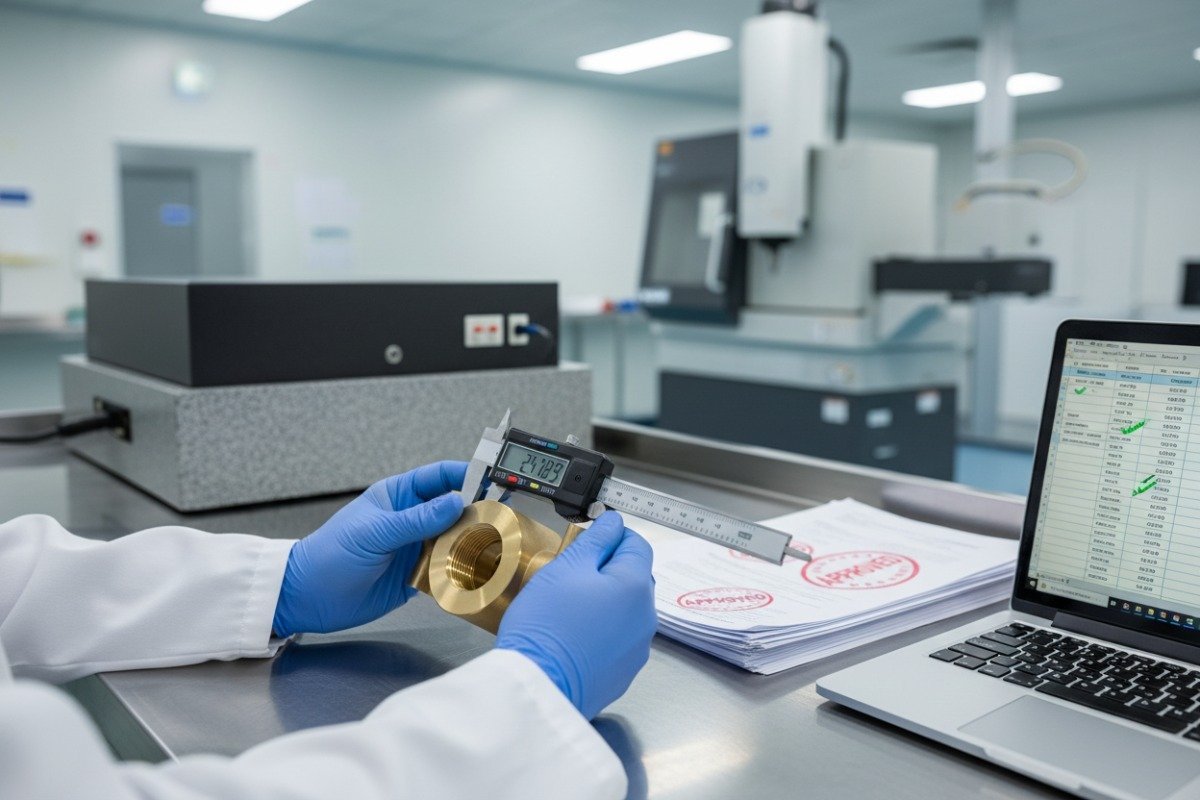
Quality control for custom parts is fundamentally different from mass-produced goods. Each order has unique specifications. So the QC process must be tailored to each order.
Define Quality Criteria Before Production
This sounds obvious, but it is where most problems start. Your drawing should clearly define critical dimensions, tolerances, surface finish requirements, material grade, and any special testing requirements. If something is ambiguous, the factory will interpret it their own way — and that interpretation may not match yours.
We always prepare a quality control plan (QCP) for each project. This document lists every inspection point, the method of inspection, acceptable ranges, and sampling plans. Both our team and the factory sign off on it before production begins.
Understand the Key QC Milestones
| Étape du CQ | Ce qui se passe | Pourquoi c'est important |
|---|---|---|
| Inspection des matériaux entrants | Raw materials tested against specifications | Empêche les matériaux défectueux d'entrer dans la production |
| Première inspection d'article (FAI) 7 | First produced part fully measured and documented | Confirms the process can produce conforming parts |
| Inspection en cours de fabrication | Checks during production at defined intervals | Catches drift or errors early before they compound |
| Inspection finale | 100% or AQL sampling inspection before packing | Last gate before shipment to ensure conformance |
| PPAP Documentation 8 | Full production part approval package | Provides traceable evidence of process capability |
First Article Inspection Is Non-Negotiable
FAI is the single most important QC step for made-to-order parts. It verifies that the factory can actually produce your part to specification. During FAI, the first parts off the production line are measured against every dimension on your drawing. Results are documented in a formal FAI report, often using AS9102 format.
If the FAI fails, production stops. The factory corrects the issue and runs another FAI. This prevents the nightmare scenario of receiving thousands of non-conforming parts.
PPAP for Critical Components
For buyers in automotive or other regulated industries, the Production Part Approval Process (PPAP) provides a comprehensive framework. It includes dimensional results, material certifications, process flow diagrams, control plans, and capability studies. Our team helps clients prepare and review PPAP documentation, because it gives both sides confidence that the process is locked in.
Do Not Rely Solely on the Factory's QC
This is a hard truth. Even good factories make mistakes. Independent inspection — either by your own team or a third-party inspection company — adds a critical safety net. Our QC inspectors in Vietnam and China perform final inspections on behalf of our clients before shipment. We use calibrated instruments, follow the agreed QCP, and issue detailed inspection reports with photos.
How Can I Ensure My Technical Drawings and Specifications Are Interpreted Correctly by the Manufacturer?
Our engineers have seen drawings that look perfectly clear to the buyer but cause complete confusion on the factory floor. One missing note, one ambiguous tolerance call-out, one assumed standard — and you end up with parts that do not fit.
To ensure correct interpretation, provide fully dimensioned drawings with GD&T callouts, specify material grades using international standards, include a clear notes section for special requirements, and always conduct a formal drawing review meeting with the manufacturer's engineering team before production.

Miscommunication on technical drawings is one of the top causes of quality failures in custom parts sourcing. Here is how to minimize that risk.
Use Universally Recognized Standards
Different countries use different standards. If your drawing references ASTM A36 steel 9, make sure the factory knows exactly what that means — or provide the equivalent local standard. The same applies to surface finish callouts, heat treatment specifications, and plating standards.
| Specification Type | U.S. Standard Example | Notes for Overseas Sourcing |
|---|---|---|
| Nuance de matériau | ASTM A36, AISI 304 | Provide chemical composition if factory uses different naming |
| État de surface | Ra 32 μin | Clarify if measured in microinches or micrometers |
| Traitement thermique | MIL-H-6875 | Include target hardness range (e.g., HRC 28-32) |
| Plating/Coating | ASTM B633, Type II | Specify thickness, color, and salt spray hours |
| Tolérances | ASME Y14.5 GD&T | Confirm factory team can read GD&T symbols |
Conduct a Drawing Review Meeting
Before any production starts, schedule a meeting — video call at minimum — where the factory's engineer walks through your drawing point by point. Ask them to explain back to you what they understand. This "read-back" technique catches misunderstandings before they become defective parts.
Our project managers do this for every new project. We sit between the client and the factory, translating not just language but engineering intent. Sometimes the drawing says one thing, but the buyer actually needs something slightly different. The review meeting is where those gaps get closed.
Provide 3D Models When Possible
A 2D drawing is essential for dimensioning and tolerancing. But a 3D model (STEP or IGES format) helps the factory visualize the part, program CNC machines accurately, and check for interference or fit issues. Always send both.
Create a Specification Summary Sheet
Beyond the drawing itself, prepare a one-page summary that lists critical requirements in plain language. Include material, finish, critical dimensions, special testing, packaging requirements, and any customer-specific standards. This acts as a quick reference for the factory's production and QC teams.
Address Language Barriers Directly
If your factory is in Vietnam, China, or another non-English-speaking country, do not assume everyone on the shop floor reads English. Our local teams translate critical specifications into the local language and post them at workstations. This small step prevents a surprising number of errors.
What Are the Best Ways for Me to Manage Lead Times and Production Risks for My Custom Orders?
When we plan production schedules for our clients' custom orders, we always build in buffers. Not because we expect failure, but because we know that in made-to-order manufacturing, surprises are the norm — raw material delays, machine breakdowns, holiday shutdowns, shipping disruptions.
The best ways to manage lead times and production risks include confirming raw material availability before order placement, establishing milestone-based production schedules, maintaining regular communication with the manufacturer, building buffer time into delivery plans, and having contingency suppliers identified for critical components.
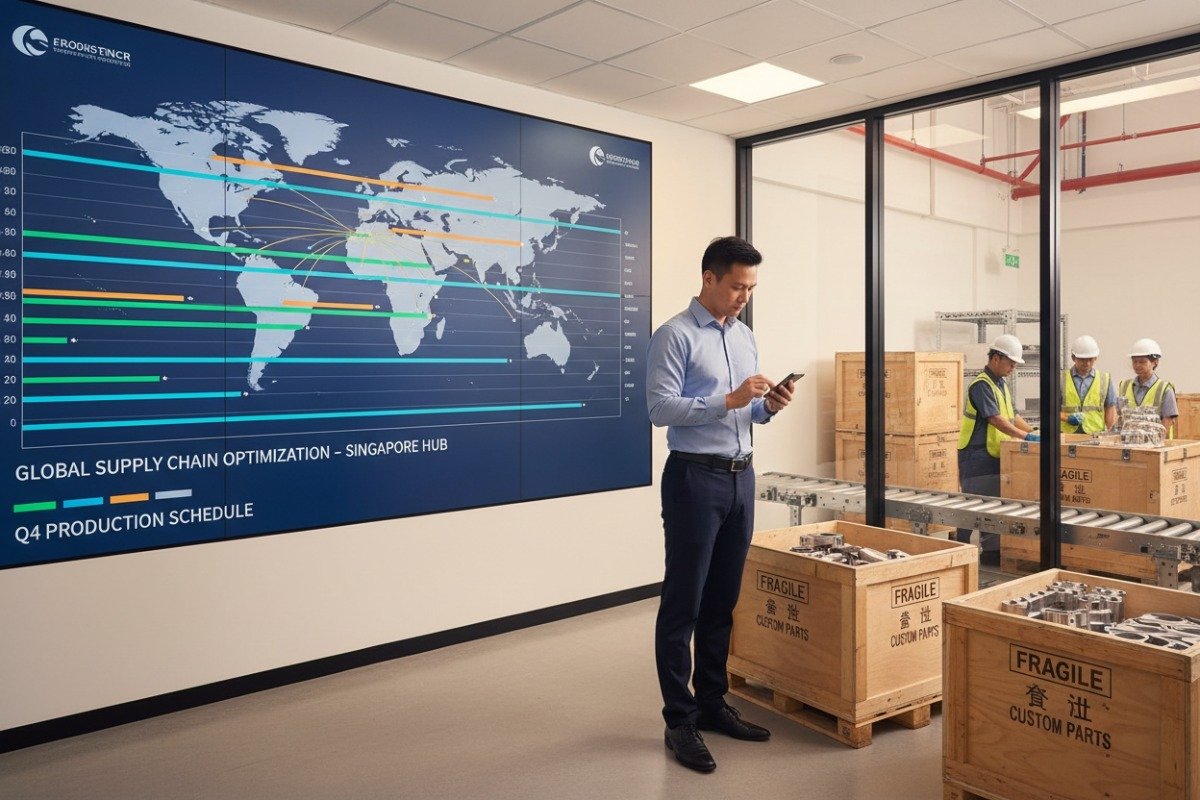
Lead time management is where many custom part sourcing projects fail. Here is a practical framework to keep your orders on track.
Understand What Drives Lead Time
Lead time for made-to-order parts is not just "manufacturing time." It includes multiple phases, and delays can occur at any stage.
| Lead Time Phase | Durée typique | Common Delay Causes |
|---|---|---|
| Drawing Review & Approval | 3–7 jours | Unclear specs, slow buyer response |
| Raw Material Procurement | 7–30 days | Material not in stock, long mill lead times |
| Tooling / Fixture Setup | 5–20 days | Complex tooling, design revisions |
| Production | 10–30 days | Machine scheduling, capacity constraints |
| Quality Inspection & PPAP | 3–10 days | FAI failures, rework needed |
| Packing & Shipping | 7–35 days | Container booking delays, port congestion |
Confirm Material Availability Early
This is the single biggest cause of lead time overruns we see. A factory quotes 30 days lead time, but then discovers the specific material grade takes 45 days to procure. Always ask the factory to confirm raw material availability and procurement lead time before you approve the production schedule.
For repeat orders, consider asking the factory to pre-stock raw material. Some manufacturers, including our network, can hold buffer stock of commonly used materials to shorten response times.
Use Milestone-Based Tracking
Do not wait until the delivery date to check on your order. Set up milestones and require updates at each stage. A simple weekly status report that covers material status, production progress, and inspection results keeps everyone accountable.
Our project managers send weekly updates to clients with photos, measurement data, and any issues flagged. This proactive communication prevents last-minute surprises.
Build Contingency Plans
No supply chain is risk-free. Machines break down. Factories have capacity limits. Shipping routes get disrupted. Smart buyers plan for these scenarios.
Identify backup suppliers for your most critical parts. If you source from one country, consider qualifying a second supplier in a different region. Our clients increasingly ask us to qualify suppliers in both Vietnam and other Southeast Asian countries to diversify their supply chain risk 10.
Align Payment Terms with Production Milestones
Cash flow pressure can cause delays on both sides. Buyers who offer reasonable payment terms — such as the 60-to-90-day open account terms we provide — reduce the financial stress on the manufacturer, which in turn reduces the temptation to prioritize other, better-paying orders. Aligning partial payments with production milestones also ensures the factory stays motivated and funded throughout the production cycle.
Plan Around Holidays and Peak Seasons
Factories in Asia have holiday schedules that can shut down production for weeks. Chinese New Year, Vietnamese Tet, and other national holidays can add 2-4 weeks to your lead time if you do not plan ahead. Place orders early and confirm production schedules well before these periods.
Conclusion
Sourcing high-quality made-to-order parts takes planning, clear communication, and the right manufacturing partner. Vet thoroughly, define quality upfront, protect your drawings, and manage lead times proactively.
Notes de bas de page
1. Replaced with the official ASME (American Society of Mechanical Engineers) page on GD&T Professional Certification, which directly relates to the ASME Y14.5 standard and the application of GD&T. ↩︎
2. Official information on the ISO 9001 quality management system standard. ↩︎
3. Official website of the International Automotive Task Force, governing IATF 16949. ↩︎
4. Explains the engineering practice of designing products to reduce manufacturing costs and ease production. ↩︎
5. SAE International provides the standard for quality management systems in aerospace. ↩︎
6. Comprehensive guide to quality control in manufacturing, its importance, and best practices. ↩︎
7. Details the process of First Article Inspection to ensure parts conform to specifications. ↩︎
8. Explains the Production Part Approval Process for establishing confidence in component suppliers. ↩︎
9. Replaced with an updated and accessible article on ASTM A36 steel from AZoM, the same authoritative domain as the original failed URL. ↩︎
10. Defines supply chain risk management and strategies to mitigate disruptions. ↩︎

 English
 Español de México
 Deutsch
 Français
 Русский
 العربية