Managing our procurement teams in Ho Chi Minh City, we frequently Ho Chi Minh City 1 encounter volatility in currency markets that threatens project budgets and delivery timelines.
You must immediately verify the official exchange rate history through the State State Bank of Vietnam 2 Bank of Vietnam and request a detailed cost breakdown. Negotiate a shared-risk currency corridor or “buffer zone” of 3-5% before accepting any price adjustments, ensuring that volatility impacts are validated rather than assumed.
Here is how we handle these negotiations to protect our bottom line while maintaining fair partnerships.
How do I verify if the exchange rate really impacts my Vietnamese supplier's costs?
When our local staff in Vietnam reviews raw material invoices, we look for discrepancies raw material invoices 3 between claimed costs and actual currency market movements.
Check the specific percentage of import-dependent materials in their bill of materials versus local costs like labor. If their expenses are primarily in VND but they invoice you in USD, a depreciating VND actually reduces their operational costs, making a price hike unjustifiable.

To effectively challenge a price increase, you must first deconstruct the supplier's cost structure. Many suppliers in Vietnam will use a general headline regarding the weakening Dong (VND) against the US Dollar (USD) to justify a blanket price increase on your finished goods. However, the economic reality is often more nuanced. We always begin by demanding a transparent breakdown of the Bill of Materials (BOM) Bill of Materials 4 to separate input costs that are actually affected by the USD from those that are paid in local currency.
Analyzing the Bill of Materials (BOM)
A significant portion of a manufacturer's cost base is local. Rent, utilities, labor, and domestically sourced packaging are all paid in VND. When the US Dollar strengthens against the Vietnamese Dong, the dollars you pay them are actually worth more in local currency. For example, if you pay $10,000 USD, and the exchange rate moves from 24,000 to 25,000 VND, the supplier receives an extra 10 million VND purely on the exchange. This is known as a "natural hedge." natural hedge 5 If the supplier claims they are losing money, it must be because they are heavily reliant on imported raw materials (like high-grade steel or electronics) that they must purchase in USD.
The Import vs. Local Cost Ratio
We use a simple verification model to calculate the true impact. If a product is 50% material and 50% labor/overhead, and only the material is imported, a 5% currency fluctuation should not result in a 5% price increase. It should only impact the material portion. If the supplier cannot prove that their import costs outweigh the gains they make on your USD payments for their local operational costs, the claim is likely invalid.
Official vs. Black Market Rates
You should also verify which exchange rate they are using. The State Bank of Vietnam (SBV) sets State Bank of Vietnam 6 a daily reference rate with a trading band. Sometimes, suppliers will quote "black market" or "free market" rates which can be significantly higher than official bank rates to exaggerate their losses. Always insist on using the official selling rate from a major bank like Vietcombank major bank like Vietcombank 7 or the SBV reference rate for all calculations.
Table: Impact of VND Depreciation on Supplier Costs
The following table illustrates how a 5% VND depreciation impacts a supplier differently based on their cost structure (assuming they invoice you in USD).
| Cost Component | Currency of Expense | Impact of Stronger USD (Weaker VND) | Result for Supplier |
|---|---|---|---|
| Imported Raw Materials | USD | Supplier needs more VND to buy USD for materials. | Negative (Cost Increase) |
| Local Labor | VND | Supplier pays workers in VND; your USD buys more VND. | Positive (Margin Gain) |
| Factory Rent | VND | Fixed in local currency; your USD buys more VND. | Positive (Margin Gain) |
| Utilities/Energy | VND | Mostly local tariff; your USD buys more VND. | Positive (Margin Gain) |
| Net Effect | Mixed | Depends on the ratio. If local costs > import costs, the supplier gains profit. | Variable |
What are the best negotiation strategies to push back on currency-based price hikes?
We often sit down with our partners to find middle ground that keeps production running without sacrificing our margin requirements.
Propose a "currency corridor" where prices remain fixed unless the exchange rate shifts beyond a set range, such as 3-5%. Alternatively, offer to pre-fund raw material purchases when rates are favorable, locking in costs early and eliminating the supplier’s risk exposure entirely.

Negotiation in this context requires a shift from a "win-lose" mindset to a structural solution that addresses risk. Simply refusing the price hike might work in the short term, but it can lead to quality fade if the supplier begins cutting corners to recover their margin. Instead, we implement structural financial defenses that protect both parties. The most effective of these is the currency corridor, also known as a "neutral zone."
Implementing a Currency Corridor
A currency corridor agreement states that the agreed-upon unit price is based on a specific exchange rate (e.g., 25,000 VND/USD). Both parties agree that as long as the market rate stays within +/- 3% (or 5%) of this baseline, no price adjustments will be made. The supplier absorbs small losses, and the buyer keeps small gains. Price discussions are only triggered if the rate breaches this corridor. This eliminates the administrative burden of negotiating over minor weekly fluctuations and provides budget stability for your finance team.
The Pre-funding Advantage
Another powerful tactic we use is "pre-funding" or increasing the deposit size for materials. If a supplier is genuinely worried about the exchange rate worsening by the time they need to pay their sub-suppliers, we offer to pay for the raw materials upfront (e.g., a 50% deposit instead of 30%). This allows the supplier to convert the USD to buy materials immediately at the current rate, effectively locking in their cost. In exchange for this liquidity and risk removal, we demand that the unit price remains fixed for the duration of that production order.
Using Competitor Benchmarks
It is also effective to benchmark the VND against other regional currencies. If the Vietnamese Dong has depreciated by 3%, but the Chinese Yuan or Thai Baht has depreciated by 4%, Vietnam remains competitively neutral or even advantageous. We point out that moving production is expensive, but if their price hike makes them more expensive than a competitor in a different country who isn't raising prices, they risk losing the entire account. This puts the pressure back on them to manage their internal efficiencies rather than passing costs to you.
Table: Negotiation Tactics and Expected Outcomes
Use these tactics depending on the strength of your relationship and the supplier's financial health.
| Stratégie | Mechanism | Best Used When… | Buyer Benefit |
|---|---|---|---|
| Currency Corridor | Prices fixed within +/- X% fluctuation range. | Long-term contracts with stable volume. | Predictable costing; avoids micromanagement. |
| Material Pre-funding | Higher upfront deposit to lock material cost. | Trust is high; supplier has cash flow anxiety. | Locks price; strengthens relationship. |
| Lagged Adjustment | Price changes apply only after 30-60 days. | Supplier demands immediate hike on open POs. | Protects current orders/margins. |
| Shared Risk Model | Split the exchange rate loss 50/50. | Supplier is critical and facing genuine crisis. | Maintains supply continuity; shows partnership. |
Is it standard practice for Vietnamese manufacturers to adjust prices based on currency changes?
In our years of exporting custom parts from Vietnam, we see varying approaches depending on the supplier’s size and their supply chain reliance.
It is common for smaller suppliers relying on imported raw materials to request adjustments, but established manufacturers typically absorb minor fluctuations. Frequent price changes are not industry standard; legitimate firms usually review pricing quarterly or semi-annually rather than reacting to daily spot rate volatility.

Understanding the market standard is crucial so you don't accept a request that is actually an outlier. In Vietnam, the approach to currency fluctuations varies significantly across different industries and company sizes. Generally, larger, well-capitalized manufacturers (like those we partner with for high-volume orders) have treasury management strategies in place. They hedge their currency exposure or hold USD accounts to pay for imports directly, meaning they don't need to convert VND to USD constantly. For these companies, asking for a price hike due to short-term volatility is rare and often viewed as unprofessional.
Sector-Specific Sensitivity
The validity of the practice depends heavily on the industry.
- High Import Dependence (High Risk): Industries like steel, electronics, and plastics often import raw resins or metals priced in USD. If the VND crashes, their input costs skyrocket immediately. In these sectors, price adjustment clauses are more common.
- High Local Content (Low Risk): Industries like furniture (wood), ceramics, or rubber often source materials domestically. For these suppliers, a price hike claim based on exchange rates is often an attempt to increase profit margins opportunistically, as their costs are largely fixed in VND.
Frequency of Adjustments
Standard practice dictates that price reviews happens at agreed intervals—typically quarterly or semi-annually—not on a shipment-by-shipment basis. If a supplier tries to change the price on a Purchase Order that has already been issued and acknowledged, this is a breach of standard business etiquette and potentially a contract violation. We always advise our clients to distinguish between "Spot Buy" suppliers and "Contract Manufacturing" partners. Spot buyers may face daily price changes, but strategic partners should offer stability.
The "Force Majeure" Misconception
Some suppliers attempt to classify currency fluctuation as "Force Force Majeure 8 Force Majeure 9 Majeure." This is incorrect under most international legal standards and Vietnamese commercial law. Currency fluctuation is a foreseeable business risk. Unless the government freezes the currency market entirely or there is hyperinflation, normal depreciation does not excuse a supplier from honoring agreed prices. Understanding this distinction empowers you to firmly reject claims that treat standard economic shifts as emergency disasters.
Table: Supplier Risk Profile by Industry
This table helps you assess if your supplier's request aligns with their industry norms.
| Industry | Import Reliance (Typical) | Validity of Currency Hike Claim | Standard Practice |
|---|---|---|---|
| Steel / Aluminum | High (Ore/Ingots often imported) | Élevé | Monthly indexing to raw material + currency. |
| Textiles / Garments | Medium (Fabric often imported) | Moyen | Seasonal pricing; strictly negotiated. |
| Wood Furniture | Low (Local timber often used) | Faible | Annual pricing; hikes usually rejected. |
| Moulage par injection | High (Resin is global commodity) | Élevé | Quarterly adjustments or raw material index. |
| Handicrafts | Very Low (Local material/labor) | Very Low | Fixed pricing; hikes indicate poor management. |
How can I structure my purchase contracts to lock in prices against future fluctuations?
Our legal team ensures every agreement we sign includes clear mechanisms for handling volatility to prevent disputes during production runs.
Include a specific "hardship clause" that defines the exact trigger points and notice periods for price reviews. Define a fixed exchange rate baseline in the contract and specify that no adjustments will occur unless the official State Bank of Vietnam rate deviates significantly for a sustained period.
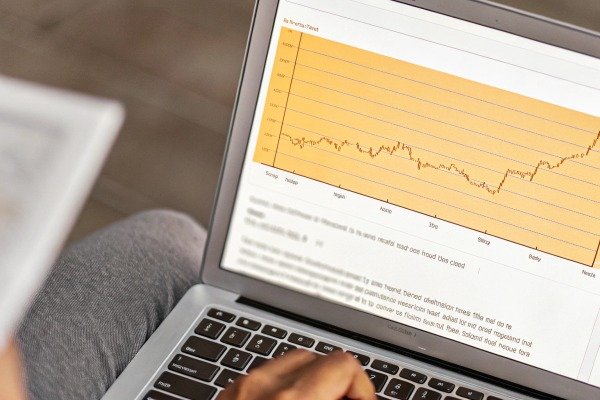
The best time to handle a price increase is before it happens. Structuring your manufacturing agreement with explicit terms regarding currency eliminates ambiguity. When we onboard a new supplier, we don't just agree on a price; we agree on the rules for how that price can change. Without these clauses, you are left negotiating from a position of weakness every time the market moves.
Defining the Baseline Rate
Every contract should state a "Baseline Exchange Rate." For example: "The unit prices in this agreement are based on the State Bank of Vietnam sell rate of 25,000 VND/USD as of January 1st." This provides a mathematical anchor. Without a baseline, the supplier can argue that the rate has moved against them since any arbitrary date in the past that suits their argument.
Notice Periods and Grace Periods
We strictly enforce a notice period clause. This clause should state that the supplier must provide at least 60 or 90 days' written notice for any price adjustment. Crucially, the contract must stipulate that all Purchase Orders issued prior to the effective date of the new price must be honored at the original price. This protects your work-in-progress. It prevents the supplier from holding your goods hostage right before shipment by demanding a surcharge.
The "Hardship" or "Price Adjustment" Mechanism
Instead of a vague force majeure clause, insert a specific Price Adjustment Mechanism. This clause Price Adjustment Mechanism 10 details the formula used to calculate a new price. It should require the supplier to present documentary evidence (invoices from their sub-suppliers) proving the actual cost impact. It should also specify that if the currency moves in the other direction (VND strengthens), you are entitled to a price reduction. Often, just the presence of a "symmetrical adjustment" clause—where they have to lower prices if the rate improves—discourages suppliers from raising the topic of currency altogether, as they don't want to risk having to lower their prices later.
Critical Contract Checklist
To ensure your contract is robust, we verify it against these points:
- Reference Source: Specify the exact bank (e.g., Vietcombank) used for rate checks.
- Trigger Threshold: Set a minimum movement (e.g., +/- 5%) required to trigger a review.
- Frequency Cap: Limit price reviews to once every 6 months maximum.
- Evidence Requirement: Supplier must prove the "Pass-Through" cost impact.
Conclusion
Managing currency risk requires data-driven verification and proactive contracting. By locking in corridors and understanding cost structures, we protect margins while sustaining reliable supply chains.
Notes de bas de page
1. Official government portal for the specific manufacturing location mentioned. ↩︎
2. Official government source for Vietnam’s exchange rate policies and daily reference rates. ↩︎
3. WTO research on how exchange rate volatility affects global trade and raw material costs. ↩︎
4. General background on the structure and purpose of a Bill of Materials in manufacturing. ↩︎
5. Explains the financial concept of a natural hedge in business operations. ↩︎
6. Official website of the central bank regulating the exchange rates. ↩︎
7. Major commercial bank in Vietnam providing official market exchange rates. ↩︎
8. International standard for force majeure and hardship clauses in commercial contracts. ↩︎
9. Authoritative legal definition of the contract clause suppliers often misuse. ↩︎
10. Industry standard guidance on structuring contract price adjustments. ↩︎

 English
 Español de México
 Deutsch
 Français
 Русский
 العربية