At our production facilities, we frequently see clients struggle to balance their limited inventory needs with factory volume requirements. You need custom parts to launch a product, but rigid minimums often block your path.
Negotiating MOQ for small-batch stamping involves offering higher unit prices to cover setup costs, utilizing blanket orders with staggered deliveries, or paying for raw materials upfront. Additionally, targeting suppliers with modular tooling capabilities or consolidating similar parts into one run effectively lowers minimum thresholds.
Let’s explore practical strategies to secure the specific quantities your business actually needs without breaking the bank.
What strategies can I use to lower the MOQ for custom metal stamping projects?
When we review new inquiries at our Vietnam and China offices, rigid volume requirements often stall promising projects. You want flexibility for your custom designs, but standard factory terms feel restrictive and unyielding.
To lower MOQ for custom stamping, propose paying a separate machine setup fee or a higher per-unit price to compensate for lost efficiency. Alternatively, request the use of “house stock” materials to bypass material minimums, or consolidate multiple part designs that share the same material thickness.
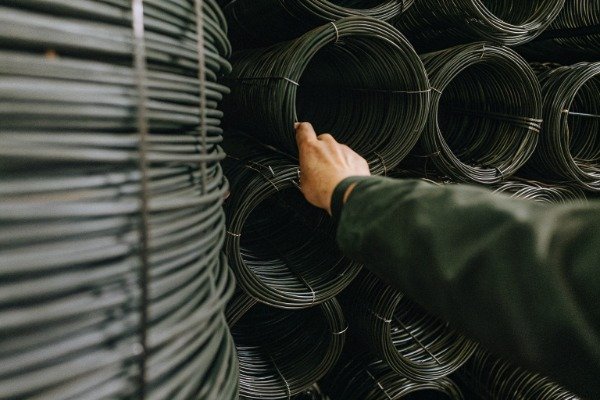
Understanding the economics behind a supplier’s refusal is the first step to overcoming it. In our daily operations, the “Minimum Order Quantity” isn’t an arbitrary number we invent to be difficult; it is a calculation based on machine downtime and material waste. Setting up a stamping press takes time—sometimes hours—to calibrate the die, feed the coil, and inspect the first articles. If a machine is not running parts, it is losing money.
Minimum Order Quantity 1
The “Setup Fee” Separation Strategy
One of the most effective ways to lower the MOQ is to offer to pay the “nuisance” cost directly. Most suppliers bake the setup cost into the unit price of a large order. For a small order, this math breaks down. You can propose separating these costs. By offering to pay a flat “Machine Setup Fee” (often between $100 and $500 depending on complexity), you remove the supplier’s financial penalty for running a short job. This allows us to run as few as 500 parts while still covering our overhead.
Leveraging “House Stock” Materials
A hidden driver of high MOQs is the raw material purchase. Steel mills often require us to buy tons of material at once. If your custom part requires a niche alloy or a specific non-standard thickness, we have to buy a whole coil just for your small order.
To circumvent this, ask your supplier: “What materials do you currently have in stock?” or “What are your most common gauges for 304 Stainless Steel?” By adjusting your design slightly to use a material we already have on the floor (House Stock), you eliminate the material purchase minimum. This often allows us to drop the production MOQ significantly because we don’t need to warehouse leftover coil.
304 Stainless Steel 2
Consolidating Designs (Combo Runs)
If you are sourcing multiple parts, look for commonalities. If Part A and Part B use the same material type and thickness, we can often run them sequentially or even arrange them on the same strip layout if the tooling allows. This “Combo Run” approach aggregates the volume. Instead of two orders of 500 units (both rejected), you present a total material consumption equivalent to 1,000 units.
Comparison of Negotiation Levers
| Stratégie | Impact on Unit Price | Impact on Upfront Cost | Supplier Willingness |
|---|---|---|---|
| Standard MOQ | Faible | Faible | Élevé |
| Pay Setup Fee | Moyen | Medium (One-time fee) | Élevé |
| House Stock | Faible | Faible | Medium (Requires design flexibility) |
| Premium Unit Price | Élevé | Faible | Élevé |
Is it better to pay higher tooling fees to secure lower minimum order quantities?
Our engineering team often debates the trade-off between tooling investment and part cost with clients during the quotation phase. High upfront costs naturally scare buyers, yet they often solve the volume issues that stall production.
Paying higher tooling fees often secures lower MOQs because advanced tooling, like progressive dies, automates production and reduces per-unit labor. While the initial investment is steeper, it drastically lowers the supplier’s manual effort per run, making smaller batches more financially viable for the factory.
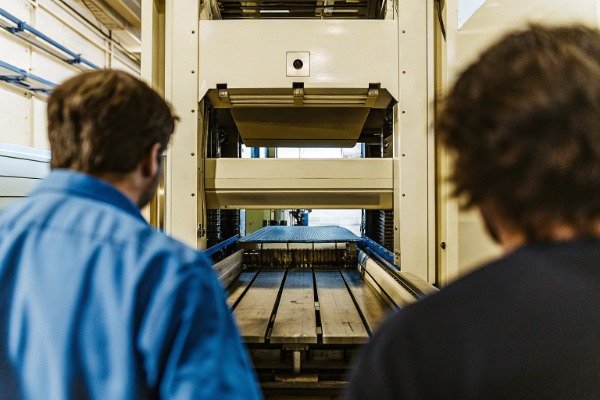
The type of tooling you choose dictates the rhythm of production. In our experience, many buyers default to the cheapest tooling option—usually “Stage Tooling” or “Single Hit Tooling”—thinking it saves money. However, this often backfires when negotiating MOQ.
The Economics of Progressive Dies
Stage tooling requires an operator to manually move the part from one machine to another for each bend or punch. This is labor-intensive. If you order a small batch, the labor cost per unit skyrockets, and the scheduling becomes a nightmare for our production managers.
Conversely, a Progressive Die is a complex tool where the metal strip is fed automatically, and the finished part drops off the end. Yes, a progressive die might cost $5,000 instead of $1,000. However, once that die is set up, the machine runs automatically. We are much more willing to run a batch of 1,000 parts on a progressive die because it doesn’t tie up three operators for two days. The “pain” of the small order is removed through automation.
Ownership and Maintenance
When you pay for higher-end tooling, you are also buying reliability. Cheap tooling wears out faster and produces more rejects. For a small batch, a high reject rate is disastrous because there is no buffer stock. Investing in better tooling ensures “Right First Time” quality, which is crucial for us as manufacturers. We don’t want to stop a short run to fix a broken punch.
Strategic Tooling Investment Analysis
Before rejecting a high tooling quote, calculate the Total Cost of Ownership (TCO) over two years. If the higher tooling fee allows you to order 500 units at a time instead of 5,000, you save significantly on warehousing and cash flow.
Total Cost of Ownership 3
Tooling Type vs. MOQ Expectations
| Tooling Type | Typical Tooling Cost | Typical MOQ Requirement | Labor Intensity | Suitable For |
|---|---|---|---|---|
| Single Stage / Hand Transfer | $500 – $1,500 | 1,000 – 5,000+ | High (Manual) | Simple parts, very low volume prototypes |
| Progressive Die | $3,000 – $15,000+ | 5,000 – 10,000 (Negotiable to 1,000) | Low (Automated) | Complex parts, medium to high volume |
| Modular / Insert Tooling | $1,500 – $4,000 | 500 – 2,000 | Moyen | Families of parts with similar features |
Can I suggest laser cutting as an alternative for my small batch stamping needs?
We frequently advise clients to switch production methods during the prototyping or early market entry phases. You need speed and low volume to test the market, but waiting weeks for stamping dies to be machined is inefficient.
Laser cutting is an excellent alternative for small batches because it eliminates tooling costs and has virtually no minimum order requirement. Although the per-unit processing time is slower and more expensive than stamping, the total cost is often lower for volumes under 500 to 1,000 units.
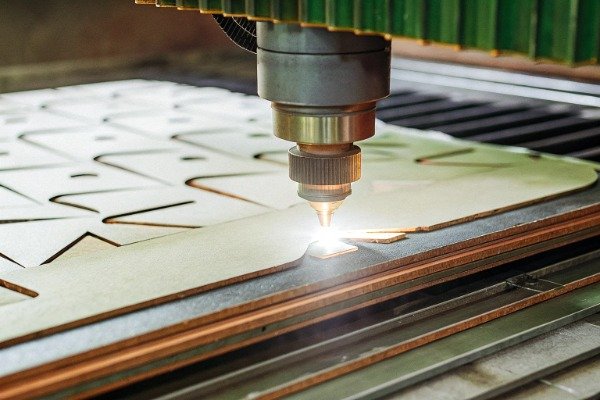
When you are stuck in MOQ negotiations, sometimes the best move is to change the game entirely. Stamping is a high-volume process by definition. Trying to force a stamping process for 200 parts is like using a freight train to deliver a pizza—it works, but it’s inefficient.
The Breakeven Point
In our factories, we operate both stamping presses and laser cutters. We often perform a breakeven analysis for our clients.
- Stamping: High fixed cost (Tooling), low variable cost (Unit price).
- Laser Cutting: Zero fixed cost (No tooling), high variable cost (Machine time).
For a simple bracket, stamping might cost $0.50 per part with a $2,000 tool. Laser cutting might cost $2.50 per part with $0 tooling.
- At 500 parts: Stamping = $2,250 total. Laser = $1,250 total. Winner: Laser.
- At 2,000 parts: Stamping = $3,000 total. Laser = $5,000 total. Winner: Stamping.
If your order is below that 1,000-unit threshold, laser cutting is not just a negotiation tactic; it is the smarter financial choice.
Design Implications and Tolerances
There are technical trade-offs. Laser cutting leaves a heat-affected zone (HAZ) on the edge of the metal, which might require secondary deburring. Stamping produces a cleaner sheared edge. However, for most internal structural parts, the laser edge is perfectly acceptable.
heat-affected zone 4
Furthermore, laser cutting offers incredible flexibility. If you discover a design flaw after the first 50 parts, you simply update the CAD file. With stamping, you would have to modify or scrap a $2,000 hard tool. For startups or new product lines, this agility is worth more than the unit cost savings.
Stamping vs. Laser Cutting Decision Matrix
| Feature | Metal Stamping | Laser Cutting |
|---|---|---|
| Setup Cost | High (Dies required) | Zero to Low (Programming only) |
| MOQ Rigidity | High (Hard limits) | None (Can make 1 unit) |
| Unit Cost | Low (Seconds per part) | High (Minutes per part) |
| Design Flexibility | Low (Hard to change dies) | High (Instant digital changes) |
| Lead Time | Long (Weeks for tooling) | Short (Days for production) |
How do I structure a long-term agreement to offset low initial order volumes?
We value partners who commit to mutual growth rather than those seeking one-off transactional deals. You need trust to secure supply, but suppliers fear the inventory risks associated with unproven long-term promises.
Net 30 5
Structure a long-term agreement by signing an annual blanket order that commits to a total yearly volume but allows for smaller, staggered shipments. Offer a slightly higher unit price initially or a small 5–15% deposit to reduce supplier risk without requiring full upfront payment.

Suppliers are risk-averse. When you ask for a low MOQ, we hear: “This client might buy once and never return, leaving us with setup losses.” To counter this, you must change the narrative from “Small Order” to “Strategic Partnership.”
blanket order 7
The Blanket Order Strategy
Instead of placing a Purchase Order (PO) for 500 units, place a Blanket PO for 5,000 units to be delivered over 12 months.
- The Commitment: You legally agree to buy 5,000 units this year.
- The Release: You request “releases” of 500 units every month or as needed.
This gives us the confidence to buy the raw material in bulk (lowering costs) and plan our production schedule. In return, we grant you the lower unit price associated with the 5,000 volume, even though you are only receiving small batches.
Laser cutting 8
The “Price-for-Flexibility” Trade-off
If you cannot commit to a large annual volume, be transparent. Tell us: “I know 500 units is below your standard run. I am willing to pay a 20% premium on the unit price for this batch to make it worth your while.”
Many buyers are afraid to offer more money. But paying $1.20 instead of $1.00 for 500 parts costs you an extra $100. That is a tiny price to pay to get your product launched. You can negotiate a clause stating that once volume hits 5,000 units, the price reverts to the standard $1.00.
Progressive Die 9
Financial Structuring: The 5-15% Deposit
Cash flow is king for manufacturers. We often have to pay our material suppliers upfront. To make a low-volume blanket order attractive, offer a “Good Faith Deposit.”
- Proposal: Sign a framework agreement for the year.
- Payment: Do not pay for the whole year upfront. Instead, offer a non-refundable deposit of 5% to 15% of the total contract value.
- Benefit: This deposit covers our initial material outlay or tooling setup risks. It shows you are serious. We can then bill you for the remaining balance on a per-shipment basis (e.g., Net 30 or Net 60 terms).
Structuring the Deal
| Component | Standard Transaction | Strategic Framework Agreement |
|---|---|---|
| Order Volume | Single PO (e.g., 500 units) | Annual Commitment (e.g., 6,000 units) |
| Delivery | All at once | Staggered (e.g., 500 / month) |
| Pricing | High (Small batch rate) | Low (Volume rate) + Small handling fee |
| Conditions de Paiement | 100% T/T Upfront | 10% Deposit + Net 30 per shipment |
| Risk Profile | High for Supplier | Balanced / Shared |
Conclusion
Negotiating MOQs requires understanding factory costs. By adjusting pricing, tooling investments, or structuring long-term agreements, you can secure the small batches your business needs while ensuring your supplier remains profitable.
machine downtime 10
Notes de bas de page
- Defines the core supply chain concept central to the article’s topic. ↩︎
- Provides technical specifications for the specific material alloy mentioned. ↩︎
- Defines the financial analysis method recommended for evaluating tooling investments. ↩︎
- Explains the metallurgical side effect of the laser cutting process. ↩︎
- Refers to the standard trade credit payment terms mentioned. ↩︎
- Identifies the standard commercial document used in procurement processes. ↩︎
- Defines the specific type of long-term purchase agreement suggested. ↩︎
- Details the alternative manufacturing technology proposed for small batches. ↩︎
- Describes the automated metalworking tooling method referenced in the comparison. ↩︎
- Explains the manufacturing efficiency loss that drives high setup costs. ↩︎

 English
 Español de México
 Deutsch
 Français
 Русский
 العربية