We understand the panic when a shipment arrives with issues. At our stamping facilities, we know this disrupts your assembly line and threatens your delivery schedules.
To initiate a claim, immediately quarantine the affected batch and notify your supplier within the contract's specified window. Submit a formal Non-Conformance Report (NCR) containing high-resolution photos, specific measurement deviations against drawings, and the batch number. Request a Root Cause Analysis to prevent future recurrence.
Let's examine the specific steps and evidence required to handle this situation effectively.
What specific evidence or documentation do I need to submit for a stamping part defect claim?
When our engineering team reviews a complaint, vague descriptions delay the solution. We need precise data to determine if the issue lies in the tooling or the raw material.
You must submit a comprehensive Non-Conformance Report (NCR) detailing the defect type and quantity. Include high-resolution photos showing the issue alongside a caliper or gauge, the specific purchase order number, and the raw material heat number. Physical samples are often required for final verification.

The Importance of Irrefutable Evidence
In international trade, distance creates a significant barrier to trust and verification. Unlike a local transaction where a supplier can drive over to inspect the parts, we are often thousands of miles away. Therefore, the evidence you submit must be self-explanatory and irrefutable. We often see claims delayed because the photos are blurry or lack a reference scale.
When you discover a defect, your goal is to prove that the non-conformance existed at the time of arrival and was not caused by handling damage at your warehouse. You need to link the physical part back to our production records. This is why the Heat Number et Batch Number are critical; they allow us to trace the steel coil used and the specific production shift.
Structuring Your Non-Conformance Report (NCR)
A standardized NCR speeds up the process. It removes the back-and-forth email chains asking for "more details." Below is the checklist we recommend our clients use to ensure nothing is missed.
| Document Type | Objectif | Key Details Required |
|---|---|---|
| Visual Evidence | Proves the existence of the defect. | High-res photos, red arrows pointing to defects, ruler/caliper in the frame for scale. |
| Dimensional Report | Proves the deviation from the print. | Measured value vs. Tolerance range (e.g., "Hole diameter 5.05mm, Spec 5.00mm ±0.02"). |
| Traceability Data | Links parts to production logs. | PO Number, Carton Label Photo, Heat Number, Date Code. |
| Scope Assessment | Defines the magnitude of the issue. | Total quantity received, quantity inspected, quantity defective (defect rate %). |
The Reality of Physical Samples
While digital evidence is faster, we sometimes require physical samples to understand the root cause. For example, if a part is cracking during your assembly, we need to test the hardness and microstructure of the metal in our lab. In these cases, air-shipping 5 to 10 defective samples back to our facility in Vietnam or China is a necessary step. This allows our engineers to replicate the failure and confirm if the issue is material fatigue or improper heat treatment.
material fatigue 1
What is the typical timeline for resolving a quality claim and receiving replacement parts?
We know that every hour of downtime costs you money. While we aim for immediate resolutions, international logistics and production schedules dictate the actual replacement timeline.
A standard claim resolution involves 3 to 5 days for the supplier to review evidence and accept responsibility. However, receiving replacement parts can take 4 to 8 weeks due to raw material procurement, production lead times, and ocean freight schedules from Asia to the US.

The Gap Between Acceptance and Replacement
There is often a misconception that once a claim is accepted, the problem is solved. In reality, accepting the claim is just the administrative start. If we need to remanufacture the parts, we are restarting the entire supply chain cycle. We may need to order new steel coils, which can take weeks, and then schedule press time.
This delay highlights a critical insight: prevention is the only true solution. By the time you are asking for a timeline on replacements, the damage to your schedule is already done. The financial compensation we provide rarely covers the cost of your line stoppage or the reputational damage with your own customers.
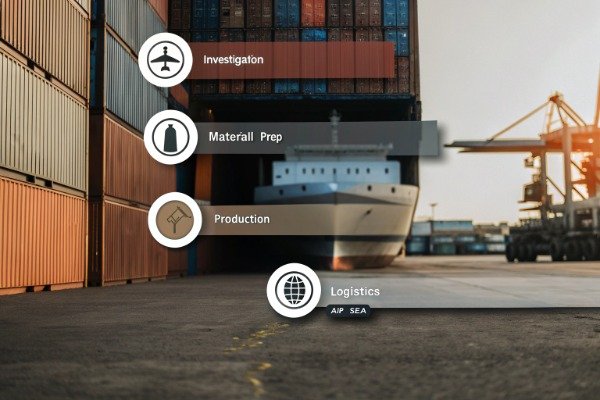
Estimated Recovery Timelines
To help you plan your inventory buffers, here is a realistic breakdown of the recovery process for a custom stamping order from Asia.
| Stage | Action | Estimated Time |
|---|---|---|
| Investigation | Supplier reviews NCR, tests samples, admits fault. | 3 – 7 Days |
| Material Prep | Sourcing raw material (if not in stock). | 7 – 14 Days |
| Production | Stamping, deburring, plating, and inspection. | 7 – 10 Days |
| Logistics (Air) | Expedited shipping for urgent replacements. | 5 – 7 Days |
| Logistics (Sea) | Standard shipping for large/heavy batches. | 30 – 45 Days |
Strategic Compensation Alternatives
Because the timeline for physical replacement is long, we often advise clients to look for immediate workarounds. Can the parts be reworked locally? If so, we can cover the labor cost. This is often faster than waiting for a new shipment.
Another common approach is the Credit Note. Instead of sending a small replacement batch immediately (which incurs high freight costs), we issue a credit for the value of the defective goods. You can then deduct this amount from your next payment. While this balances the books, it does not solve the immediate part shortage, which is why we emphasize strict process control before the goods ever leave our factory.
Will you provide a root cause analysis report to prevent recurrence of the stamping defects?
We believe that replacing parts is insufficient without fixing the underlying process. Our quality team relies on structured analysis to ensure the specific error never occurs again.
Yes, a professional supplier must provide a formal Root Cause Analysis (RCA), often in the form of an 8D Report. This document identifies the specific failure mode, such as worn tooling or material variation, and outlines the corrective actions implemented to prevent future defects.
Moving Beyond "Worker Error"
In our experience, a lazy supplier will blame "worker error" and promise to "retrain the operator." This is rarely the true root cause in metal stamping. Stamping is an automated or semi-automated process; if a defect occurs, it is usually a system failure.
We use the 8D (Eight Disciplines) problem-solving methodology. When we generate a report for you, we look at the "Five Whys."
- Why was the dimension off? The punch was worn.
- Why was the punch worn? It exceeded its stroke life.
- Why did it exceed life? The maintenance schedule was not tracked.
- Root Cause: Lack of automated maintenance alerts in the ERP system.
Corrective vs. Preventive Actions
The report you receive should distinguish between fixing the current mess (Corrective) and stopping it forever (Preventive). We focus heavily on the latter. This might involve modifying the progressive die design to be more robust or changing the type of lubricant used to prevent scoring.
ERP system 2
Common Stamping Defects and Their Systemic Causes
Understanding the technical root causes helps you evaluate if your supplier's explanation is valid.
8D (Eight Disciplines) 3
| Defect Type | Likely Physical Cause | Systemic Root Cause (Process Issue) |
|---|---|---|
| Burrs | Dull cutting edges on the die. | Inadequate die maintenance schedule or poor tool steel selection. |
| Springback | Material elasticity variance. | Inconsistent raw material sourcing; lack of stress-relief annealing. |
| Surface Scratches | Debris in the die or handling damage. | Poor shop floor cleanliness; lack of protective packaging protocols. |
| Missed Holes | Broken punch. | Lack of sensor protection (die protection) to stop the press immediately upon breakage. |
If we do not identify the root cause correctly, the next shipment will likely have the exact same problem. This is why we insist on a thorough investigation, even if it takes a few extra days.
ocean freight schedules 4
Does your warranty cover the shipping costs for returning or replacing defective stamping components?
Returning heavy metal parts to Asia is rarely cost-effective. We typically advise clients to scrap defective items locally while we handle the financial burden of replacements.
production records 5
Most international manufacturing warranties cover the cost of producing and shipping replacement parts to your facility. However, returning defective heavy stamping parts to the origin country is usually not required due to prohibitive freight costs; local scrapping with photographic proof is the standard industry practice.

specific measurement deviations 6
The Economics of International Returns
Stamping parts are heavy. Shipping a container of defective steel brackets back to Vietnam or China often costs more than the value of the parts themselves. Furthermore, the customs procedures for "Returned Goods" are incredibly complex and can lead to double taxation or months of delay.
caliper or gauge 7
Therefore, our policy—and the industry standard—is to avoid physical returns whenever possible. Once we have verified the defect via your photos and samples, we usually ask you to scrap the parts locally. We may ask for a "Certificate of Destruction" or photos of the scrapped parts to close our internal audit file.
Root Cause Analysis 8
How Compensation is Applied
Since we cannot easily "fix" the parts once they are in your warehouse, the financial resolution usually takes one of two forms:
Non-Conformance Report (NCR) 9
- Replacement at Our Cost: We manufacture a new batch and ship it to you. We pay for the manufacturing and the freight (DDP). This is the standard warranty fulfillment.
- Financial Credit: If you can salvage the parts or if you don't need replacements immediately, we issue a credit note. You deduct this value from future orders.
The Hidden Costs You Must Absorb
It is important to be realistic about what a warranty covers. While we cover the parts and the freight, no supplier typically covers consequential damages. This includes your lost production time, penalties from your customers, or the cost of your team sorting through the bad parts.
This reality brings us back to our core philosophy: Process Control. The cost of a quality failure is far higher than just the price of the part. The only way to protect your business is to ensure the parts are right before they are loaded onto the ship. We encourage our clients to view the claim process not as a way to get money back, but as a failure of the system that must be corrected upstream to prevent the far more expensive cost of business interruption.
Conclusion
Initiating a claim requires speed, precise evidence, and a focus on root causes. While we stand behind our products with replacements and credits, the true goal is to prevent defects from leaving our factory floor.
contract’s specified window 10
Notes de bas de page
1. Educational resource explaining the metallurgical failure modes mentioned. ↩︎
2. Definition from a leading provider of enterprise resource planning software. ↩︎
3. General background on the specific problem-solving methodology cited. ↩︎
4. Major logistics provider validating the reality of shipping timelines. ↩︎
5. Industry standard body for manufacturing traceability and part approval processes. ↩︎
6. Validates the need for precise, calibrated measurement in quality claims. ↩︎
7. Leading manufacturer of precision measuring instruments used for verification. ↩︎
8. Defines the standard methodology for identifying the origin of defects. ↩︎
9. Links the reporting process to international quality management standards. ↩︎
10. Official government guidance on legal timeframes for reporting defects and returns. ↩︎

 English
 Español de México
 Deutsch
 Français
 Русский
 العربية