When shipping custom welding components from our Vietnam facility, we often see clients worry about clearance delays. Dealing with customs holds stops your production line cold and increases costs.
To handle US customs clearance for Vietnamese welding parts, file the Importer Security Filing (ISF) 24 hours before loading and secure a continuous bond. Classify goods accurately under HTS headings 8311 or 8468, ensure “Made in Vietnam” marking, and hire a licensed licensed Customs Broker 1 broker to manage the CBP Form 7501 entry summary.
Let’s look at the specific steps to ensure a smooth arrival.
What essential documents do I need to prepare for clearing welding parts through US customs?
We pack thousands of crates annually, and missing paperwork remains the top reason for port delays. It creates unnecessary storage fees that hurt your bottom line.
You must provide a Commercial Invoice and Packing List that perfectly match the Bill of Lading, detailing weights and descriptions. Additionally, submit the Importer Security Filing (ISF) data, a valid Country of Origin certificate to prove Vietnam production, and evidence of a Customs Bond to guarantee duty payment.

To get your welding parts out of the port and into your warehouse US Customs and Border Protection (CBP) 2, you need a flawless paper trail. The US Customs and Border Protection (CBP) does not tolerate discrepancies. If our packing list says a crate weighs 500 kilograms, but the Bill of Lading says 550, your shipment will likely be flagged Bill of Lading 3 for an exam. This stops your supply chain immediately.
The Core Paperwork Trinity
There are three documents that must align perfectly. First, the Commercial Invoice. This must list the buyer, seller, and a detailed description of the goods. For welding parts, vague terms like "metal parts" are not enough. We list specific descriptions like "Aluminum welding brackets" or "TIG torch assemblies." It must also separate the value of the goods from shipping costs to calculate duties correctly.
Second is the Packing List. This document tells customs officers exactly what is inside each crate. Since welding components can be heavy and dense, officers need to know the gross and net weights.
Third is the Bill of Lading (B/L). This is issued by the carrier. The information here must match the invoice and packing list exactly. Even a small typo in the consignee’s name can cause a hold.
ISF Filing is Not Optional
For ocean freight, the Importer Security Filing (ISF), also known as "10+2," is critical. This must be filed electronically at least 24 hours before the cargo is loaded onto the vessel in Vietnam.
- Late Filing: Penalties start at $5,000.
- Bad Data: If the manufacturer details or ship-to address are wrong, customs may inspect the cargo.
- Responsibility: While a broker files this, you must provide the data early. We always send ISF details to our clients 72 hours before loading to be safe.
Detailed Document Checklist
The table below outlines exactly what is required and common mistakes we see.
| Document Name | Function | Common Mistakes to Avoid |
|---|---|---|
| Commercial Invoice | Determines value and duty rates. | Undervaluing goods; vague descriptions like "hardware." |
| Packing List | Details weight, dimensions, and count. | Net weight vs. gross weight discrepancies. |
| Bill of Lading | Contract of carriage and title. | Typos in company names; incorrect piece counts. |
| Certificat d'Origine | Proves goods are made in Vietnam. | Missing the "Made in Vietnam" statement; expired dates. |
| Customs Bond | Insurance policy for duty payment. | Using a Single Entry Bond for frequent shipments (costlier). |
How can I accurately determine the HTS codes and applicable duty rates for Vietnamese imports?
Our engineering team often helps clients map materials to codes, as misclassification triggers costly audits. Nobody wants a surprise bill later regarding incorrect duty payments.
Determine HTS codes by consulting the Harmonized Tariff Schedule, typically focusing on Chapter 85 for electric machines or Chapter 83 for base metal electrodes. Verify specific duty rates, including Section 232 steel tariffs, and calculate the Merchandise Processing Fee (MPF) based on the shipment’s entered value.

Classifying welding parts is more than just picking a number Harmonized Tariff Schedule (HTS) 4. The Harmonized Tariff Schedule (HTS) dictates how much duty you pay. Harmonized Tariff Schedule (HTS) 5 If you choose the wrong code, you are liable for unpaid duties and penalties for up to five years. Since we manufacture custom parts, we know that the material composition often decides the code.
Navigating Chapters 83 and 85
Most welding imports fall into two main chapters.
- Chapter 85: This covers electrical machinery. If you are importing complete welding machines, robotic welding arms, or laser laser welding heads 6 welding heads robotic welding arms 7, they usually go here. Parts solely or principally used for these machines also fall under this chapter.
- Chapter 83: This covers miscellaneous articles of base metal. Consumables often land here. For example, coated electrodes for arc welding or cored wire of base metal fall under heading 8311.
You must also consider the material. The aluminum structure shown in the product context might be classified differently depending on if it is a finished part or a raw component. If it is a specific part of a machine, it uses the machine's part code. If it is generic structural metal, it might fall under Chapter 76 (Aluminum).
Section 232 and Trade Remedies
Even if the general duty rate is low (often Free or under 3% for Vietnam), you must watch out for Section 232 tariffs. These are national security tariffs on steel (25%) and aluminum (10%).
- Steel Derivatives: Some welding parts made of steel may trigger these duties.
- Exclusions: Vietnam is generally not exempt from Section 232 unless specific quotas or agreements exist, though the rules change frequently.
Always check if your specific HTS code is flagged for Section 232.
Calculating Fees Beyond Duty
Duty is not your only cost. Every entry has fees.
- Merchandise Processing Fee (MPF): For formal entries (over $2,500), this is an ad valorem fee. It is roughly 0.3464% of the cargo value. However, it has a floor and a ceiling. You will pay a minimum of around $31 and a maximum of around $614, regardless of how expensive the shipment is.
- Harbor Maintenance Fee (HMF): If your goods arrive via ocean freight at a US port, you pay 0.125% of the cargo value. Air freight does not pay this.
Common Welding HTS Examples
Here is a breakdown of typical codes we encounter for welding products.
| Type de produit | Likely HTS Heading | General Duty Rate (Vietnam) | Potential Extra Tariffs |
|---|---|---|---|
| Welding Electrodes | 8311.10 | Free / Low | None usually |
| Welding Machinery | 8515.39 | Free | None usually |
| Gas Torches | 8468.10 | 2.4% | None usually |
| Steel Components | 7326.90 | 2.9% | Section 232 (25%) |
| Aluminum Parts | 7616.99 | 2.5% | Section 232 (10%) |
Are there specific anti-dumping duties or compliance regulations I must check before shipping?
We meticulously audit our raw material sources to protect clients from circumvention accusations. Ignoring origin rules risks massive fines and shipment seizure.
Yes, you must check for Anti-Dumping Anti-Dumping (AD) and Countervailing Duties (CVD) 8 and Countervailing Duties (AD/CVD) on steel inputs to ensure no circumvention of Chinese tariffs. Additionally, ensure compliance with ISPM 15 for wood packaging and verify if advanced laser components require FDA accession numbers or FCC data regarding radiation and radio frequency compliance.

Compliance is not just about taxes; it is about legality. US Customs is aggressively targeting supply chains to stop "transshipment." This happens when Chinese goods are moved through Vietnam to hide their origin. Since we operate legally in Vietnam with our own local team, we ensure our clients never face these accusations.
The Risk of Transshipment and AD/CVD
Anti-Dumping (AD) and Countervailing Duties (CVD) are designed to protect US manufacturers Anti-Dumping (AD) 9 from unfair competition.
- The Trap: If a welding part is made from Chinese steel that is subject to AD/CVD, and it is not "substantially transformed" in Vietnam, US Customs may view it as Chinese.
- The Cost: AD/CVD rates can be over 100% or even 200% of the value.
- Our Solution: We maintain full traceability. We can prove where every bar of aluminum or steel came from. You should always ask your supplier for mill test reports and production records.
Transformation substantielle
This is the legal test. Does the manufacturing process in Vietnam change the product's name, character, and use?
- Simple Assembly: Bolting Chinese parts together in Vietnam is not enough. The origin remains China.
- Real Manufacturing: Cutting, welding, machining, and heat-treating raw metal into a new structure (like the aluminum frame in our product image) generally confers Vietnam origin.
You must be ready to prove this to CBP if they ask.
Other Regulatory Hurdles
Besides duties, other agencies regulate welding imports.
- ISPM 15 Wood Packaging: If your heavy welding parts ship on wooden pallets or in crates, that wood must be heat-treated and stamped. If it lacks the ISPM 15 stamp, CBP will reject the shipment. They will not let you repack it; they will order the whole container to be exported immediately.
- FDA for Lasers: If you import laser welding equipment, the FDA regulates it as a radiation-emitting device. You need an "Accession Number" from the manufacturer to clear customs.
- FCC Compliance: Equipment that generates radio frequencies (like high-frequency welders) requires FCC documentation.
Regulatory Checkpoints Table
Before you ship, run your product through this risk assessment.
| Regulation | Trigger | Consequence of Non-Compliance |
|---|---|---|
| AD/CVD | Steel/Iron inputs, Origin issues. | Duties up to 200%+; retroactive bills. |
| ISPM 15 | Solid wood packing materials. | Immediate re-export of cargo; denied entry. |
| FDA (RadHealth) | Laser welding components. | FDA hold; goods cannot be distributed. |
| Section 301 | Incorrect "Made in China" declaration. | Additional 25% duty (if deemed Chinese origin). |
Should I hire a dedicated customs broker or look for a logistics partner who handles the full process?
We usually recommend full-service partners to clients who lack in-house compliance teams. Trying to self-file often leads to expensive mistakes and stress.
Hiring a licensed customs broker is highly recommended for welding part imports due to complex classification and Section 232 rules. While logistics partners offer convenience, a dedicated broker provides specialized compliance expertise, reducing the risk of inspections, penalties, and long delays at the port of entry.
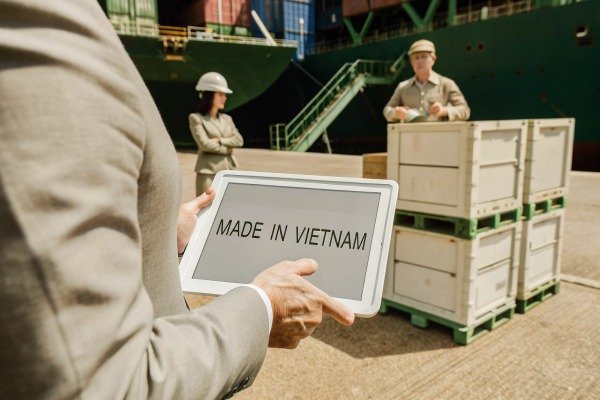
You have two main choices: a dedicated customs broker or a freight forwarder who offers brokerage as an add-on. Both can clear goods, but their focus differs. Your choice depends on the complexity of your welding parts and your internal resources.
The Role of the Customs Broker
A licensed Customs Broker is an individual or firm licensed by CBP licensed Customs Broker 10. Their primary loyalty is to compliance.
- Expertise : They know the HTS book inside out. They know if a specific welding torch needs a specific disclaimer.
- Consulting: A good broker will advise you before you ship. They will tell you if your "Made in Vietnam" label is in the wrong spot.
- Crisis Management: If your goods are flagged for an intense exam (like a CES exam), a dedicated broker will fight to get them released faster.
Integrated Logistics Solutions
Many of our clients prefer a "one-stop-shop." They hire a large freight forwarder who moves the cargo and files the entry.
- Pros: Seamless data flow. You send documents once, and they handle the boat and the customs. It is often cheaper and requires less management.
- Cons: The person filing your entry might be a data entry clerk, not a licensed expert. They might default to a generic HTS code to save time, putting you at risk.
The Hybrid Approach
For complex custom parts, we suggest a hybrid approach. Use a logistics company for the freight to keep costs down, but hire a specific customs broker for the clearance.
- Communication: You must ensure the forwarder sends the Arrival Notice to the broker immediately.
- Control: This gives you a dedicated compliance advocate.
Cost vs. Risk Analysis
Think about the cost of failure.
- Broker Fee: Typically $100 – $150 per entry.
- Storage Fee: If customs holds your container because of a bad code, ports charge $200 – $400 per day in demurrage.
- Conclusion: Saving $50 on a broker fee is not worth the risk of a $2,000 storage bill.
For welding parts involving steel and potential tariffs, the complexity is high. We strongly advise using a licensed professional rather than trying to self-file via the ACE portal or relying on the cheapest automated option.
Conclusion
Correct documentation and accurate HTS classification prevent costly delays. Partnering with experienced manufacturers ensures your welding parts clear US customs smoothly.
Notes de bas de page
1. Legal definition and regulations for customs brokers. ↩︎
2. Official agency authority on US import regulations and border security. ↩︎
3. General overview of this essential shipping document. ↩︎
4. Official US government tool for searching current tariff codes and duty rates. ↩︎
5. Official US government tool for tariff classification. ↩︎
6. Leading manufacturer of laser welding components. ↩︎
7. Major manufacturer of robotic welding automation systems. ↩︎
8. Official CBP resource on Anti-Dumping and Countervailing Duties enforcement. ↩︎
9. International organization overview of anti-dumping measures. ↩︎
10. Official CBP guidelines defining the role and licensing of brokers. ↩︎

 English
 Español de México
 Deutsch
 Français
 Русский
 العربية