When we review project inquiries at our Vietnam facility, we often see great product concepts delayed by unclear instructions. You need custom welded parts, but technical blueprints and welding symbols feel like a foreign language welding symbols 1.
You should describe your welding specifications by listing the material type and thickness, clearly stating the joint type, and specifying weld size and length. Providing high-resolution photos with digital markings, physical samples, or reference sketches effectively communicates your needs to suppliers without requiring formal technical drawings.
Let’s look at how you can communicate your requirements effectively to get the right parts the first time.
Can I use photos or physical samples to request a quote for custom welding parts?
Our engineering team frequently receives physical prototypes from US clients to bridge the gap between concept and production. It often solves confusion instantly compared to endless email chains attempting to describe complex geometric shapes.
Yes, high-quality photos and physical samples are excellent tools for requesting accurate quotes. They allow manufacturers to measure dimensions directly, analyze joint geometry, and understand spatial relationships that might be unclear in written descriptions, reducing the risk of misinterpretation during the quoting process.
The Value of Physical Samples
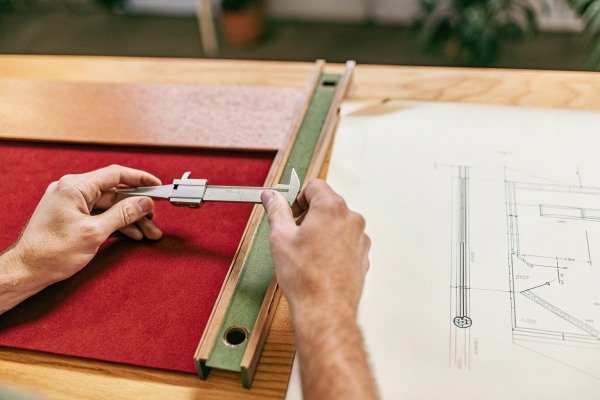
In our experience, a physical sample is often worth a thousand emails. If you have a prototype or a "golden sample" of the part you need replicated, sending it to your supplier is the most reliable method. When we receive a sample at our factory, our quality control team uses coordinate measuring machines (CMM) 2 coordinate measuring machines (CMM) and calipers to record every dimension, angle, and weld thickness. weld thickness 3 This reverse-engineering process eliminates guesswork. reverse-engineering process 4 Even if the sample is damaged or incomplete, it gives us a baseline to ask specific questions, such as, "Do you want to replicate this exact weld bead size, or should we increase it for strength?"
How to Take Effective Photos
If shipping a physical part is not feasible due to cost or time, photos are your next best option. However, a single blurry photo is not enough. We recommend taking photos from multiple angles: top, side, and isometric (corner) views. isometric (corner) views 5
To make your photos truly useful for a manufacturing team:
- Include a Scale: Always place a ruler or a tape measure next to the part in the photo. This gives us a reference for size.
- Mark Up the Images: Use simple digital tools on your phone or computer to draw arrows pointing to critical areas. Label them with text like "Weld here" or "Leave this side open."
- Focus on Joints: Take close-up shots of where the metal pieces connect. This helps us see if you need a fillet weld (a triangle shape in the corner) or a butt weld (joining two flat pieces).
Photos vs. Physical Samples
We have compiled a comparison to help you decide which method suits your timeline and budget.
| Method | Idéal pour | Pros | Cons |
|---|---|---|---|
| Physical Sample | Complex geometries, strict tolerance requirements, and mass production setups. | Eliminates measurement errors; allows material testing; ensures exact replication. | High shipping costs; takes longer to arrive; risk of loss during transit. |
| Annotated Photos | Simple parts, initial quoting phases, and quick feasibility checks. | Instant transmission; zero cost; good for rough estimates. | Cannot capture hidden dimensions; limited accuracy; relies on perspective. |
| Video Walkthrough | Assemblies with moving parts or complex 3D structures. | Shows functionality and movement; highlights stress points clearly. | Large file sizes; difficult to reference specific measurements quickly. |
What key details should I list to ensure the manufacturer understands my welding requirements?
We often have to pause production preparation to ask clarifying questions about specific weld locations or lengths. Missing details in your initial email can push back delivery dates significantly while we wait for confirmation.
To ensure understanding, list the exact material grade, the thickness of parts being joined, and the specific weld locations. You must also define whether welds should be continuous or intermittent and specify the load-bearing requirements so the supplier can select the appropriate welding method.
Defining the "What" and "Where"
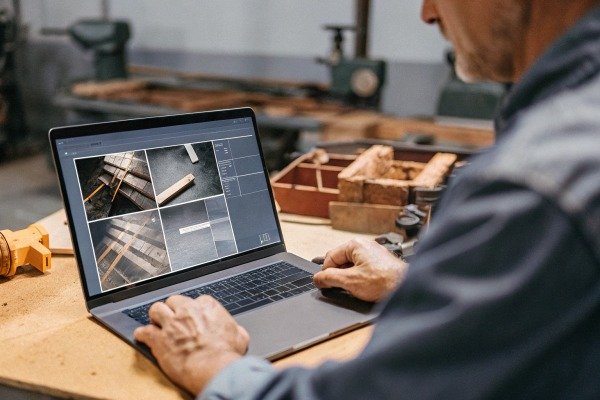
You do not need to know the code for a specific weld symbol to get what you want. Instead, use plain English to describe the physical attributes of the job. The most critical detail we need is Material Thickness. For example, if you are building a frame from rectangular aluminum tubing, tell us the wall thickness of that tubing. This dictates the heat settings on our welding machines coordinate measuring machines 6. If we guess and use too much heat on thin metal, it will warp; too little heat on thick metal, and the joint will fail.
Continuous vs. Stitch Welding
Another detail that affects both cost and strength is the length of the weld.
- Continuous Weld: This runs along the entire length of the joint. It is watertight and strong but uses more material and heat.
- Stitch (Intermittent) Weld: These are short welds spaced out (e.g., "Weld 2 inches, skip 4 inches"). This is faster, cheaper, and reduces distortion.
If you don't specify, a conscientious factory might default to continuous welding to be safe, which drives up your price. A less careful one might stitch weld to save money, compromising your part's strength. Be specific: "I need a continuous weld on the outer corners for appearance, but stitch welds are fine for the inner supports."
Finishing Requirements
Do not forget to tell us what the weld should look like after the work is done. This is often a major source of dispute. In our final inspection area, we check against three common finish levels final inspection 7:
Common Welding Specification Checklist
| Specification Category | What to Tell the Supplier | Why It Matters |
|---|---|---|
| Matériau | "3mm thick Aluminum 6061 tubing" | Determines welding wire type and machine settings. |
| Joint Type | "Connect these tubes at a 90-degree angle" | Tells us how to prepare the edges (cutting/beveling). |
| Weld Extent | "Weld all the way around" or "Tack weld only" | Affects strength, watertightness, and production time. |
| Appearance | "Grind smooth and flush" or "Leave weld visible" | "Grinding" adds significant labor cost but improves looks. |
| Tolerance | "Must fit inside a 1-meter box" | Tells us how precise the final alignment needs to be. |
How do I specify material and strength requirements without technical engineering terms?
Our sourcing specialists often help clients choose materials when they only know the application, not the alloy. We guide you based on function, translating your operational needs into the correct technical choices.
Describe the operating environment, such as exposure to chemicals, extreme heat, or heavy loads, and the intended function of the part. This functional context allows the supplier’s engineering team to recommend the correct material grade and determine necessary weld strength without needing specific technical jargon.
Use Functional Descriptions
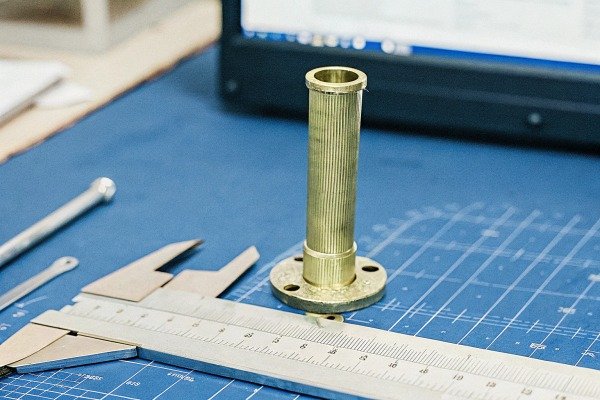
If you don't know if you need "6061-T6 Aluminum" or 304 Stainless Steel 8 "304 Stainless Steel," that is okay. Instead, describe what the part does. We call this "functional specification." Tell us the story of the part's life.
- Environment: Will it sit outside in the rain? Will it be near the ocean (salt spray)? Is it inside a hot industrial oven?
- Example: "This frame will be used outdoors near a swimming pool." (We would immediately know to use corrosion-resistant stainless steel or powder-coated aluminum).
- Load and Stress: How much weight must it hold? Is the weight static (sitting still) or dynamic (bouncing/vibrating)?
- Example: "This stand holds a 200kg machine that vibrates." (We know we need deep, strong penetration welds and perhaps a tougher alloy to resist fatigue cracking).
Aesthetics vs. Strength
Sometimes, the strongest weld is also the ugliest. A heavy, rippled weld bead is very strong but might look bad on a piece of furniture. Conversely, a ground-smooth weld looks seamless but removes some reinforcement material.
You must clarify your priority.
- Structural Priority: "I don't care how it looks; it just needs to hold 500 lbs safely."
- Cosmetic Priority: "This is for a retail display. The joints must be invisible and seamless."
Translating Needs to Materials
Here is how we translate your plain English descriptions into technical material specifications on the factory floor.
| Your Description | Potential Technical Solution |
|---|---|
| "It needs to be light but strong enough for a person to stand on." | Aluminum 6061-T6 with TIG welding. |
| "It will be used in a commercial kitchen and needs to be easy to clean." | Stainless Steel 304, food-grade finish, ground smooth welds. |
| "It's just a bracket inside a wall; it needs to be cheap and strong." | Mild Steel (A36) with standard MIG welding, maybe zinc plated. |
| "It holds a heavy motor that shakes a lot." | High-strength steel with reinforced gussets and full penetration welds. |
Will the supplier assist in creating technical drawings based on my rough description?
We prioritize co-development with our partners because it prevents costly rework later in the process. Our drafting team regularly converts hand-drawn sketches into formal CAD files drafting team 9 for client approval before we cut any metal.
Most professional suppliers are willing to create technical drawings from your rough descriptions, sketches, or samples as part of the service. They do this to confirm specifications before production begins, ensuring both parties agree on dimensions and tolerances to avoid manufacturing errors.
The Co-Development Workflow
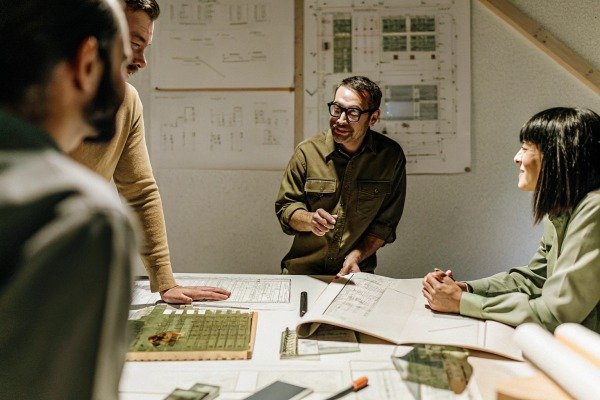
You should expect your supplier to be a partner, not just a vending machine. When we receive a rough sketch—even one drawn on a napkin—we don't just guess. We input the dimensions into our CAD (Computer-Aided Design) software 10 CAD (Computer-Aided Design) software. This creates a 3D model that lets us check for errors. For example, we might find that two holes you requested overlap, or that a tube is too thin to support the weld.
We then generate a 2D technical drawing from that model and send it back to you. This is a critical step: Do not ignore this drawing. Even if you can't read every symbol, check the main dimensions (length, width, height). By signing off on this drawing, you are agreeing that "this is what I want." It protects you. If the final part doesn't match that drawing, it is our fault. If the part matches the drawing but doesn't fit your needs because the drawing was wrong, that is a design issue.
Managing Intellectual Property
A common concern is ownership. If we create the drawing for you, who owns it?
- Service-Based: Some suppliers charge a small engineering fee for the drawings. In this case, you usually own the files and can take them anywhere.
- Order-Based: Often, if you place a production order, we waive the design fee. The drawings are part of the manufacturing service.
Checklist for reviewing Supplier Drawings
When we send you a drawing for approval, check these three things immediately:
- Overall Dimensions: Are the total length, width, and height correct?
- Hole Locations: Are the mounting holes exactly where they need to be to fit your other parts?
- Notes Section: Look for notes about finishing (e.g., "Powder Coat Black"). If it's not written there, it won't happen.
From Sketch to Production
- Client: Sends hand sketch + photos + functional description.
- Supplier: Creates 3D model and 2D PDF drawing.
- Client: Reviews PDF, confirms "Approved for Production."
- Supplier: Begins cutting and welding.
Conclusion
Clear communication prevents expensive defects. We bridge the gap between your ideas and our factory floor using photos, functional descriptions, and collaborative design to ensure successful delivery. By focusing on materials, dimensions, and usage, you can secure high-quality welded parts without ever drawing a technical symbol.
Notes de bas de page
1. Official industry standards for welding symbols and notation. ↩︎
2. NIST is a government authority on measurement standards and instrument calibration. ↩︎
3. University research on advanced manufacturing and mechanical engineering. ↩︎
4. General background on the principles and applications of reverse engineering. ↩︎
5. Explanation of isometric projection used in technical and engineering drawings. ↩︎
6. Technical documentation for high-precision coordinate measuring machines. ↩︎
7. National standards for manufacturing inspection and quality control processes. ↩︎
8. SSINA is the official industry association providing technical standards for stainless steel grades. ↩︎
9. Professional standards for engineering drawings and drafting practices. ↩︎
10. Autodesk is the industry leader for CAD technology and software definitions. ↩︎

 English
 Español de México
 Deutsch
 Français
 Русский
 العربية