
Over the years, our team has helped dozens of U.S. clients source precision custom parts from Asia. The biggest lesson? Choosing the wrong CNC machining partner costs far more than a bad quote AS9100 certifications 1.
Finding reliable CNC machining services starts with verifying a supplier's quality certifications like ISO 9001, assessing their multi-axis machining capabilities, confirming material expertise, checking references from similar projects, and ensuring transparent communication throughout the quoting and production process.
You might already have a shortlist of potential CNC shops Équipement de métrologie tridimensionnelle (MMT) 2. But knowing what to look for — and what to avoid — can save you months of rework and thousands of dollars. Let's walk through the critical checkpoints, one by one Documentation PPAP 3.
How Do I Verify the Quality Control Standards of a CNC Machining Supplier Before Placing My Order?
When we onboard a new factory into our supplier network, the very first thing we audit is their quality system multi-axis CNC machines 4. Without solid QC, even the best machines produce scrap.
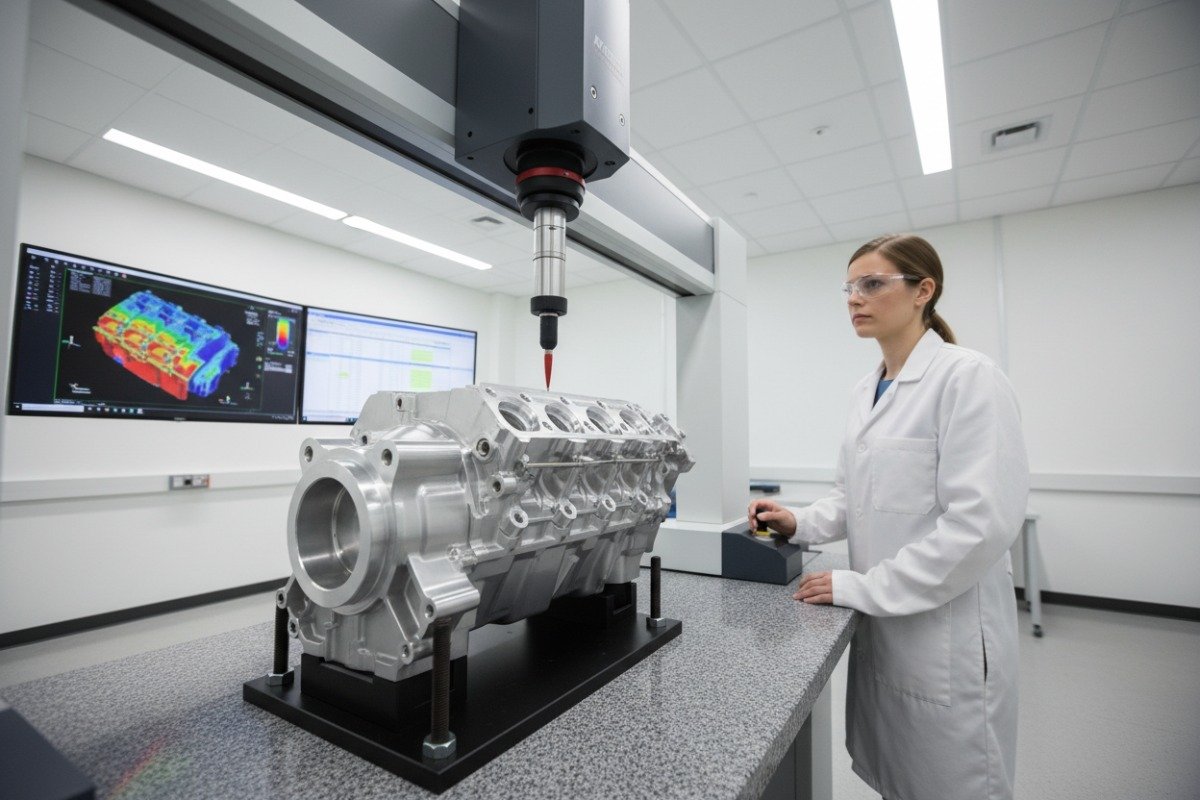
To verify a CNC supplier's quality control, request their ISO 9001 or AS9100 certifications, ask for recent inspection reports, confirm they use CMM equipment for dimensional verification, and require a First Article Inspection (FAI) or PPAP documentation before approving mass production.
Why Certifications Alone Are Not Enough
Certifications are a good starting point. ISO 9001 5 tells you a shop has a documented quality management system. AS9100 adds aerospace-level rigor. But here is the truth: a certificate on the wall does not guarantee your parts will be right.
We have visited factories with ISO 9001 plaques hanging proudly at the entrance — and found no evidence of incoming material inspection on the shop floor. The gap between paperwork and practice is real.
So what do you do? Ask for proof. Request recent inspection data. Ask to see their CMM reports. If they cannot produce a First Article Inspection report from a recent job, that is a warning sign.
Key QC Documents to Request
| Document | Ce qu'il prouve | Quand demander |
|---|---|---|
| Certificat ISO 9001 | Basic quality management system in place | Before shortlisting |
| Première inspection d'article (FAI) 6 | Supplier can produce parts to spec | Before mass production |
| PPAP (Processus d'approbation des pièces de production) | Process is stable and repeatable | Before ongoing orders |
| CMM Inspection Report | Dimensional accuracy verified by equipment | With each shipment |
| Rapport d'essai de matériau (MTR) | Raw material meets specification | With each shipment |
Ask the Right Questions
Do not just ask "Do you have quality control?" Every shop will say yes. Instead, ask specific questions:
- What is your incoming material inspection process?
- How do you handle non-conforming parts?
- What measuring equipment do you use, and when was it last calibrated?
- Can you share a corrective action report from a recent quality issue?
Their answers will tell you everything. A reliable shop will respond with details and evidence. An unreliable one will give you vague reassurances.
The Cost of Poor Quality Control
Industry data shows that 85% of custom part failures stem from poor material matching or inadequate quality controls. Certified shops report 20–30% fewer rejects compared to uncertified ones. That gap translates directly to money. Rework costs, return shipping fees, and production line downtime add up fast.
Our approach at DEWIN is simple: we run supplier audits before any order ships. We verify not just the certificate, but the daily practice. That is the only way to get it right the first time.
What Technical Capabilities Should I Look for to Ensure a Shop Can Handle My Complex Custom Part Designs?
Our engineers review hundreds of part drawings each year. Some are straightforward. Others push the limits of what standard 3-axis machines can do. Knowing a shop's real capabilities prevents costly surprises mid-project.
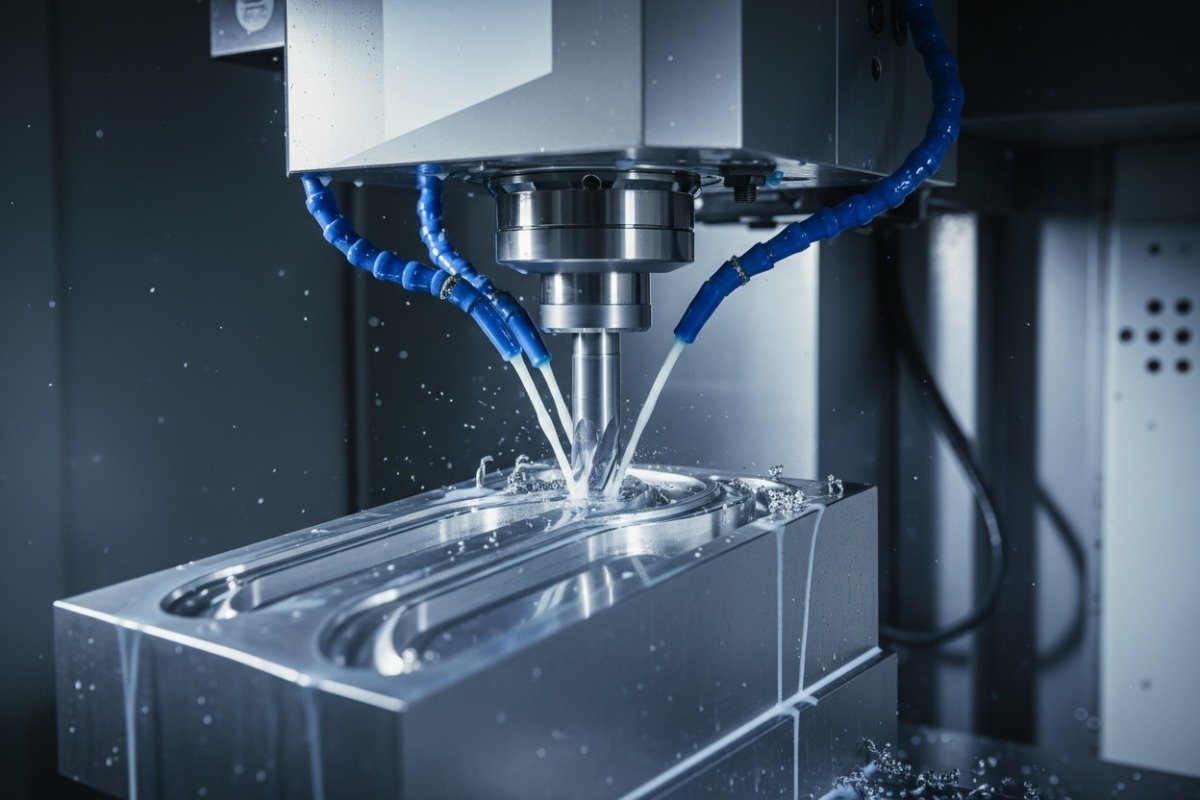
Look for multi-axis CNC machines (4-axis or 5-axis), proven experience with your specific materials, advanced CAD/CAM software compatibility, tight tolerance capability under 0.001 inches, and in-house secondary operations like grinding, EDM, or surface finishing to avoid outsourcing delays.
Match Your Part Complexity to Machine Capability
Not every CNC shop is equal. A shop with only 3-axis mills can handle flat parts and simple pockets. But if your design has undercuts, compound angles, or deep cavities, you need 4-axis or 5-axis capability.
Here is a simple way to think about it:
| Complexité des pièces | Minimum Machine Requirement | Tolérance typique |
|---|---|---|
| Flat plates, simple holes | 3-axis CNC mill | ±0.005 in |
| Angled features, rotational parts | 4-axis CNC mill or lathe with live tooling | ±0.002 in |
| Complex contours, aerospace components | 5-axis CNC mill | ±0.001 in or tighter |
| High-volume turned parts | CNC lathe with sub-spindle | ±0.002 in |
| Micro features, thin walls | Swiss-type CNC lathe | ±0.0005 in |
Shops with 5-axis capabilities can achieve tolerances under 0.001 inches. This matters for roughly 70% of custom aerospace parts, according to industry benchmarks.
Material Expertise Matters
A shop might own a beautiful 5-axis Mazak. But if their machinists have never cut titanium before, your project is at risk. Different materials demand different speeds, feeds, coolant strategies, and tooling.
Ask the shop: What materials do you work with regularly? Can you show me parts you have made from the same material I need?
Reputable providers work across metals like aluminum 6061, stainless steel 304/316, titanium Ti-6Al-4V 7, Inconel, and engineering plastics like PEEK and Delrin. They tailor their approach to each material. That reduces waste and produces better surface finishes.
In-House vs. Outsourced Operations
Here is something many buyers overlook: secondary operations. Your part might need heat treatment, anodizing, plating, grinding, or EDM. If the shop outsources these steps, you lose control over quality and timelines.
When we evaluate factories, we always map out the full process chain. We ask: What happens in-house? What gets sent out? How do you control quality at subcontractors?
The best shops keep critical operations under one roof. That means fewer handoffs, fewer communication gaps, and faster turnaround.
Software Compatibility
Modern CNC machining relies on CAD/CAM software 8. Make sure your supplier can import your file formats — STEP, IGES, SolidWorks, or native Creo files. Miscommunication between design intent and machine program is a common source of errors. A shop that invests in current software and skilled programmers will catch design issues early, often providing DFM (Design for Manufacturability) feedback before cutting any metal. Conception pour la fabrication (DFM) 9
How Can I Evaluate if a CNC Service Provider Will Consistently Meet My Production Deadlines and Lead Times?
Delivery performance is something we track obsessively for every supplier in our network. Late parts do not just delay your project — they disrupt your entire production schedule and damage your credibility with your own customers.
Evaluate delivery reliability by requesting the supplier's on-time delivery rate, asking for references from current clients, confirming their production capacity and scheduling system, and starting with a small trial order to test real-world performance before committing to large volumes.

Domestic vs. Overseas Lead Times
Geography plays a major role in lead times. Here is what we typically see across our sourcing network:
| Sourcing Region | Average Lead Time (Custom Parts) | Shipping to U.S. | Total Time to Door |
|---|---|---|---|
| U.S. Domestic | 1–4 weeks | 1–3 jours | 1.5–4.5 weeks |
| Vietnam / Southeast Asia | 3–6 semaines | 2–4 weeks (sea) | 5–10 weeks |
| Chine | 2–5 weeks | 3–5 weeks (sea) | 5–10 weeks |
| Inde | 4–8 semaines | 4–6 weeks (sea) | 8–14 weeks |
Domestic shops are faster. But they cost more. Sourcing from Asia cuts material and labor costs by 30–50%, but adds transit time and coordination complexity. That is exactly why our clients work with us — we manage the entire timeline so they get competitive pricing without the delivery risk.
Capacity and Scheduling Transparency
A good supplier will tell you honestly what their current workload looks like. Red flags include:
- They promise unrealistically fast delivery on every quote.
- They cannot tell you how many machines they run or how many shifts they operate.
- They have no formal scheduling system — just a whiteboard or memory.
Ask how they prioritize orders. Ask what happens when a rush job comes in. Ask if they have dedicated capacity for your project or if you are competing with dozens of other customers for machine time.
The Trial Order Strategy
We always recommend starting with a trial order. A small batch — maybe 10 to 50 pieces — before you commit to hundreds or thousands. This tells you more than any sales pitch ever will.
Track the trial carefully. Did parts arrive on the promised date? Were they packaged properly? Did the dimensions match the drawing? Was communication proactive, or did you have to chase updates?
Sixty percent of sourcing managers now prioritize responsiveness over price in recent industry polls. That makes sense. A responsive supplier who keeps you informed is far more valuable than a cheap one who ghosts you for three weeks.
Build in Buffer — But Not Too Much
Plan for some variance. Even the best suppliers hit occasional snags — a tooling break, a material delay, a power outage. Build a reasonable buffer into your timeline. But if you find yourself routinely adding 4–6 weeks of buffer because you cannot trust your supplier, that is a sign you need a new supplier.
What Red Flags Should I Watch Out for When Reviewing Quotes from Potential CNC Machining Partners?
When we review supplier quotes on behalf of our clients, we look beyond the bottom-line number. A quote tells you a lot about a shop's professionalism, transparency, and whether they truly understand your part.
Red flags in CNC machining quotes include unusually low pricing without explanation, vague line items that hide costs, no mention of material grade or tolerances, missing lead time commitments, and reluctance to provide references or sample parts from similar previous projects.

Understanding the Cost Breakdown
A transparent quote breaks down costs clearly. Here is what a typical CNC machining cost structure looks like:
- Matériaux : ~40% of total cost
- Machining (labor + machine time): ~30%
- Tooling: ~20%
- Setup: ~10%
If a quote just gives you one lump sum with no breakdown, ask why. Legitimate shops have nothing to hide. They can tell you exactly what you are paying for.
Spotting Suspiciously Low Bids
This is the biggest trap in custom parts sourcing. A quote comes in 40% below everyone else. It feels like a win. But in our experience, it almost never is.
Low bids usually mean one of these things:
- The shop misread the drawing and underestimated complexity.
- They plan to use cheaper, off-spec material.
- They are cutting corners on quality control.
- They are desperate for work and will prioritize other jobs once they have your deposit.
We have seen clients lose entire production runs to shops that underbid. The rework costs, expedited shipping for replacements, and production line downtime far exceeded what they "saved" on the original quote.
Green Flags That Build Confidence
Not everything is a warning sign. Here are positive signals to look for:
- The shop asks detailed questions about your drawing before quoting.
- They provide DFM (Design for Manufacturability) feedback proactively.
- Their quote specifies material grade, finish, tolerances, and lead time.
- They offer to produce a CMM-verified sample before full production.
- They can share case studies or references from similar projects.
- They have clear payment terms and a documented revision process.
Questions to Ask Every Potential CNC Partner
Before you sign a purchase order, make sure you have answers to these questions:
- What is your experience with my specific material?
- Can you share recent client references in my industry?
- What is your standard lead time for this type of part?
- What inspection equipment do you use?
- How do you handle non-conforming parts?
- What is your on-time delivery rate over the last 12 months?
- Do you offer First Article Inspection or PPAP?
- What are your data security and IP protection measures?
- Can you scale from prototype to production volume?
- What happens if there is a quality issue after delivery?
These questions separate serious suppliers from order-takers. A reliable CNC machining partner will answer them confidently, with data and examples. An unreliable one will deflect, generalize, or simply tell you "no problem" without substance.
Comparing Domestic vs. Global Sourcing
Many of our clients ask whether they should source domestically or from Asia. There is no one-size-fits-all answer. Here is a practical comparison:
| Facteur | U.S. Domestic | Asia (with Supply Chain Partner) | Asia (Direct, No Partner) |
|---|---|---|---|
| Coût unitaire | Higher (baseline) | 30–50% lower | 30–50% lower |
| Délai de livraison | 1–4 weeks | 5–10 weeks (managed) | 6–14 weeks (variable) |
| Communication | English, same time zone | Managed by partner | Language and time zone barriers |
| Contrôle qualité | Generally strong | Audited and managed | Inconsistent without oversight |
| IP Protection | Strong legal framework | Contractual + partner oversight | Higher risk |
| Scalabilité | Limited by cost | Élevé | High but harder to manage |
| Conditions de Paiement | Net 30 typical | Net 60–90 available | Often prepayment required |
The right choice depends on your volume, tolerance requirements, budget, and how much risk you are willing to manage yourself. For clients who want Asian pricing with professional quality oversight, that is exactly the gap our team fills.
Conclusion
Sourcing reliable CNC machining services comes down to verifying quality systems, matching technical capabilities to your part, testing delivery performance, and reading quotes carefully. Do the homework upfront — it pays off every time.
Notes de bas de page
1. SAE International is the authoritative source for AS9100 aerospace quality management standards. ↩︎
2. Replaced HTTP 503 error with an authoritative Wikipedia page explaining Coordinate-measuring machines (CMM). ↩︎
3. Quality-One provides an in-depth introduction to the Production Part Approval Process (PPAP) and its elements. ↩︎
4. Replaced HTTP 403 error with a comprehensive guide on multi-axis CNC machining, including 3, 4, and 5-axis explanations. ↩︎
5. Official ISO page explaining the ISO 9001 quality management system standard. ↩︎
6. 1factory offers a comprehensive guide to First Article Inspection, its purpose, and process. ↩︎
7. Xometry offers a detailed overview of Titanium Alloy 6-4 (Ti-6Al-4V), its properties, and applications. ↩︎
8. Autodesk provides integrated CAD/CAM software solutions for design and manufacturing. ↩︎
9. Ansys details Design for Manufacturability (DfM) best practices for reducing defects and improving quality. ↩︎
10. Replaced HTTP 404 error with an authoritative Wikipedia page detailing Inconel alloys. ↩︎

 English
 Español de México
 Deutsch
 Français
 Русский
 العربية