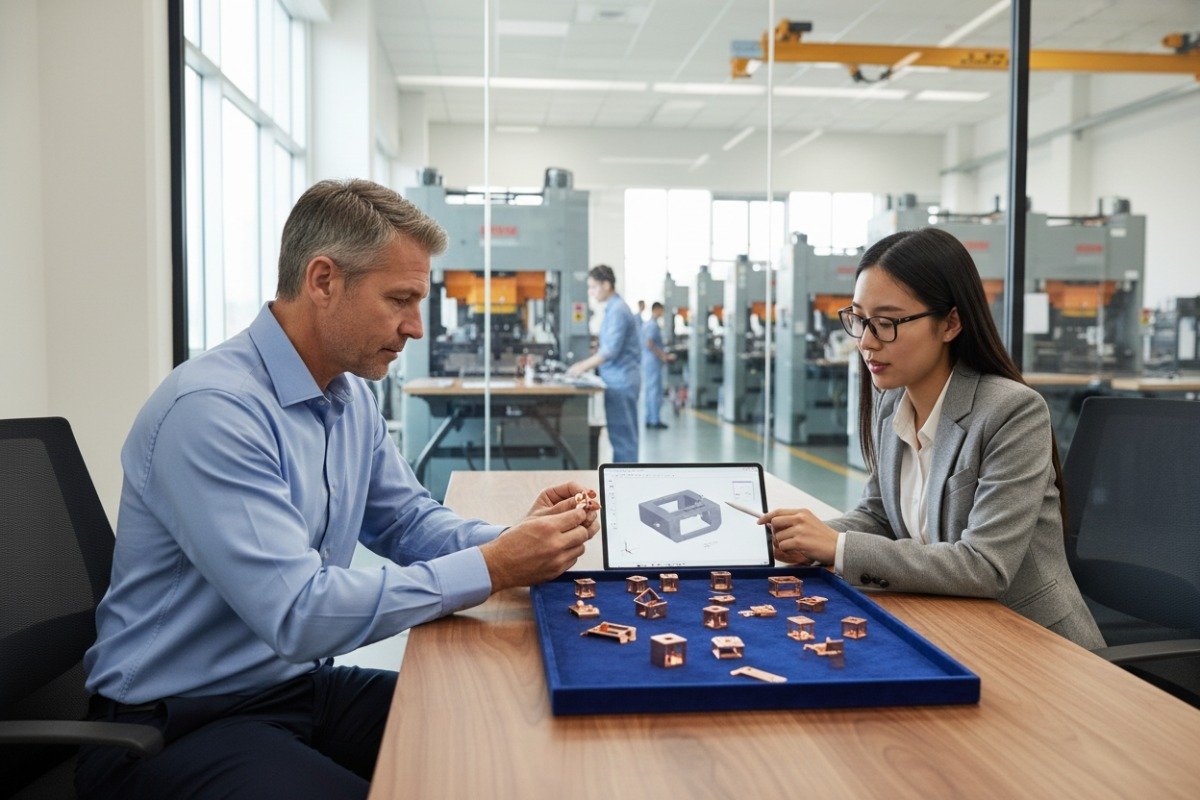
Every year, our team reviews dozens of stamping suppliers across Asia for clients who have been burned by bad partnerships le contrôle statistique des processus 1. The pattern is always the same. A buyer picks the lowest quote, skips the vetting, and ends up with late deliveries, out-of-spec parts, and costly rework. The frustration is real. And it is avoidable.
The best precision stamping manufacturer combines proven quality certifications like ISO 9001, deep experience with tight tolerances and complex geometries, scalable production capacity, transparent communication, and a collaborative approach to Design for Manufacturability — not just the lowest price.
Choosing the right stamping partner is one of the most consequential decisions a purchasing manager can make Conception pour la fabricabilité 2. Get it wrong, and you face months of delays and finger-pointing. Get it right, and you unlock a reliable supply chain that grows with your business. Let's walk through the critical factors step by step.
What Specific Quality Standards Should I Look for in a Precision Stamping Manufacturer?
When we audit stamping factories in Vietnam and across Southeast Asia, the first thing we check is not the machines — it is the quality management system on paper and on the shop floor. A shiny press means nothing without disciplined processes behind it.
Look for ISO 9001 certification as a baseline, plus industry-specific standards like IATF 16949 for automotive or AS9100 for aerospace. Verify that the manufacturer maintains documented inspection procedures, statistical process control (SPC), and full traceability from raw material to finished part.

Pourquoi les certifications seules ne suffisent pas
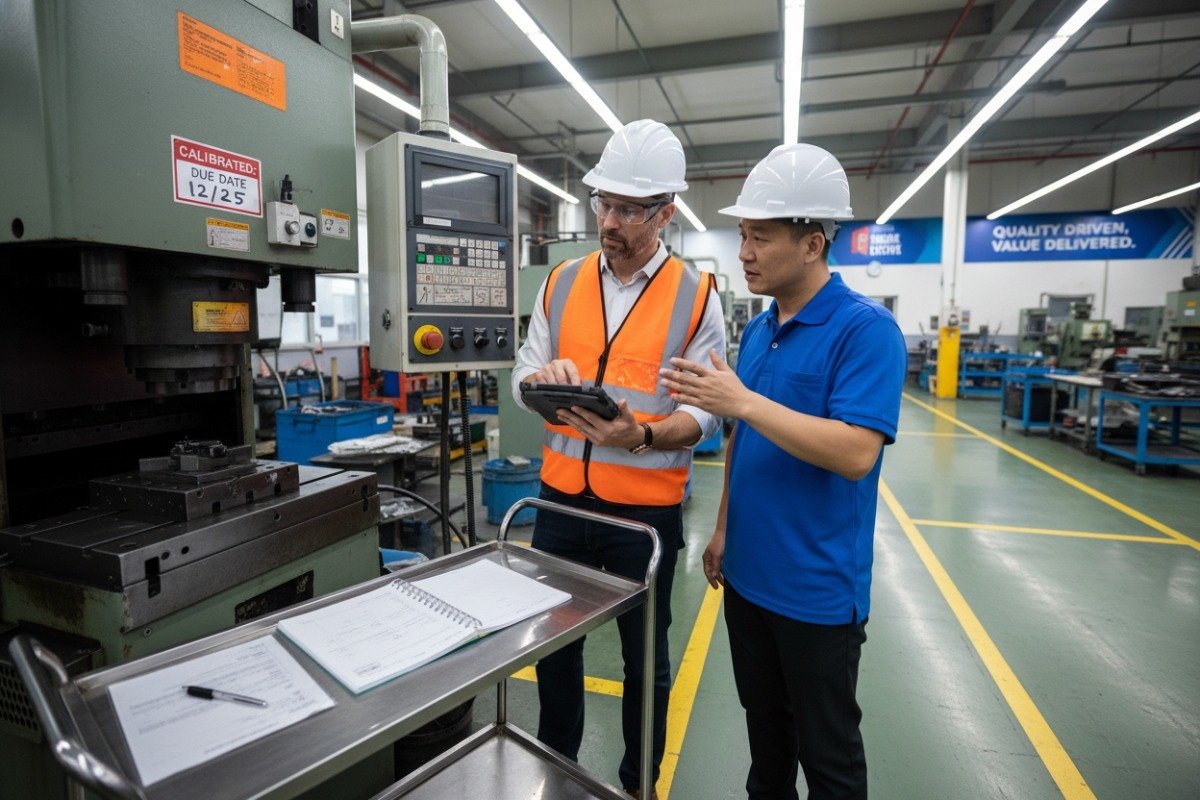
Many buyers stop at asking "Do you have ISO 9001?" and move on. That is a mistake. A certificate on the wall tells you the system was audited at one point in time. It does not tell you how the factory operates day to day. When we conduct supplier audits, we look at calibration records, corrective action logs, and how operators respond to non-conformances in real time. A factory that cannot show you a recent internal audit report or a corrective action from the last quarter is a red flag.
Key Quality Standards to Evaluate
| Standard / Certification | Ce qu'il couvre | Qui en a besoin |
|---|---|---|
| ISO 9001:2015 | Système de management de la qualité général | Toutes les industries |
| IATF 16949 3 | Automotive-specific QMS requirements | Automotive supply chain |
| AS9100 4 | Management de la qualité aérospatiale | Aerospace and defense |
| ISO 14001 5 | Système de management environnemental | Companies with sustainability goals |
| RoHS / REACH Compliance 6 | Restriction des substances dangereuses | Electronics, EU-bound products |
| PPAP (Processus d'approbation des pièces de production) 7 | Part-level quality documentation | Automotive, high-reliability sectors |
Statistical Process Control Matters
A good stamping manufacturer does not just inspect parts at the end of the line. They monitor critical dimensions during production using SPC charts. This means they catch drift before it becomes a defect. Ask your potential supplier to show you Cpk values for a recent production run. If they do not know what Cpk means, walk away.
We have seen cases where a supplier delivered 50,000 parts that passed final inspection but failed at the customer's assembly line because a non-critical dimension had drifted over time. SPC would have caught that. Final inspection alone would not.
Traçabilité et documentation
For mid-to-high quality custom parts, traceability is non-negotiable. You need to know which coil of steel went into which batch of parts, who ran the press, and what the in-process measurements were. This is especially important if you are in automotive or aerospace, but even general industrial buyers benefit from it. When a quality issue arises six months later, traceability lets you isolate the root cause fast instead of guessing.
Also look for manufacturers who provide First Article Inspection Reports (FAIR), dimensional reports with GD&T callouts, and material certifications (mill certs). These documents are not optional extras. They are the baseline for professional quality control.
Durabilité et conformité
More U.S. buyers now ask about environmental compliance. RoHS and REACH are not just European requirements — many American OEMs flow these down to their supply chains. A stamping manufacturer that tracks material composition and can provide compliance declarations saves you headaches during your own audits. ISO 14001 certification shows the factory takes environmental management seriously, including waste reduction and energy efficiency.
How Do I Verify if a Supplier Can Meet My Tight Tolerances and Complex Design Requirements?
Our engineers have spent years refining how we evaluate a stamping supplier's true technical capability — because what a factory claims on its website and what it can actually hold on the press are often two very different things.
Verify technical capability by requesting sample parts or prototype runs with your actual tolerances, reviewing their equipment list for press tonnage and speed, confirming in-house die design and build capacity, and asking for case studies or dimensional data from similar projects with comparable complexity.
Start with the Equipment
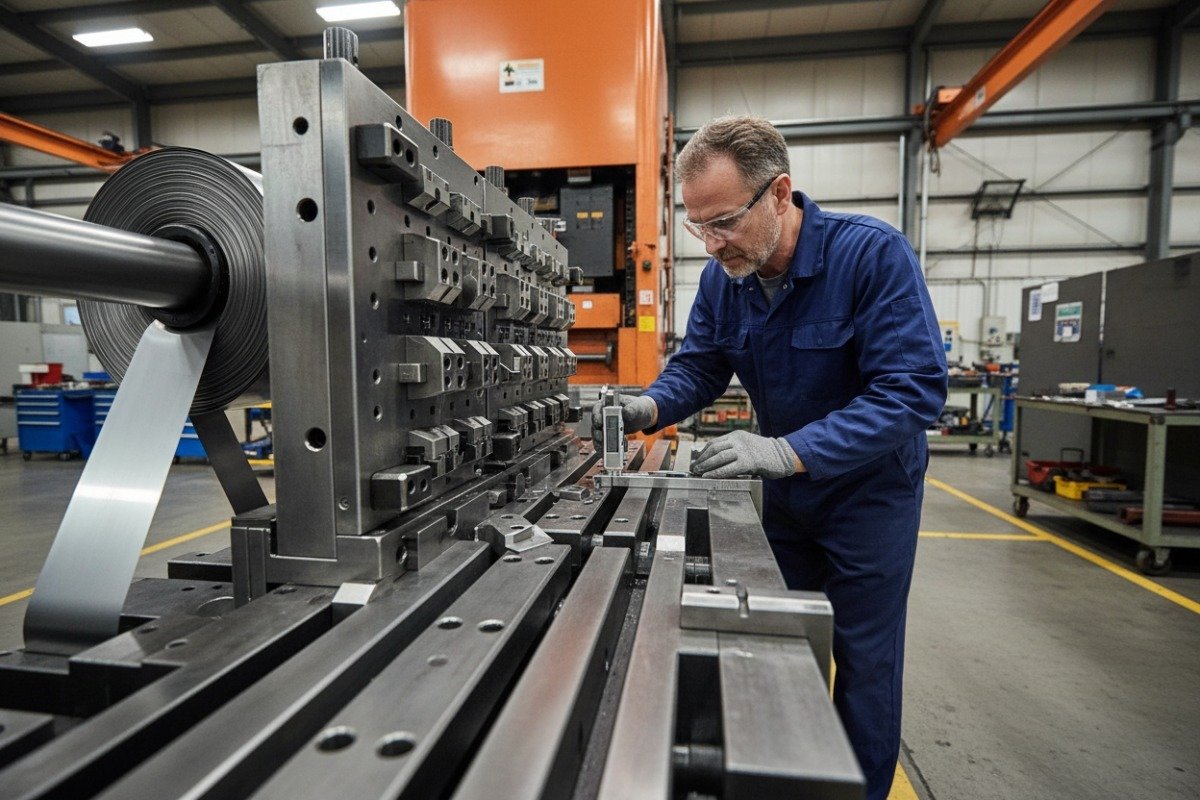
The type and condition of stamping presses directly affect what tolerances a factory can hold. High-speed progressive presses in the 15–60 ton range are common for small-to-medium precision parts with material thickness from 0.002 to 0.080 inches. But tonnage alone does not tell the whole story. You also need to ask about:
- Press age and maintenance schedule
- Coil handling and feeding systems
- Quick die change capability
- In-line sensors and monitoring
A factory running 20-year-old presses with no preventive maintenance program will struggle with tight tolerances, no matter what they promise.
Equipment and Capability Benchmarks
| Capacité | Que demander | Pourquoi c'est important |
|---|---|---|
| Press tonnage range | 15–60 tons for small precision parts | Ensures force matches material and geometry |
| Material thickness range | 0.002–0.080 inches | Confirms they handle your gauge |
| Annual volume capacity | 25,000 to 1,000,000+ parts | Matches your production forecast |
| Blank size capacity | Up to 6 x 6 inches | Fits your part envelope |
| Die design capability | In-house vs. outsourced | In-house means faster iteration and better control |
| Simulation software | FEA / forming simulation | Predicts issues before cutting steel |
The Prototype Test
Never commit to a high-volume order without a prototype or pilot run. A good stamping manufacturer will offer prototype tooling — sometimes called soft tooling — to validate your design before investing in hardened production dies. This step is where you discover if the supplier truly understands your drawing requirements.
When we manage projects for our clients, we insist on a PPAP process. This includes a prototype run, dimensional verification against the drawing, material testing, and process capability studies. If a supplier resists PPAP or says "just trust us," that is a warning sign.
Design for Manufacturability Collaboration
The best stamping partners do not just follow your drawing blindly. They push back — constructively. Early collaboration between your engineering team and the stamper's die designers can optimize material selection, simplify geometry, and reduce tooling cost. For example, a small radius change on a bend might eliminate cracking in high-strength steel. A slight repositioning of a hole might allow a more efficient progressive die layout.
This kind of DFM collaboration is a hallmark of a mature supplier. It saves money and prevents quality issues downstream. Ask potential suppliers to walk you through a recent DFM example. If they cannot, they may lack the engineering depth you need.
Expertise des matériaux
Precision stamping covers a wide range of metals — from soft copper and aluminum to stainless steel, spring steel, and even titanium. Each material behaves differently under the press. Ductility, tensile strength 9, work hardening rate, and formability all affect whether a part comes out right or cracks during forming.
A capable manufacturer knows which materials suit which applications and can advise you if your material choice creates unnecessary risk. They should also have established relationships with reliable material suppliers to ensure consistent quality and availability, especially during supply chain disruptions.
What Red Flags Should I Watch Out for When I Am Vetting a New Stamping Partner?
In our experience managing supplier relationships across Asia for U.S. clients, we have learned that the biggest problems rarely show up in the first quote. They show up after you have committed — when it is expensive to switch.
Watch for suppliers who cannot provide references or case studies, resist factory audits, offer unusually low prices without explanation, lack documented quality procedures, have no clear capacity plan, and communicate poorly or slowly during the quoting phase — these are strong indicators of future problems.
The Low-Price Trap
This is the most common and most costly mistake. A supplier quotes 20% below everyone else. The purchasing manager celebrates. Six months later, the first shipment arrives late with dimensional issues. Rework costs eat the savings. The production line sits idle.
We have seen this pattern repeat dozens of times. Low price often means the supplier is cutting corners somewhere — cheaper material, skipped inspections, overloaded presses, or underpaid operators who lack training. Price should be the last factor you evaluate, not the first.
Liste des signaux d'alarme
| Signal d'alarme | Ce que cela signale | Que faire |
|---|---|---|
| No ISO or industry certifications | Weak or absent quality system | Require proof of certification |
| Refuses or delays factory audit | Quelque chose à cacher | Insist on audit or walk away |
| Impossible de fournir des références | No track record or unhappy customers | Ask for 3 recent client contacts |
| Quote significantly below market | Cutting corners on quality or materials | Ask them to justify the pricing breakdown |
| Slow response during quoting | Will be slower during production issues | Test communication speed and clarity |
| No documented inspection process | Reactive, not proactive quality | Request their inspection plan |
| No DFM feedback on your drawing | Lacks engineering depth | Ask for specific design suggestions |
| Engagements vagues sur les délais de livraison | Poor production planning | Demand a detailed production schedule |
La communication est un indicateur avancé
How a supplier communicates during the quoting phase is a preview of how they will communicate during production. If they take a week to answer a simple question now, imagine what happens when you have an urgent quality issue on the line.
We prioritize proactive communication in every supplier we work with. That means the supplier raises issues before you ask, provides updates without being chased, and responds within 24 hours to emails. This is not a luxury. It is a basic requirement for professional B2B relationships.
Beware of "Yes to Everything"
A supplier who agrees to every requirement without asking questions is not being cooperative — they are being careless. A professional stamping manufacturer will ask clarifying questions about your drawing, your application, your volume forecast, and your quality expectations. They will push back if something does not make sense. That is a sign of competence, not difficulty.
When we review supplier responses for our clients, we actually score suppliers higher when they ask smart questions. It shows they are reading the drawing carefully and thinking about how to make the part right the first time.
Check Their Supply Chain Resilience
Ask your potential supplier what happens if their primary material source is disrupted. Do they have alternative suppliers? Do they keep safety stock? What is their disaster recovery plan? A manufacturer with a single material source and no backup plan is a single point of failure in your supply chain.
Lean manufacturing programs 10 are valuable, but only when they are company-wide and backed by strong supplier networks. A factory that claims to be "lean" but has no contingency for supply disruptions is not lean — it is fragile.
How Can I Ensure My Manufacturer Will Scale Production as My Business Grows?
When we onboard a new stamping supplier for a client, we always ask about capacity three years out — not just today. A supplier that fits your current volume but cannot grow with you will become a bottleneck exactly when you can least afford it.
Ensure scalability by evaluating the manufacturer's current capacity utilization, their willingness to invest in additional equipment, their ability to add shifts or production lines, their track record of scaling with existing clients, and their logistics infrastructure for handling increased shipping volumes.
Capacity Planning Starts at the Quote Stage
A responsible supplier will ask about your volume forecast — not just your initial order. They should want to know your projected annual usage for the next one to three years. This tells them whether they need to plan for additional tooling, press time, or staffing.
If a supplier never asks about your growth plans, they are thinking transactionally, not as a partner. And a transactional supplier will prioritize their bigger customers when capacity gets tight — leaving you waiting.
What Scalability Looks Like in Practice
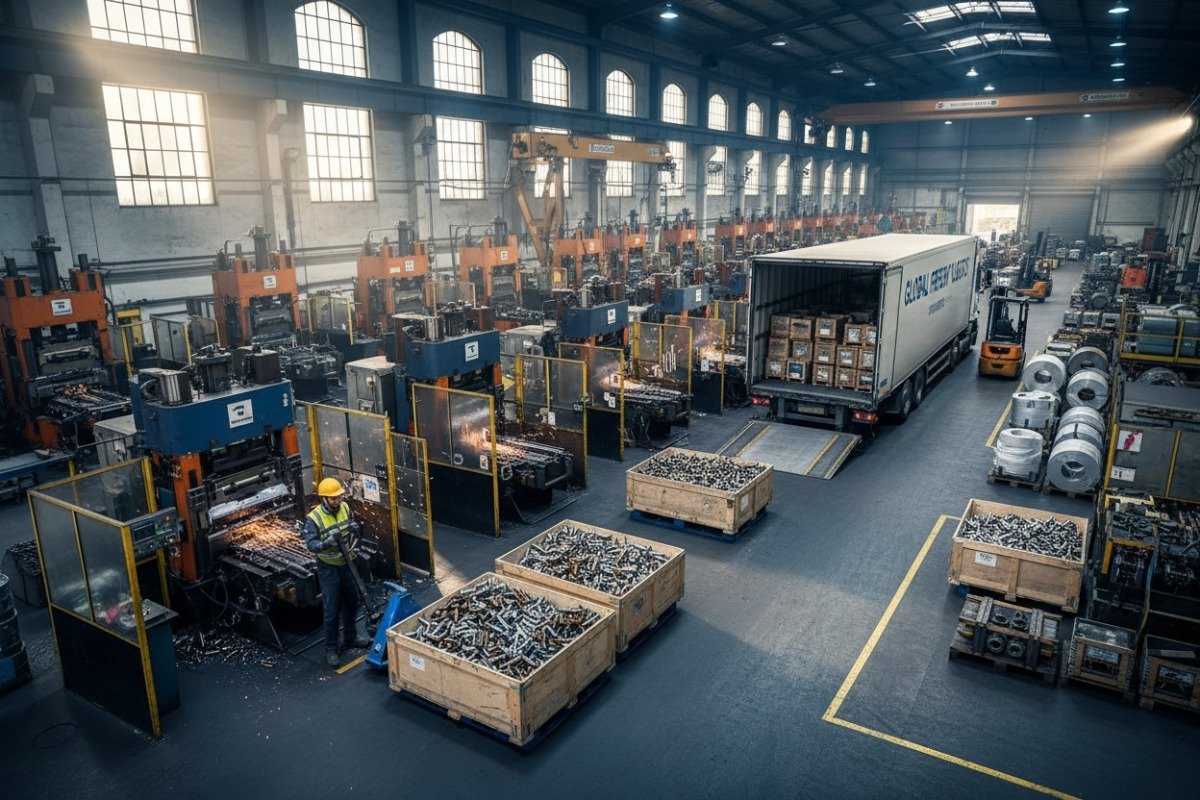
Scalability is not just about having more presses. It involves the entire production ecosystem:
- Outillage : Can they build backup or duplicate dies for high-volume runs?
- Material sourcing: Do they have supply agreements that can flex with increased demand?
- Workforce: Can they add shifts without sacrificing quality?
- Logistique : Can they handle larger and more frequent shipments?
- Systèmes de qualité : Do their inspection processes scale, or do they become a bottleneck at higher volumes?
Progressive Stamping for Volume Efficiency
For medium-to-high volume production of small precision parts, progressive stamping is often the most efficient method. A progressive die performs multiple operations — blanking, piercing, bending, forming — in a single press stroke. This means higher output with consistent quality.
However, progressive dies require significant upfront investment in tooling. A good manufacturer will discuss the break-even point with you and help you decide whether progressive stamping makes sense for your volumes. For lower volumes or highly complex shapes, deep draw stamping or transfer stamping might be more appropriate.
Matching Stamping Type to Your Needs
| Stamping Type | Idéal pour | Typical Volume Range | Niveau de complexité |
|---|---|---|---|
| Emboutissage progressif | Small parts, high volume | 25,000–1,000,000+ annually | Medium to high |
| Deep draw stamping | Cup-shaped or enclosed parts | 5,000–500,000 annually | Élevé |
| Transfer stamping | Larger parts, complex geometry | 10,000–250,000 annually | Élevé |
| Fourslide stamping | Small, intricate bent parts | 10,000–1,000,000+ annually | Moyen |
Value-Added Services Reduce Supply Chain Complexity
As your volumes grow, managing multiple suppliers for stamping, plating, heat treatment, assembly, and packaging becomes a headache. A manufacturer that offers end-to-end services — from die design through finishing and packaging — simplifies your supply chain and reduces lead time.
When we help clients scale, we look for stamping partners who can integrate secondary operations like deburring, plating, welding, or assembly. This reduces the number of handoffs, which reduces the number of things that can go wrong.
Domestic vs. Offshore Considerations
Some buyers prefer domestic or nearshore stamping partners for easier communication and shorter lead times. Others source from Asia for cost advantages. Both approaches have merit. The key is to match your choice to your priorities.
If you source from Asia, work with a partner who has local teams on the ground — like our offices in Vietnam and China — to manage quality, logistics, and communication in real time. This gives you the cost benefit of offshore manufacturing with the responsiveness of a local partner. Open account payment terms can also ease cash flow pressure during scale-up, which is something many Asian suppliers do not offer but we do.
Invest in the Relationship
Scaling with a manufacturer is not just a commercial transaction. It requires trust, shared goals, and ongoing communication. Visit the factory. Meet the team. Share your roadmap. A supplier who understands your business strategy will invest in the capacity and capability to support it. A supplier who only sees purchase orders will not.
Conclusion
Choosing the right precision stamping manufacturer comes down to quality systems, technical capability, communication, and scalability — not price alone. Vet thoroughly, start with prototypes, and build a partnership that grows with your business.
Notes de bas de page
1. ASQ provides a clear definition and explanation of SPC in manufacturing. ↩︎
2. Wikipedia entry explaining the engineering concept of DFM. ↩︎
3. Site officiel de la norme du système de management de la qualité automobile. ↩︎
4. Wikipedia entry explaining the aerospace quality management system standard. ↩︎
5. Official ISO page detailing the environmental management system standard. ↩︎
6. Provides a clear comparison and explanation of both RoHS and REACH compliance from a reputable compliance solutions provider. ↩︎
7. Official AIAG page for the Production Part Approval Process. ↩︎
8. Official ISO page explaining the widely recognized quality management standard. ↩︎
9. Wikipedia explanation of ductility, a key material property. ↩︎
10. EPA’s explanation of lean manufacturing principles and benefits. ↩︎

 English
 Español de México
 Deutsch
 Français
 Русский
 العربية