We often see clients frustrated by delays and quality issues after unknowingly hiring middlemen. When we manage our production lines, direct control ensures precision, unlike the uncertainty and miscommunication often found when dealing with trading companies.
To distinguish a real stamping factory from a trading company, request an immediate video call to view the production floor and stamping presses. Additionally, verify their business license for "Manufacturing" scope, check ISO certifications matching their address, and ask technical questions about die maintenance that only a manufacturer can answer instantly.
Identifying the true nature of your supplier is the first step toward securing your supply chain and protecting your margins.
What specific documents should I request to verify a stamping manufacturer's ownership?
When we undergo audits for our Singapore and Vietnam facilities, we provide specific legal documentation to prove our capabilities. Relying on a website claim is risky without seeing the official paperwork that legally defines a company's operations.
You must request a business license that explicitly lists "Manufacturing" or "Processing" in its scope, rather than just "Wholesale." Also, demand an Environmental Impact Assessment (EIA) report, which is mandatory for operating heavy stamping machinery, and ensure the address on ISO 9001 certificates matches the physical factory location.

Paperwork is often the most boring part of sourcing, but in the world of international trade, it is the only irrefutable proof of a supplier's identity. In our daily operations, we maintain a strict set of permits that a simple trading office would never possess. To verify a supplier, you need to look beyond the marketing brochures and examine the legal documents that govern their existence.
The Business License "Scope" Trap
In many Asian countries, particularly China, the business license is the "source of truth." However, many buyers do not know what to look for. You need to request a digital copy of their business license and look at the "Business Scope" section.
business license 1
If you are dealing with a Chinese supplier, look for the characters "生产" (Production), "加工" (Processing), or "制造" (Manufacturing). If the license only contains "批发" (Wholesale), "贸易" (Trading), or "进出口" (Import/Export), you are almost certainly dealing with a trading company. A real factory's license will be specific. For example, it might say "Manufacturing of metal products and auto parts." A trader's license will be broad, often covering everything from electronics to textiles.
Mandatory Environmental Permits
Metal stamping is a heavy industrial process. It involves noise, vibration, and the use of lubricants that require disposal. Therefore, legitimate factories must hold an Environmental Impact Assessment (EIA) report or a Pollution Discharge Permit.
Environmental Impact Assessment (EIA) report 2
Trading companies operate out of commercial office buildings where such permits are neither required nor available. Asking for an EIA report is a "silver bullet" strategy. If a supplier makes excuses—saying it is confidential or unnecessary—it is a major red flag. We always have these documents ready because they are essential for our continued operation.
Matching Names and Addresses on Certificates
Another common trick is the "borrowed" certificate. A trading company might send you an ISO 9001 certificate belonging to the factory they buy from, claiming it is their own.
ISO 9001 certificate 3
To counter this, you must perform a three-way match:
- Company Name: Does the name on the ISO certificate match the name on the Proforma Invoice and the email signature?
- Address: Does the address on the certificate match the address on their website and Google Maps?
- Scope: Does the certification scope cover "stamping" or "metal fabrication"?
If the address on the certificate points to an industrial park, but the address on their email footer points to a skyscraper in a city center, you are likely talking to a middleman.
Document Checklist for Verification
| Document Name | Real Factory (Manufacturer) | Trading Company |
|---|---|---|
| Business License Scope | Includes "Manufacturing," "Production," "Processing." | Includes "Wholesale," "Distribution," "Consulting." |
| ISO 9001 / IATF 16949 | Issued to the supplier's name; address is an industrial zone. | Often missing, or issued to a different company name. |
| Environmental Permit (EIA) | Available and mandatory for heavy machinery. | Not available; they operate in commercial offices. |
| VAT Invoice Sample | Can issue invoices for "Processed Goods." | Issues invoices for "Services" or "Sales." |
Can I use video calls or third-party audits to confirm the production facility exists?
We frequently host virtual tours for our US clients who cannot travel to Asia to see our equipment firsthand. Seeing our technicians operate the presses builds trust that static photos simply cannot provide, effectively filtering out dishonest intermediaries.
Yes, live video calls are highly effective if you demand to see specific machinery, like progressive die stampers, in operation immediately. Third-party audits by firms like SGS are even more reliable, as they physically verify asset ownership, workforce size, and production capacity, eliminating the risk of a staged office tour.

In the era of high-definition cameras and high-speed internet, there is no excuse for a supplier to refuse a virtual tour. However, the way you conduct this tour matters. A pre-recorded video sent via WhatsApp proves nothing. You need a live, interactive experience to verify that the person you are speaking with actually works at the facility they claim to own.
The "Right Now" Video Strategy
The most effective method is the ambush video call. During a standard WeChat or Zoom negotiation, simply ask: "Can you walk to the production line right now and show me the stamping presses?"
A real manufacturer will usually say, "Sure, give me a minute to put on my safety gear and walk downstairs." They know the layout, they know the workers, and they have unrestricted access.
A trading company will panic. They might say:
- "The signal is bad in the factory."
- "I am currently in the sales office, which is far from the factory."
- "We need to schedule this in advance to protect proprietary designs."
While some factories do have separate sales offices, a complete inability to show the production floor ever is a deal-breaker. If they schedule a call for three days later, they might be traveling to a partner factory to pretend it is theirs.
Analyzing the Visual Evidence
When you get on the video call, look for specific details that are hard to fake.
- The Noise: Stamping factories are loud. You should hear the rhythmic thumping of the presses. If it is library-quiet, it is not a stamping shop.
- The Interaction: Ask the salesperson to talk to a machine operator. Do they know each other? Does the operator take instructions from them? In a trading company scenario, the "salesperson" is a visitor and will treat the workers with distance or hesitation.
- The Inventory: Ask to see the raw material warehouse. Real factories have coils of steel or aluminum stacked up. Traders rarely have access to the raw material storage of their suppliers.
- The Tooling Room: This is critical. Ask to see the shelves where the dies and molds are stored. A factory will have racks of dies labeled with customer names.
Third-Party On-Site Verification
If your order volume is significant, a video call might not be enough. We always recommend hiring a third-party auditor like SGS, Intertek, or AsiaInspection (QIMA). For a few hundred dollars, they will send an inspector to the address.
auditor like SGS 4
They will verify:
- Asset Ownership: Do the serial numbers on the machines match the purchase records?
- Employee Count: Does the number of workers on the line match the payroll records?
- Capacity: Can this facility actually produce 10,000 units a month as promised?
Virtual vs. Physical Verification Effectiveness
| Méthode de vérification | Fiabilité | Cost | What it Verifies |
|---|---|---|---|
| Google Maps Check | Faible | Free | Location type (Industrial vs. Commercial). |
| Live Video Call | Medium-High | Free | Existence of machinery, salesperson's access. |
| Third-Party Audit | Élevé | $300-$500 | Legal ownership, capacity, quality systems. |
| Personal Visit | Très élevé | Travel Costs | Everything, plus relationship building. |
What technical questions about the stamping process will a trading company fail to answer?
Our engineering team deals with die maintenance and material properties daily, so we know the technical nuances inside out. A salesperson at a trading company usually lacks the depth to answer specific process questions without acting as a messenger.
A trading company will likely struggle to answer specific questions about press tonnage requirements, progressive die maintenance schedules, or material spring-back calculations without pausing to consult others. Real manufacturers can immediately discuss cycle times, scrap rates for specific alloys, and the technical limitations of their in-house tooling capabilities.

Salespeople at trading companies are often skilled linguists and negotiators, but they are rarely engineers. They memorize brochures but do not understand the physics of metal deformation. By asking specific, technical questions, you can quickly expose their lack of in-house knowledge. A real factory representative, even if they are in sales, works alongside engineers and hears these terms daily.
Probing Die Maintenance and Tooling
The heart of any stamping operation is the tooling (the die). Ask questions that require operational knowledge:
- "What is your standard maintenance schedule for a progressive die running SPCC steel? How many hits before you sharpen the punch?"
- "Do you design and build your dies in-house, or do you outsource the tooling?"
progressive die 5
A trader will likely give a vague answer like "We ensure high quality" or "We check it regularly." A manufacturer will give you numbers: "We typically sharpen the die every 50,000 hits depending on the material hardness."
Material-Specific Technicalities
Stamping isn't just about hitting metal; it's about how the metal reacts. Ask about spring-back.
- "For this 304 stainless steel bracket, how do you calculate the over-bend to account for spring-back?"
A real factory engineer knows that stainless steel has significant spring-back compared to mild steel and will explain their compensation strategy. A trader might not even know what spring-back is or will say, "Don't worry, we will make it to the drawing."
significant spring-back 6
Capacity and Tonnage
Ask about their machinery specifics.
- "What is the tonnage of the press you intend to use for this part? Is it a mechanical press or a hydraulic press?"
- "What is the stroke per minute (SPM) you run for this type of part?"
mechanical press 7
If they cannot answer the press tonnage immediately, they are not the ones making it. The tonnage determines the cost and the feasibility of the part. A manufacturer knows exactly which machine in their shop is suitable for your job.
Technical Q&A Cheat Sheet for Buyers
| Question Category | Question to Ask | Factory Response | Trader Response |
|---|---|---|---|
| Tooling | "Do you have an in-house tool room for die repair?" | "Yes, we have wire EDM and grinders for maintenance." | "We have partners" or "We handle it." |
| Process | "How do you handle scrap removal in the progressive die?" | Specifics about scrap choppers or shakers. | Vague assurances about cleanliness. |
| Capacity | "What is the bed size of your 200-ton press?" | Specific dimensions (e.g., 1500mm x 800mm). | "It is big enough" or "I need to check." |
| Matériau | "Can you provide the mill certificate for the raw coil?" | "Yes, we have it from the steel mill in our files." | "We can get it later." |
Why does the distinction between a direct factory and a sourcing agent matter for my custom parts project?
In our experience exporting custom parts, direct communication prevents the "telephone game" errors that plague complex projects. Working directly with the source ensures your technical drawings are interpreted correctly the first time, saving weeks of revisions.
The distinction matters because working directly with a factory typically reduces costs by 15-40% and allows for tighter control over custom modifications. While agents offer convenience, direct factory access ensures faster communication regarding engineering changes, clearer accountability for quality issues, and greater transparency regarding production schedules and material sourcing.
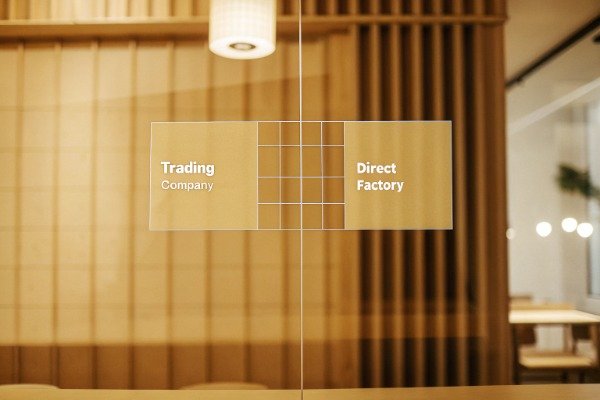
Many buyers wonder, "If the price is okay, does it matter if they are a trader?" For off-the-shelf products like paper clips, perhaps not. But for custom stamping parts, the difference is critical to the long-term success of your project. It impacts your bottom line, your risk profile, and your agility.
The Cost Structure Reality
Trading companies add a markup. This is fair, as they provide a service. However, in the stamping industry, this markup is typically between 15% and 40%.
- Factory Price: Includes material cost + processing cost + overhead + profit.
- Trader Price: Factory Price + Trader's Overhead + Trader's Profit.
When you deal with us directly, you eliminate that second layer of profit. More importantly, you gain transparency. If the price of steel rises, we can explain exactly how that impacts the unit price. A trader might use a market fluctuation as an excuse to hike prices disproportionately to protect their margin.
Engineering Communication and Speed
Custom parts rarely go from drawing to production without changes. You might need to move a hole 2mm or change the bend radius.
- With a Trader: You email the trader -> Trader translates (often poorly) -> Trader emails factory -> Factory asks a clarifying question -> Trader translates back -> You reply. This cycle can take days.
- With a Factory: You email our engineers -> We look at the CAD file -> We reply with a solution. This takes hours.
We have seen projects delayed by weeks simply because a trader did not understand a technical tolerance and failed to convey the importance of it to the actual manufacturer.
Accountability in Quality Control
When things go wrong—and in manufacturing, they sometimes do—accountability is key. If you receive a batch of defective parts from a trader, the finger-pointing begins. The trader blames the factory; the factory blames the unclear instructions from the trader.
When you work with a factory, the buck stops with us. We cannot blame a third party. We have to investigate our own process, check our own dies, and fix the issue. Furthermore, a factory has "skin in the game." We own the expensive dies and machinery. A trader has very few assets and can disappear or change names if a claim becomes too large.
hydraulic press 8
Strategic Fit: When to Use Which?
While we advocate for direct sourcing, there are times when a trader might be useful.
304 stainless steel 9
Choose a Factory When:
- You have a high volume (5,000+ units).
- The part is custom and requires technical precision.
- You want the lowest possible unit price.
- You need long-term stability and supply chain transparency.
Choose a Trader When:
- You are buying very small quantities (low MOQ).
- You need to consolidate 50 different products (stamping, plastics, electronics) into one container.
- You do not have the internal resources to manage logistics or quality control.
Conclusion
Distinguishing a real factory from a trader requires verifying documents, demanding live video proof, and asking deep technical questions. Doing so secures you lower costs, better communication, and direct control over your quality.
Proforma Invoice 10
Notes de bas de page
1. Defines the legal document required to verify a company’s operational scope. ↩︎
2. Explains the mandatory environmental evaluation for industrial factories. ↩︎
3. Links to the official standard for quality management systems mentioned. ↩︎
4. Links to the official website of the major inspection firm cited. ↩︎
5. Provides technical context for the specific metalworking process mentioned. ↩︎
6. Explains the material deformation phenomenon relevant to stamping. ↩︎
7. Defines the type of stamping machinery referenced. ↩︎
8. Defines the alternative type of stamping machinery referenced. ↩︎
9. Details the properties of the specific steel grade discussed. ↩︎
10. Official definition of this preliminary bill of sale used in international trade. ↩︎

 English
 Español de México
 Deutsch
 Français
 Русский
 العربية