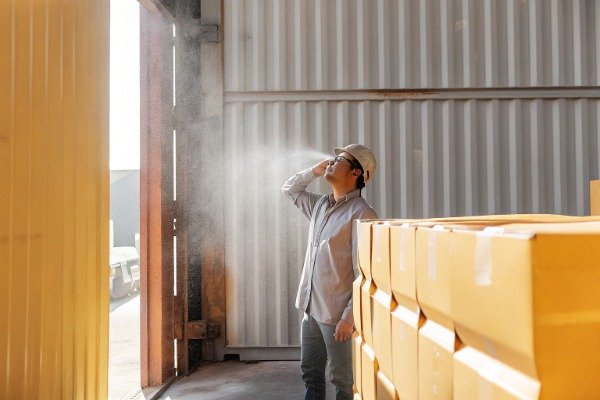
When we coordinate production runs for our clients in Vietnam, we often face a critical moment right before shipment. The goods are packed, the factory manager is smiling, and the paperwork looks clean. However, our engineers know that what lies inside those boxes can be a gamble if no one has physically verified it. We have seen firsthand how a small misunderstanding regarding a technical drawing can ruin an entire batch of custom parts. The distance between the U.S. and Vietnam is too great to leave quality to chance.
Yes, hiring a third-party inspection company is usually necessary unless you have a trusted local engineering team on the ground. It acts as a critical financial firewall, preventing the shipment of defective goods that are practically impossible to return. Independent oversight ensures adherence to AQL standards and verifies raw materials before they are processed.
The decision ultimately comes down to risk management. If you ship a container of defective stamped parts to the United States, the cost of rework, scrap, and delayed production lines will far exceed the few hundred dollars spent on an inspection. Let's explore the specific risks and solutions involved in sourcing from Vietnam.
risk management 1
What are the common quality risks for stamping parts manufactured in Vietnam?
In our daily operations across industrial zones in Vietnam, we frequently encounter specific quality issues that seem to plague stamping projects more than others. We often find that while the machinery is capable, the process controls can be inconsistent without external pressure.
process controls 2
Common risks include dimensional inaccuracies caused by poor tooling maintenance, dangerous burrs that affect assembly safety, and unauthorized material substitution with lower-grade metals. Additionally, Vietnamese stamping factories frequently outsource secondary finishes like plating or heat treatment to smaller sub-suppliers, where quality control often breaks down completely without supervision.
The Reality of Manufacturing Risks in Vietnam
When sourcing custom stamping parts from Vietnam, you are not just buying a product; you are buying the capability of a factory to maintain consistency over thousands of cycles. Based on our observations on the factory floor, here are the deep-seated risks you need to watch for.
Material Substitution and Verification
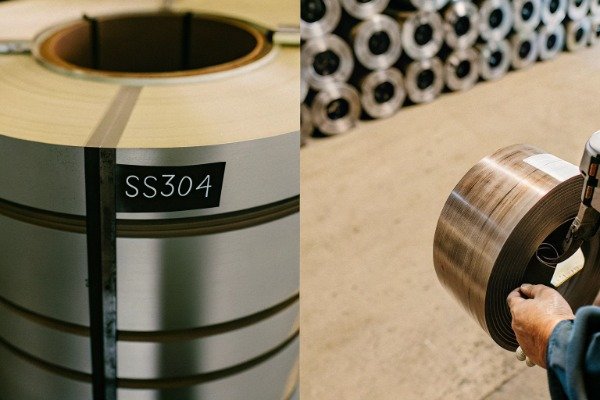
One of the most insidious risks we encounter is material substitution. Vietnam imports a significant volume of its raw steel and aluminum. When supply chains get tight, or costs rise, a factory might substitute your specified Stainless Steel 304 with a cheaper, lower-nickel alternative like 201, or use a thinner gauge sheet than requested. Visually, they look identical. Without a third-party inspector conducting a spectrometer test or checking the mill certificates against the actual coils on the floor, you might not discover this until the parts rust in your warehouse or fail under load.
The "Sub-Tier" Problem
Stamping is rarely a standalone process. The parts often need deburring, plating, anodizing, or heat treatment. In Vietnam, many stamping houses do not have these facilities in-house. They outsource this work to smaller, local workshops.
- The Risk: These sub-tier suppliers often lack ISO certifications.
- The Consequence: We have seen batches of perfectly stamped parts ruined because the plating thickness was uneven, or the heat treatment made the parts too brittle.
- The Solution: An inspection must cover these secondary processes, not just the stamping press output.
Tooling Maintenance and Tolerance Drift
Stamping dies are expensive assets. If a factory tries to extend the life of a die without proper sharpening or maintenance, you get "tolerance drift." The first 1,000 parts might be perfect, but the last 5,000 might have dimensions that have drifted out of spec. Furthermore, worn dies create excessive burrs. A sharp burr on a metal part is not just a cosmetic issue; it is a safety hazard for your assembly workers and can prevent parts from fitting into fixtures correctly.
Environmental Factors
Vietnam has a tropical climate with high humidity. We have seen containers arrive in the U.S. with "flash rust" because the factory did not use adequate desiccant or anti-corrosion oil before packaging. An inspector verifies moisture levels and packaging integrity before the doors close.
Table: Common Stamping Defects & Causes
| Defect Type | Likely Cause in Vietnam Factory | Impact on Buyer |
|---|---|---|
| Dimensional Variation | Worn die/tooling; lack of in-process checks. | Parts fail to fit during assembly; high scrap rate. |
| Excessive Burrs | Dull cutting edges on the punch; improper clearance. | Safety hazard; interference with mating parts. |
| Surface Cracks | Material grain direction ignored; poor raw material quality. | Structural failure under stress. |
| Flash Rust | High humidity packing environment; lack of rust inhibitor. | Cosmetic damage; requires expensive cleaning or scrapping. |
| Plating Peeling | Poor surface preparation by sub-tier supplier. | Long-term corrosion; warranty claims. |
Can my sourcing partner handle QC or do I need a separate inspection agency?
We often discuss this with clients who are trying to optimize their budget. They wonder if paying us to manage the project is enough, or if they need to hire a big name like Bureau Veritas or V-Trust on top of that.
Bureau Veritas 3
A capable sourcing partner with local engineers can often replace a separate agency, provided they have specific stamping expertise and conflict-of-interest policies. However, if your partner lacks technical depth or acts merely as a trader, a third-party agency is safer for objective AQL verification and ensuring unbiased reporting.

The Difference Between Sourcing QC and Third-Party Inspection
To make the right decision, you must understand the difference in "depth" between a sourcing partner's QC and a third-party agency.
The "Clipboard" vs. The "Engineer"
Most third-party inspection agencies hire generalist inspectors. On Monday they might inspect shoes, on Tuesday furniture, and on Wednesday your precision metal clips. They follow a checklist (the "clipboard" approach). They are excellent at counting quantity and spotting obvious visual defects based on an AQL (Acceptable Quality Limit) standard.
However, when we deploy our own engineers to a factory, the approach is different. If a dimension is out of spec, a third-party inspector simply marks it as "FAIL" and leaves. Our engineers, conversely, will look at the die, talk to the machine operator, and figure out why it failed. Is the punch misaligned? Is the material feeding incorrectly? We aim to fix the root cause, not just report the symptom.
The Conflict of Interest Trap
You must evaluate your sourcing partner's business model.
- Commission-based Agents: If your agent only gets paid when the goods ship, they have a financial incentive to ignore "minor" quality issues to ensure the shipment leaves. In this case, you absolutely need a separate third-party inspector to keep them honest.
- Service-based Partners (Like DEWIN): We operate on a model where our reputation depends on the long-term success of the project. We are paid to protect your interests. In this scenario, our internal QC is often more rigorous than a third-party because we treat the product as if it were our own.
When to Use Which?
There is no one-size-fits-all answer. We sometimes even recommend third-party inspections to our own clients if the project is extremely high-value or requires a specific certification (like medical or automotive standards) that requires an independent audit trail.
Table: Sourcing Partner QC vs. Third-Party Agency
| Feature | Sourcing Partner (with Engineers) | Third-Party Agency (e.g., V-Trust, SGS) |
|---|---|---|
| Cost Structure | Often included in service fee or retainer. | Per man-day fee (typically $200-$300+). |
| Technical Depth | High (Industry-specific knowledge). | Medium (Generalist inspectors). |
| Problem Solving | Proactive (Fixes issues at the source). | Passive (Reports issues only). |
| Bias Risk | Low (if professional); High (if commission-only). | Very Low (Neutral third party). |
| Timing | Continuous monitoring during production. | Snapshot (usually only at the end). |
How do I ensure my Vietnamese supplier follows strict QC standards for custom parts?
We have learned that sending a PDF of a technical drawing is not enough. In our experience, if you do not explicitly demand a specific standard, the factory will default to their own internal standard, which is usually "good enough for the local market."
Stamping dies 4
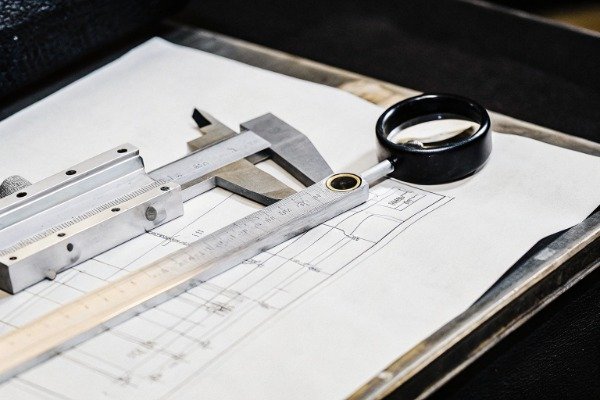
You must establish a multi-stage inspection strategy including First Article Inspection (FAI) for tooling verification, in-process checks, and Pre-Shipment Inspection (PSI). Explicitly define Acceptable Quality Limits (AQL) in your contract and require material mill certificates to prevent unauthorized substitutions or lower-grade steel usage.
Pre-Shipment Inspection (PSI) 5
Building a Quality Fortress Around Your Order
To ensure your custom parts meet your requirements, you need to implement a system that leaves no room for ambiguity. Here is how we structure quality control for stamping projects.
mill certificates 6
1. First Article Inspection (FAI) is Non-Negotiable
In stamping, quality starts with the tool (the die). Before the factory runs 10,000 parts, they must run the first 5 to 10 pieces.
- The Action: We require these samples to be fully measured against the drawing.
- The Goal: This verifies the die is cut correctly. If the FAI fails, the mass production must not start. This is the single most important step to prevent systemic errors.
2. Define the "Golden Sample"
Once the FAI is approved, we sign and seal one perfect sample. This becomes the "Golden Sample." It is kept at the factory. If there is ever a dispute during mass production about surface finish, color, or deburring quality, the Golden Sample is the judge. It removes subjective arguments like "I thought this scratch was acceptable."
3. The Power of AQL (Acceptable Quality Limit)
You cannot inspect every single screw or bracket in a 100,000-piece order—it is too expensive. Instead, we use the ISO 2859-1 standard (AQL).
- How it works: For a lot of 5,000 parts, the table might dictate randomly inspecting 200 parts.
- Setting the Bar: You set limits for Critical, Major, and Minor defects.
- Critical (0%): Safety issues (e.g., sharp burrs).
- Major (2.5%): Functional issues (e.g., hole too small).
- Minor (4.0%): Cosmetic issues (e.g., slight smudge).
- The Result: If the number of defects exceeds these limits, the entire batch is rejected. This forces the supplier to take QC seriously.
4. Documentation Requirements
Do not trust; verify. We demand a specific packet of documents with every shipment. If these are missing, the goods do not leave the port.
Table: Essential QC Documents for Stamping Orders
| Document Name | Objectif | When to Request |
|---|---|---|
| Mill Certificate | Proves the chemical composition and mechanical properties of the raw metal coil. | Before production starts. |
| Dimensional Report | Lists actual measurements of critical dimensions vs. the drawing. | With FAI and PSI. |
| Hardness Test Report | Verifies heat treatment results (if applicable). | After heat treatment. |
| Plating/Coating Report | Verifies thickness of zinc, nickel, or powder coating (salt spray test results). | Before assembly/packing. |
| Certificate of Compliance (CoC) | A formal statement from the factory guaranteeing the goods meet all specs. | With final shipping docs. |
Is it more cost-effective to use a sourcing company with local engineers for inspections?
We constantly run ROI calculations for our clients to help them decide between ad-hoc inspections and a managed service. For a one-off order, a third-party agency is great. But for regular trade, the math changes.
First Article Inspection (FAI) 7
Yes, for ongoing projects, using a sourcing company with local engineers is often more cost-effective than hiring ad-hoc agencies. It eliminates repeated travel fees, builds long-term supplier knowledge, and integrates quality management earlier in the production cycle rather than just catching defects at the very end.

Analyzing the True Cost of Quality
When you hire a third-party inspection agency, you are paying for a service transaction. When you utilize a sourcing partner's local team, you are investing in a process. Let's break down why the latter often saves money in the long run.
spectrometer test 9
The Hidden Costs of Ad-Hoc Inspections
A typical third-party inspection in Vietnam costs between $250 and $350 per man-day, plus travel expenses.
- Scenario: You have an order that requires an audit, a raw material check, and a final inspection. That is three separate visits.
- Cost: $300 x 3 = $900, plus travel.
- The Limitation: If the final inspection fails, you have to pay for a re-inspection (another $300) after the factory reworks the goods. The agency makes more money when the factory fails!
The Efficiency of Local Engineers
Our team is already on the ground. We often group inspections for multiple clients or have staff stationed near major industrial hubs like Binh Duong or Bac Ninh.
- Integrated Cost: For our clients, QC is part of the management fee. We don't charge extra for travel every time we visit the factory because we are there to manage the production schedule anyway.
- Prevention Savings: The biggest cost saving isn't the inspection fee; it's the prevention of rework. Because our engineers catch the issue during the FAI or raw material stage, we avoid the scenario where 10,000 parts are made incorrectly. Scrapping a production run costs thousands of dollars; preventing it costs a few hours of engineering time.
Asset Management: Protecting Your Dies
Third-party inspectors rarely look at the condition of your tooling; they only look at the parts. However, the die is your property and your investment.
- Our Approach: We check the storage conditions of your dies. Are they greased? Are they on a rack or on the floor? Are they being used for other customers (a common issue)?
- Value: Extending the life of a $5,000 progressive die by two years is a massive cost saving that doesn't show up on a standard inspection invoice.
Conclusion regarding Cost
If you are buying a standard, off-the-shelf product once, hire a third-party agency. It is simple and transactional. But for custom stamping parts where tooling, material grades, and ongoing consistency matter, a sourcing partner with local engineering talent provides a far better Return on Investment (ROI). We bridge the gap between "checking a box" and "ensuring success."
Conclusion
Sourcing stamping parts from Vietnam offers significant cost advantages, but it requires a robust defense against quality fade. Whether you choose a third-party agency or rely on a sourcing partner like DEWIN, you must have eyes on the factory floor. Do not rely on luck or the factory's internal promises. Implement strict AQL standards, demand material certifications, and ensure that your inspection strategy covers the entire process—from the raw metal coil to the final anti-rust packaging. This proactive approach is the only way to secure your supply chain and protect your bottom line.
Stainless Steel 304 10
Notes de bas de page
1. Official US Customs guidance on importer responsibilities and risk assessment. ↩︎
2. Academic course material covering control systems in manufacturing. ↩︎
3. Official site of the major inspection agency cited in the text. ↩︎
4. Technical guide explaining the tooling assets mentioned. ↩︎
5. Service overview from a global leader in inspection services. ↩︎
6. Government resource on material traceability and certification standards. ↩︎
7. Industry body definition and guidelines for this inspection stage. ↩︎
8. Official page for the sampling standard used in AQL inspections. ↩︎
9. Explains the technology used to verify metal chemical composition. ↩︎
10. The official ASTM standard specification for this steel grade. ↩︎

 English
 Español de México
 Deutsch
 Français
 Русский
 العربية