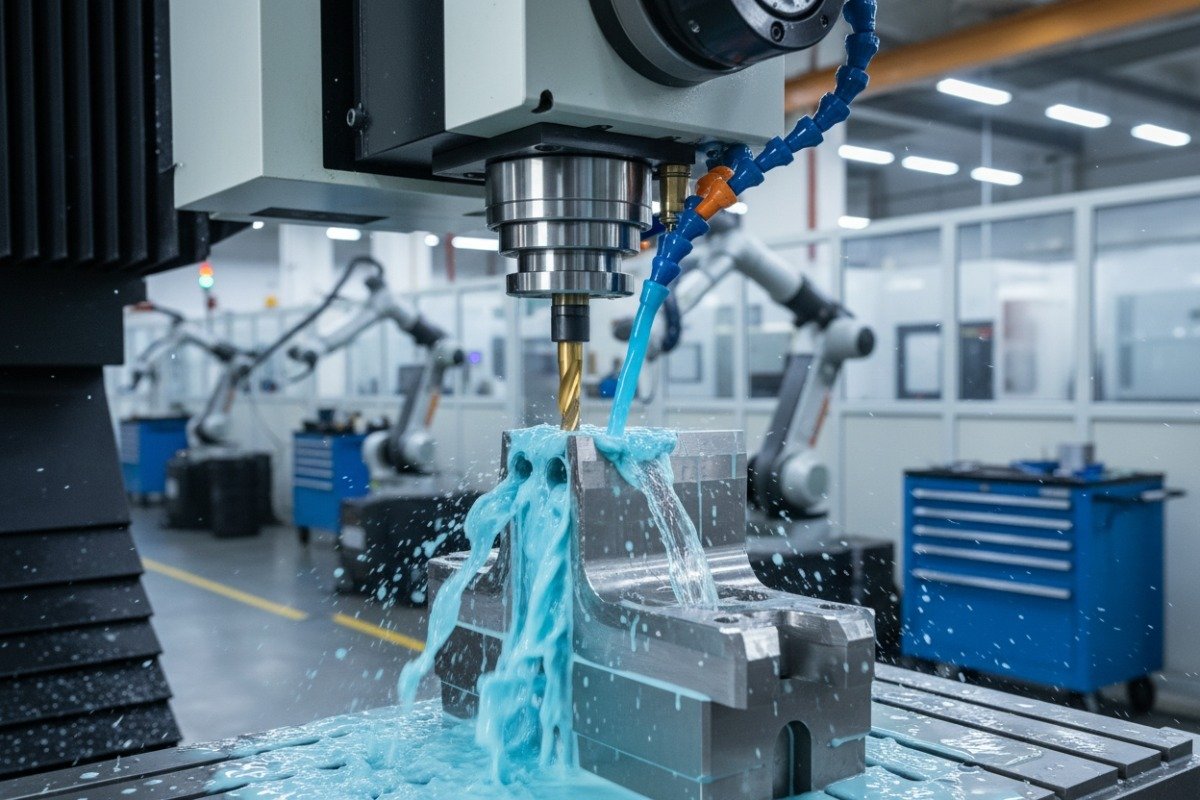
Every week, our engineering team in Vietnam reviews new stainless steel projects where clients need des géométries complexes 1, tight tolerances, and corrosion resistance — but also need the unit price to make business sense.
CNC machining stainless steel uses computer-controlled mills and lathes to shape tough, corrosion-resistant steel alloys into precise components. Success depends on choosing the right grade, optimizing cutting parameters, using coated carbide tools, and partnering with a supplier who controls quality at every step of the process.
Stainless steel dominates high-stakes industries — aerospace, medical, automotive, food processing — because nothing else matches its durability in harsh environments. But that toughness comes with real machining challenges. Work-hardening 2, heat buildup, and abrasive chip formation can destroy tools and blow up budgets if you don't manage them. Below, we break down the four questions our U.S. clients ask most often.
How Can I Reduce the Unit Cost of My CNC Machined Stainless Steel Parts?
When we quote stainless steel jobs for purchasing managers in the U.S., the first conversation is almost always about cost. Raw material is expensive, cycle times are long, and tool wear adds up fast.
You can reduce unit cost by optimizing part design for manufacturability, selecting a free-machining grade like 303 when corrosion needs allow, increasing batch sizes, using advanced CAM strategies such as trochoidal milling, and working with a supplier who controls the full process to avoid rework and scrap.

Cost reduction in stainless steel CNC machining is not about cutting corners. It is about removing waste from every stage of the process. Here is how we approach it with our clients.
Conception pour la fabrication (DFM)
The biggest cost driver is often the part design itself. Tight tolerances cost money. Deep pockets require special tooling. Thin walls cause vibration and scrap. Before any metal gets cut, our engineers review the drawing and flag features that add cost without adding function.
Simple changes make a big difference. Replacing a sharp internal corner with a radius that matches a standard end mill eliminates EDM operations. Relaxing a tolerance from ±0.01 mm to ±0.025 mm on a non-critical surface can cut cycle time by 30%. These are free savings.
Grade Selection Impacts Cost Directly
Not all stainless steels machine the same way. The grade you choose changes everything — tool life, cycle time, and surface finish. Here is a comparison:
| Grade | Indice d'usinabilité | Usage typique | Coût relatif par pièce |
|---|---|---|---|
| 303 | Excellent (free-machining) | Fittings, shafts, valves | Le plus bas |
| 304 | Modéré | Food equipment, general purpose | Moyen |
| 316 | Moderate-Low | Medical, marine, chemical | Moyen-élevé |
| 17-4 PH 3 | Low (hard after aging) | Aerospace, high-strength | Le plus haut |
If your application does not require the superior résistance à la corrosion 4 of 316, switching to 303 can reduce machining time by 25–40%. We always ask clients: "What environment will this part live in?" The answer often opens the door to a less expensive grade.
Batch Size and Setup Amortization
CNC machining has fixed setup costs — programming, fixturing, first article inspection. On a 10-piece order, those costs dominate. On a 500-piece order, they nearly disappear per unit. We help clients plan annual demand and consolidate orders to hit volume breaks.
Advanced CAM Strategies
Our programmers use trochoidal milling 5 and dynamic roughing paths that keep tool engagement constant. This matters because stainless steel work-hardens when the tool dwells or rubs. Constant engagement means consistent chip load, longer tool life, and faster material removal. One client's bracket went from a 22-minute cycle to 14 minutes after we reprogrammed the roughing strategy alone.
Coolant and Tool Management
Flood coolant 6 with proper concentration (6–8%) keeps heat under control. High-pressure through-tool coolant evacuates chips from deep holes and prevents re-cutting. We log spindle loads and track tool life in our system. Data shows that changing inserts at the right interval — not too early, not too late — extends effective tool life by 20–30% and prevents the scrap that comes from a catastrophic tool failure.
Which Stainless Steel Grade Should I Choose for My High-Precision CNC Machining Needs?
Our team has processed dozens of stainless steel grades over the years, and we have seen firsthand how the wrong grade selection derails a project — wrong corrosion performance, cracked tools, or parts that fail inspection.
For high-precision CNC machining, 304 stainless steel suits most general-purpose applications, 316 is best for medical, marine, and chemical environments needing superior corrosion resistance, and 17-4 PH serves aerospace and defense where high strength and hardness are required after heat treatment.
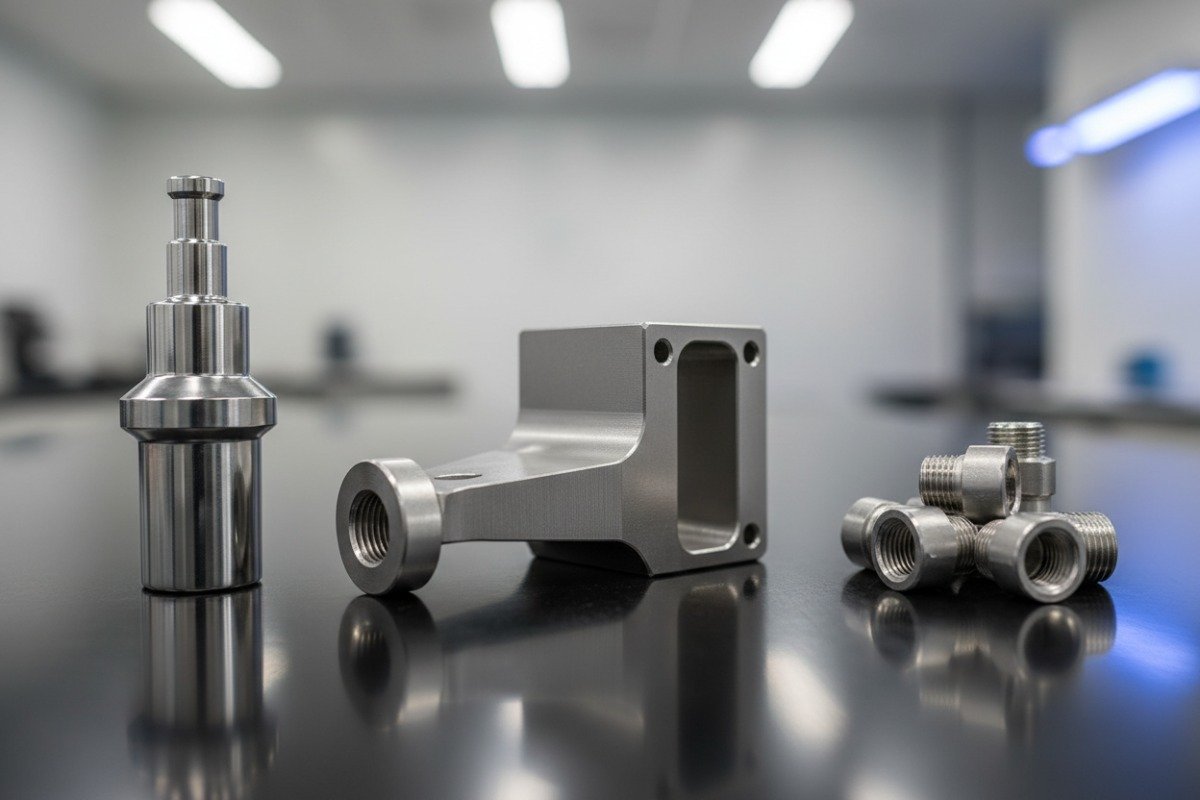
Grade selection is a balancing act between four factors: corrosion resistance, mechanical properties, machinability, and cost. Let us walk through the most common grades our clients use.
The Big Three: 304, 316, and 303
Grade 304 8 is the workhorse. It contains 18% chromium and 8% nickel. It resists corrosion well in most indoor and mild outdoor environments. It machines reasonably well with the right tools and parameters. About 50% of our stainless steel orders are 304.
Grade 316 9 adds 2–3% molybdenum, which gives it much better resistance to chlorides and acids. Medical device companies, semiconductor equipment makers, and marine hardware buyers almost always specify 316. The tradeoff is that 316 is slightly harder to machine and costs more per kilogram.
Grade 303 is the machinist's favorite. It has added sulfur and sometimes selenium, which break chips and reduce tool wear. But that sulfur reduces corrosion resistance and weldability. If your part does not need welding or extreme corrosion protection, 303 saves money.
Specialty Grades
| Grade | Key Property | Meilleure application | Machining Difficulty |
|---|---|---|---|
| 304 | Good all-around corrosion resistance | Food processing, general hardware | Modéré |
| 316 | Superior chloride/acid resistance | Medical implants, marine, chemical | Moderate-High |
| 303 | Free-machining, excellent chip control | High-volume turned parts, fittings | Faible |
| 17-4 PH | High strength after heat treatment | Aerospace brackets, defense components | Élevé |
| 440C | Very high hardness (up to 60 HRC) | Bearings, cutting tools, valve seats | Très élevé |
| 2205 Duplex | High strength + corrosion resistance | Oil & gas, pressure vessels | Élevé |
How to Decide
Ask yourself three questions:
- What environment will the part operate in? Saltwater, acids, or high-temperature steam demand 316 or duplex. Indoor dry environments are fine with 304 or 303.
- What mechanical loads will the part see? If you need yield strength above 1000 MPa, look at 17-4 PH in the H900 condition.
- What is the production volume? For high-volume turned parts, 303 saves significant money. For low-volume precision parts, the grade premium matters less than getting the properties right.
We often help clients navigate this decision during the quoting phase. Getting the grade right at the start prevents costly redesigns later. In our experience exporting to the U.S., about 70% of stainless steel RFQs specify 304 or 316, but a meaningful number could benefit from reconsidering the grade based on actual service conditions.
How Do I Maintain Tight Tolerances for My Stainless Steel Components During CNC Machining?
When we calibrate our CNC machines for stainless steel jobs requiring ±0.01 mm tolerances, every detail matters — from how the blank is clamped to the coolant temperature in the tank.
Maintaining tight tolerances on stainless steel requires a rigid machine and fixturing setup, coated carbide tooling with optimized speeds and feeds, effective flood coolant to control thermal expansion, shallow finishing passes around 0.3 mm, and in-process measurement using CMM or touch probes to catch drift early.
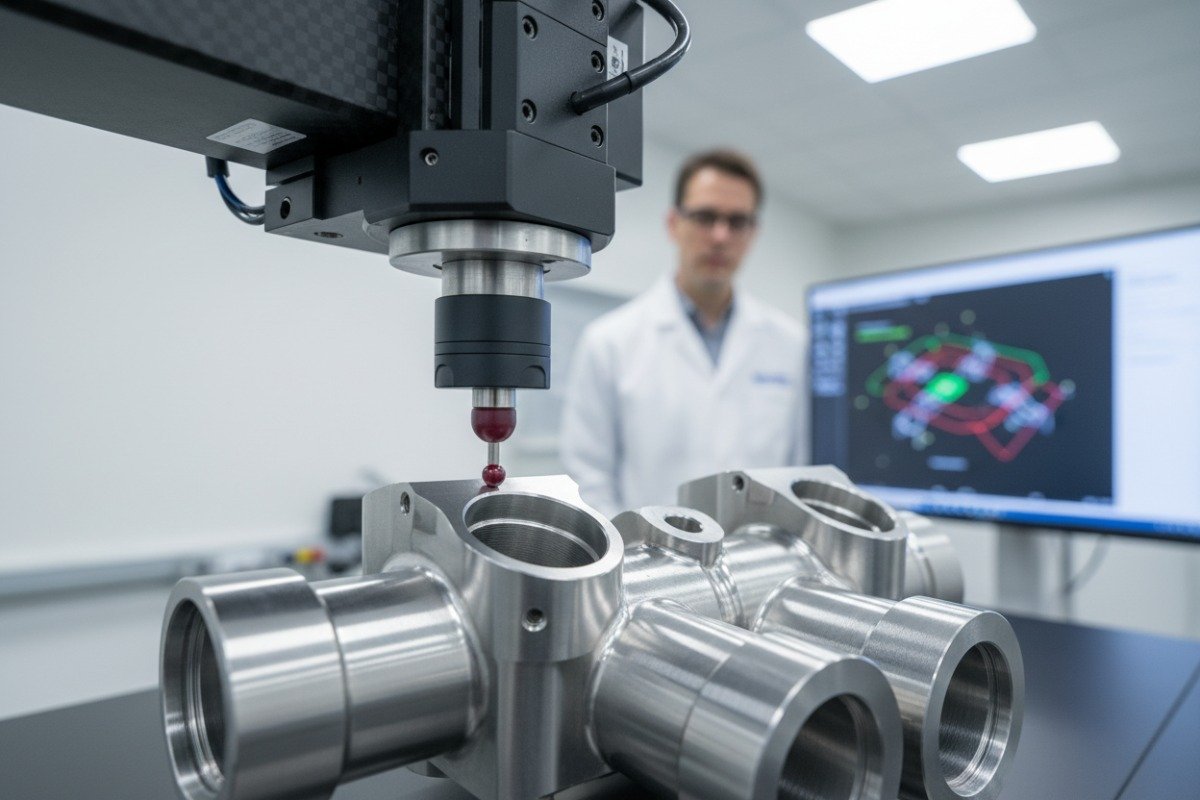
Stainless steel fights you at every step when tolerances get tight. It work-hardens, it generates heat, it deflects under cutting forces, and it springs back after the tool passes. Here is how we manage all of that.
The Work-Hardening Problem
Stainless steel — especially austenitic grades like 304 and 316 — hardens when deformed. If your tool rubs instead of cutting, the surface gets harder. Then the next pass is cutting harder material, which generates more heat, which causes more hardening. This is the vicious cycle that ruins tolerances and kills tools.
The solution is simple in concept but demanding in execution: always maintain positive chip engagement. Never let the tool dwell. Use adequate depth of cut (minimum 0.1 mm even on finishing passes) and feed rates that produce a real chip, not dust.
Rigidity Is Non-Negotiable
Vibration is the enemy of precision. Stainless steel's high cutting forces amplify any weakness in the setup. We follow these rules:
- Machine: Use machines rated for heavy cutting. Spindle runout below 0.005 mm.
- Toolholding: Hydraulic or shrink-fit holders. Collet chucks for smaller tools. Never use set-screw holders for precision work.
- Workholding: Custom fixtures that support the part close to the cutting zone. Soft jaws machined to match the part geometry.
- Tool overhang: Keep it as short as possible. Every millimeter of extra stick-out multiplies deflection.
Cutting Parameters for Precision
| Paramètre | Roughing | Semi-Finishing | Finition |
|---|---|---|---|
| Surface Speed (SFM) | 100–200 | 150–250 | 200–350 |
| Depth of Cut (mm) | 1.0–3.0 | 0.3–1.0 | 0.1–0.3 |
| Feed per Tooth (mm) | 0.05–0.15 | 0.03–0.08 | 0.01–0.04 |
| Coolant | Flood, 6–8% | Flood, 6–8% | Flood or mist |
| Tool Coating | TiAlN | TiAlN | TiCN or AlCrN |
Finishing passes at 0.3 mm depth or less with light feed rates produce the best surface finish and dimensional accuracy. But do not go too light — a depth below 0.05 mm on stainless steel causes rubbing and work-hardening.
Gestion thermique
Stainless steel has low conductivité thermique 10. Heat stays in the cutting zone instead of dissipating through the chip. This causes thermal expansion of both the part and the tool, which directly affects dimensions.
High-pressure coolant (70+ bar through the tool) is the most effective solution. It cools the cutting zone, breaks chips, and flushes debris. We monitor coolant concentration daily because diluted coolant loses its cooling and lubrication properties.
For ultra-tight tolerance work, we let roughed parts cool to ambient temperature before finishing. Measuring a warm part gives false readings. Our CMM room is temperature-controlled at 20°C ±1°C.
In-Process and Post-Process Inspection
We use on-machine touch probes to check critical dimensions between operations. This catches drift before it becomes scrap. After machining, every first article goes through CMM inspection with a full dimensional report tied to the drawing.
For ongoing production, we use Statistical Process Control (SPC) to track key dimensions. If a trend appears — say, a bore diameter creeping toward the upper limit — we adjust offsets or change the tool before it goes out of spec. This is what "right first time" looks like in practice.
What Should I Look for in a Reliable Partner for My Stainless Steel CNC Machining Requirements?
Over the past decade, our offices in Vietnam and China have worked with hundreds of U.S. purchasing managers who came to us after a bad experience with a previous supplier — late deliveries, wrong dimensions, or parts that failed incoming inspection.
A reliable stainless steel CNC machining partner should demonstrate strict quality control processes including First Article Inspection and PPAP, transparent communication with dedicated project management, proven experience with your specific stainless steel grades, on-time delivery track records, and flexible payment terms that support your cash flow.

Finding a machine shop that can cut stainless steel is easy. Finding one that delivers conforming parts, on time, every time, with clear communication — that is the hard part. Here is what separates a reliable partner from a risky one.
Quality System and Process Control
Ask for specifics, not just an ISO 9001 certificate on the wall. A good partner should be able to explain:
- Première inspection d'article (FAI): Full dimensional report on the first production part, verified on a calibrated CMM, with results mapped to every dimension on the drawing.
- PPAP (Processus d'approbation des pièces de production): For automotive or high-reliability applications, a complete PPAP package including process flow diagrams, control plans, and capability studies.
- In-process controls: What do they measure during the run? How often? What triggers a tool change or offset adjustment?
- Traçabilité: Can they trace a finished part back to the raw material heat number, the machine it was made on, and the operator who ran it?
We maintain full traceability on every stainless steel job. Our process control system logs spindle loads, tool life counts, and coolant concentration. When a client asks "what happened on part number 347?" we can answer with data, not guesses.
Communication et gestion de projet
The number one complaint we hear from U.S. buyers about overseas suppliers is poor communication. Emails go unanswered for days. Questions about drawing requirements get ignored. Problems are hidden until the container arrives.
A reliable partner assigns a dedicated project manager who understands both the technical requirements and the commercial expectations. They respond within 24 hours. They flag potential issues during DFM review — before production starts — not after 500 parts are already made wrong.
Our team includes engineers who read and interpret technical drawings to GD&T standards. When a drawing note says "break all sharp edges 0.1–0.3 mm," we do not guess. We confirm the requirement, document the method, and inspect the result.
Supplier Audit Readiness
If a potential partner resists a factory audit, that is a red flag. A confident supplier welcomes audits because they have nothing to hide. During an audit, look for:
- Clean, organized shop floor
- Calibrated measuring equipment with current certificates
- Documented work instructions at each machine
- Proper material storage with grade identification
- Evidence of corrective action processes (not just filing complaints, but actually fixing root causes)
Delivery Performance and Payment Terms
Late delivery is not just an inconvenience — it shuts down your customer's production line and damages your reputation. Ask for delivery performance data. A good supplier tracks on-time delivery rate and shares it openly. Our target is 95%+ on-time delivery, and we publish monthly performance data to our key accounts.
Payment terms also matter. Many Asian suppliers demand 100% prepayment or T/T before shipment. This puts all the financial risk on the buyer. We offer open account terms (net 60–90 days) to qualified clients because we believe the relationship should be built on trust, not leverage. This also helps our clients manage cash flow, especially on large orders.
Drapeaux rouges à surveiller
| Feu vert | Signal d'alarme |
|---|---|
| Provides detailed DFM feedback | Accepts any drawing without questions |
| Shares FAI reports proactively | "We inspect everything, trust us" |
| Dedicated project manager responds in 24 hrs | Generic sales@ email, slow replies |
| Welcomes factory audits | Resists or delays audit requests |
| Tracks and shares delivery performance | No data on delivery history |
| Offers credit payment terms | Demands 100% prepayment always |
| Has local team in manufacturing country | Relies entirely on remote brokers |
The right partner is not always the cheapest quote. The cheapest quote that arrives late, out of spec, or with hidden quality issues is actually the most expensive option. We have seen clients save 5% on unit price only to spend 30% more on rework, air freight, and lost customers.
Conclusion
CNC machining stainless steel well comes down to four things: smart cost management, correct grade selection, disciplined process control for tight tolerances, and a reliable manufacturing partner who communicates and delivers.
Notes de bas de page
1. Explains how 304 stainless steel can be formed into complex geometries. ↩︎
2. Details the causes and machining precautions for work hardening in stainless steel. ↩︎
3. Explains the properties and applications of 17-4 PH stainless steel. ↩︎
4. Explains the fundamental principles of stainless steel corrosion resistance. ↩︎
5. Authoritative source from a leading tool manufacturer explaining trochoidal milling. ↩︎
6. Discusses the benefits and applications of flood coolant in CNC machining. ↩︎
7. Describes the properties, machinability, and corrosion resistance of 303 stainless steel. ↩︎
8. Wikipedia provides a comprehensive overview of Grade 304 stainless steel properties and uses. ↩︎
9. Details the properties, including corrosion resistance, and applications of 316 stainless steel. ↩︎
10. Explores the concept of thermal conductivity specifically in stainless steel. ↩︎

 English
 Español de México
 Deutsch
 Français
 Русский
 العربية