Yes, sintered metal can be welded. However, due to its porous nature, welding sintered metals may be more challenging than welding denser solid metals. The welding process may require appropriate adjustments to ensure successful engagement.
As sintered metal becomes increasingly common, more and more engineers hope to connect one metal part to another or to a completely different metal. Naturally, it turned to welding. It should be noted that the welding performance of sintered metal depends on the type of sintered material, welding method, and microstructure of the sintered workpiece.

The welding of sintered metals is more difficult than other conventional metals, mainly due to their porous structure. This structure may cause the metal in the weld area to melt, forming cracks or holes, reducing the strength and integrity of the welded joint. Different sintered materials (such as iron, copper, stainless steel, hard alloys, etc.) have different welding properties. It is crucial to choose appropriate welding methods (such as arc welding, gas shielded welding, laser welding, etc.) and welding parameters (such as current, voltage, welding speed, etc.).
Welding sintered metal also faces many challenges. For example, the melting point of sintered metal is low, and excessive heat may be generated during the welding process, leading to material melting, deformation, and even burning through. In addition, the internal air of sintered metal may also cause explosions during welding. Due to these complex issues, special precautions need to be taken when welding sintered metal.
Therefore, for sintered workpieces that require welding, special surface treatment or welding techniques may be required. For example, gas generation can be reduced by sintering in a vacuum or controlled environment, or non melting welding methods such as butt welding and friction welding can be used to avoid melting in the weld area.
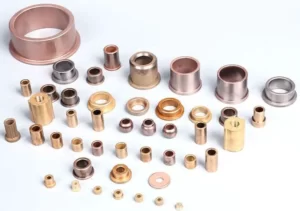
However, despite the difficulties and challenges of welding sintered metal, this does not hinder its application in industrial production. With its inherent advantages such as low cost, efficient manufacturing process, and complex shape, the welding technology of sintered metal has been widely applied in many industries such as automobiles, home appliances, and consumer electronics. Especially in precision welding, such as in the micro connection of electronic equipment or the fine assembly of medical equipment, the welding technology of sintered metal plays a crucial role.
Therefore, under appropriate welding conditions and technology choices, sintered metal welding can still achieve good results.
Merci d'avoir lu notre article. Si vous avez besoin de produits connexes ou si vous avez des questions ou des suggestions concernant nos produits, n'hésitez pas à nous contacter en envoyant un e-mail, et nous vous répondrons dans les plus brefs délais.

 English
 Español de México
 Deutsch
 Français
 Русский
 العربية