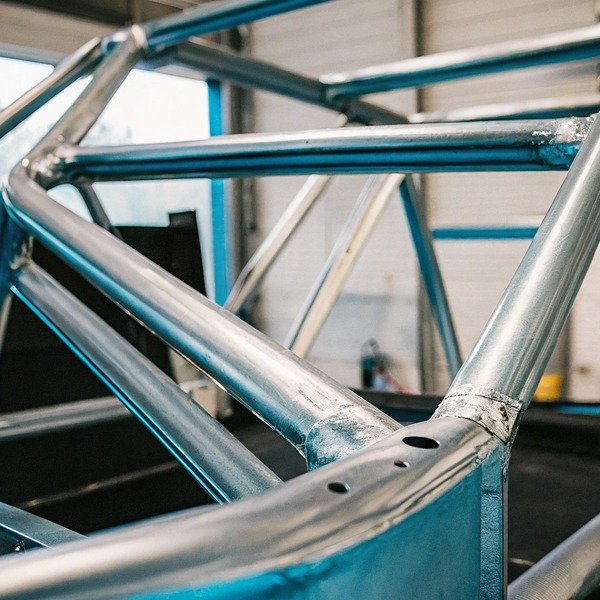
In our experience overseeing production lines in Vietnam and China, we often see a disconnect between design intent and fabrication reality. You might design a perfect aluminum frame, but after the heat of welding hits those bars and tubing, dimensions shift unpredictable. If your current supplier lacks the right machinery to correct this, you end up with parts that simply do not fit.
To ensure production quality, you should ask if the supplier possesses Vertical Machining Centers for general work, Horizontal Boring Mills for large frames, 5-axis centers for complex geometries, and CNC turning centers for cylindrical precision. These machines correct thermal distortion and guarantee final dimensional accuracy.
Let’s break down the specific machinery capabilities you need to verify to ensure your welded assemblies arrive ready for installation.
Why is post-weld CNC machining capability critical for maintaining tight tolerances on my welded assemblies?
When we analyze failed inspections in our assembly department, the root cause is rarely the machining of the individual components, but rather what happens after they are joined. We know that relying solely on a welder's skill to hold a +/- 0.05mm tolerance over a large frame is a recipe for disaster.
Post-weld CNC machining is vital because welding introduces high heat that warps metal and alters dimensions. Precision machining removes this distortion, ensuring that critical mating surfaces and bolt patterns meet tight geometric tolerances that manual fabrication alone cannot achieve.
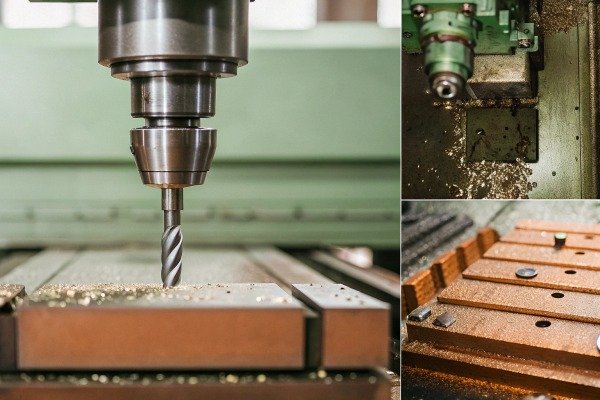
The Reality of Thermal Distortion
Welding is a violent process at the molecular level. When we fuse aluminum bars or steel tubing, we are introducing massive amounts of localized heat. introducing massive amounts of localized heat 1 As the metal cools, it contracts, pulling the structure out of alignment. In our factories, we refer to the welded state as "Near Net Shape." Near Net Shape 2 It looks like the final part, but the holes are slightly oval, the flat surfaces are bowed, and the overall length might be off by a millimeter or two.
Without post-weld machining, these errors stack up. If you are sourcing a complex frame like the one shown in the product image above, a supplier who only welds will send you a part that rocks on a flat surface. By utilizing CNC equipment after the welding process, we can "skim" the mounting faces flat and bore holes to their final precise location. This ensures that the heat-induced warping is completely removed from the equation.
On-Machine Probing Systems
A critical feature to ask your supplier about is "On-Machine Probing." On-Machine Probing 3 In our production process, we cannot just clamp a welded part into a CNC machine and hit "start" like we would with a raw block of metal. Every welded part is distorted slightly differently.
Advanced CNC machines equipped with probes (like Renishaw systems) can touch off multiple points Renishaw systems 4 on the welded assembly to find its actual position in 3D space. The machine control then dynamically adjusts the coordinate system to match the warped part. This allows us to machine features exactly where they need to be relative to the rest of the structure. If your supplier does not have probing capabilities, their setup times will be massive, and their rejection rates will be high.
Comparison: Manual Fabrication vs. Integrated CNC Processing
| Feature | Manual Welding Only | Integrated Post-Weld CNC Machining |
|---|---|---|
| Positional Tolerance | Typically +/- 1.0mm to 3.0mm | Can achieve +/- 0.01mm to 0.05mm |
| Surface Flatness | Dependent on material stock and heat warp | Precision milled to near-perfect flatness |
| Hole Geometry | Often distorted or oval from heat | Perfectly round and location-accurate |
| Assembly Readiness | Often requires shims or hammering to fit | "Plug and Play" assembly |
Do I need a supplier with 5-axis CNC milling centers for complex welding part geometries?
We have handled projects where US clients designed intricate chassis with mounting points facing every possible direction. Initially, we tried to produce these on standard 3-axis machines, but the constant flipping and re-clamping of the parts killed our efficiency and introduced stacking errors.
You definitely need a supplier with 5-axis capabilities if your welded parts require machining on multiple non-parallel faces. This equipment allows us to machine five sides in a single setup, drastically reducing error accumulation and ensuring superior relative position accuracy.
Reducing Setup Errors
The biggest enemy of precision in welding parts is the "setup." Every time an operator unclamps a part, rotates it, and clamps it down again to machine a different side, a small amount of error is introduced. On a complex welded assembly with angled supports or side-mounted brackets, a standard 3-axis machine might require six or seven different setups.
With a 5-axis machining center, we clamp the part once. 5-axis machining center 5 5-axis machining center 6 The cutting tool can approach the workpiece from almost any vector. This means the relationship between a hole on the top of the frame and a slot on the side of the frame is controlled entirely by the machine's movement, not by how well the operator realigned the part. For your sourcing needs, this translates to parts that fit perfectly every time.
Accessing Hard-to-Reach Areas
Welded assemblies often have deep pockets or features obstructed by other structural members. In our facility, we often encounter designs where a standard tool simply cannot reach the area that needs machining without hitting the frame itself.
5-axis machines allow us to tilt the tool or the table to navigate around these obstacles. This capability is essential for "single-piece flow" manufacturing. Instead of welding, sending it out for machining, bringing it back for more welding, and then finishing it, a 5-axis machine can often handle all the complex features in one go after the major fabrication is done.
Cost Implications of 3-Axis vs. 5-Axis
Many buyers assume 5-axis is always more expensive. While the hourly machine rate is higher, the total cost is often lower for complex parts because the labor time for setups is eliminated.
| Aspect | 3-Axis Machining Strategy | 5-Axis Machining Strategy |
|---|---|---|
| Fixtures Required | Multiple custom fixtures for each angle | Single holding fixture |
| Operator Labor | High (constant loading/unloading) | Low (load once, run program) |
| Accuracy Risk | High (cumulative error from re-fixturing) | Low (single coordinate system) |
| Throughput | Slower (bottleneck at setup) | Faster (continuous cutting) |
Should I verify if the manufacturer has horizontal boring mills for large-scale welded components?
When we export large infrastructure components or heavy equipment frames to the US, size becomes the primary constraint. We have seen suppliers try to force massive weldments onto vertical mills, hanging halfway off the table, leading to dangerous conditions and poor quality.
Verifying horizontal boring mill availability is essential for large-scale components. These machines handle heavy, awkward weldments without needing to flip them, providing exceptional stability for deep boring operations and side-face machining that standard vertical mills simply cannot accommodate.

Handling Gravity and Weight
Large welded structures are heavy and awkward. On a standard Vertical Machining Center (VMC), gravity works against you if you need to machine the sides of a tall part. You have to stand the part up on its edge, which requires massive fixtures and creates safety hazards. safety hazards 7 If the part vibrates during cutting, your surface finish is ruined.
A Horizontal Boring Mill (HBM) is designed differently. Horizontal Boring Mill 8 The part sits flat on a large table, and the spindle approaches from the side. This uses gravity to our advantage—the heavy weldment is naturally stable. In our workshops, we use HBMs for frames that weigh over a ton. The stability allows us to take aggressive cuts without chatter, ensuring the structural integrity of the metal is not compromised by vibration.
Deep Bore Capabilities
The "Boring" in Horizontal Boring Mill is key. Many welded assemblies, such as gearboxes, pivot points for heavy machinery, or hydraulic cylinder mounts, require long, perfectly straight holes.
Standard mills struggle with deep holes because long tools deflect (bend) under pressure. HBMs are built with a quill that extends out, providing extreme rigidity even when reaching deep into a weldment. If your design includes pivot points that must align perfectly across a 1-meter span, a supplier without an HBM will struggle to maintain concentricity. They might try to bore from both ends and hope the holes meet in the middle, but this rarely works perfectly. An HBM drives straight through in one shot.
Versatility for Multi-Face Work
Similar to 5-axis machines but on a much larger scale, modern HBMs often feature rotary tables. This allows us to machine four sides of a massive cube-shaped weldment in one setup. For a Purchasing Manager, this capability is a green flag. It indicates the supplier is equipped to handle heavy industrial projects efficiently. If a supplier says they will machine your 2-meter long frame on a standard bridge mill, be very skeptical about their ability to hold side tolerances.
What CNC turning capabilities are necessary for finishing precision round welded fittings?
We frequently produce tank assemblies and fluid handling systems where flanges are welded onto pipes. Even with the best welding fixtures, the heat turns a perfect circle into an oval. If we ship that "as-welded," your gaskets will leak.
For finishing round welded fittings, ask for CNC turning centers with large swing capacities and live tooling. These capabilities allow the supplier to restore perfect concentricity to flanges and shafts that may have become oval-shaped or misaligned during the intense heat of the welding process.
Restoring Concentricity and Sealing Surfaces
When a flange is welded to a pipe or a shaft is welded to a plate, the cooling metal pulls the circular feature out of round. We call this "ovality." For high-pressure applications, an oval flange is a failure point.
You need a supplier with large CNC lathes (turning centers) that can "swing" the entire welded assembly. "Swing" refers to the maximum diameter the machine can rotate without hitting the bed. By chucking the welded assembly into a lathe, we can re-turn the face of the flange and the inner diameter. This ensures the sealing face is perfectly flat and perpendicular to the axis of rotation, regardless of how much the welding distorted the pipe.
The Advantage of "Live Tooling"
Modern CNC turning centers often come with "live tooling." live tooling 9 This means the turret holding the cutting tools includes a motorized spindle that can drill and mill while the part is held in the lathe chuck.
For welded fittings, this is a game-changer. Imagine a welded flange that needs a bolt circle drilled into it. Without live tooling, we would have to turn the face on a lathe, take the part out, move it to a mill, dial it in, and then drill the holes. This adds cost and potential for error. With live tooling, we turn the face and drill the bolt holes in one operation. This ensures the bolt circle is perfectly concentric with the sealing face.
Equipment Checklist for Round Welded Parts
When auditing a supplier for these types of parts, we look for specific features in their turning department.
| Turning Capability | Why It Matters for Welded Parts |
|---|---|
| Large Swing over Bed | Allows rotation of bulky weldments, not just straight bars. |
| Steady Rests | Supports long welded shafts to prevent whipping/vibration during cutting. |
| Live Tooling (Mill-Turn) | Drills bolt patterns and mills slots without moving the part to a second machine. |
| Hard Turning | Ability to machine hardened weld overlays or tough alloys like Inconel. Inconel 10 |
Conclusion
Sourcing high-quality welding parts requires more than just finding a shop with good welders; you need a partner with the right CNC machining infrastructure to finish the job. By verifying that your supplier possesses the correct mix of Vertical and Horizontal mills, 5-axis capabilities, and large-capacity turning centers, you protect your supply chain from quality issues. In our experience, this integrated approach is the only way to guarantee that the complex, heat-distorted realities of welding are transformed into the precision components your engineers designed.
Notes de bas de page
1. Authoritative explanation of heat input and distortion in welding. ↩︎
2. Defines the manufacturing concept of Near Net Shape. ↩︎
3. Official page of the industry leader in probing systems mentioned in text. ↩︎
4. Direct link to the manufacturer mentioned for on-machine probing systems. ↩︎
5. Educational overview of 5-axis machining technology and benefits. ↩︎
6. General background information on multiaxis machining technology. ↩︎
7. Official government regulations regarding machine guarding and safety hazards. ↩︎
8. Industry article detailing the specific applications of HBMs. ↩︎
9. Society of Manufacturing Engineers article explaining live tooling capabilities. ↩︎
10. Official site of the trademark holder for Inconel alloys. ↩︎

 English
 Español de México
 Deutsch
 Français
 Русский
 العربية