Lorsque nous gérons des projets de soudage au Vietnam et en Chine, nous constatons souvent que les clients se concentrent uniquement sur les spécifications techniques, ignorant les risques cachés dans la gestion de la main-d'œuvre de leur chaîne d'approvisionnement.
Oui, les politiques de main-d'œuvre des fournisseurs ont un impact direct sur votre conformité et votre réputation. Les violations des normes internationales peuvent entraîner de lourdes sanctions juridiques, des saisies à l'importation en vertu de lois telles que l'UFLPA, et des dommages immédiats à la marque. L'approvisionnement éthique n'est plus une option ; c'est une garantie essentielle pour la continuité des activités et la position sur le marché.
Examinons pourquoi les pratiques de travail sont désormais une exigence de fabrication incontournable.
Quels risques juridiques spécifiques encours-je si mon fournisseur de soudage viole les normes internationales du travail ?
Nous avons vu des expéditions retardées à la douane parce qu'un sous-traitant n'a pas réussi un audit de base sur le travail, causant d'énormes maux de tête à nos partenaires américains qui avaient besoin de pièces de toute urgence.
Vous encourez des risques juridiques importants, notamment de lourdes amendes, des embargos sur la chaîne d'approvisionnement et la saisie de marchandises en vertu de réglementations telles que la loi sur la prévention du travail forcé des Ouïghours. L'ignorance n'est pas une excuse ; vous êtes légalement responsable de vérifier que l'ensemble de votre chaîne d'approvisionnement, y compris l'approvisionnement en matières premières, est exempt de travail forcé.

Le paysage réglementaire pour l'importation de composants industriels a considérablement évolué au cours des cinq dernières années. Il ne suffit plus de faire confiance à un fournisseur pour qu'il respecte les lois locales. Les gouvernements des États-Unis et d'Europe appliquent une responsabilité stricte à l'ensemble de la chaîne d'approvisionnement. l'ensemble de la chaîne d'approvisionnement 1 Cela signifie que si votre fournisseur de soudage achète de l'aluminium auprès d'une mine ou d'une fonderie qui utilise le travail forcé, vos pièces finies peuvent être saisies à la frontière. travail forcé 2 achète de l'aluminium auprès d'une mine 3
Le filet d'extension de la responsabilité
Des réglementations telles que la loi sur la prévention du travail forcé des Ouïghours Loi sur la prévention du travail forcé des Ouïghours 4 (UFLPA) et le UK Modern Slavery Act ont modifié la charge de la preuve. Les autorités douanières fonctionnent désormais sur une présomption de culpabilité pour les marchandises provenant de régions à haut risque. Vous devez prouver que votre chaîne d'approvisionnement est propre. Si vous ne pouvez pas fournir de documentation claire cartographiant votre chaîne d'approvisionnement jusqu'au niveau des matières premières, votre inventaire reste dans un entrepôt sous douane. Cela crée un risque de "défaut croisé" où un manquement à la conformité déclenche des violations de vos contrats de livraison et même de vos polices d'assurance-crédit commercial.
Le coût de l'action corrective
Lorsqu'une violation est constatée, l'impact financier va bien au-delà de l'amende initiale. Nous avons aidé des clients à gérer les conséquences de ces problèmes, et les coûts s'accumulent rapidement. Vous devez payer pour des audits d'urgence, des conseils juridiques et des expéditions accélérées auprès de fournisseurs alternatifs qui facturent souvent une prime parce qu'ils savent que vous êtes désespéré.
Catégories de risques par région
Différentes régions présentent différents risques juridiques. Comprendre ces nuances est essentiel pour les responsables de l'approvisionnement.
| Catégorie de risque | Réglementation clé | Impact potentiel sur l'approvisionnement |
|---|---|---|
| Travail forcé | UFLPA (États-Unis) | Saisie immédiate des marchandises ; impossibilité d'importer les expéditions futures. |
| Esclavage moderne | UK Modern UK Modern Slavery Act 5 Slavery Act | Exigences de divulgation publique ; atteinte à la réputation ; amendes potentielles. |
| Diligence raisonnable en matière de chaîne d'approvisionnement | Loi de l'UE sur la chaîne d'approvisionnement | Diligence raisonnable obligatoire en matière de droits de l'homme ; responsabilité des fournisseurs de niveau 2. |
| Sécurité au travail | OSHA / Lois locales du travail | Fermetures d'usines ; retards de production ; poursuites judiciaires pour rupture de contrat. |
D'après notre expérience, la cartographie proactive coûte moins cher que la défense juridique réactive. S'approvisionner dans des régions dotées de lois du travail transparentes, ou travailler avec des partenaires disposant d'équipes locales pour vérifier les conditions, est la meilleure défense contre ces menaces juridiques.
Les violations du travail d'un fournisseur peuvent-elles réellement nuire à la réputation de la marque de mon entreprise ?
Lors de nos discussions avec des clients du secteur automobile, nous soulignons qu'un seul reportage sur une grève d'usine ou des conditions dangereuses peut détruire des années de confiance du jour au lendemain.
Absolument, les violations du travail peuvent dévaster votre image de marque instantanément. À l'ère des médias sociaux et des rapports ESG, les consommateurs et les investisseurs punissent les entreprises liées à des pratiques contraires à l'éthique. Cette perte de confiance entraîne des résiliations de contrats, des boycotts et une tache permanente sur votre profil de responsabilité sociale d'entreprise.
La réputation est un actif qui prend des décennies à construire mais qui peut être perdu en quelques minutes. Dans le secteur industriel, de nombreux acheteurs pensent être à l'abri de l'indignation des consommateurs parce qu'ils vendent en B2B. C'est une idée fausse dangereuse. Vos clients, qu'il s'agisse de géants de l'automobile, de sociétés aérospatiales ou de fabricants d'appareils médicaux, subissent une pression immense pour maintenir des scores environnementaux, sociaux et de gouvernance (ESG) propres. Environnementaux, sociaux et de gouvernance 6 Environnementaux, sociaux et de gouvernance 7 (ESG).
L'effet domino
Si vos pièces de soudage s'avèrent provenir d'une usine ayant des pratiques de travail d'exploitation, votre client devient coupable par association. Nous avons vu de grandes entreprises américaines résilier immédiatement des contrats avec des fournisseurs après avoir découvert des violations du travail afin de protéger leur propre cours de bourse et leur image de marque. Elles ne peuvent pas se permettre la mauvaise presse. Cela signifie que votre politique du travail n'est pas seulement une position éthique ; c'est une condition préalable pour conserver vos plus gros clients.
Examen par les investisseurs
Les institutions financières utilisent de plus en plus les métriques ESG pour déterminer la solvabilité et la viabilité des investissements. Un scandale dans la chaîne d'approvisionnement peut entraîner des taux d'intérêt plus élevés sur vos prêts ou amener les investisseurs à retirer leur financement. La transparence est désormais une métrique financière.
Analyse de l'impact des parties prenantes
Les dommages causés par une crise de réputation affectent toutes les parties de votre écosystème commercial.
| Groupe d'intervenants | Impact d'un scandale de violation du travail | Conséquence à long terme |
|---|---|---|
| Clients B2B | Révision ou résiliation immédiate du contrat. | Exclusion des listes de "fournisseurs privilégiés" pendant 3 à 5 ans. |
| Investisseurs/Banques | Notation ESG plus faible ; coût du capital plus élevé. | Accès réduit au financement d'expansion ou au crédit commercial. |
| Employés internes | Perte de moral ; taux de rotation plus élevé. | Difficulté à recruter les meilleurs talents en ingénierie et en vente. |
| Consommateurs finaux | Boycotts et campagnes négatives sur les réseaux sociaux. | Érosion permanente de la fidélité à la marque et de la part de marché. |
Nous conseillons à nos clients de considérer les politiques de travail des fournisseurs comme un élément central de leur identité de marque. En choisissant activement des fournisseurs au Vietnam ou dans d'autres régions respectant des normes éthiques vérifiées, vous transformez un risque potentiel en un avantage concurrentiel commercialisable.
Comment puis-je vérifier que mon fabricant de soudage respecte les directives éthiques en matière de travail ?
Lorsque nous auditons des partenaires potentiels pour notre réseau, nous allons bien au-delà de leurs robots de soudage ; nous inspectons leurs dortoirs et interrogeons les travailleurs pour garantir une conformité réelle. robots de soudage 8
Vous devez mettre en œuvre un processus de vérification à plusieurs niveaux qui va au-delà de simples cases à cocher. Cela implique des audits indépendants par des tiers, des visites d'usine surprises et une cartographie complète des sous-fournisseurs. La mise en place d'un Code de Conduite Fournisseur strict et l'utilisation d'outils de transparence numérique garantissent un suivi en temps réel des pratiques éthiques tout au long de votre chaîne d'approvisionnement.
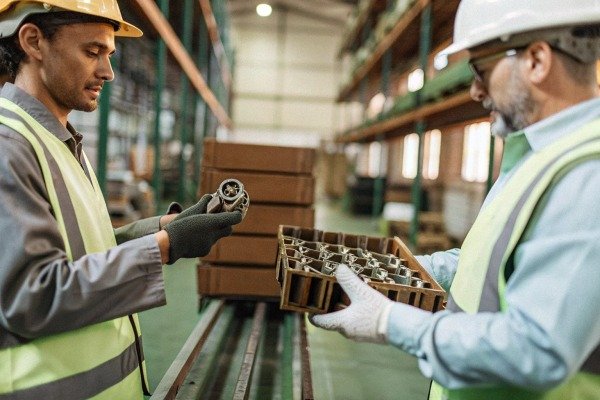
De nombreuses entreprises s'appuient sur une approche "signer et oublier". Elles demandent à un fournisseur de signer un Code de Conduite et supposent que le travail est terminé. En réalité, la conformité sur papier est souvent dénuée de sens sans vérification. Nous avons visité des usines qui semblaient parfaites sur le papier mais présentaient des violations claires de sécurité sur le terrain.
Aller au-delà du théâtre de la conformité
Pour vérifier véritablement les directives du travail, vous avez besoin de présence sur le terrain. C'est pourquoi avoir des équipes locales dans des endroits comme le Vietnam et la Chine est essentiel. Un audit annoncé permet à une usine de dissimuler des problèmes. Les visites inopinées révèlent la vérité. Vous devez vérifier que les travailleurs ont la possession de leurs propres passeports, sont payés à temps et ne travaillent pas d'heures supplémentaires excessives contre leur volonté.
Cartographie de la chaîne d'approvisionnement
Les plus grands risques se cachent souvent dans les niveaux inférieurs de la chaîne d'approvisionnement. Vous pourriez faire confiance à votre usine d'assemblage directe, mais qui fournit leur tube d'aluminium brut ? Qui fabrique les gabarits ? Vous devez cartographier ces connexions. Seulement 23% des entreprises disposent d'un cadre crédible pour cela, laissant un angle mort massif. Nous aidons nos clients à retracer les matériaux jusqu'à la source pour garantir qu'aucun travail forcé n'entre dans la chaîne au stade des matières premières.
Outils de transparence numérique
L'approvisionnement moderne nécessite des outils modernes. Nous recommandons l'utilisation de plateformes numériques qui permettent un suivi en temps réel des données de conformité. Cela vous fait passer d'une audit reactive à une surveillance proactive.
Liste de vérification
Voici un cadre que nous utilisons pour évaluer la profondeur de la conformité des fournisseurs.
| Niveau de vérification | Point d'action | Efficacité |
|---|---|---|
| Niveau 1 : Basique | Le fournisseur signe le Code de Conduite. | Faible. Minimum légal, mais n'offre aucune preuve réelle. |
| Niveau 2 : Intermédiaire | Audit annuel planifié par un tiers (par exemple, SMETA) SMETA 9. | Moyen. Détecte les problèmes évidents mais peut être mis en scène. |
| Niveau 3 : Avancé | Visites de site inopinées par votre propre équipe/agents. | Élevé. Révèle les conditions de travail quotidiennes réelles. |
| Niveau 4 : Complet | Entretiens avec les travailleurs + cartographie des sous-fournisseurs. | Très Élevé. Identifie les risques cachés tels que la servitude pour dettes ou le vol de propriété intellectuelle. |
Une vérification efficace nécessite un état d'esprit de partenariat. Nous travaillons avec fournisseurs à améliorer leurs normes, plutôt que de simplement les contrôler. Cette approche collaborative favorise la stabilité et la transparence à long terme.
Existe-t-il un lien direct entre les politiques de travail équitables et la qualité de mes pièces de soudage ?
Nous rappelons constamment à nos équipes d'ingénierie qu'un soudeur fatigué ou sous-payé fait des erreurs, et ces erreurs finissent par se transformer en fissures microscopiques dans votre produit final.
Oui, il existe une forte corrélation entre les conditions de travail et la qualité du produit. Des politiques de travail médiocres entraînent un fort taux de rotation et une perte de savoir-faire précieux, ce qui se traduit par des défauts. Inversement, une main-d'œuvre stable et bien traitée assure une précision constante, réduit les risques de micro-sabotage et maintient les normes techniques élevées requises pour les projets de soudage personnalisés.

Le soudage de haute qualité n'est pas seulement un processus mécanique ; c'est une compétence qui demande concentration, expérience et main ferme. Lorsqu'un fournisseur exploite sa main-d'œuvre avec de bas salaires ou des conditions dangereuses, la première chose qui en souffre est la qualité du produit.
L'effet d'hémorragie des cerveaux
Les certifications de soudage sont précieuses. certifications de soudage 10 Si une usine traite mal ses ouvriers, les meilleurs soudeurs partent pour de meilleures opportunités. Cela crée un fort taux de rotation. Chaque fois qu'un soudeur qualifié part, il emporte avec lui le "savoir-faire tribal" – la compréhension subtile du comportement d'un gabarit spécifique ou de la réaction du métal à la chaleur par temps humide. Les nouveaux remplaçants font des erreurs pendant leur apprentissage. Cela conduit à des défauts métallurgiques latents que votre contrôle qualité pourrait manquer mais qui échoueront sur le terrain.
Fatigue et précision
Le soudage de cadres en aluminium, comme celui de l'image du produit, nécessite un contrôle précis de la chaleur. Un travailleur épuisé effectuant un quart de travail de 14 heures est statistiquement plus susceptible de faire des erreurs de calibration. Il ne s'agit pas seulement de problèmes esthétiques ; ce sont des faiblesses structurelles. Nous avons vu des cas de "micro-sabotage" où des travailleurs mécontents omettent intentionnellement de petites étapes du processus, sachant que cela ne sera détecté que bien plus tard.
La qualité comme sous-produit de la culture
Une usine avec des politiques de travail équitables conserve son personnel. Les employés de longue date se soucient de leur production. Ils repèrent les erreurs avant qu'elles ne deviennent des rebuts. Nous insistons auprès de nos clients sur le fait que payer un prix unitaire légèrement plus élevé pour un fournisseur ayant une bonne rétention de personnel est en réalité moins cher que de payer pour la retouche et les retours causés par un atelier d'exploitation ("churn and burn").
Les coûts cachés d'une main-d'œuvre médiocre
| Risque de qualité | Cause (Problème de main-d'œuvre) | Résultat pour l'acheteur |
|---|---|---|
| Soudures incohérentes | Rotation élevée / Nouveau personnel | Intégrité structurelle variable ; taux d'échec plus élevés. |
| Défauts latents | Fatigue des travailleurs / Heures supplémentaires excessives | Des fissures apparaissent après que le produit est en usage (risque de responsabilité). |
| Vol de propriété intellectuelle | Personnel mécontent / Sous-payé | Conception propriétaire vendue aux concurrents. |
| Délais non respectés | Grèves / Litiges du travail | Situations d'arrêt de ligne dans votre usine d'assemblage. |
En fin de compte, la qualité de la pièce reflète la qualité de la vie de la personne qui l'a fabriquée.
Conclusion
Les politiques de main-d'œuvre des fournisseurs sont un impératif stratégique, pas seulement des formalités administratives. Nous garantissons un approvisionnement éthique pour protéger votre statut juridique, la réputation de votre marque et la qualité de vos produits.
Notes de bas de page
1. Aperçu général de la gestion de la chaîne d'approvisionnement et de son importance dans le commerce mondial. ↩︎
2. Définition et contexte juridique international des pratiques de travail forcé. ↩︎
3. Documentation du principal producteur d'aluminium sur l'approvisionnement durable et éthique. ↩︎
4. Page officielle des douanes américaines décrivant l'application de l'UFLPA et les exigences de conformité. ↩︎
5. Législation officielle du Royaume-Uni concernant la transparence dans les chaînes d'approvisionnement. ↩︎
6. Normes de l'industrie pour la communication des métriques ESG aux investisseurs. ↩︎
7. Ressource faisant autorité de l'OCDE définissant les normes ESG et les critères d'investissement. ↩︎
8. Spécifications techniques pour les systèmes de soudage industriel automatisés. ↩︎
9. Page officielle de la méthodologie d'audit SMETA mentionnée dans le texte. ↩︎
10. Normes professionnelles pour la qualité du soudage et la qualification du personnel. ↩︎

 English
 Español de México
 Deutsch
 Français
 Русский