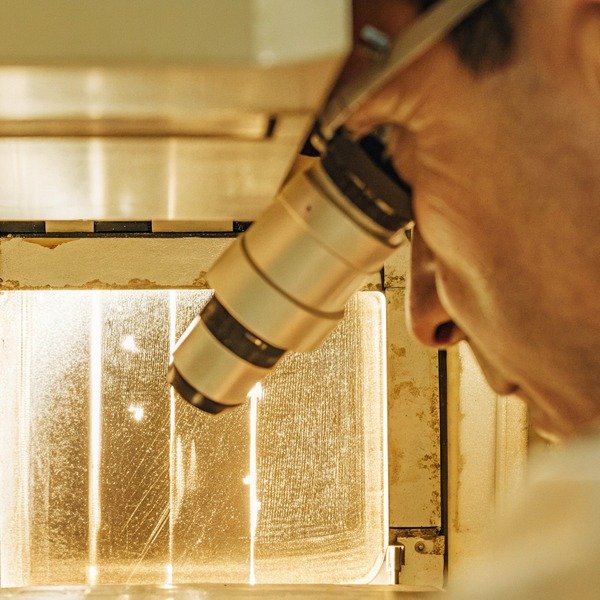
Lorsque notre équipe d'ingénierie au Vietnam développe des assemblages personnalisés impliquant des entretoises isolantes soudées, nous sommes souvent confrontés à un danger caché : la contrainte thermique IEEE 43 1. Une soudure peut sembler parfaite sous un microscope, mais la chaleur intense peut altérer les propriétés diélectriques de l'isolant propriétés diélectriques 2, créant une bombe à retardement pour l'utilisateur final.
Pour tester correctement la résistance des isolants soudés, effectuez un test de résistance dans le temps à l'aide d'un mégohmmètre pour calculer l'indice de polarisation ASTM D149 3. Suivez cela avec un test de tension par paliers pour exposer les défauts physiques causés par la chaleur de soudage. Enfin, effectuez un test de tenue diélectrique (Hipot) à des tensions supérieures aux niveaux de fonctionnement pour garantir que l'intégrité de l'interface de soudure reste intacte.
Pour garantir que vos composants sont sûrs et durables, vous avez besoin d'une stratégie de test rigoureuse qui va au-delà des simples vérifications de continuité.
Quelles méthodes de test spécifiques dois-je utiliser pour vérifier la rigidité diélectrique après soudage ?
Nous constatons généralement que les “ contrôles ponctuels ” standard sont insuffisants pour les pièces personnalisées où le métal et la céramique sont fusionnés. D'après notre expérience dans la fourniture au marché américain, le recours à une seule lecture de résistance manque souvent les micro-fissures qui se produisent pendant la phase de refroidissement du processus de soudage.
Nous recommandons trois méthodes principales : le test de lecture ponctuelle pour des vérifications rapides, la méthode de résistance dans le temps pour mesurer l'absorption et calculer l'indice de polarisation, et le test de tension par paliers. Le test de tension par paliers est particulièrement efficace pour les pièces soudées, car l'augmentation des niveaux de contrainte révèle les fractures mécaniques dans la zone affectée par la chaleur.
Les limites de la lecture ponctuelle
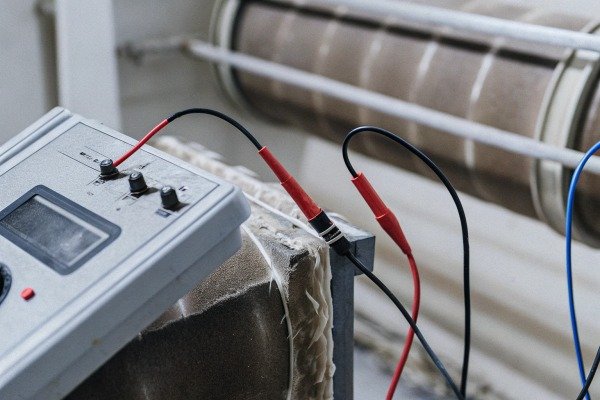
La forme de test la plus simple est le test de lecture ponctuelle. Ici, nous appliquons une tension continue spécifique à travers l'isolant soudé pendant une courte durée, généralement 60 secondes, et prenons une mesure de résistance. Bien que cela donne une idée approximative de l'état de l'isolation, nous la trouvons peu fiable pour valider la qualité d'une soudure. La résistance d'isolation est très sensible à la température et à l'humidité Résistance d'isolation 4. Si notre usine au Vietnam est humide, la lecture peut chuter, donnant un faux échec. Inversement, une journée froide et sèche peut masquer un défaut. Parce que le processus de soudage introduit des variables thermiques importantes, une seule lecture ponctuelle ne fournit pas suffisamment de données pour certifier l'intégrité structurelle de la pièce.
La puissance de la résistance temporelle
Pour les composants soudés, nous nous appuyons fortement sur la méthode de résistance temporelle. Cela implique d'appliquer une tension pendant une période de 10 minutes. Une bonne isolation dans une jointure soudée montrera une augmentation progressive de la résistance au fil du temps à mesure que le matériau se charge (le courant d'absorption diminue). Si la résistance reste plate ou diminue, cela indique que la chaleur de soudage a pu rendre l'isolant poreux, permettant à l'humidité ou aux contaminants de conduire le courant.
Cette méthode nous donne deux métriques critiques :
- Ratio d'absorption diélectrique (DAR) : Le rapport de la lecture de 60 secondes à la lecture de 30 secondes.
- Indice de polarisation (PI) : Le rapport de la lecture de 10 minutes à la lecture de 1 minute.
Test de tension par paliers pour les défauts physiques
La méthode la plus agressive et révélatrice pour les pièces soudées est le test de tension par paliers. Le soudage crée une "zone affectée par la chaleur" (ZAT) où les propriétés du matériau changent. Zone affectée par la chaleur 5 Une tension standard pourrait ne pas franchir une minuscule fissure dans cette zone, mais une tension plus élevée le fera.
Dans ce test, nous appliquons la tension par incréments — par exemple, 500 V, puis 1000 V, puis 2500 V — en maintenant chaque palier pendant une minute. Si l'isolation est saine, la résistance doit rester constante ou diminuer légèrement selon une courbe prévisible. Si nous constatons une chute soudaine de la résistance à une tension plus élevée, cela signifie généralement que le stress de soudage a créé une fissure physique ou un point faible qui amorce sous contrainte. C'est la seule façon de détecter les soudures "marginales" qui échoueraient autrement sur le terrain.
Comparaison des méthodologies de test
| Méthode d'essai | Durée | Métrique principale | Meilleure application pour les pièces soudées |
|---|---|---|---|
| Lecture ponctuelle | 60 secondes | Résistance absolue (Ω) | Contrôles rapides de réussite/échec sur les lignes d'assemblage ; valeur limitée pour l'intégrité de la soudure. |
| Résistance temporelle | 10 minutes | Indice de polarisation (PI) | Détection d'infiltration d'humidité ou de porosité causée par la contamination de la soudure. |
| Tension par pas | Variable (Pas) | Déviation de résistance | Identification de fissures physiques et de liaisons faibles dans la zone affectée par la chaleur (ZAT). |
Comment puis-je déterminer si la chaleur de soudage a compromis l'intégrité de l'isolant ?
Lorsque nous co-développons des pièces avec de nouveaux fournisseurs, le mode de défaillance le plus courant que nous observons est le choc thermique. choc thermique 6 Les taux d'expansion distincts des matériaux métalliques et isolants signifient que si les paramètres de soudage ne sont pas parfaitement réglés, l'isolant se brise efficacement en interne tout en paraissant intact de l'extérieur.
Vous pouvez détecter un compromis thermique en surveillant le rapport d'absorption diélectrique (DAR). Si l'isolant ne parvient pas à absorber la charge normalement, la structure moléculaire a probablement subi une dégradation thermique. De plus, utilisez l'imagerie ultrasonore C-Scan parallèlement aux tests électriques pour identifier le délaminage ou les vides créés par les décalages d'expansion thermique entre le métal et l'isolant.

Comprendre le choc thermique dans les diélectriques
Les isolants, qu'ils soient en céramique, en verre ou en polymères spécialisés, ont généralement une faible conductivité thermique matériaux isolants 7 par rapport aux métaux auxquels ils sont soudés. Lorsqu'un processus de soudage à haute température (comme le soudage TIG ou laser) est appliqué, le métal se dilate rapidement. L'isolant, cependant, résiste à cette expansion. Ce décalage crée d'immenses forces de cisaillement à l'interface.
Si l'apport de chaleur est trop élevé, la structure moléculaire de l'isolant près de la ligne de liaison change. Nous appelons souvent cela la "carbonisation" dans les polymères ou le "micro-craquelage" dans les céramiques. Ces dommages sont souvent invisibles à l'œil nu mais transforment le matériau d'un résistor en un semi-conducteur.
Analyse de la courbe de l'indice de polarisation (PI)
Un isolant sain agit comme un condensateur ; il stocke la charge. Lorsque vous appliquez une tension continue, le courant doit commencer haut (courant de charge) et chuter rapidement à mesure que le composant se charge, ce qui signifie que la résistance calculée augmente.
Si la chaleur de soudage a compromis l'intégrité :
- La courbe de résistance s'aplatit : Le matériau perd sa capacité capacitive. Le courant ne diminue pas avec le temps car un courant de fuite traverse les chemins endommagés par la chaleur.
- Faibles valeurs de PI : Si votre PI (ratio 10 min / 1 min) est proche de 1,0, cela suggère que l'isolant agit essentiellement comme un résistor plutôt que comme un diélectrique. C'est un signe classique de dégradation thermique.
Au-delà de l'électricité : analyse acoustique
Parfois, les tests électriques seuls sont délicats car une fissure sèche peut encore avoir une résistance élevée. Dans nos projets haut de gamme, nous complétons les tests électriques par des essais non destructifs (END). Le balayage ultrasonore est particulièrement utile. Il envoie des ondes sonores à travers la pièce. Une soudure solide transmet bien le son ; une interface délaminée ou fissurée réfléchit le son.
Si nous voyons une "zone morte" dans le balayage ultrasonore à l'interface de soudure, nous savons que la chaleur a provoqué une séparation. Même si elle réussit un test électrique de 500V aujourd'hui, cet espace d'air finira par se remplir de condensation ou de débris, entraînant un court-circuit catastrophique plus tard.
Signes de compromission par la chaleur
| Indicateur | Méthode d'observation | Ce que cela signifie |
|---|---|---|
| Courbe de résistance plate | Test de résistance dans le temps | Le matériau a perdu ses propriétés capacitatives en raison d'une dégradation moléculaire. |
| DAR faible (< 1,25) | Mégohmmètre | Un courant de fuite rapide suggère un amorçage de surface ou une contamination par les fumées de soudure. |
| Réflexion acoustique | Balayage ultrasonore | Séparation physique ou délaminage entre la soudure et l'isolant. |
| Décoloration | Inspection visuelle | Amorçage de carbone ou oxydation à la surface de l'isolant, réduisant la distance d'amorçage. |
À quelles normes internationales dois-je me référer pour les tests de résistance d'isolement sur les pièces soudées ?
Nous adhérons strictement aux normes mondiales lors du traitement du PPAP (Production Part Approval Process) pour nos clients européens et américains. Sans référence à des normes ISO ou IEC spécifiques, le contrôle qualité devient subjectif, entraînant des litiges lorsqu'une expédition arrive avec des variations.
Référence IEC 60243-1 CEI 60243-1 8 pour définir les procédures de test de rigidité diélectrique et ASTM D149 pour les matériaux d'isolation électrique solides. Pour les mesures de résistance spécifiques, IEEE 43 fournit des directives sur la tension de test et les critères d'acceptation pour les machines tournantes, que les experts de l'industrie adaptent souvent pour évaluer les composants d'isolation soudés statiques.
CEI 60243-1 : La base de la rigidité diélectrique
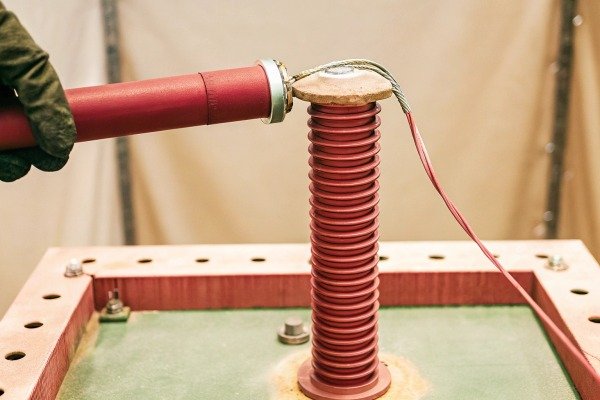
Pour la fabrication B2B, la CEI 60243-1 est la référence CEI 60243-1 9 pour tester la résistance électrique des matériaux isolants solides. Elle décrit comment appliquer la tension, en particulier le taux d'augmentation de la tension. Dans le contexte des pièces soudées, cette norme nous aide à définir la méthode de test "à court terme".
Cette norme dicte la géométrie des électrodes et le milieu (souvent de l'huile ou de l'air) utilisé pendant le test. Lorsque nous testons un ensemble soudé, le cadre métallique lui-même agit comme une électrode, et nous fixons la deuxième électrode à l'élément conducteur supporté par l'isolant. Le respect de la CEI 60243 garantit que si un amorçage se produit, il est dû à une défaillance du matériau et non à une configuration de test incorrecte.
ASTM D149 : Vérification des matériaux
Alors que la CEI couvre la procédure, l'ASTM D149 est cruciale ASTM D149 10 pour le matériau lui-même. Avant le soudage, nous vérifions souvent que l'isolant brut répond aux spécifications ASTM D149 pour la tension de claquage diélectrique. Cependant, après le soudage, nous nous référons à cette norme pour comprendre comment l'épaisseur du matériau (qui peut être modifiée par le cordon de soudure ou le métal fondu) est corrélée à la tolérance de tension attendue. Si la soudure réduit l'épaisseur d'isolation effective, l'ASTM D149 nous aide à calculer la nouvelle tension maximale théorique.
Adaptation de l'IEEE 43 pour les composants statiques
L'IEEE 43 est techniquement intitulé "Pratique recommandée pour le test de la résistance d'isolement des machines tournantes". Vous pourriez vous demander pourquoi nous utilisons une norme pour moteurs pour des pièces soudées statiques. La raison est la méthodologie pour le Indice de polarisation (PI).
L'IEEE 43 fournit les directives les plus complètes pour interpréter les valeurs de PI et de résistance d'isolement (IR). Il offre des facteurs de correction de température, qui sont essentiels. Par exemple, si nous testons une pièce dans notre usine du Vietnam à 35°C (95°F), la résistance sera considérablement plus faible que si elle est testée à 20°C. L'IEEE 43 nous donne la formule pour normaliser ces résultats à 40°C, garantissant qu'un "Pass" en Asie est également un "Pass" lorsque vous l'inspectez aux États-Unis.
Pourquoi les normes protègent l'acheteur
L'utilisation de ces normes ne concerne pas seulement la bureaucratie ; il s'agit de la responsabilité. Si un isolant soudé échoue et provoque un incendie ou un arrêt d'équipement :
- Traçabilité : Nous pouvons prouver que la pièce a été testée conformément à la CEI 60243-1.
- Cohérence : " Haute résistance " est subjectif. " Résistance > 100 MΩ selon IEEE 43 " est un fait objectif.
- Contrôle des processus : Cela oblige l'usine à maintenir un équipement calibré et des environnements de test cohérents.
Quels critères d'acceptation dois-je définir pour la tension de claquage de l'isolement dans mon plan de contrôle qualité ?
Dans notre gestion de la chaîne d'approvisionnement, nous rencontrons fréquemment des dessins qui disent simplement “ Tester l'isolation ”. C'est dangereux. Sans seuils numériques spécifiques, une usine pourrait accepter une pièce marginale qui échoue six mois plus tard. Nous aidons nos clients à définir des limites précises “ Go/No-Go ”.
Définissez vos critères d'acceptation en fonction de la “ Règle du mégohm ” (1 MΩ par 1000 V de tension de fonctionnement) plus une marge de sécurité. Pour les composants soudés critiques, exigez un indice de polarisation (PI) supérieur à 2,0. La tension de claquage lors des tests Hipot doit dépasser deux fois la tension de fonctionnement plus 1000 V sans amorçage.

La " Règle du mégohm " et les marges de sécurité
La valeur de base minimale absolue pour la résistance d'isolement (IR) est de 1 mégohm (MΩ) pour chaque 1000 volts de tension nominale de fonctionnement, avec un minimum de 1 MΩ. Cependant, pour les nouvelles pièces personnalisées utilisant des isolateurs soudés modernes, c'est souvent trop bas. La nouvelle isolation devrait être beaucoup plus performante.
Pour nos clients, nous recommandons généralement une norme d'acceptation plus stricte :
- Tension de fonctionnement < 1000 V : IR minimum de 100 MΩ.
- Tension de fonctionnement > 1000 V : IR minimum de 1000 MΩ (1 GΩ).
Si une pièce nouvellement soudée ne présente que 5 MΩ, même si elle " réussit " techniquement la règle de base, cela indique une contamination ou une mauvaise interface de soudure. Nous signalerions cela comme un rejet.
Seuils de l'indice de polarisation (PI)
La valeur du PI est un rapport sans dimension qui vous renseigne sur la qualité de l'isolation, pas seulement de la résistance.
- PI < 1,0 : Dangereux. La pièce doit être immédiatement rejetée. Cela indique un chemin de fuite direct, probablement une fissure dans la soudure.
- PI 1,0 – 1,5 : Douteux. L'isolation pourrait être humide ou la surface de soudure sale (résidu de flux).
- PI 2,0 – 4,0 : Excellent. C'est l'objectif pour un assemblage soudé sain et de haute qualité.
- PI > 4,0 : Très cassant ou sec. Bien qu'électriquement sain, vérifiez la fragilité mécanique dans la zone affectée par la chaleur (ZAT) de la soudure.
Critères de Hipot (essai de tenue diélectrique)
Alors que le test IR mesure la résistance, le test Hipot vérifie la rupture. Le critère d'acceptation ici est binaire : Pas de claquage.
La formule standard pour la tension de test est :
$$V_{test} = 2 \times V_{operating} + 1000V$$
Par exemple, si votre composant fonctionne à 240V :
$$V_{test} = 2(240) + 1000 = 1480V$$ (Arrondir à 1500V).
Pendant ce test, nous avons également fixé une limite au courant de fuite. Un réglage typique est de 5 mA ou 10 mA. Si le courant dépasse cette limite sans arc, il s'agit d'un "échec doux", indiquant que l'isolation se dégrade rapidement sous contrainte, probablement en raison d'inclusions métalliques dans le cordon de soudure.
Résumé des critères d'acceptation
| Indicateur | Limite d'acceptation minimale | Valeur cible (bonne qualité) | Action en cas de défaillance |
|---|---|---|---|
| Résistance d'isolement (IR) | 1 MΩ par kV + 1 MΩ | > 100 MΩ (Basse tension) | Vérifier l'humidité de surface ; nettoyer et retester. Rejeter si l'échec se reproduit. |
| Indice de polarisation (PI) | > 1,5 | > 2,0 | Rejeter. Un PI < 1,0 indique des dommages structurels permanents. |
| Tenue diélectrique | Pas de claquage à $(2 \times V_{op} + 1000V)$ | Fuite < 1 mA | Mise au rebut immédiate. Un claquage indique un trou ou une fissure dans l'isolation. |
Conclusion
Le test des isolateurs soudés nécessite une approche multicouche car le processus de soudage introduit des contraintes thermiques et mécaniques uniques auxquelles les composants standard ne sont pas confrontés. En combinant les tests de résistance dans le temps pour la qualité du matériau, les tests de tension par paliers pour les fissures physiques et des critères d'acceptation rigoureux basés sur les normes internationales, vous vous assurez que la liaison entre le métal et l'isolant est aussi solide électriquement que mécaniquement.
Notes de bas de page
1. Documentation officielle de la norme IEEE pour les tests de résistance d'isolement et d'indice de polarisation. ↩︎
2. Aperçu faisant autorité des propriétés diélectriques en science des matériaux. ↩︎
3. Page de norme officielle pour les tests de tension de claquage diélectrique. ↩︎
4. Leader de l'industrie expliquant les variables des tests de résistance d'isolement. ↩︎
5. Explication technique de la zone affectée par la chaleur par une organisation mondiale majeure de recherche et de technologie. ↩︎
6. Contexte général sur le phénomène physique du choc thermique dans les matériaux fragiles. ↩︎
7. Informations générales sur les propriétés et les types de matériaux isolants électriques. ↩︎
8. Page de publication officielle de la norme IEC référencée. ↩︎
9. Page de norme IEC officielle pour les tests de rigidité diélectrique des matériaux isolants solides. ↩︎
10. Norme ASTM officielle pour la tension de claquage diélectrique et la rigidité diélectrique de l'isolation électrique solide. ↩︎

 English
 Español de México
 Deutsch
 Français
 Русский