We often see clients puzzled by high upfront quotes for custom stamping projects, unsure if the investment aligns with market standards. (20 words)
custom stamping projects 1
To determine reasonableness, compare the quote against the total production volume and part complexity. A reasonable cost aligns with the die type, material grade, and guaranteed tool life. Always request a cost breakdown separating design, materials, and labor to identify inflated markups.
Understanding the logic behind these numbers is crucial for your procurement strategy.
What specific factors drive up the cost of stamping dies in my quote?
When we review engineering drawings, certain design features immediately signal to our engineering team that tooling expenses will be higher than average. (22 words)
The primary cost drivers include part complexity, tight tolerances, and the number of forming stations required. Harder materials like stainless steel demand durable tool steels, increasing costs. Additionally, complex geometries requiring side-action cams or multiple bending stages significantly escalate design and machining hours.

The Impact of Part Complexity and Geometry
The geometry of your part is the single most significant factor influencing the cost of the die. In our factories, we often explain to clients that a simple flat washer requires a basic blanking die, which is relatively inexpensive. However, as soon as you introduce bends, deep draws, or complex contours, the tooling requirements change drastically.
If your part requires multiple operations—such as cutting, bending, and punching—in a specific sequence, we likely need to design a progressive die. A progressive die feeds the metal strip through multiple stations, performing a different operation at each step. While this ensures high efficiency for mass production, the upfront cost is substantial because we are essentially building multiple tools into one base.
progressive die 2
Furthermore, features like undercuts or side holes often require "cams" or "slides" within the die. These are moving mechanical parts that actuate perpendicular to the main press movement. Adding these mechanisms increases the design time, the number of components in the BOM (Bill of Materials), and the assembly labor, all of which drive up the quote.
Bill of Materials 3
Material Selection and Tolerance Requirements
The material you choose for your final part dictates the material we must use for the tool. Stamping soft aluminum allows us to use standard tool steels. However, if you are stamping high-strength stainless steel or spring steel, the die components experience immense stress and wear.
To prevent rapid failure, we must use high-grade tool steels like D2, A2, or even carbide inserts for the cutting edges. These materials are not only more expensive to buy but also significantly harder to machine. We often have to use Wire EDM (Electrical Discharge Machining) rather than standard CNC milling to cut these hardened steels, which is a slower and more costly process.
Wire EDM 4
H3 – Tolerance Sensitivity
Tight tolerances on your part print translate directly to precision requirements for the die. If a dimension has a tolerance of +/- 0.05mm, the die must be built to an even tighter standard. This requires precision grinding and fitting by our most senior die makers. We have listed the typical cost multipliers associated with different features below to help you gauge your quote.
| Feature Complexity | Tooling Cost Impact | Reason for Cost Increase |
|---|---|---|
| Simple Blanking | Low (Base) | Single operation, minimal machining. |
| Simple Bending | Faible à moyen | Requires form blocks and pressure pads. |
| Deep Drawing | Élevé | Requires precise clearance control and high-grade polished steel. |
| Side Action/Cams | Très élevé | Complex moving mechanisms, increased assembly time. |
| Tight Tolerances | Medium to High | Requires precision grinding and EDM wire cutting. |
How do I balance tooling lifespan requirements with initial mold costs?
We frequently advise clients not to over-spec tools for short-run projects, as this unnecessarily drains their initial procurement budget. (19 words)
Balancing lifespan involves matching the tool steel grade to your total expected production volume. For low volumes, cheaper P20 steel suffices, whereas high-volume runs require expensive D2 or carbide. Over-specifying tool life for short projects wastes capital without adding value to your supply chain.
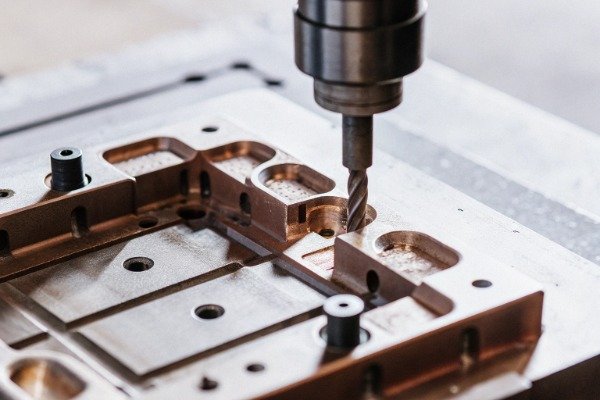
Matching Steel Grade to Production Volume
One of the most common mistakes we see in RFQs is a mismatch between the requested tool life and the actual production volume. We often receive inquiries for a "1 million hit" tool life for a project that will only produce 5,000 parts per year. In this scenario, you are paying for durability you will never utilize.
RFQs 5
Tooling costs are largely driven by the grade of steel used for the cutting and forming inserts. For low-volume production or prototyping (e.g., under 20,000 parts total), we can use lower-cost pre-hardened steels or even mild steel for certain components. These are easier to machine and cheaper to purchase.
However, for high-volume production (e.g., 500,000+ parts annually), we must use high-performance alloys. These materials resist abrasive wear and maintain sharp cutting edges over millions of cycles. The trade-off is that the initial investment is much higher. You need to calculate the "break-even" point where the higher upfront cost of a durable tool is offset by the lower maintenance and replacement costs over time.
H3 – The "Total Cost of Ownership" Approach
When evaluating a quote, look at the Total Cost of Ownership (TCO). A cheap tool might save you $5,000 upfront, but if it requires sharpening every 10,000 hits, the downtime and maintenance fees will quickly exceed the savings. Conversely, an expensive carbide die might run for 1 million hits without maintenance, making it the cheapest option per part for high-volume runs.
Total Cost of Ownership 6
We encourage you to share your 2-year and 5-year volume projections with us. This allows our engineers to recommend the "sweet spot" for tooling investment. Sometimes, a modular die design allows us to use cheaper inserts initially and upgrade to carbide inserts later if volume increases, providing a flexible balance.
H3 – Tool Steel Classification Table
To help you understand what you are paying for, here is a breakdown of common tool steels we use and their typical application ranges.
| Tool Steel Grade | Relative Cost | Typical Lifespan (Hits) | Best Application |
|---|---|---|---|
| 1045 / P20 | Faible | < 50,000 | Prototyping, low volume, soft materials (Alu/Brass). |
| O1 / A2 | Moyen | 50,000 – 250,000 | Mid-volume production, general purpose stamping. |
| D2 | Élevé | 500,000 – 1,000,000 | High volume, abrasive materials, stainless steel. |
| Carbide | Très élevé | > 1,000,000 | Extreme volume, high speed, maximum precision. |
Our team has seen contracts where low initial prices hide expensive mandatory maintenance clauses that catch buyers off guard later. (20 words)
Scrutinize the contract for clauses regarding sharpening frequency, spare parts replacement, and guaranteed hits. Hidden fees often lurk in undefined responsibility for major repairs versus routine maintenance. Ensure the supplier covers wear-and-tear repairs within the guaranteed lifespan to avoid unexpected invoices later.
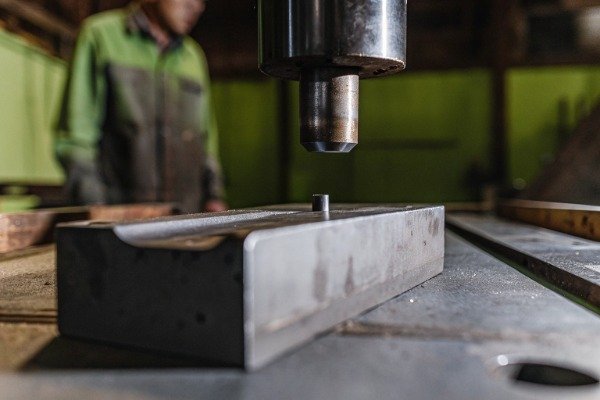
Defining Responsibility for Maintenance
In the excitement of getting a project started, many buyers overlook the "Maintenance and Repair" section of the tooling agreement. This is dangerous. A stamping die is not a static asset; it is a machine that degrades with use. Punches wear down, springs fatigue, and pilots can break.
You must clarify who pays for what. In our standard contracts, we typically assume responsibility for routine maintenance (sharpening, cleaning, lubrication) for the duration of the production life, provided the tool remains at our facility. This is often referred to as "tooling amortization" into the piece price. However, some suppliers may charge you a separate fee for every sharpening cycle. If this isn't defined, you might receive an invoice for $500 every time the tool needs maintenance.
H3 – The "Guaranteed Hits" Clause
The most critical metric in your contract is the "Guaranteed Hits" or "Tool Life Warranty." If a supplier quotes a tool for $20,000, they should guarantee it for a specific number of cycles (e.g., 500,000 hits).
If the tool breaks or produces non-conforming parts before reaching this number, the repair or replacement cost should be 100% on the supplier. We have seen competitors argue that a broken punch is "normal wear and tear" and charge the client for replacement. A strong contract explicitly states that the supplier bears the cost of all repairs required to maintain part quality within the guaranteed lifespan.
H3 – Exit Clauses and Portability
Another hidden cost arises if you decide to move the tool to a different supplier. Some manufacturers build tools with proprietary components or integrate them into specific die sets that only fit their presses. If you try to move the tool, you may find it is useless elsewhere, forcing you to pay for new tooling.
Always ensure your contract specifies that the tool is your property (once paid for) and that it must be designed to industry standards (e.g., standard shut heights, clamping slots) to ensure portability. Ask for the 2D and 3D tool designs upon completion. If a supplier refuses to release the tool design, they are locking you in, which is a hidden long-term cost.
How can I effectively benchmark tooling quotes from different Asian suppliers?
We encourage comparing bids, but apples-to-apples comparison requires looking beyond the bottom line number to the underlying engineering assumptions. (20 words)
Effective benchmarking requires obtaining detailed cost breakdowns from at least three suppliers with similar capabilities. Compare line items for design, material, and heat treatment rather than just the total price. Significant deviations usually indicate different assumptions about tool life, cavity count, or steel quality.

Analyzing the Cost Breakdown
When you receive a single lump sum figure for tooling, it is impossible to judge its reasonableness. We always recommend asking for a breakdown that splits the cost into:
- Design & Engineering: The hours spent designing the strip layout and tool structure.
- Materials: The cost of the die set, punch holder, and cutting steels.
- Machining & Assembly: The labor hours for CNC, EDM, grinding, and assembly.
- Tryout & Validation: The cost of running the press to prove the tool works.
If one supplier quotes $15,000 and another quotes $25,000, do not immediately assume the cheaper one is better. Look at the weight of the material or the design hours. The cheaper supplier might be using a thinner die set that will flex under load, causing quality issues, or they might be skipping the heat treatment of critical components.
heat treatment 7
H3 – Negotiation Strategies: Amortization and Refunds
If you find that the tooling cost is genuinely high but the supplier is technically superior, you have leverage to negotiate payment terms rather than just the price. A strategy we often accept for long-term partners is tooling amortization.
Instead of paying $30,000 upfront, you might pay $15,000 upfront and amortize the remaining $15,000 onto the piece price of the first 50,000 parts. This eases your cash flow. Alternatively, ask for a refund scheme: "If we order 100,000 parts within 12 months, will you refund 50% of the tooling cost?" This aligns our incentives—we want the volume, and you want a lower total cost.
H3 – The Quote Comparison Matrix
Use a matrix like the one below to spot outliers. If Supplier B is significantly cheaper on material, ask them what grade of steel they are using. If Supplier C has zero cost for "Tryout," ask if they are hiding it in the piece price or if they plan to charge it later.
die set 8
| Cost Component | Supplier A (Low Bid) | Supplier B (Mid Bid) | Supplier C (High Bid) | Drapeaux rouges à surveiller |
|---|---|---|---|---|
| Design Fees | $500 | $2,000 | $2,500 | Low design fees may mean no DFM analysis. |
| Material Cost | $4,000 | $6,500 | $7,000 | Low material cost suggests cheaper/softer steel. |
| Usinage | $5,000 | $8,000 | $9,500 | Low machining hours implies less precision/EDM work. |
| Tryout | $0 (Hidden) | $1,500 | $2,000 | "Free" tryout often means they haven't budgeted for issues. |
| Total | $9,500 | $18,000 | $21,000 | Is Supplier A missing a critical process? |
By dissecting the quote in this manner, you move the conversation from "Why is this so expensive?" to "Show me how this investment guarantees my product quality." This is the hallmark of a professional buyer.
tooling amortization 9
Conclusion
To ensure fair tooling costs, evaluate part complexity, match tool lifespan to production volume, and scrutinize maintenance contracts. Always benchmark detailed breakdowns to identify hidden risks. (25 words)
carbide inserts 10
Notes de bas de page
1. Provides an overview of the metal stamping manufacturing process. ↩︎
2. Explains the specific high-efficiency die type mentioned. ↩︎
3. Defines the comprehensive list of components required for the tool. ↩︎
4. Describes the precision machining process used for hardened steels. ↩︎
5. Defines the standard business process for inviting supplier bids. ↩︎
6. Explains the financial estimate helping buyers assess direct and indirect costs. ↩︎
7. Describes the industrial process used to harden metal components. ↩︎
8. Defines the fundamental assembly holding the custom tooling components. ↩︎
9. Explains the accounting method of spreading costs over time. ↩︎
10. Details the extremely hard material used for high-wear cutting edges. ↩︎

 English
 Español de México
 Deutsch
 Français
 Русский
 العربية