At our Singapore and Vietnam facilities, we see clients struggling with rising import costs daily. Navigating complex US tariff codes without guidance drains your budget and delays critical shipments.
Importing stamping parts to the US requires mastering three key areas: Harmonized Tariff Schedule (HTS) classification for base duty rates, country-specific levies like Section 301 or 232 tariffs, and free trade agreement eligibility. Understanding these factors determines your total landed cost and compliance obligations.
Let’s break down the specific costs and regulations you need to master to protect your bottom line.
How do Section 301 tariffs affect the cost of stamping parts imported from China versus Vietnam?
When we quote projects for US buyers, the price difference between our China and Vietnam production lines is often shocking. Relying solely on Chinese suppliers now hurts your bottom line.
Section 301 tariffs impose significant additional duties on Chinese-origin goods, often pushing total import fees to 45% or higher. In contrast, sourcing from Vietnam typically incurs a standard rate around 20%, offering a potential 25% cost saving on landed duty expenses alone.

Importing from China has become increasingly expensive for American companies. For decades, China was the default option for metal stamping due to its vast infrastructure. However, the trade landscape has shifted dramatically. The Section 301 tariffs specifically target Chinese manufacturing, creating a punitive tax layer that does not apply to other nations. This means when you buy from China, you pay the standard duty plus a heavy penalty duty.
The Financial Impact of Tariff Stacking
“Tariff stacking” is a concept every buyer must understand. It occurs when multiple duties apply to a single product. If you import steel stampings from China, you may face Section 232 tariffs on the steel content itself, stacked on top of Section 301 tariffs on the finished good. This cumulative effect destroys profit margins.
In our experience helping clients migrate supply chains, moving production to Vietnam effectively bypasses the Section 301 burden. Vietnam is not subject to these specific punitive taxes. You generally only pay the Most Favored Nation (MFN) rate. This simple geographic switch can save a quarter of your product cost immediately, which can be reinvested into better tooling or expedited logistics.
Most Favored Nation (MFN) rate 1
Comparative Duty Analysis: A Real-World Scenario
We have calculated the landed cost differences for many clients to illustrate the savings. The table below breaks down a typical scenario for a $50,000 order of custom steel brackets.
| Cost Component | Sourcing from China | Sourcing from Vietnam |
|---|---|---|
| Order Value (FOB) | $50,000 | $50,000 |
| Base Duty (Approx. 3-6%) | $2,500 | $2,500 |
| Section 301 Penalty (25%) | $12,500 | $0 |
| Section 232 Surcharge | Varies (Stacking applies) | Varies (Exemptions may apply) |
| Total Estimated Duty | $15,000+ | $2,500 |
| Effective Tax Rate | ~30-45% | ~5% |
Note: Rates are estimates for illustration. Actual rates depend on specific HS codes and current exclusions.
The “China Plus One” Strategy
This cost disparity drives the “China Plus One” strategy we advocate. While China remains a powerhouse for raw materials, final assembly and export from Vietnam or Singapore is often the smarter financial move. However, you must be careful. The US government is vigilant about “transshipment”—shipping Chinese goods through Vietnam without adding value. To secure these savings legally, the manufacturing process must genuinely occur in the alternative country, a process we strictly adhere to in our Vietnam facility.
What are the current duty rates for custom metal stampings under specific HS codes?
Our engineering team spends hours verifying HTS codes before shipping because a single digit error triggers audits. Misclassifying your metal parts is a costly mistake you cannot afford.
Duty rates for custom metal stampings depend heavily on their material and function, typically falling under HTS Chapters 73, 84, or 85. While base rates range from duty-free to 6%, specific steel components may face an additional 50% tariff under Section 232 regulations.
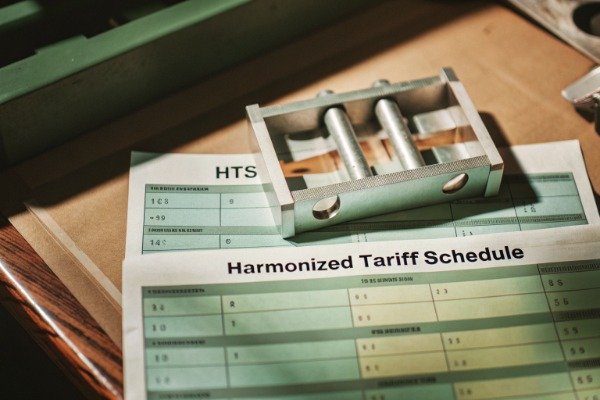
The Harmonized Tariff Schedule (HTS) is the dictionary of global trade. Every part we manufacture must have a specific code assigned to it. For metal stampings, this code is the difference between paying zero duty and paying a heavy tax. The classification depends on the material composition and the intended use of the part.
Common HTS Chapters for Stampings
Most metal parts we produce fall into two primary categories, and the distinction is vital:
- General Articles of Metal (Chapter 73): These are generic parts like brackets, washers, frames, or mounting plates. Customs views these as “parts of general use.” They often attract higher scrutiny and are primary targets for Section 232 steel tariffs because they are viewed essentially as raw steel in a different shape.
- Parts of Machinery (Chapters 84 & 85): These are parts designed specifically for a machine, such as a motor housing, a printer chassis, or an electrical enclosure. These often benefit from lower duty rates or even duty-free status.
The Art of Tariff Engineering
“Tariff engineering” is a legitimate strategy we use to help clients optimize costs. It involves designing or finishing a part so that it qualifies for a more favorable HTS code. For example, if a generic steel bracket is modified to include welded nuts and specific mounting holes that fit only one type of engine, it might move from Chapter 73 (General Article) to Chapter 84 (Part of an Engine). This shift could drop the duty rate significantly. However, this requires proving the part has no other commercial use.
Section 232 and Steel Tariffs
You must also be aware of Section 232 investigations. Recent updates indicate that stamped steel components can face a 50% tariff. This applies to the value of the steel content. Even if the base duty is low, this surcharge applies if the material origin is not exempt. This is why we often source raw materials from countries with favorable trade agreements or exemptions to minimize this risk for our clients.
Typical Duty Rates by Category
Here is a breakdown of common classifications we see in our export documentation.
| Part Description | Likely HTS Chapter | Base Duty Range | Section 232 Risk |
|---|---|---|---|
| Steel Brackets | Chapter 73 | 0% – 6% | High (50%) |
| Motor Laminations | Chapter 85 | Free – 2.5% | Moyen |
| Automotive Body Panels | Chapter 87 | 2.5% | Low (If USMCA applies) |
| Aluminum Heatsinks | Chapter 76 | 2.5% – 5.7% | High (Aluminum tariffs) |
Always consult a licensed customs broker. A small design change that reclassifies a part from “general steel article” to “machinery part” can save significant capital over the life of a product line.
How can I verify the country of origin to ensure my parts qualify for lower tariff rates?
We strictly control our supply chain in Vietnam to ensure no Chinese materials are simply “passed through.” False origin claims lead to severe penalties and shipment seizures.
Verifying country of origin requires auditing the entire production process to ensure “substantial transformation” occurs in the export country. You must collect mill certificates, production logs, and value-add documentation to prove the goods were not merely transshipped to evade tariffs.
Importer Security Filing (ISF) 2
Customs authorities are aggressive about “transshipment.” This illegal practice involves a factory in China shipping parts to Vietnam, changing the label, and exporting them to the US to avoid tariffs. To legally qualify for the lower Vietnam tariff rate, the product must be genuinely manufactured there. As a buyer, the burden of proof often falls on you to verify your supplier’s claims.
19 U.S.C. § 1304 3
Understanding Substantial Transformation
The legal standard for determining origin is “substantial transformation.” This means the raw material must undergo a fundamental change in form, name, or character within the export country.
- Not Enough: Repackaging, painting, simple assembly, or cleaning.
- Enough: Stamping a raw steel coil into a complex bracket, welding components, or precision machining.
At our facilities, we document every step of this transformation. We start with the raw material invoice. We track the stamping, welding, and finishing processes. This paper trail is your insurance policy. It proves the value was added in Vietnam (or Singapore), not China.
require a Customs Bond 4
The Risk of Transshipment Penalties
If US Customs and Border Protection (CBP) suspects you are evading tariffs through transshipment, the consequences are harsh. They can impose a 40% penalty on the value of the goods. Furthermore, they publish lists of companies caught circumventing rules, which can permanently damage your brand’s reputation. To protect yourself, you should demand transparency. Do not just accept a “Made in Vietnam” sticker. Ask for proof.
Verification Checklist for Buyers
Use this checklist to audit your suppliers and ensure they are compliant.
| Verification Document | Objectif |
|---|---|
| Mill Certificates | Proves where the raw steel or aluminum was melted and poured. |
| Production Photos/Video | Visual proof of the machinery and tooling operating in the declared country. |
| Capacity Reports | Verifies the factory actually has the machines and power usage to make the order volume. |
| Labor Records | Confirms a local workforce was paid to perform the manufacturing steps. |
| Material Invoices | Shows the purchase of raw materials by the specific factory entity. |
If a supplier refuses to share this data, it is a major red flag. Legitimate manufacturers like us have nothing to hide and will readily provide evidence of our production activities to ensure your peace of mind.
US Customs and Border Protection (CBP) 5
What paperwork do I need to prepare for US Customs when importing metal components from Asia?
Our logistics team prepares dozens of document packets weekly to ensure smooth entry at US ports. Missing a single commercial invoice detail can leave your container stuck in expensive demurrage.
substantial transformation 6
Essential paperwork for US Customs includes a commercial invoice with precise HTS codes, a packing list, a bill of lading, and a country of origin certificate. Additionally, imports valued over $2,500 require a Customs Bond to guarantee payment of all duties and fees.
Documentation is the bridge between our factory floor and your warehouse. Without the right papers, even the highest quality parts become a liability. US Customs and Border Protection (CBP) requires specific data elements to clear your shipment, and accuracy is non-negotiable.
HTS Chapters 73, 84, or 85 8
The Commercial Invoice: Your Primary Declaration
The commercial invoice is the most critical document in the packet. It is not just a bill; it is a legal declaration to the US government. It must include:
- A detailed description of the goods (avoid vague terms like “parts”—use “stamped steel mounting bracket for HVAC unit”).
- The correct HTS classification code.
- The value of the goods in US dollars.
- The Country of Origin.
- The Incoterms (e.g., FOB, DDP) agreed upon.
If the description is vague, Customs will likely flag the cargo for inspection. This results in delays and expensive examination fees that you, the importer, must pay.
Section 301 9
Customs Bonds and Entry Types
Many first-time importers are surprised by the bond requirement. If your shipment value exceeds $2,500, it is considered a “formal entry.” You cannot just pay duties with a credit card at the port; you must purchase a Customs Bond.
- Single Entry Bond: Good for one specific shipment. This is best for infrequent importers.
- Continuous Bond: Covers all shipments for a full year. This is the standard for businesses importing regularly, as it speeds up processing and lowers costs over time.
Physical Marking Requirements
Paperwork is not just digital; it extends to the physical product. Under US law (19 U.S.C. § 1304), the Country of Origin must be permanently and conspicuously marked on the part or its immediate container. We often laser etch or stamp “Made in Vietnam” directly onto parts to ensure compliance. If this marking is missing, Customs may demand you mark every single piece at the port before release, which is incredibly expensive and time-consuming.
Importer Security Filing (ISF)
Don’t forget the “10+2” rule. The Importer Security Filing (ISF) must be filed with Customs 24 hours before the ship leaves the Asian port. This requires coordination between us (the supplier) and your freight forwarder. Late filing results in a minimum $5,000 penalty. We always provide the necessary data points early to ensure our clients never face this fine.
Conclusion
Navigating tariffs requires vigilance and strategic sourcing. By understanding HTS codes, leveraging Vietnam for lower duties, and ensuring strict compliance, you can secure your supply chain and protect your margins.
Harmonized Tariff Schedule (HTS) 10
Notes de bas de page
- CBP explanation of duty rates and trade relations. ↩︎
- Official CBP page explaining ISF (10+2) requirements. ↩︎
- Official US House of Representatives text of the specific law cited. ↩︎
- Official CBP guidance on when and why customs bonds are required. ↩︎
- Official website of the US customs agency. ↩︎
- CBP publication defining rules of origin and substantial transformation. ↩︎
- Official Bureau of Industry and Security page on Section 232 investigations. ↩︎
- Official USITC page providing the full tariff schedule chapters. ↩︎
- Official USTR page detailing Section 301 tariff actions and lists. ↩︎
- Official US government search tool for tariff classification codes. ↩︎

 English
 Español de México
 Deutsch
 Français
 Русский
 العربية