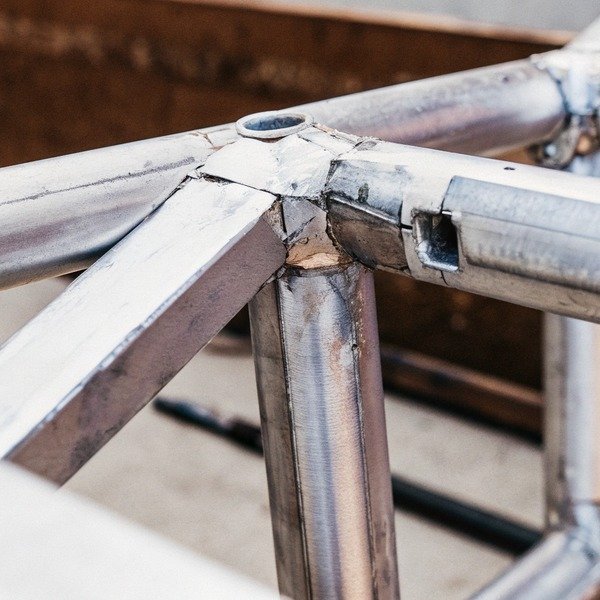
Inconsistent weld quality can derail your production schedule and inflate costs. Inconsistent weld quality 1 We often see clients struggle with suppliers who fix individual mistakes but fail to improve the underlying process, leading to the same defects surfacing repeatedly.
Evaluate a supplier’s continuous improvement capability by verifying ISO 9001 certifications, auditing their corrective action protocols for recurring defects, and analyzing historical performance metrics like scrap reduction. Look for investments in automation and workforce upskilling to ensure long-term efficiency and consistent quality.
To secure a reliable supply chain, you must identify partners who actively evolve their operations rather than simply maintaining the status quo.
How do I verify that a supplier effectively uses root cause analysis to prevent recurring welding defects?
Seeing the same porosity issue on a second shipment is frustrating and costly. porosity issue 2 In our QA labs, we treat repetitive mistakes as a major red flag, indicating that the supplier is patching problems rather than curing the process.
Verify root cause analysis effectiveness by auditing their Corrective and Preventive Action (CAPA) logs for specific recurrence prevention measures. Ensure they use structured methodologies like 8D or 5 Whys to eliminate fundamental process flaws rather than relying on temporary rework fixes.
Digging Deeper into CAPA Protocols
When we manage complex custom projects for our U.S. clients, we do not accept “operator error” as a sufficient root cause for a welding defect. That is usually a symptom, not the cause. To truly evaluate a supplier, you need to look past their initial explanation and examine their Corrective and Preventive Action (CAPA) documentation. Corrective and Preventive Action (CAPA) 3 A supplier committed to continuous improvement will have a paper trail—or preferably a digital trail—that links a defect to a systemic change.
For example, if a weld fails due to lack of fusion, a reactive supplier simply tells the welder to “turn up the heat” and re-welds the part. A proactive supplier, however, investigates why the parameters were wrong. Was the Welding Procedure Specification (WPS) unclear? Was the machine calibration drift unchecked? Welding Procedure Specification (WPS) 4
The 8D and 5 Whys Methodologies
You should specifically ask to see completed 8D reports 8D reports (Eight Disciplines) 5 (Eight Disciplines) or “5 Whys” worksheets for past non-conformances. When we audit our sub-suppliers in Vietnam, we look for evidence that they changed a process step, updated a fixture, or modified a cleaning protocol. If the corrective action is always “retrained operator,” the supplier is likely not improving their process.
H3: Reactive vs. Proactive Problem Solving
The table below illustrates the difference between a supplier who fixes parts and one who fixes processes.
| Característica | Reactive Supplier (High Risk) | Proactive Supplier (Continuous Improvement) |
|---|---|---|
| Defect Response | Reworks the specific part immediately. | Quarantines lot and investigates root cause. |
| Documentation | Paper tags or verbal instructions. | Digital CAPA log with assigned owners. |
| Root Cause | Blames “careless worker” or “bad material.” | Identifies process gap (e.g., poor fit-up, dirty gas). |
| Prevention | “We will be more careful next time.” | Implements physical stops, sensors, or updated WPS. |
| Follow-up | None after shipment. | Audits the fix 30 days later to ensure stability. |
Critical Thinking: The “Clean Plate” Trap
Be wary of suppliers who claim zero defects or refuse to show you their scrap logs. In our experience, a supplier with no recorded internal rejections is often hiding them or failing to inspect rigorously. Continuous improvement requires data; you cannot improve what you do not track. A healthy CAPA log shows a living system where problems are found, analyzed, and systematically killed.
What specific signs show me that a manufacturer is investing in advanced welding technology?
Old equipment often limits precision and increases variability. When we walk our production floors, the hum of updated robotic arms and modern power sources signals a commitment to reliability that manual processes struggle to match.
Look for the integration of robotic welding cells and real-time monitoring sensors that track voltage and amperage stability. Investments in automated fixture design and Industry 4.0 data analytics indicate a commitment to reducing variability and increasing production throughput.

The Shift from Manual to Automated
In the custom parts business, flexibility is key, but the industry is moving undeniably toward automation. When evaluating a supplier, you aren’t just looking for robots; you are looking for smart application of technology. A supplier investing in continuous improvement will likely have a mix of manual stations for low-volume prototypes and robotic cells for production runs.
The presence of robotic welding cells significantly reduces the “human factor” in weld consistency. robotic welding cells 6 Robots don’t get tired, and their travel speed doesn’t fluctuate at the end of a shift. However, having a robot isn’t enough. We verify that the supplier has in-house programming capabilities. If they have to hire an external consultant every time a weld path needs a minor adjustment, their improvement cycle will be agonizingly slow.
Sensors and Real-Time Monitoring
Beyond the robot itself, look for advanced power sources. Modern welding machines (like those from Fronius or Lincoln Electric) have data logging capabilities. data logging capabilities 7 They can record heat input, voltage, and wire feed speed for every arc strike.
H3: Technology Tiers in Manufacturing
A supplier utilizing data analytics can predict when a contact tip is wearing out before it creates a bad weld. This is predictive maintenance, a hallmark of advanced continuous improvement.
| Technology Level | Descripción | Impact on Quality |
|---|---|---|
| Level 1: Manual | Standard analog machines. Relies entirely on operator skill. | High variability; quality depends on the specific welder. |
| Level 2: Digital Assist | Digital power sources with memory settings. | Better repeatability; faster setup for recurring jobs. |
| Level 3: Robotic | 6-axis robots for welding. Manual loading. | Excellent consistency; reduced cycle times. |
| Level 4: Smart Factory | Robotics + Seam Tracking + Data Logging. | Adaptive control; 100% traceability of weld parameters. |
Fixturing as a Technology Indicator
Do not overlook the tooling. High-quality welding requires high-quality fit-up. A supplier focused on improvement will invest in modular, precision-machined fixtures rather than crude, hand-welded jigs. Hydraulic or pneumatic clamping systems ensure that every part is held with the same force, reducing distortion. When we develop products, we often find that the money spent on a smart fixture yields a higher ROI than upgrading the welding machine itself.
How can I assess the ongoing training and certification standards for the welding workforce?
A welder’s hand determines the structural integrity of your product. We constantly send our team for recertification because we know that skill decay leads to catastrophic field failures and costly delays.
Assess ongoing training by reviewing the supplier’s internal qualification matrix and confirming adherence to AWS or ISO 9606 standards. Check for regular recertification records and evidence of cross-training programs that upskill operators on new materials and complex joint geometries.
Verified Skills vs. Static Certificates
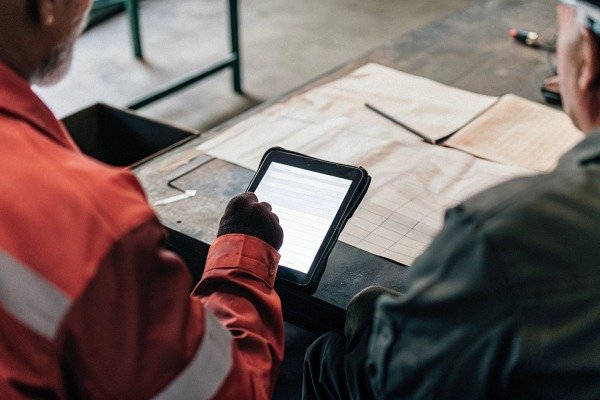
A certificate on a wall from ten years ago means very little today. Welding is a perishable skill that requires constant practice and updated knowledge. When we vet partners for our supply chain, we look for a “Qualification Matrix.” This is a live document that tracks exactly which welder is qualified for which procedure (e.g., TIG on Aluminum vs. MIG on Carbon Steel).
Continuous improvement in the workforce is demonstrated by cross-training. A shop where welders can only perform one specific type of joint is fragile. If that welder calls in sick, your production stops. A supplier investing in their people will have a program to advance operators from Class C (tacker) to Class A (master welder).
H3: The Role of the CWI (Certified Welding Inspector)
You should also check for the presence of a Certified Welding Inspector (CWI) or equivalent internal lead. Certified Welding Inspector (CWI) 8 Certified Welding Inspector (CWI) 9 This person is the guardian of quality. In a continuous improvement culture, the CWI doesn’t just inspect final parts; they mentor the welders. They spot bad habits—like improper gun angle or incorrect travel speed—and correct them in real-time.
Training for New Materials
As industries evolve, so do materials. If your project involves high-strength low-alloy (HSLA) steels or exotic aluminum grades, ask the supplier how they trained their team for these materials. Did they bring in an external expert? did they run test coupons?
- Documentation Check: Ask to see the WPQR (Welding Procedure Qualification Record).
- Continuity Logs: Welders must maintain their certification by welding with that process regularly (usually every 6 months). Ask to see these logs.
The Cultural Aspect of Quality
In many Asian manufacturing hubs, retention is a challenge. A factory that invests in training tends to retain staff longer. We have found that high turnover correlates directly with high defect rates. Therefore, a robust training program is not just about skill; it is a retention strategy that stabilizes your supply chain. A supplier who treats welders as replaceable labor rather than skilled artisans will rarely sustain continuous improvement.
What metrics should I track to measure a supplier’s year-over-year process efficiency gains?
Data never lies about progress or stagnation. We track every arc-on minute and scrap percentage to ensure our clients aren’t paying for our inefficiencies or unexpected downtime.
Track Year-over-Year (YoY) improvements in scrap rates, First Pass Yield (FPY), and overall equipment effectiveness (OEE). Additionally, monitor lead time variability and the successful implementation rate of engineering change orders to gauge the supplier’s operational agility and efficiency.

The Metrics That Matter
To objectively evaluate continuous improvement, you need to move beyond “good quality” and look at the numbers. Improvement implies a delta—a positive change over time. If a supplier cannot provide historical data, they are not managing their process; they are just reacting to it.
First Pass Yield (FPY) is the most critical metric for welding. It measures the percentage of parts that pass inspection immediately, without any rework. A supplier might boast a 99% final acceptance rate, but if 20% of those parts had to be ground down and re-welded, their process is inefficient. That rework introduces heat stress and potential latent defects. You want to see FPY trending upward year over year.
H3: KPI Dashboard for Improvement
We recommend requesting a quarterly report that includes the following data points.
| Metric | Definition | Trend Goal | What it Tells You |
|---|---|---|---|
| Scrap Rate | Percentage of material discarded. | Decrease (↓) | Material efficiency and cost control. |
| First Pass Yield | Parts correct without rework. | Increase (↑) | Process stability and “Right First Time” capability. |
| Arc-On Time | % of time the robot/welder is welding. | Increase (↑) | Efficiency in fixture loading and workflow. |
| Consumable Usage | Gas/Wire per part. | Stable/Optimized | Control over waste and consistent weld size. |
| Changeover Time | Time to switch fixtures/jobs. | Decrease (↓) | Adoption of SMED (Single-Minute Exchange of Die) principles. Single-Minute Exchange of Die 10 |
Interpreting the Data
When we review these metrics, we look for consistency. A jagged line with wild spikes suggests a process out of control. A slow, steady improvement suggests deliberate effort.
Lead Time Variability:
Another subtle indicator of process improvement is the consistency of lead times. If a supplier quotes 4 weeks but delivers in 3 weeks one time and 6 weeks the next, their internal planning is chaotic. Continuous improvement initiatives like Lean Manufacturing or 5S should result in predictable, stable lead times.
Engineering Change Orders (ECOs):
Finally, track how handled ECOs are. When you request a design change, how fast can the supplier implement it? A facility focused on improvement will have a streamlined workflow for updating WPS and fixtures, whereas a stagnant supplier will struggle to adapt, leading to delays and “accidental” production of the old revision.
Conclusión
Continuous improvement is not just a buzzword; it is a survival strategy in modern manufacturing. By rigorously evaluating a supplier’s CAPA systems, technology investments, workforce training, and performance metrics, you can distinguish between a partner who will grow with you and one who will hold you back. Validating these elements ensures your supply chain remains robust, competitive, and capable of delivering high-quality custom parts year after year.
Notas al pie
- Authoritative guide on common weld defects and quality issues. ↩︎
- Industry leader explaining the causes and cures for weld porosity. ↩︎
- Standard definition of CAPA by the American Society for Quality. ↩︎
- Technical definition of WPS documents in welding engineering. ↩︎
- Official overview of the 8D problem-solving methodology. ↩︎
- Industry association overview of robotic welding technology and benefits. ↩︎
- Product documentation for welding data analysis systems mentioned in the text. ↩︎
- Official certification page for CWIs by the American Welding Society. ↩︎
- Official certification page from the American Welding Society detailing CWI standards. ↩︎
- General background information on the SMED concept for context. ↩︎

 English
 Español de México
 Deutsch
 Français
 Русский
 العربية