We often see clients struggle when standard shipping methods fail to accommodate their large custom welding frames. Delays and transit damage shouldn't be the norm for your critical international projects.
Plan special container loading by selecting Open Top or Flat Rack units for out-of-gauge items and calculating the exact center of gravity. You must implement heavy-duty lashing, use custom steel cradles for weight distribution, and verify all securing points meet ISO 1161 standards to ensure safe maritime transport.
Let's explore the specific steps required to secure your heavy cargo effectively and avoid costly disruptions.
Which specific container types should I choose for shipping my over-length welding components?
During our logistics coordination in Vietnam, we noticed that selecting the wrong box type frequently causes immediate port rejections. Don't let simple dimension errors stall your entire supply chain.
Select Flat Rack containers for items exceeding width or height limits, as they allow loading from the sides or top. Open Top containers are ideal for tall welding parts requiring crane loading. Ensure the container floor rating exceeds your concentrated load weight to prevent structural failure during transit.
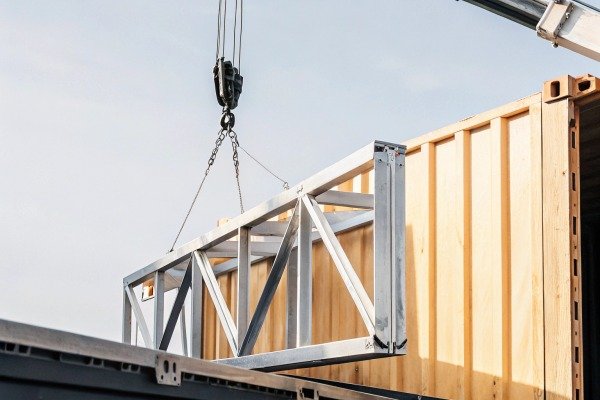
Choosing the correct container is the first step in successful logistics for custom parts. Standard dry vans often fail when dealing with complex geometries. For example, the silver-colored aluminum lattice frames we manufacture have specific length requirements that standard 20ft or 40ft containers cannot always handle. If you try to jam these into a standard box, you risk damaging the delicate extrusions.
Understanding Out-of-Gauge (OOG) Needs
"Out of Gauge" or OOG refers to cargo that exceeds Out of Gauge 1 the internal dimensions of a standard container. If your welding assembly is too long, wide, or tall, you must move to specialized equipment. We analyze the dimensions of every lattice structure before production ends. If a frame cannot be disassembled, we immediately look at Open Top or Flat Rack options.
Open Top containers are similar to standard ones but have Open Top containers 2 a removable tarpaulin roof. This allows us to use an overhead crane to lower heavy welding parts directly into place. This is safer than trying to push a heavy item through the doors with a forklift.
Flat Rack containers are necessary for even larger items. Flat Rack containers 3 They have no side walls and no roof. They only have end walls. This allows cargo to stick out from the sides or top. However, this exposes your aluminum frames to the elements. Since our products are metallic and silver-colored, we must apply heavy-duty protection against salt water.
Comparing Container Specifications
You need to know the specific limits of each container type. A standard container has rigid walls that limit what you can load. Special containers offer flexibility but come with different weight capacities.
Table: Comparison of Container Types for Welding Parts
| Container Type | Mejor caso de uso | Primary Advantage | Key Limitation |
|---|---|---|---|
| Standard Dry Van (40ft) | Parts within 2.3m width and 2.3m height. | Lowest cost and best protection from weather. | Hard to load heavy items; strict size limits. |
| Open Top | Tall items or items requiring crane loading. | Easy overhead loading; flexible height. | Roof bow removal takes time; requires tarpaulin. |
| Flat Rack | Over-width or over-length heavy machinery. | Accommodates massive, irregular shapes. | Cargo is fully exposed; requires expensive lashing. |
When we ship your custom parts, we always check the "payload" rating. Even if the part fits inside, it might be too heavy for the floor. Flat Racks have reinforced floors designed for heavy concentrated loads, which is vital for dense welding assemblies.
How can I optimize the loading plan to maximize space for my heavy welding parts?
We frequently redesign packing layouts when our engineers spot wasted space in initial shipping plans. Inefficient loading burns your budget and risks product stability during rough sea voyages.
Optimize your loading plan by balancing the center of gravity across the container’s structural floor cross-members. Use custom cradles or skids to distribute weight evenly, stack uniform crates with proper separation, and position forklift pockets toward doors to facilitate safe, efficient unloading at the destination facility.

Proper planning prevents the "point loading" effect. This happens when a heavy object rests on a small area of the floor. It can punch a hole right through the container deck. For our aluminum lattice designs, which have many open spaces, the contact points are small. This makes weight distribution even more critical.
The Critical Role of Weight Distribution
The center center of gravity 4 of gravity (CoG) must be low and centered. If you load a heavy welding jig on the left side and light parts on the right, the container will tilt when the crane lifts it. This is dangerous and ports will refuse to load it.
We recommend using a "bedding" approach. We place timber or steel beams on the container floor first. These beams span across the container's bottom cross-members. We then place the welding frame on top of these beams. This spreads the weight over a larger area. For the aluminum frames, we often design custom steel cradles. These cradles act as a shipping base and can also be used as an assembly jig when the part arrives at your factory.
Modularity and Disassembly Audits
Before we even book a ship, we perform a modularity audit. We look at the welding assembly and ask: "Can we remove this bracket?" or "Can this section be bolted instead of welded?"
Reducing the size of the cargo saves money. If we can remove a protruding piece to make the item fit into a standard container, we avoid OOG surcharges. For the geometric lattice designs, we often ship them in flat-pack sections if the design allows. This optimizes the volume inside the container.
Table: Checklist for Loading Plan Optimization
| Paso | Action Item | Beneficio |
|---|---|---|
| 1. Calculate CoG | Determine the exact 3D center of gravity. | Prevents tipping and ensures safe lifting. |
| 2. Design Cradles | Fabricate custom skids for the part. | Protects the frame and spreads weight. |
| 3. Verify Floor Load | Check container kg/m² rating. | Prevents structural floor failure. |
| 4. Plan Door Access | Face forklift points outward. | speeds up unloading at your facility. |
| 5. Vertical Stacking | Use props or hoops for stacking. | Maximizes use of vertical space. |
Tiered stacking is another method we use. If the frames are light enough, we stack them. However, we never stack directly on the aluminum surface. We use dividers or intermediate decks. This ensures the bottom unit does not get crushed by the top unit.
What lashing and securing standards must I enforce to prevent damage during sea freight?
Our quality team has witnessed severe damage when sub-contractors use substandard lashing materials on urgent shipments. Loose cargo destroys precision welding surfaces and ruins your project timelines.
Enforce strict lashing standards using steel chains, turnbuckles, or heavy-duty timber blocking compliant with CTU packing codes. Secure cargo to bottom corner fittings rated for 300 kN, fill voids with dunnage, and verify that no pressure is applied to container doors or weak side panels.
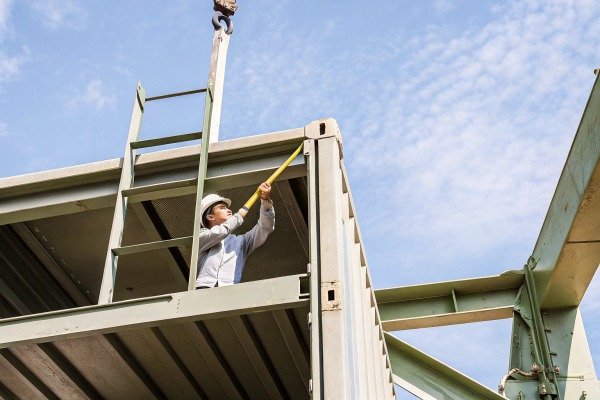
Securing the cargo is just as important as the container choice. The ocean is unpredictable. A ship can roll 30 degrees in a storm. If your welding parts are not secured, they will become battering rams inside the box.
Choosing the Right Lashing Gear
We do not rely on simple nylon straps for heavy metal parts. We use steel chains and turnbuckles. These allow us to apply high tension to hold the item down. The lashing points inside the container are rated for specific loads.
According to ISO 1161 standards ISO 1161 standards 5 ISO 1161 standards 6, bottom corner fittings are rated for 300 kN of force. We aim for these strong points. We avoid lashing to the side rails unless the load is light. For the aluminum frames, we must be careful not to let the chains touch the silver finish. We use rubber pads or protective sleeves on the chains. This prevents scratches and galvanic corrosion between the steel chain and the aluminum part.
Securing Protocols for Heavy Frames
Blocking and bracing are essential. "Blocking" prevents the cargo from sliding. We nail heavy timbers to the container floor (if permitted) or wedge them against the corner posts. "Bracing" prevents tipping. We build wooden frames around the upper parts of the welding assembly.
We also use "dunnage." This is material used to fill empty gaps. We use air bags or foam blocks. If the cargo cannot move, it cannot break. We also ensure that no part of the cargo touches the container doors. If the cargo leans on the door, the door might fly open dangerously when your team unlocks it.
Table: Lashing Material Specifications and usage
| Material | Aplicación | Working Load Limit (Approx) | Notas |
|---|---|---|---|
| Steel Chain (10mm) | Heavy machinery tie-down. | 5,000 kg+ | Must use turnbuckles for tension. |
| Wire Rope | Securing large static loads. | Varies by diameter | Harder to re-tension than chains. |
| Polyester Webbing | Lighter parts or anti-tip. | 2,000 – 5,000 kg | Can stretch; check regularly. |
| Timber Blocking | Floor bracing to stop sliding. | N/A | Must use treated wood (ISPM 15). ISPM 15 7 |
Finally, because we often use Open Tops or Flat Racks, protection from the air is vital. We wrap the aluminum frames in Vapor Corrosion Inhibitor (VCI) Inhibidor de corrosión por vapor 8 shrink wrap. This creates a chemical barrier against the salty sea air.
How will utilizing special containers for oversized items impact my overall logistics budget?
We often warn clients that special equipment costs vary wildly compared to standard boxes depending on the route. Unexpected surcharges can destroy your profit margins if not calculated early.
Special containers significantly impact budgets through OOG surcharges, lost slot fees on vessels, and specialized heavy-lift crane requirements. You must also account for higher road transport costs, such as superload permits and escort vehicles, alongside increased marine insurance premiums for deck-loaded cargo.

When you move from a standard container to a special one, the price does not just double; it often triples. This is because of "lost slots." A container ship is like a giant 3D puzzle. Standard boxes stack perfectly.
Ocean Freight and Slot Loss Fees
If you use a Flat Rack and your cargo sticks out (Out of Gauge), the carrier cannot put other containers next to it or on top of it. You are effectively renting the empty space around your cargo. This is why carriers charge a premium. They are losing revenue on the empty slots.
We always advise our clients to get a firm quote that includes "OOG surcharges." These fees change based on how busy the route is. If the ship is full, the surcharge is high. If the ship is empty, they might negotiate.
Inland Transport and Permitting
The cost impact continues after the ship arrives. Standard trucks might not be able to carry an over-width Flat Rack legally. You may need a "low boy" trailer to handle the height.
In the US, if your load is over a certain width, you need Superload 9 "Superload" permits. You might even need police escorts or pilot cars to drive in front of the truck. These costs add up quickly. We help coordinate this, but you must budget for it.
Table: Cost Breakdown Estimate (Standard vs. OOG Shipment)
| Elemento de costo | Standard 40ft Container | Special / OOG Shipment | Reason for Increase |
|---|---|---|---|
| Ocean Freight | Base Rate ($3,000 avg) | 2x – 4x Base Rate | Slot loss and handling difficulty. |
| Port Handling (THC) | Standard Fee | High Surcharge | Requires special crane/gear. |
| Trucking | Standard Chassis | Specialized Trailer | Permits, escorts, specialized equipment. |
| Seguro | Low Premium | High Premium | higher risk on deck (salt/waves). |
Insurance is the final hidden cost. Cargo on a Flat Rack is often stowed on deck 10 "on deck." This means it is exposed to waves. Insurance companies consider this high risk. You must verify that your policy covers "on-deck" stowage specifically. Without this clause, any damage from a storm might not be covered.
Conclusión
Successfully shipping over-length welding parts requires choosing the right container, rigorous load planning, and strict securing protocols. By anticipating OOG costs and technical requirements, you ensure your custom parts arrive safely and on budget.
Notas al pie
1. Definition of OOG cargo by a major global shipping line. ↩︎
2. Technical specifications for Open Top containers from an industry leader. ↩︎
3. Technical specifications for Flat Rack containers from an industry leader. ↩︎
4. Educational resource explaining the physics of balance and center of gravity. ↩︎
5. Official ISO standard specification for container corner fittings. ↩︎
6. Official ISO standard for corner fittings mentioned in the article’s technical requirements. ↩︎
7. International standard for wood packaging materials used in global trade. ↩︎
8. Explanation of VCI technology by a leading manufacturer. ↩︎
9. US government information on oversize load permits. ↩︎
10. Insurance and liability information regarding on-deck cargo stowage. ↩︎

 English
 Español de México
 Deutsch
 Français
 Русский
 العربية