We see it happen on our production floor more often than we would like Free on Board 1. You wait weeks for a batch of custom metal components, only to custom metal components 2 open the container and find the brushed silver finish scratched or the geometric frames bent because the crates were not built to handle the ocean transit. It is a frustrating halt to your assembly line that costs both time and money.
To handle claims effectively, you must inspect the shipment immediately upon arrival, note all visible damage on the delivery receipt, and notify both the carrier and supplier within 48 hours Delivered Duty Paid 3. Collect photographic evidence of the packaging failure and reference your specific Incoterms to identify the liable party for the financial loss.
Navigating the claims process can be tricky, so here is a clear guide on how to protect your business and recover your costs.
What evidence must I document to prove that my welding parts were damaged due to the supplier's improper packaging?
We always advise our clients that the quality of their claim depends entirely on the quality of their intake process. When we review photos sent from a customer's receiving dock, we look for clear proof that the damage happened because the box was weak, not just because the forklift driver was careless.
You must capture high-resolution photos of the external packaging condition before opening the shipment, followed by detailed images of the internal dunnage failure. Retain all original crates and packing materials for carrier inspection, and explicitly record specific damages on the Bill of Lading before the delivery driver departs.

Documenting evidence is not just about taking a picture of a broken part. It is about telling the story of cómo the break happened. When you receive custom welding parts, especially those with sensitive finishes like brushed silver or complex geometric structures, the evidence must be irrefutable.
The Immediate Inspection Protocol
The most critical moment is when the truck arrives. If you sign the Bill of Lading (BOL) without notes sign the Bill of Lading (BOL) 4 Bill of Lading 5, you are essentially telling the insurance company that the goods arrived in perfect condition. Once the driver leaves, proving that the damage occurred during transit becomes incredibly difficult.
You need to inspect the exterior. Look for crushed corners, holes in the wood, or tilted crates. If the crate looks compromised, write "Received with visible packaging damage" on the BOL. Do not be shy about this. Drivers may be in a hurry, but your signature is a legal acknowledgment of receipt.
Visual Evidence Checklist
When you document the damage, you are building a legal case. Fuzzy photos or close-ups without context are useless. We recommend a three-step photography process:
- Wide Shots: Take a photo of the entire pallet or crate as it sits in the truck or on the dock. This proves the goods were damaged before your team handled them.
- The Packaging Failure: Photograph the specific point where the packaging failed. Did the bracing snap? Was the bubble wrap too thin? Did the geometric tubes rub against each other because there was no foam between them? This connects the damage to "improper packaging" rather than "rough handling."
- The Product Damage: finally, photograph the damage to the part itself. For a brushed silver finish, use good lighting to show deep scratches or dents.
Retaining the "Corpse"
A common mistake is throwing away the broken crate to clear up floor space. You must keep the packaging. The carrier’s insurance adjuster has the right to inspect the packaging materials. If you throw them away, they can deny the claim by arguing they cannot verify if the packaging was sufficient. Keep the pallet, the broken wood, and the wrapping until the claim is fully settled.
Required Documentation List
To ensure your claim is processed quickly, gather the following documents immediately. Missing one of these can delay your settlement by weeks.
| Tipo de documento | Propósito | Critical Detail to Check |
|---|---|---|
| Bill of Lading (BOL) | Proof of delivery and condition. | Must have damage notes written next to your signature. |
| Factura Comercial | Establishes the value of the goods. | Ensure the value matches the claim amount. |
| Lista de Empaque | detailed list of contents. | verify which specific line items are damaged. |
| Photo Log | Visual proof of damage. | Date and time stamps on photos are highly recommended. |
| Delivery Receipt | Carrier's copy of the transaction. | Ensure the driver signed your copy acknowledging the notes. |
How do the Incoterms I selected affect who is liable for welding components damaged by insufficient packing during transit?
We often spend time clarifying to our partners that "shipping the goods" is not the same as "insuring the goods." In our global logistics operations, we see that the specific three-letter Incoterm chosen at the start specific three-letter Incoterm 6 of the contract dictates exactly whose insurance policy needs to pay for the bent frames.
Incoterms determine the precise transfer of risk point between the buyer and the seller during the shipping journey. Under EXW or FOB terms, the buyer bears the risk during the main transit, whereas terms like DDP or CIF place the liability and insurance responsibility on the seller until the goods reach the destination.
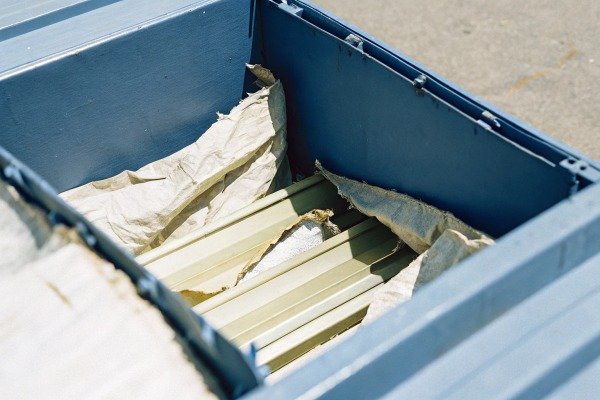
Understanding liability is crucial because it tells you who you need to fight: the supplier or the freight forwarder. The Incoterm defines the "transfer transfer of risk 7 of risk." Incoterm defines the "transfer of risk" 8 Once the risk transfers to you, any damage that happens afterward is your problem to solve, usually through your own insurance or the carrier.
The "FOB" Misconception
Many of our US clients buy on FOB (Libre a bordo) terms. This means the seller is responsible for getting the goods onto the ship at the export port (e.g., Shanghai or Ho Chi Minh City). Once the crane lifts the container onto the vessel, the risk transfers to you.
If the parts arrive damaged, you might think, "The seller packed this poorly, so they are liable." Legally, under FOB, you (the buyer) are responsible for the goods during the ocean voyage. You have to file the claim with your freight forwarder or insurance. However, if you can prove the damage was caused solely by negligence in packaging (a breach of contract) rather than the movement of the ship, you may have a secondary claim against the seller. But this is a harder battle to win.
When the Seller is Liable (DDP and CIF)
If you bought on DDP (Delivered Duty Paid) or CIF (Costo, Seguro y Flete) terms, the seller is responsible for a longer portion of the journey.
- DDP: The seller bears all risks until the goods arrive at your warehouse door. If you open the crate and find a bent frame, you simply refuse the goods or file a claim directly with the seller. They must replace it.
- CIF: The seller pays for insurance, but the risk transfers to you at the port of origin. However, you are the beneficiary of the seller's insurance policy. You would file a claim against the insurance policy the seller purchased for you.
The Grey Area of "Improper Packaging"
Regardless of the Incoterm, the seller has a fundamental duty to package goods suitably for their destination. If a seller puts a heavy steel structure in a thin cardboard box, and it gets crushed, they cannot hide behind "FOB terms."
Carriers will deny claims if they determine the packaging was insufficient. In this scenario, even if you are technically liable for transit risk, the liability bounces back to the seller because they failed to prepare the goods correctly. This is why proving "improper packaging" via photos is so vital.
Risk Transfer Matrix
Here is a quick reference to help you decide who to contact first based on your shipping terms.
| Incoterm | Risk Transfer Point | Who Files Carrier Claim? | Who is Liable for Packaging? |
|---|---|---|---|
| EXW (Ex Works) | Seller's Warehouse | Buyer | Seller (must package per contract) |
| FOB (Libre a bordo) | Port of Export (On Vessel) | Buyer | Seller |
| CIF (Cost, Insurance, Freight) | Port of Export (On Vessel) | Buyer (using Seller's insurance) | Seller |
| DAP (Delivered at Place) | Buyer's Destination (on truck) | Seller | Seller |
| DDP (Delivered Duty Paid) | Buyer's Destination (unloaded) | Seller | Seller |
How can I specify strict packaging requirements in my purchase order to prevent future damage to custom welding parts?
Our engineering team knows that a great product is worthless if it arrives looking like scrap metal. To ensure our complex geometric frames arrive with their brushed silver finish intact, we encourage buyers to stop relying on vague terms like "standard export packaging" and start dictating the technical specs.
Define specific crate materials, bracing methods, and moisture protection standards directly in your Purchase Order. Reference international testing standards like ISTA 3A and include a clause allowing rejection of goods if the packaging does not meet these agreed-upon technical specifications.
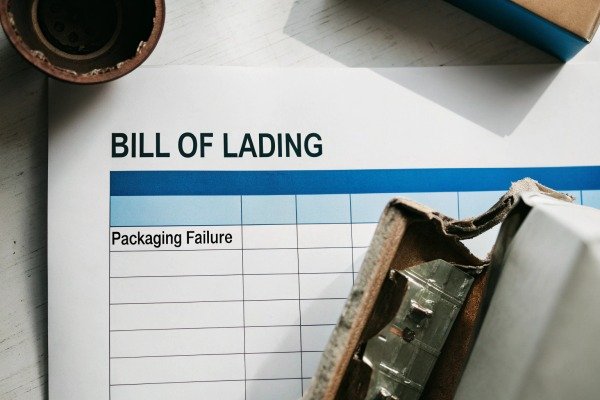
Preventing damage is always cheaper than fighting for a claim. The most effective way to do this is to move packaging from an "afterthought" to a "specification." Just as you specify the grade of steel or the tolerance of a weld, you must specify the crate.
Moving Beyond "Standard Export Packaging"
The term "Standard Export Packaging" is dangerous. To a supplier trying to save costs, it might mean a thin plywood box. To you, it means a reinforced crate. You need to bridge this gap in the Purchase Order (PO).
For heavy welding parts or fabrications with complex shapes, you need to specify:
- Wood Quality: Require fumigated, heat-treated wood (ISPM 15 compliant) with a minimum heat-treated wood (ISPM 15 compliant) 9 thickness (e.g., 1/2 inch or 15mm plywood).
- Internal Dunnage: Specify that the item cannot float. It must be braced. For silver finishes, demand "non-abrasive foam contact points" to prevent scratching.
- Moisture Control: Demand desiccants (silica gel) and VCI (Vapor Corrosion Inhibitor) bags, especially for ocean freight, to prevent rust.
The Power of the "Packaging Clause"
Add a dedicated section to your PO or Manufacturing Agreement. This gives you legal leverage. If the parts arrive damaged and you find the seller used cheap Styrofoam instead of the high-density foam you specified, they are in clear breach of contract. This makes the liability argument much shorter.
You can also require a "Pre-Shipment Packaging Audit." Ask the supplier to send photos of the parts inside the open crate before they nail the lid shut. We do this for all our critical shipments. It allows us to catch issues (like insufficient padding) before the container leaves the factory.
Recommended Packaging Specs for Metal Fabrications
Below are the specifications we recommend including in your contracts for different types of welding components.
| Component Type | Hazard Risk | Recommended Packaging Spec |
|---|---|---|
| Brushed Finish Frames | Scratches, Abrasions | Wrapped in 2mm PE foam; corner protectors; floating crate base with vibration dampeners. |
| Heavy Rectangular Tubes | Bending, Impact | Solid wood bracing (2×4 lumber); blocked and braced to prevent movement; strapped to pallet base. |
| Small Precision Parts | Loss, Corrosion | VCI bag sealed; individual compartments or heavy-duty cartons palletized and shrink-wrapped. |
| Complex Geometries | Crushing, Distortion | Custom wooden cradle tailored to the part shape; minimum 2 inches of clearance from crate walls. |
Using Impact Indicators
For high-value custom parts, require the use of "ShockWatch" or "Tip-N-Tell" stickers on the outside "ShockWatch" or "Tip-N-Tell" stickers 10 of the crate. These change color if the crate is dropped or tipped over. It forces the carriers to be more careful because they know they are being monitored. If the sticker is red upon arrival, you have immediate proof of mishandling.
What is the best approach to negotiate a fair settlement or replacement for welding parts ruined by inadequate shipping protection?
We believe that in B2B relationships, the goal is not just to get money back, but to keep the supply chain moving. When we face these situations, we find that a calm, data-driven negotiation focuses on solving the immediate inventory gap rather than assigning blame, which usually leads to a faster resolution.
Present a comprehensive evidence package including photos, the signed BOL, and repair estimates to the liable party immediately. Focus negotiations on future prevention and rapid replacement rather than just financial compensation to maintain the supply chain relationship.

Negotiation is about leverage and relationships. If you go in screaming and threatening a lawsuit, the supplier or carrier will shut down and pass you to their legal team. If you approach it as a partner trying to solve a joint problem, you often get better results.
The "Make Good" Strategy
Before you ask for a cash refund, consider what you actually need. Usually, you need parts to keep your production line running. A supplier is often more willing to rush-produce a replacement batch at their own cost than to write a check for the damages.
This is often easier for them financially (they pay internal cost vs. retail price). Propose a "rapid replacement" plan where they air-freight the new parts, and you split the air-freight cost, or they absorb it entirely if the packaging was clearly negligent.
Handling the "Salvage Value"
Often, a welding part is damaged but not destroyed. A brushed silver frame might have a scratch that can be buffed out, or a bracket might be slightly bent but fixable.
Get a quote from a local machine shop to repair the damage. Negotiate a "allowance" or credit from the supplier to cover this repair cost. This is faster than shipping parts back and forth across the ocean. If the cost to repair is $500, but shipping a new part costs $2000, the supplier will happily pay the repair bill.
Leveraging Future Business
If the supplier is resisting the claim, remind them of the "Lifetime Value" of your account. You can say, "We have $50,000 worth of orders planned for next year. We need to resolve this $2,000 claim to move forward with confidence."
This shifts the conversation from a petty dispute to a strategic business decision. Most rational business owners will not risk a large future contract over a small packaging claim.
Settlement Options Comparison
When negotiating, keep these three outcomes in mind and decide which one suits your current inventory needs best.
| Settlement Option | Pros | Contras | Best For |
|---|---|---|---|
| Full Refund | Cash back in hand. | Leaves you without parts; damages relationship. | One-off purchases; changing suppliers. |
| Free Replacement | Restores inventory; maintains relationship. | Takes time (production + shipping). | Ongoing production needs; custom parts. |
| Repair Credit | Fastest solution; parts stay on site. | Requires local repair resources; assumes damage is fixable. | Cosmetic damage; minor structural issues. |
Conclusión
Handling claims for damaged welding parts requires speed and precision. By inspecting goods immediately, documenting issues on the Bill of Lading, and understanding your Incoterms, you can pin down liability. However, the best defense is a good offense: clearly specify your packaging requirements in the contract to prevent damage before it happens. Approach negotiations with facts and a focus on solutions to protect both your bottom line and your supply chain.
Notas al pie
1. General background on the FOB Incoterm and its historical application in shipping. ↩︎
2. ISO standard for technical drawings and specifications of metal components. ↩︎
3. Official US government guidance on Incoterms including DDP for international trade. ↩︎
4. Legal definition and implications of the Bill of Lading document. ↩︎
5. Government resource explaining the legal functions of a Bill of Lading in maritime commerce. ↩︎
6. Official source for Incoterms rules defining responsibilities between buyers and sellers. ↩︎
7. Academic research paper discussing the legal implications of risk transfer in international sales. ↩︎
8. Official source for Incoterms rules and risk transfer definitions. ↩︎
9. International standard for regulating wood packaging materials. ↩︎
10. Manufacturer documentation for impact monitoring devices. ↩︎

 English
 Español de México
 Deutsch
 Français
 Русский
 العربية