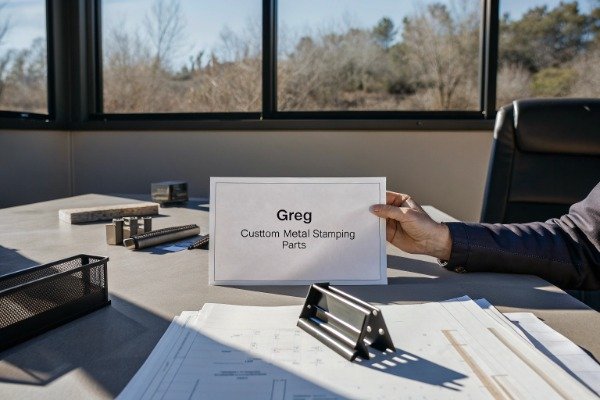
At our facility, we often see clients focus heavily on the unit price, missing the bigger picture. Ignoring hidden fees in stamping quotes often leads to significant budget overruns later in the project.
You must scrutinize the quotation for excluded tooling maintenance fees, ambiguous scrap rate calculations, and unlisted secondary operations like heat treatment. Additionally, verify if packaging, logistics, and quality compliance documentation are included, as these hidden costs can significantly inflate the total cost of ownership beyond the initial piece price.
Let’s break down these invisible expenses so you can compare quotes accurately and protect your profit margins.
How do tooling maintenance and repair fees impact my total stamping project cost?
When we quote new projects, we clarify die ownership immediately. Ambiguity here causes major friction when tools eventually wear down or require modifications during production runs.
die ownership 1
Tooling maintenance fees impact costs by adding unexpected charges for routine sharpening and component replacement if not defined upfront. Without a clear agreement on who funds die fatigue repairs or engineering changes, buyers face significant unbudgeted expenses that can exceed the original tooling investment over the project’s lifespan.

The Hidden Economics of Tooling Ownership
In the metal stamping industry, the initial tooling charge is often just the entry fee. A common pitfall we observe involves the distinction between “preventative maintenance” and “refurbishment.” A supplier might offer a lower upfront tooling cost, but their quotation may remain silent on who pays for sharpening the die punches or replacing worn springs after 50,000 hits. If this is not specified, you may receive a surprise invoice for “die refurbishment” right when you need a critical shipment.
Furthermore, the concept of “Amortized Tooling” can be a financial trap. Some suppliers offer to waive the upfront tooling cost in exchange for a higher piece price. While this helps cash flow initially, it often obscures the total cost. If the amortization period isn’t capped, you could end up paying for the tool two or three times over the life of the project.
Amortized Tooling 2
Critical Questions for Die Maintenance
To avoid these disputes, you must demand a clear “Tooling Life Policy.” This policy should define the expected life of the tool (e.g., 500,000 strokes) and explicitly state that the supplier is responsible for routine maintenance (sharpening, cleaning, lubrication) to maintain part quality. The buyer should typically only be responsible for major repairs caused by design changes or catastrophic failure not due to supplier negligence.
Comparing Tooling Cost Models
The table below illustrates how different tooling agreements can drastically change your financial liability over time.
| Elemento de costo | Buyer-Owned Tooling (Recommended) | Amortized Tooling (High Risk) | “Free” Tooling (Hidden Cost) |
|---|---|---|---|
| Upfront Payment | 100% of Tool Cost | $0 or Partial | $0 |
| Precio Unitario | Lower (Material + Labor + Margin) | Inflated (Includes Tool Tax) | Significantly Inflated |
| Maintenance | Usually Supplier’s responsibility (Standard) | Often ambiguous | Supplier owns tool; you have no control |
| Portability | You can move the tool to another supplier | Difficult until full amortization is paid | Impossible; you do not own the asset |
| Risk | High upfront cash outlay | Overpaying if volume exceeds forecast | Vendor lock-in; price hikes are harder to fight |
Engineering Change Orders (ECOs)
Another hidden lever is the cost of Engineering Change Orders. If your product design evolves—which it almost always does—modifying a hardened steel die is expensive. Some quotations include a provision for minor adjustments, but most do not. A low-ball quote might be accompanied by exorbitant hourly rates for engineering changes. We always advise clients to ask for the “ECO hourly rate” and “standard lead time for die modification” before signing the contract. This prevents the supplier from holding your production hostage over a minor design tweak.
Engineering Change Orders 3
Does the unit price calculation typically include material scrap rates and waste recovery?
Our engineers calculate nesting layouts carefully to minimize waste, but not every supplier operates transparently. Ignoring the scrap factor often hides the true efficiency of your production run.
Unit price calculations often exclude explicit scrap rates, meaning you might pay for the gross material weight rather than the finished part. If the quote ignores the “buy-to-fly” ratio or waste recovery credits, you risk absorbing the full cost of inefficient nesting layouts and material offal without realizing it.
The “Buy-to-Fly” Ratio Trap
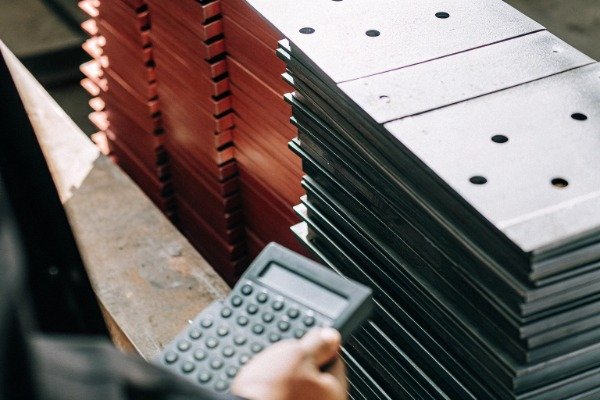
Material cost is usually the single largest component of a stamped part’s price, often exceeding 60-70% of the total. However, the weight of the finished part is rarely the weight of the material you are paying for. This is known as the “Buy-to-Fly” ratio. In stamping, you pay for the skeleton (the strip of metal left over) and the offal (the slugs punched out).
Buy-to-Fly ratio 4
If a supplier uses an inefficient nesting layout—placing parts too far apart on the strip or failing to interlock complex shapes—your material utilization could drop from 80% to 50%. A quote that simply lists “Material Cost” without specifying the utilization rate or gross weight effectively hides this inefficiency. You might be paying for 50% waste, while a more competent supplier with better engineering could achieve 20% waste.
Scrap Credits: Who Keeps the Money?
Metals like copper, brass, and stainless steel have significant scrap value. When we stamp thousands of parts, the tons of scrap metal generated are sold back to recyclers. A transparent quotation should either:
- Net the scrap credit against the material cost, lowering your unit price.
- Explicitly state that the scrap revenue is retained by the supplier as part of their profit margin.
scrap value 5
If this isn’t discussed, the supplier is likely double-dipping: charging you for the full gross weight of the raw material and then keeping the revenue from selling the scrap you paid for.
Material Price Escalation Clauses
Another hidden risk involves raw material market volatility. A quote is valid for a specific time, but what happens if steel prices jump 15% next month?
- Fixed Pricing: The supplier absorbs the risk (usually results in a higher buffer in the initial price).
- Indexed Pricing: The price floats based on a public index (e.g., LME).
Hidden costs arise when a supplier quotes a low price based on “current market rates” but includes fine print allowing them to adjust prices immediately if the market moves, without a reciprocal agreement to lower prices if the market drops.
Impact of Material Grade on Total Cost
Sometimes, the hidden cost isn’t in the math, but in the material selection itself.
| Material Grade | Base Cost | Die Wear Impact (Hidden Cost) | Scrap Value (Recovery) |
|---|---|---|---|
| Mild Steel (CRS) | Low | Low | Low |
| Stainless Steel (304) | Alto | High (Frequent sharpening required) | Alto |
| High-Strength Steel | Medio | Very High (Risk of die breakage) | Low/Medium |
| Copper/Brass | Muy alto | Low | Very High (Crucial to negotiate credit) |
By understanding these dynamics, you can challenge a supplier’s material cost assumptions. Ask to see the “Strip Layout” or “Nesting Diagram.” If they refuse or if the layout looks sparse, you are paying for air, not parts.
Are secondary operations like plating or heat treatment clearly separated in the quotation?
We frequently manage post-processing for clients, yet we notice many competitors omit these steps initially. This tactic makes their base stamping price look artificially low until production starts.
Secondary operations are frequently excluded from the initial unit price or bundled vaguely, leading to scope creep. Processes like plating, deburring, and heat treatment often require third-party handling fees and transport costs, which must be itemized separately to avoid surprise surcharges after the contract is signed.

The “Raw Part” Pricing Strategy
One of the most common ways suppliers make a quote look attractive is by quoting the part “as stamped.” However, most custom parts require secondary processing to be functional. A stamped bracket might need deburring to remove sharp edges, zinc plating for corrosion resistance, or heat treatment for hardness.
If your RFQ (Request for Quotation) specifies “Zinc Plated,” but the quote says “Price per part (Stamping only),” you are walking into a trap. The supplier can later claim that the plating requirement was “not standard” or requires a specific vendor, adding 20% to 40% to the final cost.
Logistics of Outsourced Finishing
Very few stamping houses have internal plating or heat-treating lines due to environmental regulations. This means your parts must be:
- Stamped.
- Packed in temporary bins.
- Trucked to a plating facility.
- Unpacked, plated, and repacked.
- Trucked back to the stamper for final inspection.
The hidden costs here are transportation y el handling damage. Who pays for the truck to the plater? Who pays for the parts bent or scratched during this double-handling? If the quote lists “Plating: $0.05,” does that include the freight and the 5% scrap rate typical of the plating process? Often, it does not.
Deburring: The Silent Budget Killer
Deburring is perhaps the most overlooked cost. Stamping naturally leaves a burr on the cut edge.
- Tumbling: A bulk process that is relatively cheap but can dent delicate parts.
- Electrochemical Deburring: Precise but expensive.
- Manual Deburring: Extremely labor-intensive and inconsistent.
If the print says “Free of Burrs,” and the supplier assumes a quick tumble while you expect a perfectly smooth machined-style edge, the re-quote for manual deburring can destroy the project’s economics. We always recommend defining the “Acceptable Burr Height” (e.g., Max 0.05mm) to force the supplier to quote the correct removal method.
In-Die Operations vs. Secondary Steps
Advanced stampers can perform tapping (threading holes) or inserting hardware (PEM nuts) inside the die. This increases tooling cost but drastically reduces piece price.
- Scenario A (Secondary): Stamp part ($0.50) -> Move to tapping machine -> Operator taps holes ($0.20). Total: $0.70.
- Scenario B (In-Die): Stamp and tap in one hit ($0.52). Total: $0.52.
If you don’t ask about in-die capabilities, you might accept a quote based on Scenario A, paying a premium for labor every single time you order.
What specific packaging and logistics fees are often excluded from the initial stamping quote?
In our export experience from Vietnam, we see many buyers assume standard packaging is included. Unfortunately, local suppliers often quote ex-works without accounting for export-grade protection.
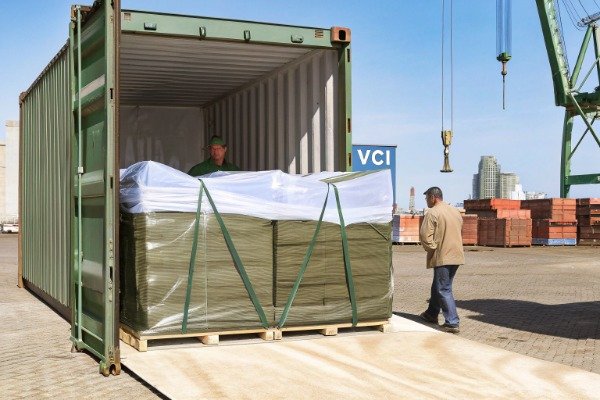
Standard quotations often exclude specific packaging fees such as export-grade cartons, pallets, and rust-preventative VCI materials. In regions like Vietnam, suppliers typically quote based on bulk domestic packing, leaving buyers to face unexpected charges for dunnage, container loading, and international freight protection required for safe transit.
The “Domestic Packaging” Disconnect
When sourcing from Asia, particularly from emerging manufacturing hubs like Vietnam or India, there is a distinct gap between “factory standard” and “export standard” packaging. A local supplier might quote a price assuming they will toss parts into a thin cardboard box and stack them on the floor.
However, for an ocean shipment to the US or Europe, you need:
- Double-wall corrugated cartons (to prevent crushing).
- Fumigated wooden pallets (ISPM 15 compliant).
- Corner boards and strapping (for stability).
Insight from the field: In Vietnam, we frequently see quotes that strictly cover the metal part. When the PO is placed, the supplier adds a separate line item for “Palletizing and Export Packing,” which can add $300-$500 per container. Or worse, they ship in weak boxes that collapse in transit, leading to rusted, damaged goods that are unusable upon arrival.
The Rust Prevention (VCI) Surcharge
Metal parts shipping via ocean freight face high humidity and temperature fluctuations—the perfect recipe for rust (oxidation). “Clean and dry” is not enough.
- VCI (Volatile Corrosion Inhibitor) Bags: These release a vapor that protects the metal.
- Desiccants: Silica gel packets to absorb moisture.
- Oil: A heavy rust-preventative oil.
If your quote doesn’t specify “VCI Packaging,” the supplier might just use plastic bags. You will receive rusty parts, and the supplier will claim they left the factory in good condition. The cost of VCI materials is not insignificant, and excluding it is a common way to shave pennies off a quote to win the business.
VCI Packaging 6
Incoterms and the “Ex-Works” Trap
The Incoterm used in the quote dictates where the hidden costs lie.
- EXW (Ex-Works): You pay for everything once it leaves their loading dock. This includes export customs clearance in the origin country, trucking to the port, and port handling fees.
- FOB (Free on Board): The supplier pays to get it onto the ship.
Many buyers compare an EXW quote from Supplier A with an FOB quote from Supplier B without adjusting for the difference. Supplier A looks cheaper, but once you add the local logistics fees, customs declarations, and forwarder handling charges, they are often more expensive.
EXW quote 7
Packaging Cost Comparison
The table below highlights the cost difference between what is often quoted versus what is actually needed.
PEM nuts 8
| Artículo | Domestic Standard (Often Quoted) | Export Standard (Required) | Hidden Cost Risk |
|---|---|---|---|
| Carton | Single-wall, recycled paper | Double-wall, virgin kraft | Box collapse, crushed parts |
| Pallet | Cheap plywood or non-standard | Fumigated / Heat-treated wood | Customs rejection, re-palletizing fees |
| Protección | None or light oil | VCI Bags + Desiccants | 100% loss due to rust |
| Loading | Loose loading | Palletized & Strapped | Higher unloading labor at destination |
Always specify your packaging requirements before the quote is finalized. Ask for a “Packaging Plan” that includes photos of how they intend to ship the parts.
manual deburring 9
Conclusión
To secure a truly competitive deal, you must look beyond the piece price. Verify tooling maintenance terms, scrap credit policies, secondary operation logistics, and export packaging details to ensure your stamping project remains profitable and predictable.
zinc plating 10
Notas al pie
- Defines the specialized manufacturing tool central to the cost discussion. ↩︎
- Explains the financial concept of spreading capital costs over a period of time. ↩︎
- Describes the formal process used to implement and track changes in product design. ↩︎
- Defines the efficiency ratio comparing raw material weight to the finished part weight. ↩︎
- Refers to the monetary recovery value of recyclable metal waste generated during production. ↩︎
- Defines the chemical technology used in packaging to prevent rust on metal surfaces. ↩︎
- Refers to Ex Works, a standard international commercial term defining delivery obligations. ↩︎
- Links to the generic term (swage nut) for the specific self-clinching hardware brand mentioned. ↩︎
- Explains the finishing process required to remove sharp edges and imperfections from parts. ↩︎
- Details the electroplating process used to apply a protective zinc coating for corrosion resistance. ↩︎

 English
 Español de México
 Deutsch
 Français
 Русский
 العربية