When our project managers receive sudden design updates, we often face the immediate headache of stranded components. Dealing with obsolete stock hurts cash flow and clutters the warehouse floor.
You should immediately conduct a physical audit to segregate usable components from true scrap. Then, prioritize negotiating buy-back agreements with suppliers, exploring rework possibilities for high-value metal parts, or liquidating through industrial marketplaces before depreciation renders them worthless.
Here is a detailed guide on navigating this inventory crisis and minimizing financial loss.
Can I rework my obsolete welding parts to fit the new design specifications?
Our engineering Engineering Change Notice (ECN) 1 team frequently evaluates if existing aluminum frames can be modified rather than discarded. The goal is saving material costs without compromising the structural integrity of the final product integridad estructural 2.
Reworking is viable if the cost of machining and labor is significantly lower than manufacturing new parts. You must evaluate the structural integrity of the metal after modification and ensure the modified dimensions strictly meet the new engineering tolerances.
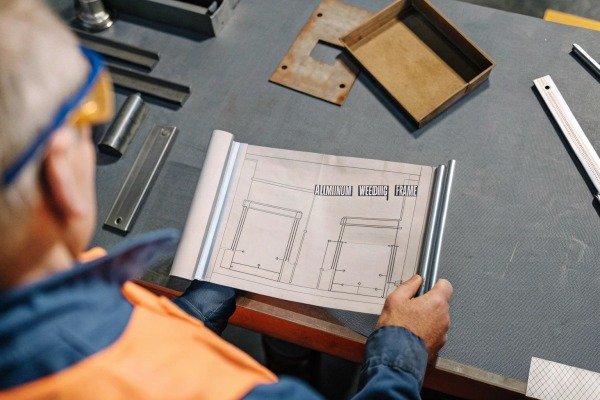
When you hold high-value inventory like our silver-colored aluminum frames, simply scrapping them is painful. You must analyze the technical possibility of saving them. Reworking is often the first line of defense against total loss. However, it requires a strict comparison between the cost of the modification and the cost of buying new material.
Assessing Technical Feasibility
Not all parts can be saved. You need to look at the geometry of the lattice design. If the new design requires a smaller frame, you might be able to cut down the horizontal supports. If the new design requires a larger frame, you cannot stretch the metal.
You must also check the welding points. If the new design interferes with existing welds, reworking becomes dangerous. Cutting through a weld can weaken the structure. However, if you only need to drill new holes or shorten a vertical support, the part is likely salvageable.
The Component Harvesting Strategy
Sometimes the entire frame cannot be used, but parts of it are still valuable. This is called component harvesting. You disassemble the complex sub-assemblies. component harvesting 3 You keep the universal hardware.
- Fasteners and Brackets: These standard parts often fit many designs.
- Sensors and Valves: If your welding assembly includes electronics, remove them immediately.
- Clean Extrusions: Straight sections of aluminum can be cut and used for smaller braces in the new design.
Cost-Benefit Analysis
Before you send parts to the machine shop, do the math. We use a simple logic: if rework costs exceed 60% of the new part price, we usually scrap it. The risk of quality issues increases with rework.
Rework Decision Matrix
Use this table to decide if you should rework your welding parts.
| Factor | Favor Rework | Favor Scrap/Recycle |
|---|---|---|
| Material Cost | High (e.g., Specialized Alloys) | Low (e.g., Mild Steel) |
| Modification Type | Subtracting material (Cutting/Drilling) | Adding material (Welding extensions) |
| Labor Availability | In-house capability available | Requires expensive outsourcing |
| Volume | Small batch (Under 50 units) | High volume (Thousands of units) |
| Tolerance Tightness | Loose tolerances | Precision fits required |
How can I negotiate with my supplier to return or repurpose the excess stock?
Our purchasing department always tries to maintain open lines of communication with our supply partners in Asia. We find that early transparency about design shifts often leads to better solutions.
Success depends on your contract terms and relationship strength. Propose a restocking fee arrangement or an exchange for credit on future orders. If direct returns fail, ask your supplier to help broker the stock to other customers using similar specifications.
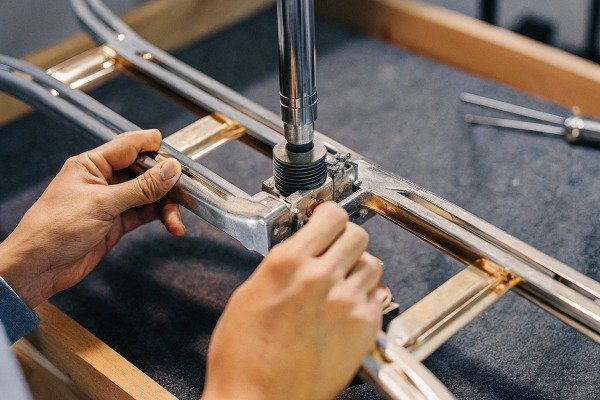
Negotiating a return is uncomfortable, but it is necessary. Suppliers do not want your dead stock, but they do want your future business. You must use your leverage wisely. The goal is to recover capital, even if you do not get 100% of your money back.
Leverage the "Open Account" Relationship
If you have payment terms like net 60 or net 90 days, you are in a stronger position. net 60 4 You are a trusted partner. We advise clients to approach the conversation collaboratively. Do not demand a refund. Instead, ask for a credit.
Say to your supplier: "We have these parts due to a design change. We know this is not your fault. However, we plan to place a large order for the new design. Can we return the old stock for a 70% credit toward that new order?" This keeps their machines running and solves your inventory problem.
The "Legacy Support" Inventory Tier
Sometimes the supplier cannot take the parts back. In this case, negotiate a "Legacy Support" deal. You agree to keep a small portion of the stock for warranty repairs. The supplier agrees to list the remaining stock on their own marketplace. They might sell it to other customers who use older machines.
Contract Clauses for Prevention
For future orders, you should update your agreements. We always recommend adding specific terms to purchase orders.
- Buy-Back Clause: Defines a percentage (e.g., 50%) the supplier will pay to take back unused standard parts.
- No-Fault Return Window: A period (e.g., 30 days) where returns are accepted with a restocking fee.
- Obsolescence Warning: Requires the supplier to notify you if they see other customers abandoning a specific part design.
Supplier Negotiation Outcomes
Different suppliers respond differently. This table outlines what you can typically expect based on the supplier type.
| Supplier Type | Best Negotiation Strategy | Typical Outcome |
|---|---|---|
| Original Equipment Manufacturer (OEM) | Leverage future orders and long-term volume contracts. | Credit for future purchases (minus 15-25% restocking fee). |
| Distributor / Stockist | Check return policy windows immediately. | Cash refund or full credit if within 30 days; otherwise unlikely. |
| Custom Job Shop | Ask for scrap value credit or material repurposing. | Very low return success; they cannot sell custom parts to others. |
| Global Sourcing Agent | Request they broker the parts to other clients in their network. | Consignment sale (you get paid when they sell the part). |
What are the best options for scrapping or recycling unusable custom welding components?
We hate seeing our custom frames go to waste, but holding onto them costs money every single day. Eventually, we have to admit that clearing floor space is more valuable than hoping for a sale.
Recycling is the best option for high-grade metals like aluminum or stainless steel that cannot be repurposed. Contact industrial metal recyclers who offer rates based on alloy purity, or donate usable generic components to vocational schools for tax benefits.

When rework fails and suppliers refuse returns, you must liquidate. The silver-colored aluminum frames in our warehouse still have intrinsic value. They are made of metal. The market for scrap metal is active and liquid. market for scrap metal 5
Understanding Scrap Value
You are not selling a "frame" anymore. You are selling "Series Series 6000 Aluminum 6 Series 6000 Aluminum 7 6000 Aluminum." The shape does not matter. The weight matters. You must separate your materials. If you mix steel bolts with your aluminum frames, the recycler will pay you the lower steel rate for the whole lot.
- Clean the Material: Remove plastic caps, rubber seals, and steel screws.
- Bulk Weighing: Accumulate enough scrap to fill a truck. Recyclers pay better rates for bulk pickups.
The Tax Write-Off Strategy
The financial loss is real, but the tax code can help soften the blow. In many jurisdictions, including the U.S., you can write down the value of obsolete inventory. write down the value 8 You must prove the value is lower than your cost.
Documentation is key here. You need a "Certificate of Destruction" or a receipt from the scrap yard. This proves you did not sell the parts for profit. This document allows your finance team to book the loss and reduce your taxable income reduce your taxable income 9.
Space vs. Value Audit
Conduct a "Square Footage Opportunity Audit." Measure the space these obsolete parts occupy. Calculate the cost of that space (rent, utilities, insurance). Compare this to the potential scrap value.
Often, we find that the cost of storing a dead part for one year exceeds its value. If the part is worth $5 in scrap but costs $10 to store, you are losing money by keeping it.
Recycling vs. Landfill Checklist
Use this logic to decide the final fate of the material.
- Is it Metal? Yes -> Scrap Yard.
- Is it Hazardous? Yes -> Specialized Disposal (Pay to remove).
- Is it General Plastic? Yes -> Industrial Recycling (Low value).
- Is it Mixed Material? Yes -> Disassemble if labor is cheap; otherwise Landfill.
How do I improve my inventory planning to prevent waste from future design changes?
Our engineers now coordinate closely with client purchasing teams before finalizing any drawing updates. We learned that the disconnect between design and procurement is the root cause of almost all excess waste.
Prevent waste by integrating Engineering Change Notices (ECN) directly with purchasing data. Establish a “use-up” policy that forces production to deplete existing stock before switching, and appoint a cross-functional team to approve design changes only after inventory impacts are calculated.

Prevention is the only permanent cure. Design changes are inevitable in custom manufacturing, but the waste they create is optional. You need a system that links your drawing software to your warehouse data.
The "Use-Up" Strategy
This is the most effective tool. When an engineer changes a design, the system should flag the existing stock quantity. The Engineering Change Notice (ECN) should have a "Effective Date" based on inventory depletion.
- Hard Cut: The new design starts immediately. Old stock is scrapped. (Use only for safety issues).
- Running Change: The new design is introduced only after the old stock hits zero.
- Attrition: Use old parts for service/repair and new parts for production.
Improving Forecasting Accuracy
You cannot rely on last year's sales data for custom parts. You need "Project-Based Forecasting." Talk to your sales team. Are they bidding on projects that use the old design?
We use a method called "Vendor Vendor Managed Inventory 10 Managed Inventory" (VMI) for some clients. We monitor their stock levels. If we see a design change coming, we stop production immediately. We do not wait for a formal cancellation order.
The Role of the "Surplus Czar"
Assign one person to be responsible for this. It does not have to be a new hire. It can be a senior buyer. Their job is to sign off on every ECN. They check the inventory balance. If the engineer wants to change a part, the Surplus Czar asks: "We have 500 units left. That is $10,000. Do you want to scrap that, or can we wait two months?" This simple question saves thousands of dollars.
Inventory Planning Protocol
Implementing these steps will stop the bleeding before it starts.
| Planning Step | Action Item | Responsible Party |
|---|---|---|
| ECN Review | Check on-hand quantity before approving design change. | Engineering & Purchasing |
| BOM Audit | Ensure Bill of Materials is updated instantly to stop auto-ordering. | Production Manager |
| Supplier Alert | Notify supplier of potential change 90 days in advance. | Procurement |
| Safety Stock Review | Reduce safety stock levels for parts near end-of-life. | Inventory Analyst |
Conclusión
Managing excess inventory requires decisive action and better planning. You must audit your stock, negotiate aggressively with suppliers, and be willing to scrap what cannot be saved. Ultimately, bridging the gap between your engineering and purchasing teams is the best way to prevent these costly piles of metal from accumulating in the first place.
Notas al pie
1. Standard body defining engineering document revision practices. ↩︎
2. Authoritative source on materials engineering and structural integrity. ↩︎
3. General background on the industrial practice of harvesting components from obsolete assemblies. ↩︎
4. Explanation of standard commercial credit terms used in business-to-business purchasing agreements. ↩︎
5. Official statistics and market information regarding the global scrap metal recycling industry. ↩︎
6. Industry standard association for aluminum alloy classifications. ↩︎
7. Industry standard definitions for aluminum alloy series and their specific material properties. ↩︎
8. Official IRS guidance on inventory valuation and write-downs for tax purposes. ↩︎
9. Official IRS guidance on deducting business losses and expenses. ↩︎
10. Professional institute defining procurement and inventory strategies. ↩︎

 English
 Español de México
 Deutsch
 Français
 Русский
 العربية