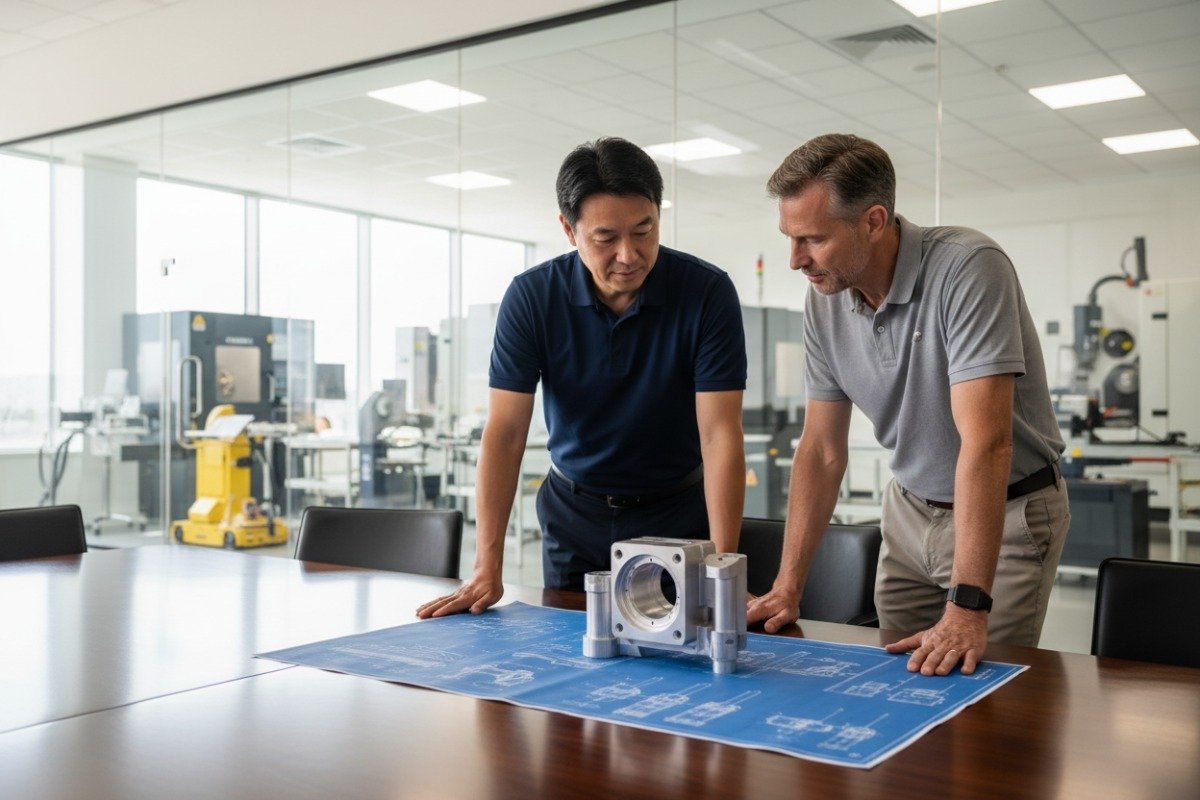
Every week, our project engineers review drawings from U.S. buyers who just had a bad experience with a previous supplier. The tolerances were off. The surface finish was rough. Delivery was late. And the worst part? They paid full price for parts they could not use.
To choose the right CNC turning service, evaluate the provider's machine capabilities, material expertise, quality certifications like ISO 9001, inspection processes, and track record with similar part complexity. Also confirm their tolerance range, lead time commitments, and willingness to support co-development from prototype to production.
Choosing a CNC turning partner is not just about price per piece. It is about getting the right part, the first time, every time. In this guide, we break down the key questions purchasing managers ask us most often — and give you straight answers based on years of sourcing and manufacturing custom turned parts across Asia.
¿Cómo elijo el servicio de torneado CNC adecuado para las especificaciones de mis piezas complejas?
Our team in Vietnam and China reviews hundreds of part drawings each quarter, and we see the same mistake repeatedly — buyers pick a turning shop based on price alone, then spend months fixing quality issues.
Choose a CNC turning service by matching your part's geometric complexity, material type, and tolerance requirements to the provider's machine capabilities, certifications, and engineering support. Prioritize suppliers with multi-axis lathes, documented quality processes like PPAP, and proven experience in your specific industry.
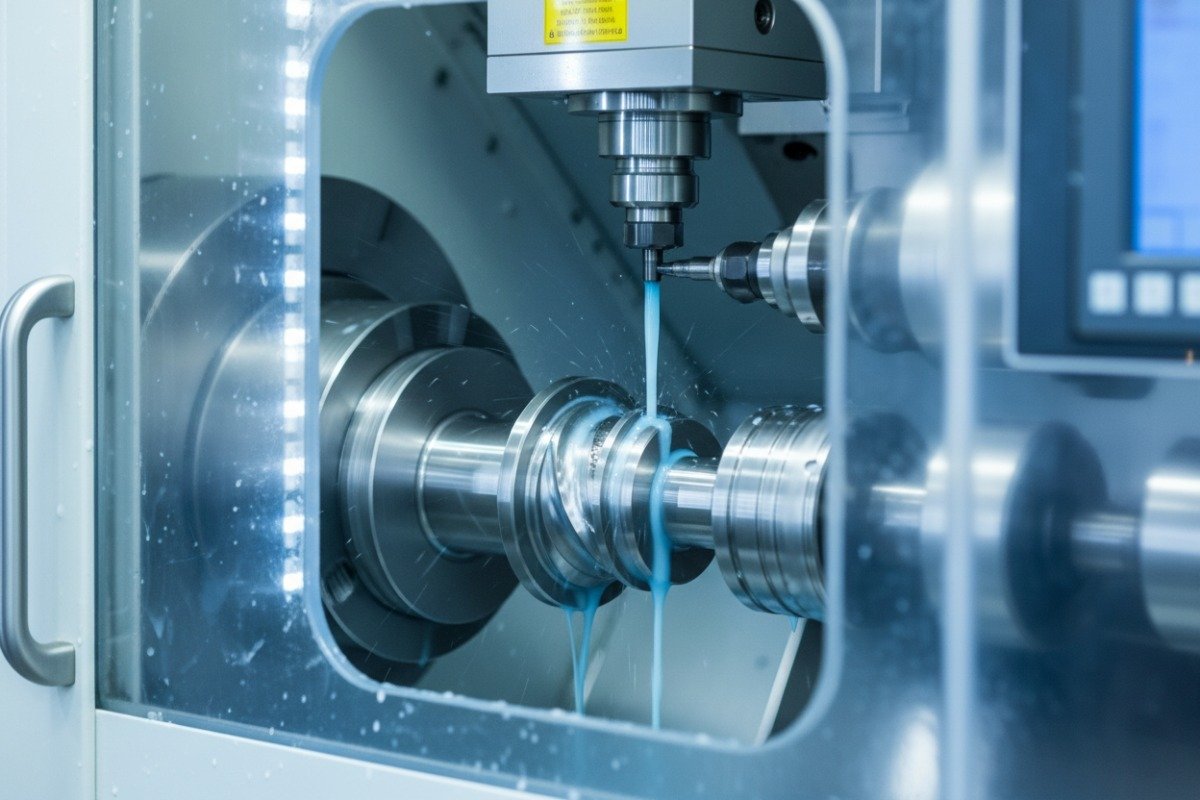
Selecting the right CNC turning service starts with understanding what your part actually demands. A simple brass bushing is very different from a titanium aerospace shaft with ±0.0005-inch tolerances. Here is how to break it down.
Match Machine Capability to Part Geometry
Not all CNC lathes are created equal. A 2-axis lathe handles straight turning and facing. But if your part has off-center holes, flats, or cross-drilled features, you need live tooling or a mill-turn center. Ask your potential supplier what axes their machines support. If they only run 2-axis equipment and your part needs milling features, you will end up with secondary operations, added cost, and longer lead times.
Verify Material Experience
CNC turning works on aluminum, stainless steel, carbon steel, brass, titanium, and engineering plastics. But machining 6061 aluminum is nothing like machining Inconel 718. Each material has different cutting speeds, tool wear rates, and chip behavior. When we onboard a new material at our facilities, our engineers run test cuts and document optimal parameters before production begins. Ask your supplier if they have run your specific alloy before. Request sample parts or test cut data.
Check Certifications and Quality Systems
Certifications tell you a lot about a shop's discipline. Here is a quick reference:
| Certificación | Qué Cubre | Lo mejor para |
|---|---|---|
| ISO 9001 1 | General quality management system | Most commercial parts |
| AS9100 2 | Aerospace quality management | Componentes aeroespaciales |
| IATF 16949 3 | Automotive quality management | Piezas automotrices |
| ISO 13485 4 | Gestión de calidad de dispositivos médicos | Medical implants and tools |
If your parts go into aerospace or medical applications, do not compromise on certifications. A shop without AS9100 may produce good parts, but they lack the documented processes to prove it consistently.
Evaluate Inspection and Reporting
Ask what inspection equipment the supplier uses. Máquinas de Medición por Coordenadas 5 (CMMs), optical comparators, and surface roughness testers are standard for precision work. More importantly, ask if they provide Informes de Inspección del Primer Artículo 6 (FAIR) or Production Part Approval Process (PPAP) documentation. At our company, we run PPAP for every new part number before mass production begins. This catches dimensional issues before they become expensive problems.
Assess Communication and Engineering Support
Complex parts need back-and-forth between your engineering team and the supplier. If a supplier takes three days to respond to a simple email, imagine what happens when you need a design change mid-production. We assign a dedicated project engineer to each client. That person understands your drawings, your tolerances, and your timeline. This single point of contact eliminates the miscommunication that causes most quality failures.
What Factors Will Influence the Total Cost of My CNC Turning Project?
When we quote a new project, buyers are sometimes surprised that two seemingly similar parts can have very different prices. The truth is, cost in CNC turning is driven by a combination of factors that go far beyond raw material.
The total cost of a CNC turning project depends on material type and price, part complexity and tolerances, production volume, cycle time per part, tooling requirements, secondary operations like heat treatment or plating, inspection level, and logistics. Higher complexity and tighter tolerances always increase cost.
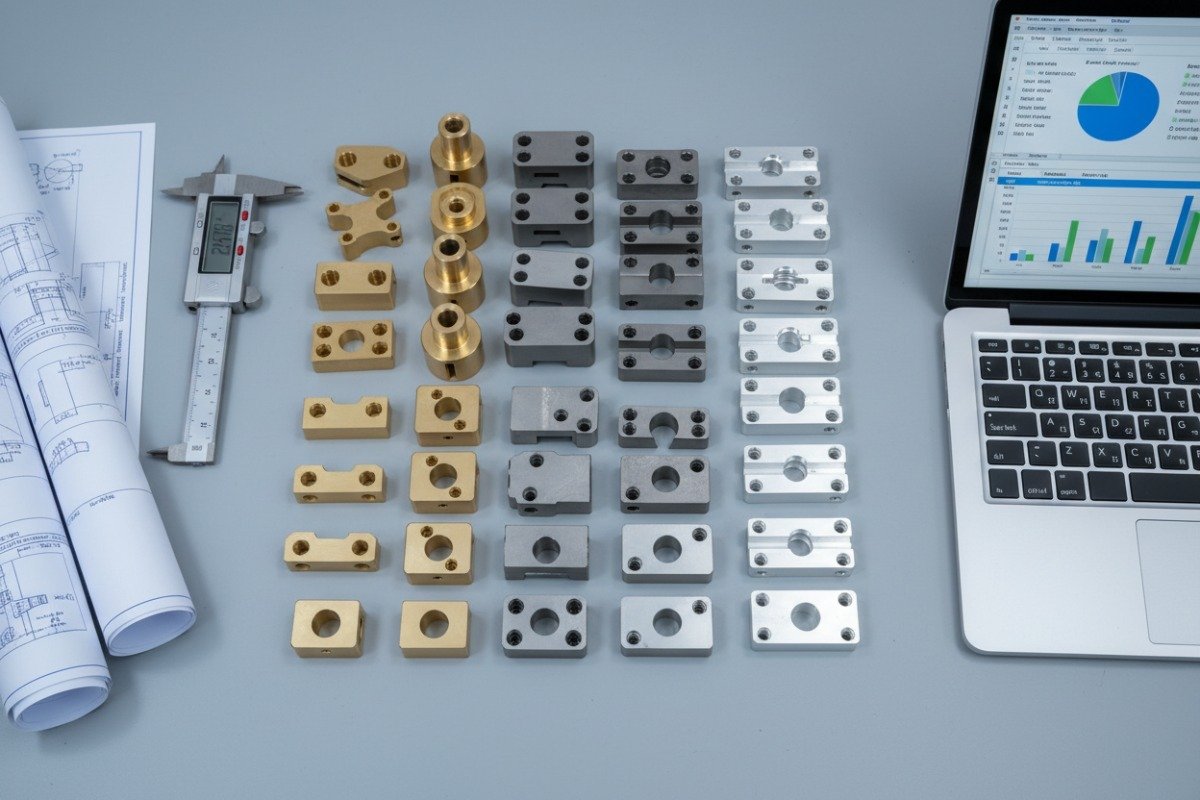
Let us walk through each cost driver so you can estimate and control your budget before you even request a quote.
Costo del Material
Material is the most obvious cost factor. But the price gap between common and exotic materials is enormous.
| Material | Approximate Cost per lb (USD) | Maquinabilidad | Aplicaciones Comunes |
|---|---|---|---|
| Aluminio 6061 | $2–5 | Excelente | Housings, brackets, fittings |
| Carbon Steel 1045 | $1–3 | Bueno | Shafts, pins, gears |
| Acero inoxidable 304 | $3–7 | Moderado | Food equipment, medical |
| Titanium Grade 5 | $20–40 | Difficult | Aerospace, implants |
| Inconel 718 | $30–60 | Very difficult | Turbine parts, high-temp |
Aluminum is fast to cut and cheap to buy. Titanium is slow to cut and expensive to buy. A part that costs $2 in aluminum might cost $25 in titanium — same geometry, same tolerances.
Part Complexity and Tolerances
A straight cylindrical shaft with ±0.005-inch tolerance is a quick job. Add tight tolerances of ±0.0005 inches, internal grooves, threads, and cross-holes, and the cycle time doubles or triples. Tighter tolerances also mean more inspection time and higher rejection rates. Our engineers always review drawings with clients to identify where tight tolerances are truly necessary and where they can be relaxed without affecting function. This simple step can cut costs by 15–25%.
Volumen de producción
CNC turning has a strong economy of scale. Setup time is fixed — programming, fixturing, and first article inspection happen whether you make 10 parts or 10,000. At mid-volumes of 1,000 to 10,000 units, per-part costs typically range from $0.50 to $5. At higher volumes, costs can drop to $0.10 to $1 per part. For very low volumes under 50 pieces, the setup cost dominates, and per-part pricing rises sharply.
Operaciones secundarias
Many turned parts need post-processing. Heat treatment, anodizing, plating, grinding, and assembly all add cost and time. When we plan a project, we map out every operation from raw bar stock to finished packaged part. This gives the buyer a clear picture of total landed cost, not just machining cost.
Tooling and Fixturing
Standard turning tools handle most jobs. But special form tools, custom jaws, or dedicated fixtures for unusual geometries add upfront cost. These are typically one-time charges amortized over the production run. For a 500-piece order, a $2,000 fixture adds $4 per part. For 10,000 pieces, it adds $0.20.
How Can I Ensure the Dimensional Accuracy of My Parts When Outsourcing CNC Turning?
One of the biggest fears our U.S. clients share with us is this: "How do I know the parts will be right if I cannot walk the shop floor myself?" It is a valid concern. We have built our entire quality system around answering that question.
Ensure dimensional accuracy by requiring a documented quality plan that includes First Article Inspection with CMM reports, in-process Statistical Process Control, final inspection per AQL standards, and PPAP submission before mass production. Also insist on clear drawing callouts and GD&T to eliminate interpretation errors.
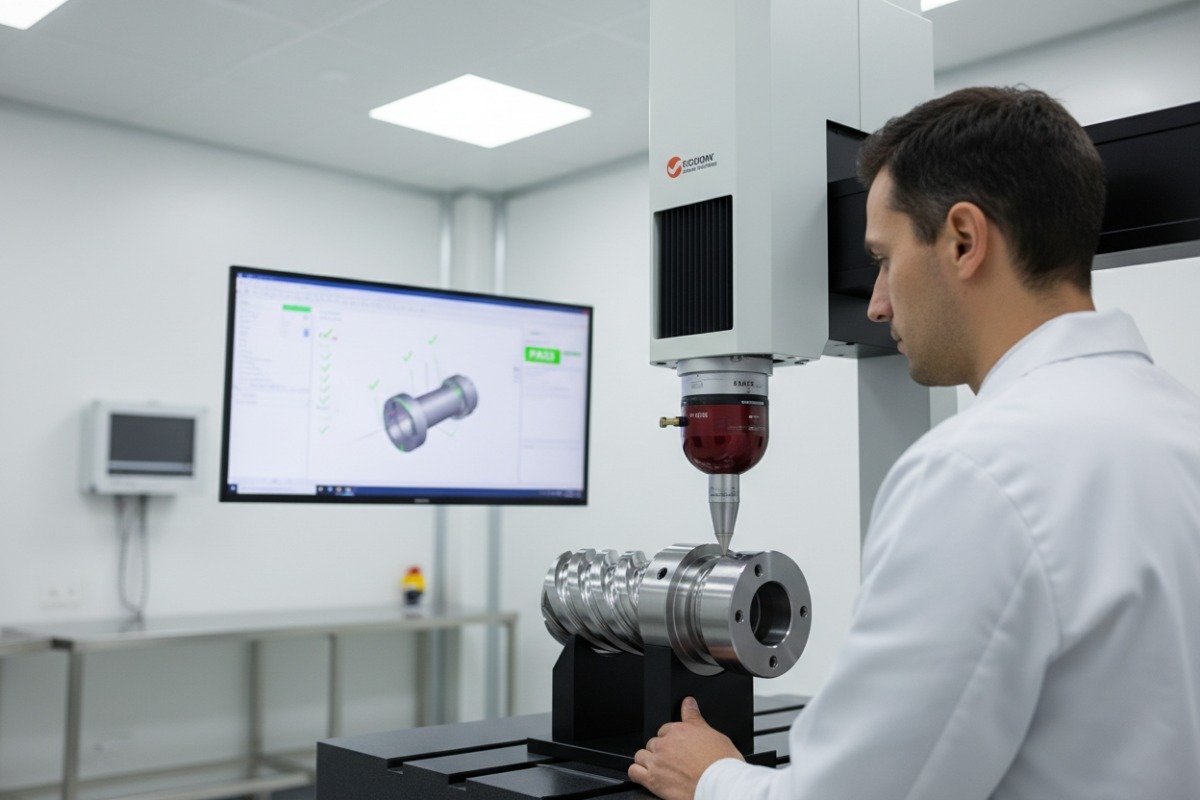
Dimensional accuracy is not luck. It is the result of a controlled process from start to finish. Here is how to build that control into your outsourcing relationship.
Start with Clear Drawings and GD&T
Most quality failures we see trace back to ambiguous drawings. If your drawing says "0.500 ±0.005" but does not specify the datum or measurement method, two different inspectors might get two different results. Use Dimensionamiento y Toleranciado Geométrico 7 (GD&T) per ASME Y14.5 to define exactly what you need. This removes guesswork. When we receive a drawing with proper GD&T, our quality team knows exactly how to set up the CMM program. No phone calls. No confusion.
Require First Article Inspection (FAI)
Before mass production begins, the supplier should produce a small batch — typically 3 to 5 pieces — and measure every dimension on the drawing. This First Article Inspection Report (FAIR) is your proof that the process can hit your specs. At our facilities, we use Zeiss and Mitutoyo CMMs with automated reporting. The FAI report goes to the client for approval before we cut a single production part.
Implement In-Process Controls
Dimensional accuracy is not just about checking parts at the end. It is about monitoring the process while it runs. Control Estadístico de Procesos 8 (SPC) tracks critical dimensions in real time. If a dimension starts drifting toward the tolerance limit, the operator adjusts before producing scrap. We run SPC on all critical-to-quality (CTQ) dimensions. Our control charts are available to clients on request.
Define Final Inspection Criteria
| Nivel de inspección | Sample Size Basis | Typical Use Case |
|---|---|---|
| AQL 0.65 | Tighter sampling, more pieces checked | Aeroespacial, médico |
| AQL 1.0 | Standard sampling | Automotive, industrial |
| AQL 2.5 | Looser sampling | Commercial, non-critical |
| 100% Inspection | Every single part checked | Safety-critical features |
Agree on the Nivel de Calidad Aceptable 9 (AQL) before production starts. For critical parts, we recommend AQL 1.0 or tighter. For safety-critical dimensions, 100% inspection is non-negotiable.
Use PPAP for New Part Approval
Proceso de Aprobación de Piezas de Producción 10 (PPAP) is the gold standard for new part launches. It includes dimensional results, material certifications, process flow diagrams, control plans, and capability studies (Cpk). When we submit a PPAP package, the client has complete visibility into how the part was made, measured, and controlled. This is especially important when sourcing from Asia, where distance makes shop floor visits impractical for every project.
Request Traceability
Every part should be traceable to its raw material heat lot, machine, operator, and inspection record. If a problem appears six months later, traceability lets you find the root cause fast. We maintain full traceability on every order and can pull records within 24 hours of a client inquiry.
What Is the Typical Lead Time I Should Expect for My High-Volume CNC Turning Order?
Lead time is the question that keeps purchasing managers up at night. When we discuss timelines with clients, we always break it down into stages so there are no surprises.
For high-volume CNC turning orders of 5,000 to 50,000 pieces, typical lead time ranges from 4 to 8 weeks, covering engineering review, material procurement, tooling setup, production, inspection, and shipping. Rush orders may cut this to 2–3 weeks, but at a premium cost.

Lead time is not one number. It is the sum of several phases, each with its own variables. Understanding these phases helps you plan better and avoid the panic of a missed deadline.
Breaking Down the Lead Time Phases
Here is a typical timeline for a high-volume CNC turning order:
| Fase | Duración | Variables clave |
|---|---|---|
| Engineering Review & DFM | 1–3 días | Drawing complexity, revision cycles |
| Material Procurement | 5–15 días | Material type, availability, MOQ |
| Tooling & Fixture Setup | 2–5 días | Custom tooling needs |
| Production (5,000–50,000 pcs) | 7-21 días | Cycle time, machine availability |
| Inspection & Quality Approval | 2–5 días | AQL level, CTQ count |
| Packaging & Shipping | 3–10 días | Air vs. sea, destination |
| Total | 20–59 days |
The biggest variable is usually material procurement. Standard materials like 6061 aluminum or 1045 steel are stocked by most distributors and ship in days. Exotic alloys like Inconel or medical-grade titanium can take 4–6 weeks just for the raw bar stock.
How to Shorten Your Lead Time
There are practical steps you can take to compress the timeline.
First, finalize your drawings before requesting quotes. Every revision cycle adds 2–3 days. Second, specify commonly available materials and standard sizes when possible. A 1-inch diameter bar is stocked everywhere. A 1.127-inch diameter bar might need a special order. Third, approve the First Article quickly. We have seen projects delayed by two weeks simply because the client's engineering team was slow to review the FAI report.
The Role of Supplier Location
Sourcing from Asia adds shipping time compared to domestic U.S. suppliers. Sea freight from Vietnam or China to a U.S. port takes 18–25 days. Air freight takes 3–5 days but costs 5–8 times more. Our approach is to overlap production and logistics planning. While parts are in final inspection, we are already booking freight and preparing customs documents. This parallel processing saves 3–5 days on every order.
Planning for Repeat Orders
The first order always takes the longest because of engineering review, tooling, and PPAP. Repeat orders skip most of that. A reorder of the same part typically ships in 2–4 weeks because the program, tooling, and quality plan are already locked in. We keep tooling and fixtures stored for active clients, so reorders go straight to production.
Buffer for the Unexpected
Even with the best planning, things happen. A tool breaks. A material shipment is delayed. A dimension drifts and requires rework. Smart purchasing managers build a 1–2 week buffer into their project timeline. This is not pessimism. It is professional risk management. When we set delivery dates with clients, we commit to realistic timelines and communicate proactively if anything changes. No surprises.
Conclusión
CNC turning is a proven, efficient process for producing precision cylindrical parts at scale. Choosing the right service comes down to matching capabilities, controlling costs, demanding quality documentation, and planning realistic lead times.
Notas al pie
1. Provides an overview of the ISO 9001 quality management system standard. ↩︎
2. Official source for the AS9100 quality management system for aerospace. ↩︎
3. Provides information on the IATF 16949 automotive quality management standard. ↩︎
4. Explains the ISO 13485 quality management system for medical devices. ↩︎
5. Explains the function and types of Coordinate Measuring Machines (CMMs). ↩︎
6. Details the purpose and components of First Article Inspection Reports (FAIR). ↩︎
7. Provides an introduction to Geometric Dimensioning and Tolerancing (GD&T) principles. ↩︎
8. Explains the methodology and benefits of Statistical Process Control (SPC). ↩︎
9. Defines Acceptable Quality Level (AQL) and its role in quality control. ↩︎
10. Explains the standardized Production Part Approval Process (PPAP) in manufacturing. ↩︎

 English
 Español de México
 Deutsch
 Français
 Русский
 العربية