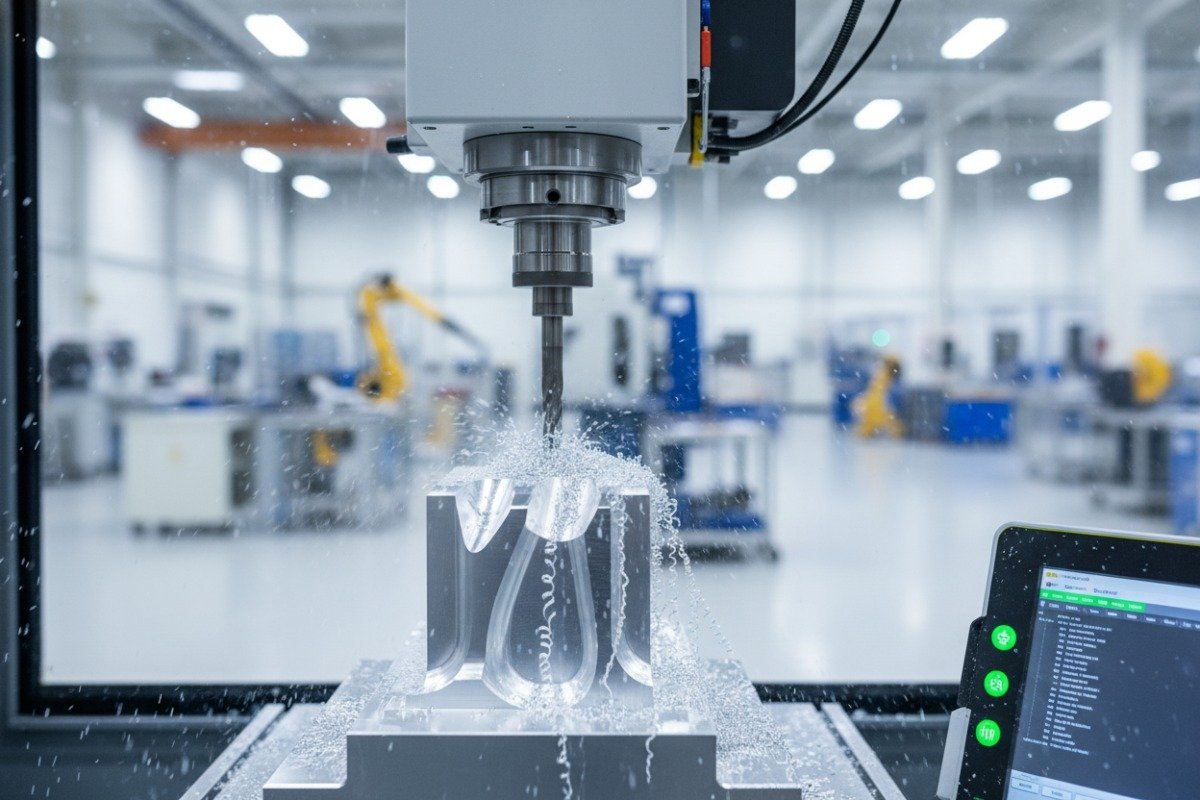
Every week, our project engineers review dozens of CNC milling quotes from factories across Asia automotive parts distributor 1. The differences in quality, pricing, and lead times are staggering — and one wrong choice can derail an entire production schedule.
CNC milling services use computer-controlled rotating cutting tools to remove material from a workpiece, producing complex parts with tolerances as tight as ±0.001 inches. Choosing the right service depends on your industry requirements, material needs, quality certifications, and the supplier's ability to deliver on time consistently.
Picking a CNC milling partner is not just about price CNC milling services 2. It is about precision, communication, and reliability. In this guide, we break down the key factors that matter most — from selecting the right service provider to verifying quality and managing lead times. Let's get into it.
How Do I Choose the Best CNC Milling Service for My Specific Industry Needs?
Our team has helped U.S. clients source CNC milled parts from Vietnam, Taiwan, and India for over a decade. The single biggest mistake we see? Buyers choose a supplier based on price alone, then spend months fixing quality issues.
To choose the best CNC milling service, evaluate the supplier's industry experience, machine capabilities (3-axis vs. 5-axis), material expertise, quality certifications like ISO 9001 or AS9100, and their track record with similar projects. Request sample parts and audit their quality control processes before committing.

Selecting the right CNC milling service is a multi-step process. You need to match the supplier's strengths to your specific industry demands. A medical device company 3 needs different things than an automotive parts distributor. Here is how to think through it.
Start With Machine Capabilities
Not all CNC milling shops are equal. A shop with only 3-axis mills can handle simple flat parts and basic pockets. But if you need turbine blades, complex housings, or parts with undercuts, you need 4-axis or 5-axis capability.
Five-axis machines allow the cutting tool to move around the workpiece from virtually any direction. máquinas de 5 ejes 4 This reduces setup times by up to 50% and produces smoother finishes on curved surfaces. For aerospace or medical parts, 5-axis is often non-negotiable.
Ask the supplier directly: What machines do you have? What is the maximum workpiece size? What spindle speeds do you run? These questions tell you a lot about their real capability.
Match Industry Certifications to Your Requirements
Different industries demand different certifications. Here is a quick reference:
| Industria | Certificación requerida | Por qué importa |
|---|---|---|
| Aeroespacial | AS9100 5 | Ensures traceability, risk management, and flight-critical quality standards |
| Dispositivos Médicos | ISO 13485 | Covers biocompatibility, cleanliness, and regulatory compliance |
| Automotriz | IATF 16949 | Focuses on defect prevention, process control, and continuous improvement |
| Fabricación general | ISO 9001 6 | Baseline quality management system for consistent output |
If a supplier cannot show you a valid certificate, walk away. Certifications are not just paperwork. They represent systems that catch errors before parts ship.
Evaluate Communication and Project Management
This is where many offshore suppliers fail. They take your drawings, quote a price, and then go silent. When the parts arrive, critical dimensions are wrong because nobody asked clarifying questions.
We have seen this pattern hundreds of times. A drawing note says "break all sharp edges." The factory ignores it. The parts cut the assembler's hands. The whole batch gets rejected.
Look for suppliers who ask questions. Good questions mean they actually read your drawings. Look for a dedicated project manager who responds within 24 hours. Look for suppliers who send you a Diseño para la Fabricación 7 (DFM) review before production starts.
Request Sample Parts and Conduct a Supplier Audit
Never place a large order without first running a sample. A sample run reveals the supplier's true capability — their surface finish quality, dimensional accuracy, and how they handle post-processing like anodizing or heat treatment.
If possible, visit the factory or hire a third-party auditor. Check their inspection equipment. Do they have CMMs (Máquinas de Medición por Coordenadas 8)? Do they use calibrated instruments? A shop without proper metrology equipment cannot guarantee tight tolerances.
What Factors Will Impact the Total Cost of My CNC Milling Project?
When we quote CNC milling projects for our clients, we break down every cost driver transparently. Most buyers are surprised to learn that material choice alone can swing the price by 300% or more.
The total cost of a CNC milling project depends on material type, part complexity, tolerances, surface finish requirements, batch size, and post-processing needs. Tighter tolerances and harder materials like titanium increase machining time and tool wear, driving costs significantly higher than standard aluminum parts.
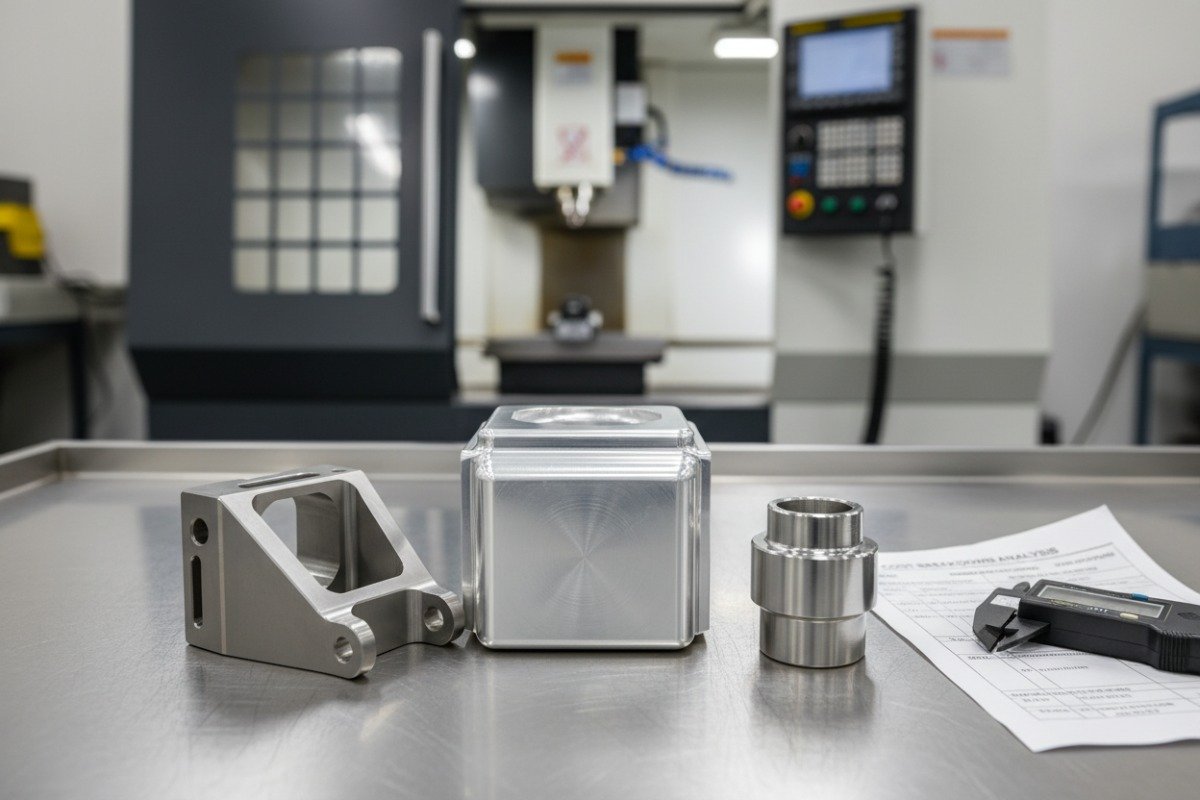
Understanding cost drivers helps you make smarter design decisions. Sometimes a small change in tolerance or material saves thousands of dollars without affecting part performance. Let's break it down.
Material Selection and Cost Impact
Material is the first major cost driver. Aluminum is the most commonly milled material — it accounts for roughly 60% of CNC milling jobs. It machines fast, wears tools slowly, and costs less per pound than steel or titanium.
Here is how common materials compare:
| Material | Relative Cost per Part | Maquinabilidad | Typical Use Case |
|---|---|---|---|
| Aluminio 6061 | Low | Excelente | Carcasas, soportes, disipadores de calor |
| Acero inoxidable 304 | Medio-Alto | Moderado | Food equipment, medical devices |
| Titanium Grade 5 | Muy alto | Difficult | Aerospace, implants |
| Latón C360 | Medio | Excelente | Electrical connectors, fittings |
| PEEK | Alto | Moderado | Medical, semiconductor |
| Delrin (POM) | Bajo-Medio | Excelente | Engranajes, casquillos, aislantes |
Titanium is 5-10 times more expensive to machine than aluminum. It generates extreme heat, wears tools fast, and requires slower feed rates. If your application allows it, switching from titanium to a high-strength aluminum alloy can cut costs dramatically.
Complexity and Tolerances
A simple rectangular block with drilled holes takes minutes to machine. A complex housing with internal channels, thin walls, and compound angles takes hours. More machining time means higher cost.
Tolerances matter too. Standard CNC milling holds ±0.005 inches without much difficulty. Tightening that to ±0.001 inches requires slower cuts, more inspection, and often a secondary finishing pass. Going to ±0.0005 inches demands specialized equipment and climate-controlled environments.
Our rule of thumb: only specify tight tolerances on surfaces that actually mate with other parts. Putting ±0.001 inches on every dimension is a common mistake that inflates cost for no functional benefit.
Batch Size and Setup Costs
CNC milling has a fixed setup cost for each job. The operator loads the program, installs tooling, fixtures the workpiece, and runs a first article. This setup might take 1-2 hours regardless of whether you order 10 parts or 10,000.
For small batches, setup cost dominates. For large batches, it gets spread across many parts and becomes negligible. This is why per-unit cost drops sharply as volume increases.
Post-Processing Adds Up
Deburring, anodizing, powder coating, heat treatment, plating — each post-processing step adds cost and lead time. Anodizing aluminum, for example, typically adds $2-$10 per part depending on size and type (Type II vs. Type III hard anodize).
Plan your post-processing requirements early. Combining operations or choosing a supplier who handles everything in-house saves both money and time.
How Can I Verify the Quality and Precision of My CNC Milled Components?
In our Vietnam facility, we run final inspection on every batch before it ships. We have caught issues that would have cost our clients tens of thousands of dollars in assembly line downtime. Quality verification is not optional — it is the backbone of any CNC milling project.
Verify CNC milled component quality by requiring First Article Inspection Reports (FAIR), dimensional inspection using CMMs, surface roughness measurements, material certifications, and PPAP documentation. Establish clear acceptance criteria upfront and insist on inspection data with every shipment to ensure parts meet specifications.
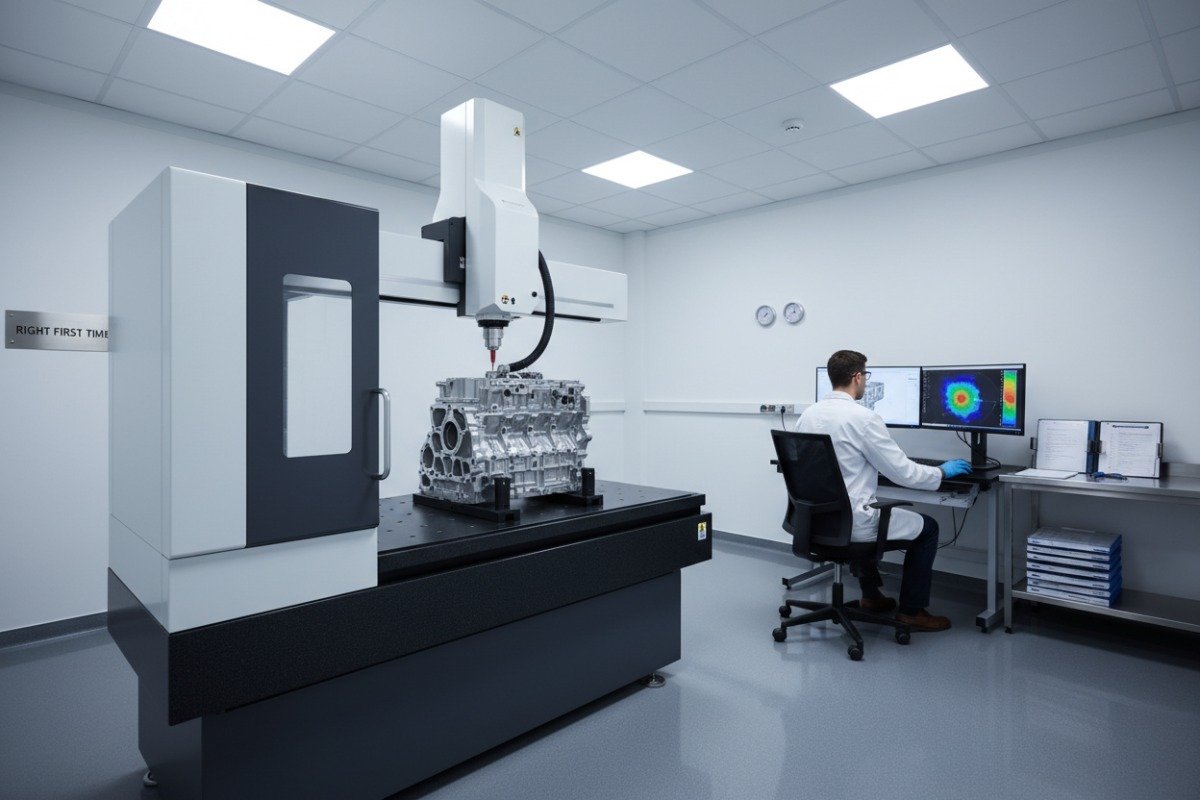
Quality problems in CNC milling usually come from three sources: the supplier did not read the drawing carefully, the process was not controlled, or inspection was skipped. Here is how to prevent all three.
Define Acceptance Criteria Before Production Starts
Before any chips fly, you and your supplier must agree on what "good" looks like. This means specifying:
- Critical dimensions and their tolerances
- Surface finish requirements (Ra value in microinches)
- Material grade and heat treatment condition
- Cosmetic standards (scratches, tool marks, burrs)
- Functional requirements (thread fit, flatness, parallelism)
Put it all in writing. A Purchase Order that just says "per drawing" is not enough. Call out the critical characteristics explicitly.
Inspection Methods and Equipment
Different features require different inspection tools. Here is what to expect from a capable supplier:
| Feature to Inspect | Método de Inspección | Typical Accuracy |
|---|---|---|
| Linear dimensions | MMC (Máquina de Medición por Coordenadas) | ±0.0001 inches |
| Hole diameters | Pin gauges, bore gauges | ±0.0002 inches |
| Surface roughness | Profilometer | Measures Ra in microinches |
| Flatness / Parallelism | Surface plate + dial indicator | ±0.0005 inches |
| Thread quality | Go/No-Go thread gauges | Pass/Fail |
| Material composition | Spectrometer or mill cert review | Verifies alloy grade |
A supplier who only uses calipers and micrometers cannot verify complex GD&T callouts. Ask what inspection equipment they own. If they do not have a CMM, they cannot reliably hold tolerances below ±0.002 inches on complex parts.
Implement PPAP for Critical Projects
Proceso de Aprobación de Piezas de Producción 9 (PPAP) is standard in automotive, but it works for any industry. A full PPAP package includes:
- First Article Inspection Report with measured values for every dimension
- Process Flow Diagram showing each manufacturing step
- Control Plan defining how critical characteristics are monitored during production
- Material certifications from the raw material supplier
- Capability studies (Cpk) proving the process can consistently hold tolerance
We prepare PPAP documentation for our U.S. clients as standard practice. It takes more effort upfront, but it virtually eliminates surprises when parts arrive.
In-Process Inspection vs. Final Inspection
Do not rely solely on final inspection. By the time you inspect finished parts, you have already spent the machining time. If something went wrong early in the process, the entire batch may be scrap.
In-process inspection catches problems in real time. The operator checks critical dimensions after each major machining step. If a dimension starts drifting, they adjust before it goes out of tolerance. This is how you achieve "right first time" results consistently.
Control Estadístico de Procesos 10 (SPC) takes this further. By charting measurements over time, you can see trends before they become defects. A dimension trending toward the upper tolerance limit signals that the tool is wearing and needs replacement.
What Lead Times Should I Expect When I Outsource My CNC Milling Requirements?
When we manage CNC milling projects across multiple Asian countries, lead time is the number one concern our clients raise. Late delivery does not just delay one project — it cascades through the entire production schedule and costs real money.
Standard CNC milling lead times range from 1-2 weeks for simple prototypes to 4-8 weeks for production runs requiring special materials, tight tolerances, or post-processing. Lead times increase further when projects need custom tooling, surface treatments like anodizing, or third-party certifications and inspections.
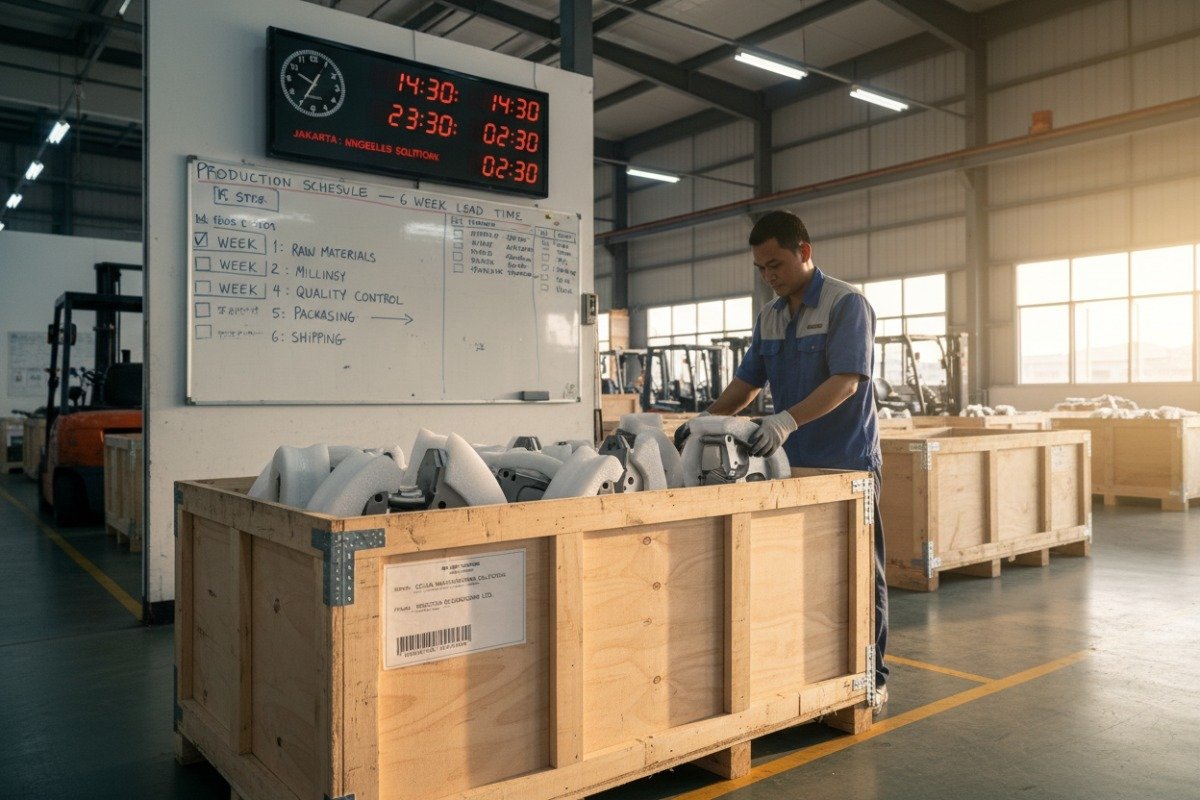
Lead time is not just machining time. It includes quoting, material procurement, programming, setup, machining, inspection, post-processing, and shipping. Each step adds days or weeks. Here is how to understand and manage the full timeline.
Breaking Down the Lead Time Components
Most buyers think lead time equals machining time. It does not. Here is a realistic breakdown for a typical production order:
| Fase | Duración típica | Qué Sucede |
|---|---|---|
| Quoting & DFM Review | 2-5 days | Supplier reviews drawings, identifies issues, provides pricing |
| Material Procurement | 3-15 days | Raw material ordered; specialty alloys take longer |
| CAM Programming | 1-3 days | Tool paths created, simulated, and verified |
| Configuración de la máquina | 0.5-1 day | Fixtures built, tools loaded, first article run |
| Mecanizado | 1-10 days | Depends on complexity, quantity, and machine availability |
| Inspección | 1-3 days | CMM measurement, documentation, FAIR preparation |
| Post-Processing | 3-10 days | Anodizing, plating, heat treatment (often outsourced) |
| Shipping (Asia to U.S.) | 5-30 days | Air freight (5-7 days) vs. sea freight (25-30 days) |
A simple aluminum prototype with no post-processing can ship in 7-10 days via air. A production run of 500 stainless steel parts with hard anodizing and PPAP documentation? Expect 6-8 weeks minimum.
Factors That Extend Lead Times
Several things push lead times longer than expected:
Specialty materials. Standard aluminum 6061 is usually in stock. But titanium Grade 5, Inconel, or specific stainless steel grades may require 2-3 weeks just for material procurement.
Tight tolerances. Parts requiring ±0.001 inches or tighter need slower machining speeds and more inspection time. Each part takes longer to produce and verify.
Complex post-processing. Hard anodizing, electroless nickel plating, or passivation often requires sending parts to a specialized sub-supplier. This adds transit time and queue time at the plating shop.
Revision cycles. If the supplier sends a DFM review and you take a week to respond, that week gets added to the lead time. Fast communication on both sides keeps projects on track.
How to Shorten Your Lead Time
There are practical steps you can take to reduce lead time without sacrificing quality.
First, provide complete and accurate drawings from the start. Missing dimensions, unclear notes, or outdated revisions cause back-and-forth that wastes days.
Second, choose standard materials whenever possible. If your design works with aluminum 6061 instead of a specialty alloy, you eliminate weeks of material procurement time.
Third, consolidate post-processing. Work with a supplier who handles machining, finishing, and inspection under one roof. Every time parts move to a different facility, you add transit time and risk.
Fourth, plan ahead. Rush orders cost 30-50% more and still may not meet your deadline. Giving your supplier 6-8 weeks of lead time instead of 3 weeks results in better pricing, better quality, and less stress for everyone.
Our approach is to build a detailed project timeline at the start of every order. We share it with the client so both sides know exactly when each milestone should be hit. If anything slips, we flag it immediately — not the day before the shipment is due.
Conclusión
Choosing the right CNC milling service comes down to four things: matching capabilities to your needs, understanding true costs, verifying quality with data, and planning realistic lead times.
Notas al pie
1. Industry group for automotive supply chain best practices. ↩︎
2. Provides a general definition and overview of CNC milling. ↩︎
3. FDA regulations for medical device companies. ↩︎
4. Explains the capabilities and advantages of 5-axis machining. ↩︎
5. Aerospace quality management system standard. ↩︎
6. Official standard for quality management systems. ↩︎
7. Discusses principles of optimizing designs for manufacturing efficiency. ↩︎
8. Explains the function and use of CMMs in dimensional measurement. ↩︎
9. Replaced HTTP 403 with an authoritative and comprehensive Wikipedia article on Production Part Approval Process. ↩︎
10. Defines and explains the use of statistical methods for process control. ↩︎

 English
 Español de México
 Deutsch
 Français
 Русский
 العربية