At our facilities in both nations, we see buyers struggling with rising costs. You need a stable supply chain, but geopolitical shifts make sourcing harder every day.
Vietnamese suppliers offer a distinct competitive edge through a 25% tariff advantage compared to China and labor costs that are roughly one-third of Chinese rates. This shift allows US importers to significantly reduce landed costs while mitigating supply chain risks through a strategic "China Plus One" diversification approach.
Let's explore the specific financial and operational benefits of shifting your custom welding projects to Vietnam.
How do US import tariffs differ between Vietnam and China?
When we handle customs documentation for our US clients, the duty difference is stark. High tariffs eat into your margins, making competitive pricing nearly impossible.
Since late 2025, US tariffs on Chinese goods have stabilized around 45%, whereas Vietnamese imports face a much lower rate of 20%. This massive 25% duty differential immediately boosts your bottom line, making Vietnam the financially superior choice for cost-sensitive custom metal projects.

The landscape of international trade has shifted dramatically. For years, China was the default factory of the world. However, recent policy changes have altered the math for US importers. We have observed this firsthand when quoting projects for our American clients. The tariff gap is no longer a minor inconvenience; it is a decisive factor in supplier selection.
The 25% Advantage
Currently, goods imported from China into the United States face a composite tariff rate that often hits 45%. This includes standard duties plus the additional levies imposed under various trade acts. In contrast, Vietnam enjoys a "Most Favored Nation" status with the US, keeping tariffs significantly lower.
For a welding project valued at $100,000, this difference is substantial. Sourcing from China could result in a $45,000 tax bill. Sourcing the same parts from Vietnam would cost you roughly $20,000 in duties. That is a direct saving of $25,000, which goes straight to your profit margin.
Critical Cost Analysis
You must look beyond the "Ex-Works" price (the price at the factory door). A Chinese supplier might offer a slightly lower unit price due to mature supply chains. However, once the goods land in Long Beach or Seattle, the tariff bill reverses that advantage.
We advise our clients to calculate the "Landed Cost." This includes the unit price, shipping, insurance, and duties. In almost every scenario involving custom metal parts, the 25% tariff gap makes Vietnam the winner.
Table 1: Landed Cost Simulation (Based on $50,000 Order)
| Cost Component | Sourcing from China | Sourcing from Vietnam |
|---|---|---|
| Production Cost | $50,000 | $52,000 (Assume slightly higher material logistics) |
| Freight & Insurance | $3,500 | $3,800 |
| Import Duty Rate | 45% | 20% |
| Duty Amount | $22,500 | $10,400 |
| Total Landed Cost | $76,000 | $66,200 |
| Net Savings | – | $9,800 (approx. 13%) |
This table illustrates a common scenario. Even if the raw production cost in Vietnam is slightly higher due to imported materials, the tax savings result in a much lower total cost.
Long-Term Stability
Tariffs on Chinese goods are volatile. They are often used as political leverage. Vietnam, while monitored by the US, currently presents a more stable trade environment. This stability allows you to forecast costs for the next 12 to 24 months with greater confidence. You do not want to quote a price to your customer today, only to have your margins wiped out by a new tweet or policy announcement tomorrow.
Is labor cost significantly lower in Vietnam for metal fabrication?
On our production floors, we track operational expenses closely to optimize pricing. Rising wages in established hubs can drain your budget for labor-intensive welding tasks.
Labor costs in Vietnam are currently about one-third of those in China, providing a substantial reduction in production expenses for manual welding and assembly. This cost structure allows for competitive pricing on medium-volume orders without sacrificing the quality or precision required for custom parts.
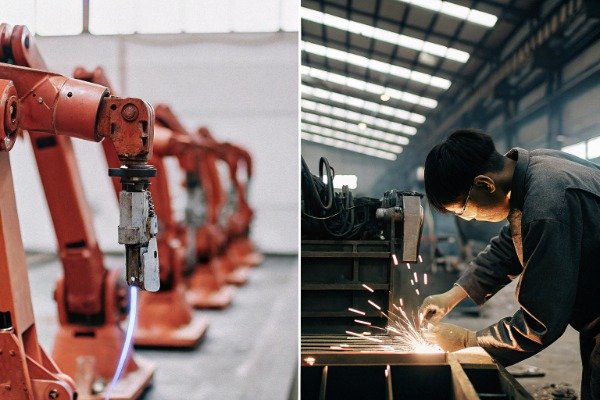
Labor is a massive component of custom welding. Unlike injection molding, which can be highly automated, custom metal fabrication often requires skilled human hands. This is where Vietnam shines.
The Wage Gap Explained
In China, the manufacturing sector has matured. Wages in coastal provinces like Guangdong or Zhejiang have skyrocketed. Factory owners there must pay higher salaries to retain skilled welders. This is good for Chinese workers but hard for US buyers.
In Vietnam, the industrial workforce is younger and growing. The cost of living is lower, which translates to lower wage requirements. For our operations, this means we can hire excellent welders in Vietnam for roughly 30% to 35% of the cost of a comparable welder in China.
Manual vs. Automated Processes
This labor cost difference dictates the manufacturing strategy.
- China: Due to high labor costs, Chinese factories invest heavily in robotic welding. This is great for orders of 10,000+ identical units. However, for custom parts (50 to 500 units), programming robots is too expensive and slow.
- Vietnam: With lower labor costs, we can deploy skilled manual welders for medium-sized batches. We can adapt to design changes quickly without reprogramming complex automation.
Quality of the Workforce
Do not mistake "lower cost" for "lower skill." Vietnam has a strong tradition of mechanical craftsmanship. The government has invested heavily in vocational training. Our Vietnamese teams are highly proficient in TIG and MIG welding. They handle complex geometries that robots struggle with.
Table 2: Labor Market Comparison for Metal Fabrication
| Merkmal | China | Vietnam |
|---|---|---|
| Average Welder Wage | High (Rising fast) | Low (approx. 1/3 of China) |
| Am besten für | High Volume / Automation | Medium Volume / Custom Manual Work |
| Flexibilität | Low (Rigid lines) | High (Adaptable workforce) |
| Workforce Age | Aging | Young & Growing |
The "Total Cost" Impact
Lower labor costs also reduce overhead. Maintenance staff, quality inspectors, and logistics personnel all cost less in Vietnam. This reduces the factory's "burden rate." When we quote a project, these savings are passed on to you. If your product requires significant grinding, polishing, or manual assembly after welding, the savings in Vietnam multiply.
However, you must be realistic. If you need millions of simple brackets, China's automation might still win. But for the custom, complex parts that most of our clients need, Vietnam's labor advantage is unbeatable.
environmental standards 1
How does diversifying to Vietnam reduce my supply chain risks?
We often help clients scramble when a single source gets disrupted by policy changes. Relying solely on one country exposes your business to unpredictable shutdowns.
CPTPP 2
Diversifying to Vietnam implements a robust "China Plus One" strategy that insulates your supply chain from geopolitical tensions and trade wars. By spreading manufacturing across two distinct regions, you ensure continuity of supply, protect against sudden tariff spikes, and maintain leverage in supplier negotiations.
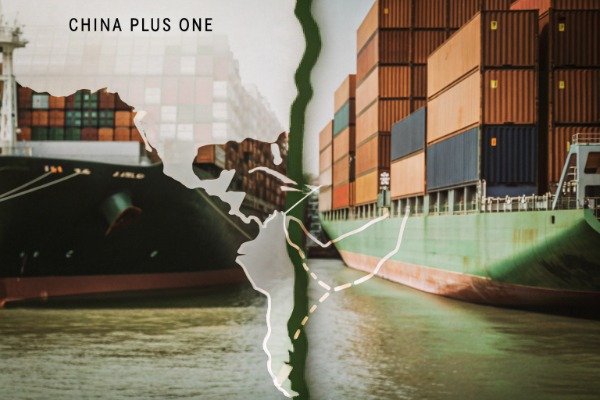
Risk management is no longer a buzzword; it is a survival skill. We have seen companies go bankrupt because they had all their eggs in one basket. Moving some production to Vietnam is an insurance policy for your business.
trade wars 4
The "China Plus One" Strategy
This strategy is simple: keep some production in China for capacity, but move a significant portion to another country. Vietnam is the top choice for this. By having a foothold in Vietnam, you are not held hostage by events in China.
Geopolitical Insulation
The relationship between the US and China is complex and often tense. Trade wars, sanctions, and export restrictions can happen overnight. Vietnam maintains a neutral stance. It has good relations with both the US and China. Sourcing from Vietnam removes the political target from your back. You are less likely to face sudden bans or punitive taxes.
Avoiding Port Congestion
During peak seasons, Chinese ports like Shanghai and Ningbo can become parking lots. Delays of weeks are common. While Vietnam's infrastructure is still developing, its ports (like Haiphong and Ho Chi Minh City) offer an alternative route. When one region is clogged, the other might be flowing freely. We use this flexibility to route shipments based on current conditions.
Intellectual Property (IP) Safety
This is a sensitive topic. In the past, IP theft was a major concern in Asia. China has improved, but risks remain. Vietnam is earlier in its industrial journey. Manufacturers here are eager to build trust with Western clients.
- Less Saturation: In China, a supplier might have a cousin down the street who runs a competing factory. Designs leak easily.
- Focus on Export: Vietnamese suppliers are 100% focused on export compliance. They protect your drawings because their business depends on your repeat orders.
H3: Critical Thinking: Is Vietnam Risk-Free?
No. It is important to be honest. Vietnam has its own risks. The power grid can be unstable in peak summer months. The supply chain for raw materials (like specific steel alloys) often still relies on imports from China.
However, the type of risk is different.
- China Risk: Political, Tariff, IP.
- Vietnam Risk: Infrastructure, Raw Material Logistics.
By balancing these, you reduce your total risk profile. You are trading a high-impact political risk for a manageable operational risk.
TIG and MIG welding 5
What trade agreements benefit US importers sourcing from Vietnam?
Our logistics team constantly reviews export regulations to find the best routes. Missing out on favorable trade pacts means leaving significant savings on the table.
robotic welding 6
Vietnam benefits from an extensive network of free trade agreements like the CPTPP and EVFTA, which integrate it deeply into the global economy. While direct US-Vietnam FTAs are evolving, these global connections enhance logistics efficiency and raw material sourcing, indirectly benefiting US importers through streamlined operations.

You might ask, "The US doesn't have a Free Trade Agreement (FTA) with Vietnam, so why do other agreements matter?" This is a great question. The answer lies in the global supply chain ecosystem.
Landed Cost 8
The Network Effect
Vietnam is a member of the CPTPP (Comprehensive and Progressive Agreement for Trans-Pacific Partnership) and has a trade deal with the EU (EVFTA).
- Raw Material Access: These agreements allow Vietnam to import high-quality machinery and materials from Japan, South Korea, and Europe with low duties. This lowers the cost of production for your parts.
- Standardization: To join these agreements, Vietnam had to upgrade its labor laws, environmental standards, and quality regulations. When you buy from Vietnam, you benefit from these higher standards, even if the US isn't a direct signatory.
Indirect Benefits for US Buyers
While there is no zero-tariff deal yet, the trade environment is "friendly." The US and Vietnam signed a Bilateral Trade Agreement years ago that normalized relations.
Furthermore, Vietnam is part of ASEAN. This economic bloc is a powerhouse. It ensures that goods flow smoothly between Southeast Asian nations. If we need a specific component from Thailand to finish your welding assembly in Vietnam, it arrives quickly and cheaply. This regional integration keeps your lead times down.
Most Favored Nation 9
Table 3: Trade Environment Comparison
| Factor | China | Vietnam |
|---|---|---|
| US Relationship | Tense / Competitive | Cooperative / Strategic Partner |
| Key Agreements | RCEP | CPTPP, EVFTA, ASEAN, RCEP |
| Tariff Trend | Increasing | Stable / Decreasing |
| Customs Scrutiny | High (Section 301 checks) | Moderat |
Future-Proofing Your Business
The US government views Vietnam as a key partner in the Indo-Pacific region. There is constant diplomatic chatter about upgrading trade ties. By establishing a relationship with Vietnamese suppliers now, you are positioning yourself to benefit from any future trade deals. You will already have a vetted supply chain in place while your competitors are just starting to look.
Sourcing Raw Materials
One challenge in Vietnam is that it produces less raw steel than China. However, thanks to trade agreements, Vietnamese factories can easily import steel from Japan or Korea. This often results in higher quality material than standard Chinese steel. For welding projects requiring high-strength alloys, this is a hidden advantage. You get Japanese material quality at Vietnamese labor rates.
Fazit
Shifting your welding supply chain to Vietnam is a strategic financial move. You gain a massive 25% tariff advantage and cut labor costs by two-thirds. While challenges like material logistics exist, the risk reduction and stability offered by Vietnam make it the smart choice for US importers in 2026.
composite tariff rate 10
Footnotes
1. The global standard body for environmental management systems referenced in the text. ↩︎
2. US government guide listing Vietnam’s participation in major trade pacts. ↩︎
3. Academic research on strategies for mitigating supply chain disruptions. ↩︎
4. General background on the economic conflicts impacting supply chains. ↩︎
5. Technical resource from a leading equipment supplier comparing these welding processes. ↩︎
6. Major manufacturer describing the automation technology used in mass production. ↩︎
7. Survey data documenting the rising labor costs in key Chinese manufacturing hubs. ↩︎
8. Logistics industry definition and components of this critical financial metric. ↩︎
9. Explains the international trade status mentioned in the comparison. ↩︎
10. Official government details on the additional duties applied to Chinese imports. ↩︎

 English
 Español de México
 Deutsch
 Français
 Русский
 العربية