Sourcing welded components from Vietnam offers significant cost advantages, but we often see US clients struggle with inconsistent quality due to vague documentation requirements. When we manage supply chains, we prioritize clear evidence of process control to prevent structural failures.
supply chains 1
To verify welding quality from Vietnamese suppliers, you must request a Welding Procedure Specification (WPS) and Procedure Qualification Record (PQR). Additionally, demand Welder Performance Qualification (WPQ) records, Material Test Reports (MTR) for base metals, and Non-Destructive Testing (NDT) reports to ensure structural integrity and code compliance.
Here is the essential documentation checklist you need to secure your supply chain and validate your supplier's capabilities.
Is an ISO 9001 certificate enough to guarantee welding quality?
At our Singapore headquarters and Vietnam facility, we maintain strict certifications, but we know from experience that a general quality certificate does not automatically prevent a cold lap in a critical weld joint.
ISO 9001 is insufficient for guaranteeing welding quality because it only covers general management processes, not technical welding competence. You need specific certifications like ISO 3834 or detailed technical audits to verify that the supplier has the equipment, skills, and controls to produce sound welds.
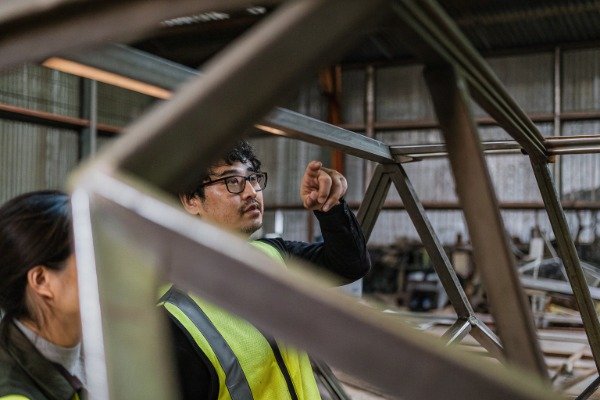
Many buyers mistakenly believe that an ISO 9001 certificate is the gold standard for all manufacturing quality. While it is a necessary baseline, it is far from sufficient for "special processes" like welding. In the manufacturing world, a special process is defined as one where the output cannot be fully verified by subsequent monitoring or measurement alone—defects like internal porosity or lack of fusion are often invisible to the naked eye.
ISO 9001 certificate 2
ISO 9001 certifies that a company has a management system in place. It proves they have a procedure for purchasing, a procedure for training, and a procedure for handling complaints. However, it does not dictate how to weld a specific joint, nor does it require the supplier to employ a certified welding engineer. A factory can have perfect ISO 9001 paperwork and still produce welds that fail under load because their technical parameters were incorrect.
The Gap Between Management and Technical Skill
To bridge this gap, you should look for ISO 3834 certification, which specifically addresses quality requirements for fusion welding of metallic materials. Unlike ISO 9001, ISO 3834 dives deep into the technicalities: it evaluates the welding personnel, the equipment maintenance, the welding consumables, and the post-weld heat treatment capabilities.
ISO 3834 3
If your Vietnamese supplier lacks ISO 3834, you must act as the auditor yourself (or hire one). You cannot rely on their general quality manual. You must demand evidence of technical control. This is why we always perform technical audits focusing on the "4Ms"—Man, Machine, Material, and Method—specifically for the welding workshop, regardless of their ISO 9001 status.
Comparison of Quality Standards
| Merkmal | ISO 9001 | ISO 3834 |
|---|---|---|
| Primary Focus | General Quality Management System | Quality Requirements for Fusion Welding |
| Scope | Entire organization (HR, Sales, Admin) | Welding workshop and technical processes |
| Technical Depth | Low (Process flow only) | High (Specific welding parameters) |
| Personnel Req. | General competence | Certified Welding Coordinators (e.g., IWE/IWT) |
| Suitability | Baseline requirement | Critical for structural integrity |
Should I ask for their Welding Procedure Specifications (WPS)?
Before our production line starts any welding job, our engineers define every single parameter to ensure consistency, rather than letting individual operators guess the machine settings.
You should always request a Welding Procedure Specification (WPS) because it serves as the mandatory instruction manual for the welder. It defines critical variables like current, voltage, travel speed, and shielding gas, ensuring that every weld is performed consistently according to the engineered design.
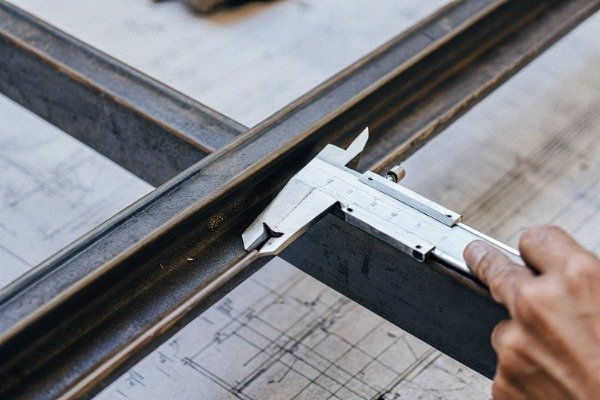
A Welding Procedure Specification (WPS) is the most fundamental technical document in the welding industry. Think of it as a recipe for a chef. Just as a chef needs to know the exact temperature and cooking time to bake a soufflé, a welder needs the WPS to know the amperage, voltage, and travel speed to fuse two pieces of metal without defects.
When we audit suppliers in Vietnam, the absence of a written WPS is a major red flag. It implies that the welders are relying on "tribal knowledge" or personal preference. One welder might run "hot and fast" while another runs "cold and slow." This inconsistency leads to variable penetration and unpredictable mechanical properties. Even if the parts look identical on the outside, their internal strength can vary wildly.
Critical Variables in a WPS
A proper WPS must be detailed. It is not enough to say "MIG welding on steel." It must specify the joint design, the welding position (flat, vertical, overhead), and the electrical characteristics. If a supplier sends you a one-page sheet with vague ranges (e.g., "100–300 Amps"), they are not controlling their process.
We recommend ensuring their WPS complies with international standards such as AWS D1.1 (Structural Welding Code – Steel) or ASME Section IX. These codes require specific ranges for essential variables. If the welder deviates from these ranges, the weld is no longer considered pre-qualified or safe.
AWS D1.1 4
Key WPS Elements to Verify
| Variable | Why It Matters | Risk of Deviation |
|---|---|---|
| Amperage (Current) | Controls depth of penetration | Burn-through (too high) or lack of fusion (too low) |
| Voltage | Controls arc length and bead shape | Excessive spatter or undercut |
| Travel Speed | Controls heat input per inch | Distortion or brittle heat-affected zones |
| Shielding Gas | Protects the molten pool | Porosity (holes) in the weld metal |
| Preheat Temp | Slows cooling rate | Cracking in thick or high-carbon steels |
Do they provide material mill certificates for every production batch?
We have seen entire shipments rejected because a supplier used cheaper, unverified steel that cracked under stress, so we strictly enforce material traceability in our supply chain.
Professional suppliers must provide Material Test Reports (MTR) or mill certificates for every heat number used in production. These documents verify the chemical composition and mechanical properties of the base metal, ensuring it matches the specifications required for weldability and structural strength.
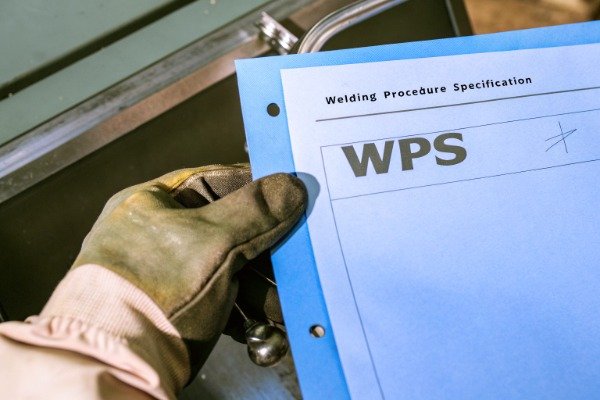
In the custom parts industry, "mystery metal" is a silent killer. You cannot produce a high-quality weld if the base material is substandard. In Vietnam, as in many manufacturing hubs, there is a mix of high-quality imported steel (from Japan, Korea, or Taiwan) and lower-grade local or unverified materials. Without a Mill Certificate, you have no way of knowing what you are actually buying.
A Mill Test Report (MTR), also known as a Mill Certificate, is a document issued by the raw material manufacturer. It acts as the birth certificate of the steel. It links the material to a specific "Heat Number"—a unique identifier for the batch of molten metal from which the steel was cast.
Verifying the Heat Number
When we inspect a batch of raw materials, the first thing we do is check the stencil or stamp on the steel plate or tube. This number must match the Heat Number on the MTR exactly. If the supplier cannot show you the physical marking on the material that corresponds to the paper certificate, the traceability chain is broken.
Chemical vs. Mechanical Properties
The MTR provides two critical sets of data:
- Chemical Composition: This tells you the percentage of Carbon, Manganese, Sulfur, and Phosphorus. This is vital for welding because high carbon or sulfur content can cause cracking (hot cracking or hydrogen-induced cracking).
- Mechanical Properties: This lists the Yield Strength, Tensile Strength, and Elongation. This confirms the material can carry the loads calculated by your design engineers.
What to Look for in an MTR
| Data Point | Function | Warning Sign |
|---|---|---|
| Heat Number | Traceability link | Missing or does not match the physical part |
| Carbon Equivalent (CE) | Predicts weldability | High CE values require preheating; ignoring this leads to cracks |
| Yield Strength | Load-bearing capacity | Value is lower than the ASTM/ISO standard minimum |
| Standard Ref. | Specification compliance | Cites a generic standard instead of the specific one (e.g., "Steel" vs "ASTM A36") |
Can they show Procedure Qualification Records (PQR) for similar parts?
When we validate a new welding process, we conduct rigorous destructive testing to prove our methods work, and we document these results to reassure our clients that the physics are on our side.
Tensile Test 5
A Procedure Qualification Record (PQR) is essential because it provides physical evidence that the WPS produces a sound weld. It records the actual values used during a test weld and the results of destructive tests like tensile strength and bend tests, proving the process is valid.

Procedure Qualification Record (PQR) 6
While the WPS is the recipe, the Procedure Qualification Record (PQR) is the proof that the meal is edible. You should never accept a WPS without its supporting PQR (unless the procedure is "Pre-Qualified" under specific codes like AWS D1.1, but even then, documentation is required).
chemical composition 7
The PQR is a record of a test weld. It documents the specific parameters used to weld a test coupon and, more importantly, the results of the testing performed on that coupon. This is where you can verify the "Insights" regarding cutting samples and testing.
shielding gas 8
Destructive Testing: The Ultimate Proof
To generate a PQR, the supplier must weld a sample piece and then destroy it to test its limits.
- Tensile Test: The sample is pulled apart until it snaps. The break must occur in the base metal, not the weld, proving the weld is stronger than the material itself.
- Bend Test: The sample is bent 180 degrees. If the weld cracks or opens up, the procedure fails.
- Macro-Etch Test: The sample is cut cross-sectionally, polished, and etched with acid. This reveals the penetration profile and fusion lines, showing if the weld bit deep enough into the root.
Non-Destructive Testing (NDT) Reports
Beyond the PQR (which is for process qualification), you should also ask for NDT reports for the actual production parts.
- Visual Inspection (VT): Every weld should be visually inspected for surface defects.
- Ultrasonic Testing (UT) or Radiography (RT): For critical structural parts, these methods "see" inside the metal to detect hidden cracks or porosity.
- Airtightness/Leak Testing: For tanks or vessels, we often perform pressure tests or dye penetrant tests to ensure no leaks exist.
If a supplier claims they have "good quality" but cannot show you a PQR with passing tensile and bend test results, or NDT reports for production batches, they are asking you to rely on blind faith. In international trade, faith is not a strategy; documentation is.
Welding Procedure Specification (WPS) 9
Fazit
Requesting these documents ensures your Vietnamese supplier follows a validated process, minimizing risks and guaranteeing that your custom parts meet international quality standards.
Non-Destructive Testing (NDT) 10
Footnotes
1. US government resource on supply chain resilience and standards. ↩︎
2. General background on the ISO 9001 quality management standard. ↩︎
3. Official standard definition for quality requirements in fusion welding. ↩︎
4. Official source for the Structural Welding Code referenced in the text. ↩︎
5. Leading testing equipment manufacturer explaining tensile testing methodology. ↩︎
6. Authoritative industry definition of PQR from The Welding Institute. ↩︎
7. Government authority on chemical composition standards and measurements. ↩︎
8. Major industrial gas supplier explaining shielding gas functions. ↩︎
9. Major manufacturer explaining the purpose and content of a WPS. ↩︎
10. Comprehensive educational resource for NDT methods and theory. ↩︎

 English
 Español de México
 Deutsch
 Français
 Русский
 العربية