
We often see US clients struggle when shifting production from China to Vietnam because the supply chain is less mature. Finding a shop that claims they can weld is easy, but finding one that understands AWS standards and has a proven track record is much harder. AWS standards 1
Verifying a Vietnamese supplier’s US export history involves checking customs data databases like ImportGenius or Panjiva for Bill of Lading records. You must also request redacted commercial invoices, verify their FDA or tax registration numbers, and cross-reference their certifications with official US trade statistics to ensure legitimacy.
Here is how you can validate these suppliers before you sign any contracts.
How can I access customs data to see a Vietnamese supplier's previous shipments to the US?
During our initial audits in Vietnam, we rely heavily on hard data before even visiting a factory floor. Trusting a website claim without data is a quick way to face delays, so we always cross-check shipment logs first.
Access customs data by subscribing to trade intelligence platforms such as ImportGenius, Panjiva, or Datamyne. These tools allow you to search by supplier name or HS code to view specific Bill of Lading details, including US consignee names, shipment dates, ports of entry, and total cargo weight.
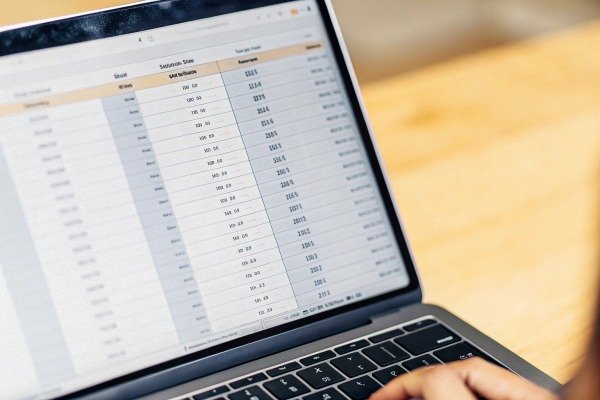
Using Trade Intelligence Platforms
The most direct way to see if a supplier is telling the truth is to look at the public record. US Customs and Border Protection (CBP) data is publicly accessible through various third-party aggregators. When we vet a new partner in Vietnam, we do not just ask for a client list; we look for the paper trail that proves it.
Platforms like ImportGenius, Panjiva, and Export Genius scrape Bill of Lading (BOL) data. A Bill of Lading is a legal document issued by a carrier to acknowledge receipt of cargo for shipment. Bill of Lading 2 It lists the "Shipper" (the Vietnamese factory) and the "Consignee" (the US buyer). If a supplier claims they ship to the US but you cannot find their name as a "Shipper" in these databases, it is a major red flag. They might be a trading company using a different exporter of record, or they might be dishonest about their experience.
Searching by HS Codes
If you cannot find the company by name, search by Harmonized System (HS) codes. Harmonisierte Systematik 3 Harmonized System (HS)-Codes 4 For welding parts and machinery, you will typically look under Chapter 85 or Chapter 73. This helps you see the volume of goods leaving a specific region or port.
Analyzing the Data
Once you have the records, you need to analyze the frequency and volume. A factory that shipped one container three years ago is very different from one shipping five containers a month. Consistent shipments indicate reliability and a stable production process.
Comparison of Trade Data Tools
To help you choose the right tool for verification, we have compared the most common platforms below based on our usage.
| Platform Name | Best Use Case | Key Feature for Buyers | Estimated Cost Level |
|---|---|---|---|
| ImportGenius | Verifying specific supplier history | detailed Bill of Lading records | Mid-High |
| Panjiva | Supply chain trend analysis | Visualizing supplier networks | High (Enterprise) |
| Export Genius | Market research in Asia | Vietnam-specific export data | Mid |
| Free Govt Data | Basic verification | Aggregated trade statistics | Free |
Interpreting the Consignee
Look closely at who the Consignee is. If the Consignee is a logistics company or a freight forwarder, it might be harder to verify the end user. However, if the Consignee is a known US manufacturer or distributor in your industry, that is strong proof of competence. It means the Vietnamese supplier has successfully passed that US company's quality control audits.
What specific documents should I request to prove a factory's experience with US welding standards?
When we manage custom projects, simply seeing a welding machine isn’t enough to guarantee quality. We need proof that the team knows how to meet specific American industrial standards without constant hand-holding or expensive rework.
Request redacted commercial invoices and packing lists from previous US shipments to prove export history. Additionally, ask for valid AWS (American Welding Society) certifications for their welders, ISO 9001 certificates, and Mill Test Reports (MTRs) for raw materials that comply with ASTM standards required by American engineers.
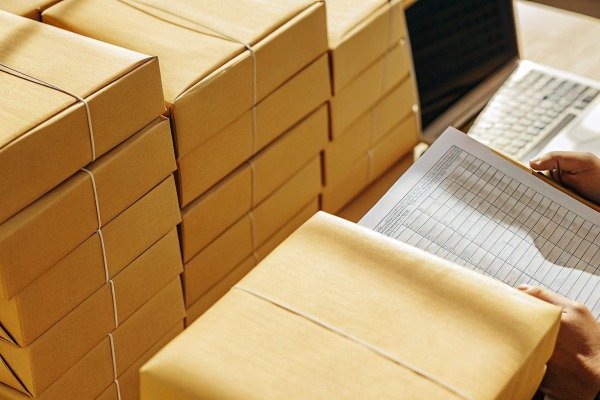
The Importance of Redacted Invoices
A Bill of Lading tells you a shipment happened, but a Commercial Invoice tells you what was inside. We often ask potential suppliers to share "redacted" invoices from past US jobs. They can black out the pricing and the client's name to protect confidentiality.
What we look for is the product description and the destination. Does the invoice describe "Custom Welded Frame" or just "Metal Parts"? Does the destination address verify it went to the US? If a supplier refuses to provide this, citing "confidentiality" for everything, be cautious. A legitimate factory usually has no issue sharing a sanitized document to win new business.
Technical Certifications are Non-Negotiable
Welding is a special process. In the US, structures often need to meet AWS D1.1 (Structural Welding Code – Steel) or AWS D1.2 (Aluminum). A Vietnamese factory might be excellent at making gates for the local market but fail miserably at meeting US tolerance and penetration requirements.
You must ask for the WPQR (Welding Procedure Qualification Record). This document proves that the factory has a qualified procedure for the specific weld type you need. It details the current, voltage, travel speed, and filler metal used. If they do not know what a WPQR is, they are not ready for high-level US export.
Material Traceability Documents
In the US market, material failure is a huge liability. You need to ensure the steel or aluminum used in Vietnam matches your specs. This is where the Mill Test Report (MTR) comes in. Mill Test Report 5
Essential Verification Documents Checklist
Use this checklist when requesting documentation package from your potential supplier.
| Document Name | Purpose | What to Check For |
|---|---|---|
| Commercial Invoice (Redacted) | Proof of transaction | Date, Product Description, Destination Country |
| Packing List | Volume verification | Net Weight, Gross Weight, Packaging type |
| AWS Welder Certs | Skill verification | Expiration date, specific welding process (MIG/TIG) |
| Mill Test Report (MTR) | Material quality | Heat number, Chemical composition, ASTM standard compliance |
| ISO 9001 Certificate | System quality | Validity dates, Scope of registration |
Checking for Fake Certificates
Unfortunately, fake certificates are common in Asia. When we receive an ISO or AWS certificate, we do not just file it. ISO or AWS certificate 6 We go to the issuing body's website (like SGS, TUV, or Bureau Veritas) and type in the certificate number. If the database returns "No Record Found," you have saved yourself from a disaster. Always verify the issuer is an accredited body.
How do I verify that a Vietnamese vendor isn't just transshipping parts from China to bypass tariffs?
We have encountered “factories” that are effectively just empty warehouses moving boxes to dodge taxes. This puts US importers at massive risk for customs fraud and strict tariff evasion penalties under Section 301.
Verify value-added manufacturing by auditing their production capacity against their export volume. Check if the factory imports raw materials rather than finished goods, inspect their machinery setup for actual usage, and request a Certificate of Origin (Form B) issued by the Vietnam Chamber of Commerce and Industry.

Understanding the Transshipment Risk
Since the US imposed Section 301 tariffs on Chinese goods, many Chinese companies set up "shell" factories in Vietnam. They ship nearly finished goods to Vietnam, slap a "Made in Vietnam" sticker on them, and re-export them to the US. US Customs (CBP) is aggressively targeting this. If your supplier is caught, your goods will be seized, and you could face massive fines.
Analyze Input vs. Output
This is a method we use constantly. Look at the supplier's import records. A real welding factory must import raw materials—steel coils, aluminum tubes, welding wire, and shielding gas.
If their import records show they are bringing in "semi-finished steel structures" or "welding machine parts" from China that match your final product description, they are likely just assembling or transshipping. Real manufacturing requires raw material input that equals the weight of the finished product output (minus scrap).
Factory Audit Indicators
If you can visit (or hire us to visit), look at the floor. Is there dust? Are the welding machines warm? Is there scrap metal? A transshipment center is usually suspiciously clean. They might have a few machines plugged in to look busy, but they lack the chaotic energy of a real welding shop.
The Certificate of Origin (C/O)
Vietnam has strict rules for what qualifies as "Made in Vietnam." The Vietnam Chamber of Commerce and Industry (VCCI) issues the Certificate of Origin. Vietnam Chamber of Commerce and Industry 7 To get this, the factory must prove a certain percentage of "Local Value Content" (LVC) or a "Change in Tariff Classification" (CTC).
Ask the supplier if they can provide a Form B (for general export) or other specific C/O forms. If they hesitate or say they "don't need it," be very careful. A legitimate exporter knows exactly how to apply for this because it is a standard part of their business.
Red Flags for Transshipment vs. Genuine Manufacturing
We created this table to help you spot the difference between a real factory and a tariff-evasion front.
| Merkmal | Genuine Manufacturer | Transshipment/Shell Factory |
|---|---|---|
| Raw Material Source | Imports raw steel/aluminum or buys locally | Imports semi-finished or finished goods from China |
| Machinery | diverse range (Cutting, bending, welding) | Limited assembly tools or "Showpiece" machines |
| Energy Consumption | High electricity bills (industrial load) | Low electricity bills (warehouse load) |
| Workforce | Large team of skilled welders | Small team of packers/movers |
| Production Time | Standard lead times (30-60 days) | Suspiciously fast lead times (1-2 weeks) |
Can I rely on client references to validate a supplier's reliability and export history?
In our years of sourcing, we have learned that a reference list is only as good as the questions you ask. Many suppliers list famous brands like “General Electric” or “Home Depot” on their website even if they only sent them one sample ten years ago. General Electric 8
Client references are valuable only if verified directly through phone calls or official emails. Do not rely solely on a logo list on a website. Ask specific questions about on-time delivery rates, defect handling, and communication styles to confirm the supplier actually served those US clients.

The Problem with Logo Walls
Visit any Alibaba page or factory website, and you will see logos of Fortune 500 companies. Suppliers love to project authority. Sometimes they served these clients through a third party or a trading company and never had direct contact. Relying on these logos without checking is a common mistake for new buyers.
How to Verify a Reference
If a supplier gives you a reference, you must contact them. But be respectful. Do not just ask "Is this supplier good?" That is too vague.
We recommend asking specific, process-oriented questions. For example:
- "Did they handle the DDP logistics, or did you buy FOB?"
- "How did they handle the PPAP (Production Part Approval Process)?"
- "What was their defect rate on the first batch?"
If the reference cannot answer these, they might not be the actual buyer, or the relationship might be superficial.
The "NDA" Excuse
Suppliers often claim they cannot share references due to Non-Disclosure Agreements (NDAs). Non-Disclosure Agreements 9 While this is valid for intellectual property, it is often used as a shield to hide a lack of experience.
If they claim NDA, ask for sanitized proof. Ask for photos of the goods on the production line with today's newspaper or a card with your name on it next to the product. Or, ask for a reference for a generic part that isn't proprietary. A supplier with zero referenceable clients in the US is a high-risk gamble.
Cross-Check with Social Media
LinkedIn is a powerful verification tool. LinkedIn is a powerful verification tool 10 Search for the supplier's company name. Do they have employees listed? Do those employees post photos of shipments going to the US?
Conversely, search for the US companies they claim to work with. Sometimes, purchasing managers at those US firms will have connections with the Vietnamese supplier's sales staff. If there is no digital link between the two companies, the relationship might be exaggerated.
Evaluating Communication Style
The reference check is also about culture fit. Ask the past client about communication. Did the Vietnamese team hide bad news? Did they say "yes" when they meant "maybe"?
US buyers prefer proactive bad news over reactive surprises. If a reference tells you, "They are great at welding, but they go silent when there is a delay," you know exactly what management challenge you will face.
Fazit
Verifying a Vietnamese supplier requires more than a quick web search. You must combine hard data from customs databases, technical documentation like AWS certs and redacted invoices, and critical analysis of their production inputs to rule out transshipment. While Vietnam offers excellent cost advantages, the burden of verification sits with you. By taking these steps, or working with a team like ours to handle the legwork, you can secure a reliable supply chain that meets US standards.
Footnotes
1. Official site for American Welding Society standards mentioned in the text. ↩︎
2. General background on the legal document used to track shipments. ↩︎
3. Official definition of the global HS code system by the World Customs Organization. ↩︎
4. Official US government resource for classifying goods using HS codes. ↩︎
5. Educational resource from Colorado School of Mines regarding engineering standards and reports. ↩︎
6. Official standard page for ISO 9001 quality management systems. ↩︎
7. Official website of the Vietnamese organization responsible for issuing trade documents. ↩︎
8. Official site of a major US company cited as a common reference. ↩︎
9. Official government definition of this legal contract used in business. ↩︎
10. Official site for the professional networking platform used for verification. ↩︎

 English
 Español de México
 Deutsch
 Français
 Русский
 العربية