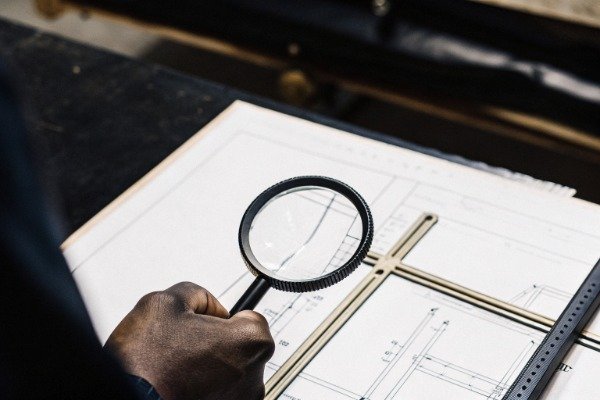
When we first established our local team in Vietnam to support US clients, we quickly realized that a supplier's glossy brochure rarely tells the full story. Finding a partner who can consistently deliver structural integrity requires digging deeper than just price per unit. You need to verify their technical backbone before a single spark flies. If you do not ask the right technical questions upfront, you risk receiving a container full of components with hidden porosity or weak joints that fail under load.
To vet Vietnamese welding suppliers effectively, ask for their specific Welding Procedure Specifications (WPS) and Procedure Qualification Records (PQR) for your material grade. Request proof of ISO 3834 or AWS certifications, verify their in-house Non-Destructive Testing (NDT) capabilities, and confirm if they own the raw material supply chain to ensure traceability.
Below, we break down the critical questions you must ask to filter out high-risk workshops and find professional manufacturing partners.
What specific welding equipment and technologies do they possess?
Walking through a workshop in Haiphong or Ho Chi Minh City, we often look past the shiny reception area directly at the machinery on the floor. The age, brand, and condition of the welding stations tell us immediately if a factory is ready for high-precision export work or if they are merely a general fabrication shop.
Ask suppliers for a detailed equipment list specifying brands, models, and maintenance logs. Confirm if they utilize robotic welding arms for high-volume consistency or rely on manual TIG/MIG stations. Crucially, verify if they possess calibrated positioning equipment to manage distortion during complex assembly welding.

Assessing Equipment Capabilities and Capacity
When you ask about equipment, you are not just looking for a list of machines; you are looking for evidence of investment in quality. In our experience sourcing custom parts, we have found that suppliers who invest in top-tier brands like Panasonic, OTC Daihen, or Lincoln Electric generally have a higher commitment to process stability than those using unbranded, aging equipment.
You need to determine if their technology matches your product requirements. For example, if you require high-volume production with identical weld beads, manual welding is often a liability due to operator fatigue and inconsistency. In this case, you must ask specifically about their robotic welding cells. Ask them: "What is the reach of your robot arm?" and "Do you design your own welding jigs in-house?" The ability to design and fabricate robust jigs is what allows a factory to utilize their equipment effectively.
Furthermore, welding causes heat distortion. A supplier might have excellent welding machines but lack the necessary positioners and clamping fixtures to keep the part within tolerance. You should ask about their secondary equipment: Do they have hydraulic straightening presses? Do they use modular welding tables (like Demmeler or Siegmund systems) or makeshift benches?
Maintenance is Key to Consistency
Equipment is only as good as its maintenance. We always ask to see the maintenance schedule. A welding machine with inconsistent voltage output will produce defects like lack of fusion or spatter. If a supplier cannot show you a log of when their machines were last calibrated, it is a major red flag.
defects like lack of fusion 1
Equipment Evaluation Matrix
| Equipment Type | Green Flag (Preferred) | Red Flag (Avoid) |
|---|---|---|
| Welding Power Sources | Digital inverters, brands like Lincoln, Miller, OTC, Panasonic. | Old transformer-based machines, rusted casings, no brand name. |
| Automation | 6-axis robots with coordinated positioners. | "We plan to buy robots soon" (but have none). |
| Fixturing | Dedicated modular tables, hydraulic clamps, custom-machined jigs. | Parts clamped to the floor, rusty scrap metal used as weights. |
| Post-Weld Treatment | Shot blasting machines, stress relief ovens, pickling baths. | Wire brushes only, no chemical cleaning area. |
Do they have in-house engineers for design and technical support?
We frequently send complex CAD files to potential partners, only to receive silence or blind acceptance of the drawing. In our daily operations, we value suppliers who push back with questions, as this indicates they have an engineering team capable of reviewing weld symbols and joint geometry rather than just guessing.
Determine if the supplier employs certified welding engineers (CWE) or merely production supervisors. Ask if they can interpret GD&T tolerances and suggest joint design improvements for manufacturability. A capable engineering team should provide DFM (Design for Manufacturing) feedback before tooling begins to prevent structural failures.

The Importance of the Welding Engineer
In Vietnam, many smaller workshops rely heavily on the skill of individual welders rather than engineering oversight. While the welders may be talented, this approach is not scalable for export quality. You need to ask: "Who creates the Welding Procedure Specification (WPS) for my project?"
If the answer is "the foreman," proceed with caution. A qualified Welding Engineer should be responsible for selecting the correct filler metal, determining the pre-heat and interpass temperatures, and defining the travel speed. This engineering input is vital for preventing issues like hydrogen cracking or warping, especially when dealing with high-strength steels or aluminum.
Design for Manufacturing (DFM) Capabilities
When we co-develop products with our suppliers, we expect them to offer DFM feedback. A true partner will look at your drawing and say, "If we change this fillet weld to a partial penetration groove weld, we can reduce distortion and save 15% on cost."
Ask your potential supplier: "Can you provide a DFM report highlighting potential welding issues before we start?" Their response will reveal their technical depth. If they simply quote the price without analyzing the geometry, they likely lack the engineering support to solve problems when they inevitably arise during production.
Communication and Problem Solving
Technical support also extends to communication. Since you are likely thousands of miles away, you need an engineer who can communicate technical issues in English. Misinterpretation of welding symbols (e.g., confusing a field weld with a shop weld, or a stitch weld with a continuous weld) is a common source of disputes.
Engineering Competency Checklist
- Software: Do they use SolidWorks, AutoCAD, or Catia? Can they open your native 3D files?
- Standards: Are they familiar with the specific code you are using (e.g., AWS D1.1 for structure, ASME Section IX for pressure vessels)?
- Process: Do they have a formal process for Engineering Change Orders (ECO)?
What is their standard lead time for prototype versus mass production?
Our logistics team in Singapore knows that a promised delivery date is often just a placeholder if the factory lacks a robust scheduling system. We have learned to distinguish between optimistic sales estimates and realistic production timelines based on actual capacity planning and material availability.
Request a breakdown of lead times separating raw material procurement, tooling fabrication, and actual welding production. Ask how they handle capacity surges and if they offer a "fast-track" option for prototypes. Reliable suppliers should provide a Gantt chart showing critical path milestones rather than a vague delivery week.

Deconstructing the Lead Time
"Lead time" is a vague term. When we source parts, we force suppliers to break it down. In Vietnam, raw material procurement can sometimes take longer than the actual manufacturing, especially for specialized steel grades that might need to be imported from Japan, Korea, or China.
You should ask: "Do you stock this material, or do you buy it per order?" If they buy per order, ask for the mill's lead time. We have seen projects delayed by weeks simply because the supplier didn't account for the shipping time of the raw steel.
The Prototype Gap
There is often a massive disconnect between how a factory handles a sample and how they handle a container load. A sample might be welded by their best master welder in a dedicated room, resulting in a perfect part in 10 days. However, mass production might be done by junior welders on a different line.
Ask specifically: "What is the lead time for T1 samples, and does this include the time for fixture fabrication?" You need to know if they are hand-welding the prototype (which gives you false hope about quality and speed) or if they are building the production jig first.
Managing Delays and Capacity
Every factory faces delays. The difference lies in how they manage them. Ask the supplier: "What is your current capacity utilization rate?" If they are running at 95% capacity, any small hiccup will cause your order to be late. We prefer suppliers operating at 70-80% capacity, as they have the buffer to handle rush orders or rework without destroying the schedule.
Typical Lead Time Breakdown (Example for Custom Welding Project)
| Stage | Typical Duration | Key Questions to Ask |
|---|---|---|
| Material Procurement | 1–3 Weeks | Is the material standard stock or special order? |
| Fixture/Jig Design & Build | 2–4 Weeks | Will you use temporary or permanent fixtures for samples? |
| Sample Production (T1) | 1–2 Weeks | Is NDT included in this timeline? |
| Mass Production | 4–6 Weeks | What is your daily output capacity? |
| Surface Treatment | 1 Week | Is this done in-house or outsourced? |
Can they provide proof of ISO or AWS certifications immediately?
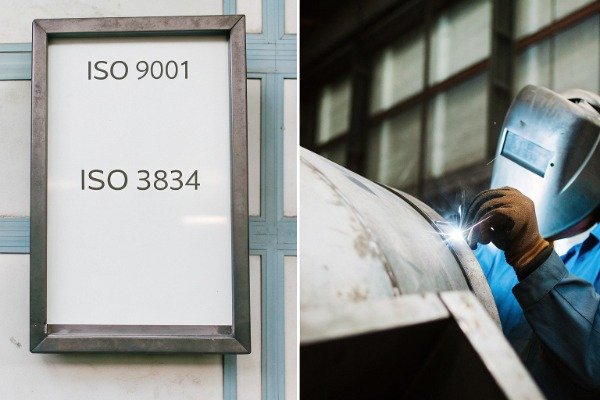
During our supplier audits, we often see framed certificates on the wall that expired three years ago or apply to a completely different scope of work. We insist on seeing current, valid documentation because a lapse in certification usually signals a deeper lapse in process control and quality management systems.
ASME Section IX 2
Demand digital copies of valid ISO 3834 (Quality Requirements for Fusion Welding) and ISO 9001 certificates before negotiating. Verify that individual welders hold current AWS D1.1 or ASME IX qualifications relevant to your specific metal thickness and position. Authentic certifications must be traceable to an accredited third-party auditor.
Facility Certifications vs. Individual Qualifications
It is crucial to understand the difference between the factory's certification and the welder's qualification. A factory might have ISO 9001, which is a general quality management standard, but that does not mean they know how to weld.
SolidWorks 4
For welding specifically, you should ask for ISO 3834. This standard is specific to fusion welding of metallic materials and covers everything from technical review to personnel and equipment. If a Vietnamese supplier has ISO 3834, it is a strong indicator of competence.
However, the facility certification doesn't hold the torch. You must ask: "Can I see the Welder Performance Qualification (WPQ) records for the staff who will work on my project?" A welder qualified for flat fillet welds is not necessarily qualified for vertical groove welds. We often request a "welder continuity log" to ensure their certifications haven't lapsed due to inactivity.
The "Paperwork" of Quality: WPS and PQR
In the welding world, if it isn't documented, it didn't happen. You must ask for two specific documents:
GD&T tolerances 5
- WPS (Welding Procedure Specification): The "recipe" for the weld (amps, volts, speed, filler metal).
- PQR (Procedure Qualification Record): The proof that the recipe works, backed by destructive testing results.
If a supplier cannot produce a PQR for a similar joint configuration to yours, they are essentially guessing. We have seen cases where suppliers used a generic WPS that didn't match the material thickness, leading to cold lap defects that were only discovered after the parts arrived in the US.
calibrated 6
Verification of NDT (Non-Destructive Testing)
Certifications usually mandate a certain level of testing. You need to ask what NDT methods they perform in-house versus what they outsource.
robotic welding cells 7
- Visual Inspection (VT): Every weld should be visually inspected. Ask if their inspectors are certified (e.g., AWS CWI or CSWIP).
- Penetrant Testing (PT) / Magnetic Particle (MT): Essential for detecting surface cracks.
- Ultrasonic (UT) / Radiographic (RT): Necessary for detecting internal defects in critical structural welds.
If they outsource RT or UT, ask for the name of the third-party lab and their accreditation.
raw material supply chain 8
Certification Verification Table
| Document | Purpose | What to Check |
|---|---|---|
| ISO 9001:2015 | General Quality Management | Expiry date and scope (does it include manufacturing?). |
| ISO 3834-2 | Comprehensive Quality for Welding | This is the gold standard for welding shops. |
| AWS D1.1 / ASME IX | Welding Code Compliance | Ensure it matches your product's industry (Structure vs. Pressure). |
| WPQ (Welder Quals) | Individual Skill Verification | Check the welder's ID, qualified positions (1G, 2G, 3G, etc.), and expiry. |
| Mill Test Reports (MTR) | Material Traceability | Match heat numbers on the steel to the paper report. |
Fazit
Sourcing welding parts from Vietnam offers significant cost advantages and access to a rapidly modernizing skilled workforce, but it is not without risks. The difference between a successful partnership and a supply chain nightmare often lies in the questions you ask during the first week of contact.
Non-Destructive Testing (NDT) 9
By rigorously vetting their equipment, verifying engineering support, dissecting lead times, and auditing their certifications, you move beyond the role of a buyer and become a strategic partner. At DEWIN, we have found that high-quality suppliers respect these questions because it shows them you understand the process. Do not settle for vague assurances—demand the data, the documents, and the details.
ISO 3834 10
Footnotes
1. Technical guide from a major manufacturer on identifying and fixing weld defects. ↩︎
2. Official standard page for ASME Boiler and Pressure Vessel Code Section IX. ↩︎
3. Official American Welding Society certification information page. ↩︎
4. Official site of the CAD software mentioned in the engineering checklist. ↩︎
5. General overview of Geometric Dimensioning and Tolerancing concepts. ↩︎
6. US government authority on measurement standards and calibration protocols. ↩︎
7. Major manufacturer page detailing robotic welding systems and capabilities. ↩︎
8. US government resource regarding supply chain management and resilience. ↩︎
9. University research center specializing in non-destructive evaluation technologies. ↩︎
10. Official standard page for ISO 3834 quality requirements for fusion welding. ↩︎

 English
 Español de México
 Deutsch
 Français
 Русский
 العربية