
I once visited a factory that claimed to have all machines—but some crucial ones were missing or broken. It cost me weeks to recover.
When importing custom metal parts from Vietnam, you must inspect every vital production facility — from machining to packaging — to ensure your supplier truly has the full capability to meet specifications, quality, and delivery expectations.
If you skip or skim these inspections, hidden gaps in tooling, finishing, or quality labs will surface later—at your cost. Let me walk you through exactly what to check, why each is critical, and how it links to your risk.
Which machinery is essential for metal custom parts?
I once endorsed a supplier because they showed “CNC machines” in brochures. On the shop floor, half were idle, poorly maintained, or lacked the right axes. That discrepancy taught me the hard way to verify machinery in person.
For custom metal parts, essential machinery includes multi-axis CNC machining centers 1, grinders, EDMs, milling & turning centers, drills, and possibly laser cutting or waterjet units — you must inspect type, condition, calibration, maintenance, and utilization.
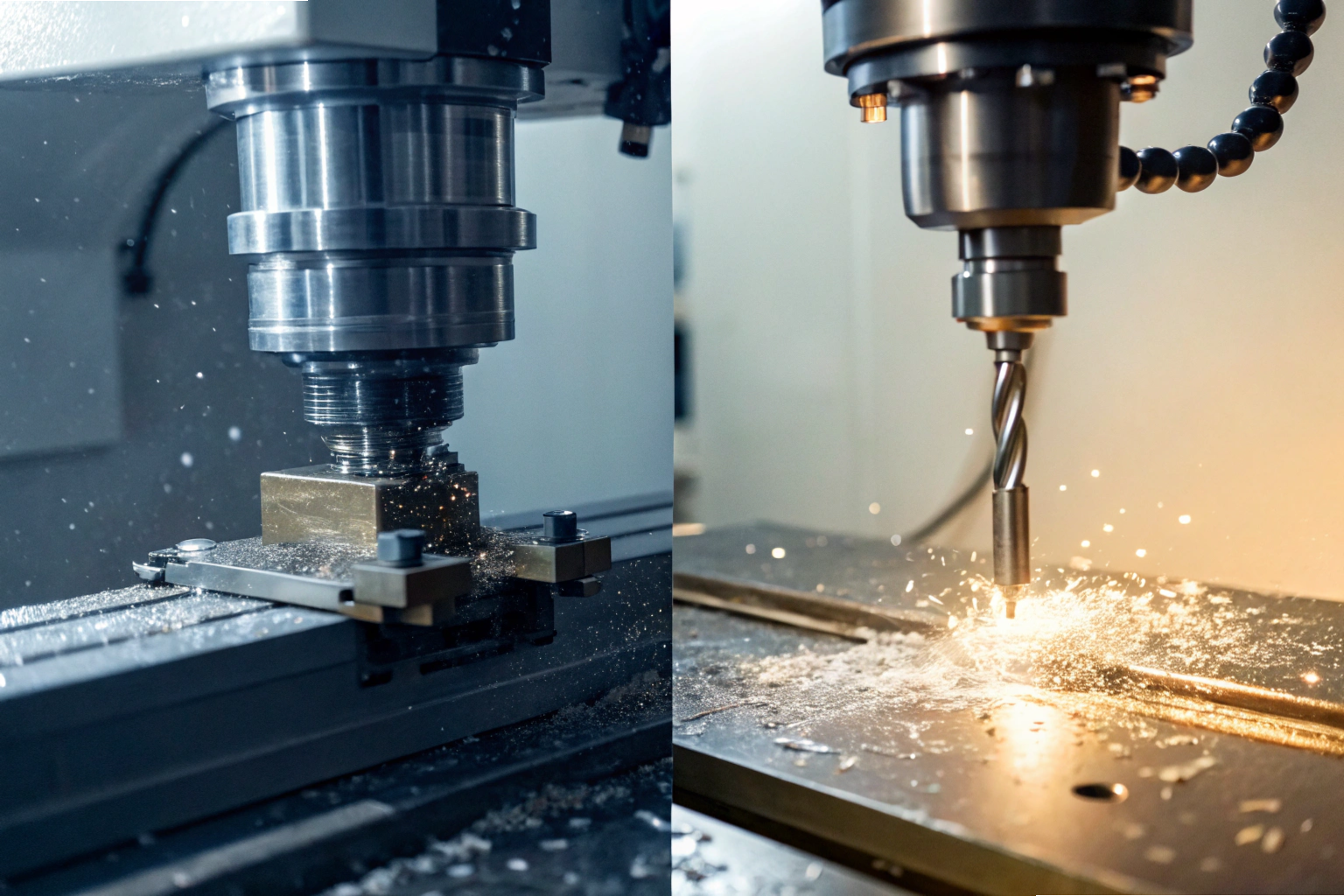
Common Machinery Types to Inspect
| Machinery | Zweck | Was zu inspizieren ist |
|---|---|---|
| CNC Mills (3, 4, 5-axis) | Precision cutting and shaping | Axes, calibration, spindle status |
| CNC Lathes | Turning cylindrical parts | Tool changers, live tooling |
| EDM (Wire/Sinker) | Complex geometry, hard metals | Dielectric fluid, wire control |
| Grinders | Flatness, surface finish | Vibration, balance, wear |
| Drilling/Tapping Centers | Holes and threading | Drill alignment, RPM range |
| Laser/Plasma Cutters | Sheet part profiling | Beam control, focus, table wear |
Make sure these machines are not only present but in use, maintained, and appropriate for your part specs.
How important are tooling and mold-making facilities?
I once dealt with a supplier who subcontracted all tooling. When a tool failed mid-run, they couldn’t repair it fast, and production stalled. That delay taught me to prefer suppliers who can at least maintain or partially produce their own tooling on site.
Tooling, jig, mold, and fixture workshops are critically important — they allow fast adjustments, consistent positioning, quicker turnaround, and lower external dependencies. You must inspect their design, capability, repair setup, and spare tool stock.
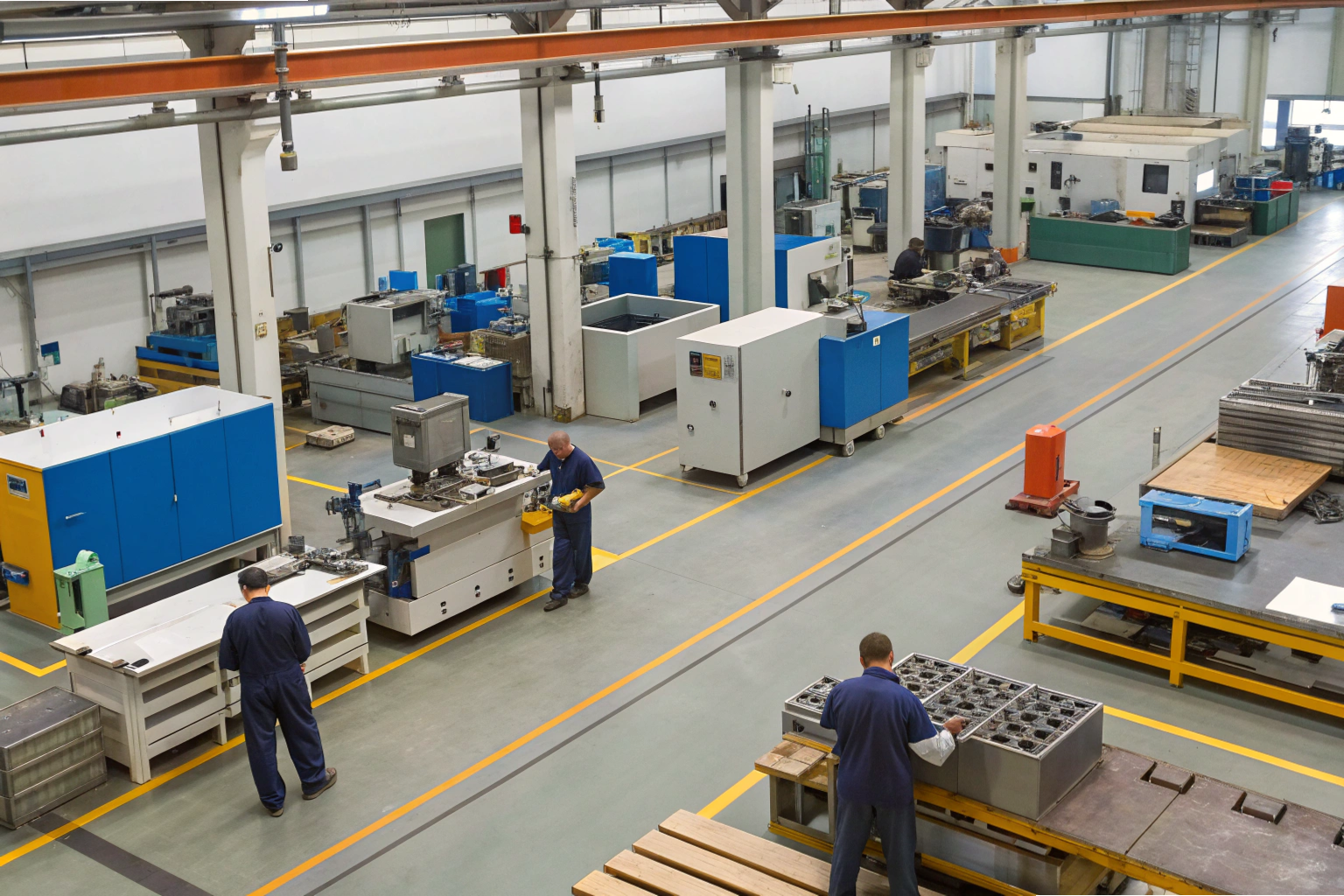
Tooling Capabilities You Should Verify
| Area | Fähigkeit | Was zu überprüfen ist |
|---|---|---|
| CAD/CAM Design | In-house tool and jig design | 3D CAD/CAM software 2 |
| Tool Fabrication | In-house manufacturing of fixtures/dies | Milling, grinding, EDM |
| Repair & Maintenance | On-site quick fix capacity | Spare parts, downtime logs |
| Testing Fixtures | Inspection support | Jigs for dimensional control |
| Dokumentation | Tool life tracking | Repair logs, preventive schedules |
A factory with internal tooling keeps control in its hands, reducing both cost and time when you need changes or maintenance.
What surface treatment labs must be inspected?
Once machining is done, many parts need plating, coating, anodizing, or passivation. I once received parts that were machined perfectly, but the plating cracked off because their plating bath conditions were poor. That taught me to inspect surface treatment lines carefully.
You must inspect all surface treatment laboratories in factory: plating, coating, anodizing, powder coating, passivation, and associated testing labs — especially for bath control, environmental management, waste treatment, and uniformity.
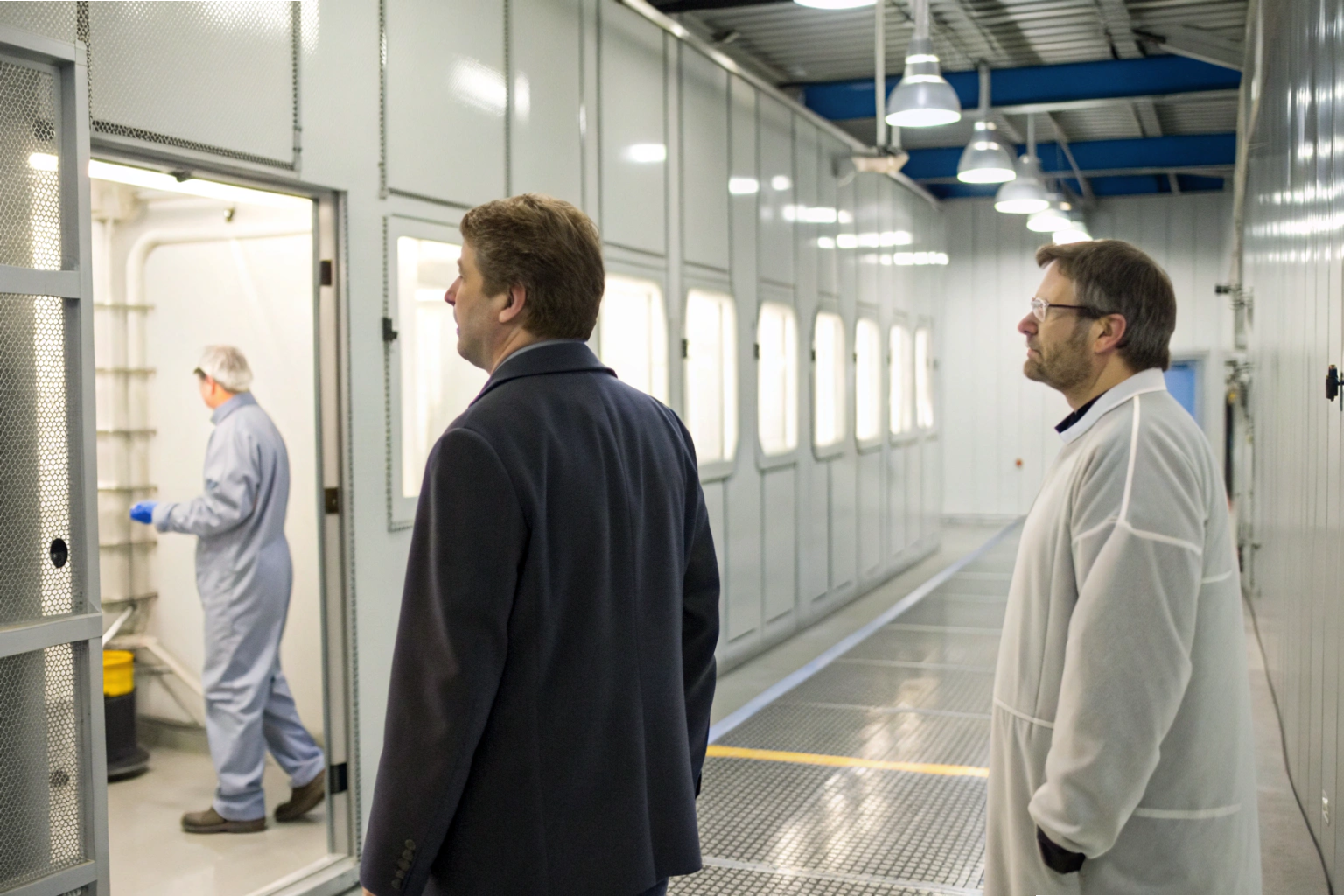
Surface Treatment Zones to Inspect
| Prozess | Equipment to Verify | Key Risks if Ignored |
|---|---|---|
| Electroplating | Bath tanks, temperature & current control | Flaking, uneven coating |
| Pulverbeschichtung | Spray booths, curing ovens | Peeling, poor adhesion |
| Eloxieren | Voltage control, rinse systems | Color variation, porosity |
| Passivation | Acid baths, time/temp control | Rust, short service life |
| Testing Lab | Thickness testers, salt spray chambers 3 | No data to prove quality |
Surface finish affects appearance, corrosion resistance, and even part performance—never skip this part of the inspection.
Why verify finishing and packaging facilities?
Even with perfect machining and coating, parts can be damaged en route by moisture, shock, or contamination. I once received a batch with fine threads full of metal dust because the factory packed loosely. That loss taught me never to overlook final facilities.
Finishing (deburring, polishing, cleaning) and packaging areas deserve inspection — to ensure parts are handled, protected, labeled, and shipped safely. Poor finishing or packing can trash value and reputation.

Final Stage Facilities to Review
| Area | Wichtigkeit | Was zu inspizieren ist |
|---|---|---|
| Deburring/Polishing | Prevents sharp edges and cosmetic flaws | Consistency, manual vs automated |
| Reinigung | Removes grease, chips | Ultrasonic cleaning systems 4 |
| Packaging Station | Prepares parts for export | Foam, bags, desiccants, label accuracy |
| Storage & Staging | Holds finished goods before shipping | Racks, climate control, order segregation |
| Export Prep | Shipping document readiness | Carton labeling, palletization, ISPM-15 wood compliance 5 |
Proper finishing and packaging are the last gate before parts reach your customer—your quality reputation depends on it.
Fazit
Without inspecting the core production facilities — machines, tooling, surface treatment, and packaging — you’re flying blind. These areas determine if your supplier can deliver the consistent, compliant, and damage-free custom metal parts you need from Vietnam.
Footnotes
1. Haas CNC explains machining centers for precision parts. ↩︎
2. Autodesk overview of CAD/CAM design tools. ↩︎
3. ASTM salt spray testing standard for coatings. ↩︎
4. Kaijo guide to ultrasonic cleaning systems. ↩︎
5. IPPC ISPM-15 wood packaging compliance guide. ↩︎
6. ISO 14001 framework for environmental management in plating labs. ↩︎
7. Bureau Veritas inspection services for manufacturing audits. ↩︎
8. NIST manufacturing standards relevant to machining and inspection. ↩︎
9. QIMA factory audit checklist for supplier verification. ↩︎
10. Flexport packaging and shipping guide for export prep. ↩︎

 English
 Español de México
 Deutsch
 Français
 Русский
 العربية