When our QC team in Vietnam flags a non-conforming stamping sample, we know the buyer feels immediate pressure. You need parts for assembly, but the dimensions are out of tolerance. )
Communicate immediately by submitting a formal Non-Conformance Report (NCR) containing high-resolution photos and specific measurement data. Request a collaborative technical review to discuss tolerance stack-ups and require a Root Cause Analysis (RCA) to determine if tooling modifications or process adjustments are necessary for the improvement plan.
Let’s break down the specific steps to turn a failed sample into a successful production run without losing valuable time or damaging the supplier relationship.
What technical details should I include in my feedback report for failed stamping samples?
We often see vague emails from clients stating “it doesn’t fit,” which delays our engineering team’s ability to fix the die. Precise data is the only way to move forward.
Your feedback report must include a side-by-side comparison of the measured dimensions against the original CAD specifications. Include clear photos of the defect, specific reference points on the drawing, and a “die-strip” analysis request to identify where in the progressive sequence the failure occurred.

When you are dealing with custom stamping parts, the quality of your feedback directly dictates the quality of the correction. A stamping die is a complex, high-precision tool. If you provide generic feedback, the supplier has to guess the solution. In our daily operations, we have found that the most effective feedback reports are those that speak the language of the press operator and the toolmaker.
The Anatomy of a Professional NCR
A standard email is not enough. You need a formal Non-Conformance Report (NCR). This document serves as the “single source of truth” for the issue. It eliminates translation errors and ambiguity. The report should not just list what is wrong; it must contextualize the error.
For example, if a hole is misaligned, simply stating “hole position wrong” is insufficient. Is it wrong relative to the edge? Relative to another hole? Is the hole shape deformed? These details tell the toolmaker if the issue is a punch misalignment, a feeding error, or material stretching.
We recommend structuring your technical data in a clear, tabular format within your report. This allows the supplier’s engineering team to quickly compare their internal measurement data with your findings.
Table 1: Essential Data Points for Stamping Feedback
| Data Category | What to Include | Why It Matters to the Toolmaker |
|---|---|---|
| Visual Evidence | High-res photos with red circles around defects. | Overcomes language barriers; shows the “nature” of the defect (e.g., burr vs. dent). |
| Measurement Data | Target dimension, Tolerance, Actual value (x5 samples). | Shows if the error is consistent (tooling issue) or random (process/stability issue). |
| Reference Datum | Screenshot of the drawing highlighting the datum used. | Ensures both sides are measuring from the same starting point. |
| Die Strip Request | Request a photo of the metal strip skeleton. | Reveals exactly how the metal flows and deforms between stations in the progressive die. |
The Importance of the Die Strip
One specific technical detail you should always ask for is the “die strip” or “skeleton.” This is the scrap metal webbing left over after the part is punched out.
In our experience, the strip tells the true story of the process. It shows if the material is feeding smoothly or if it is getting stuck (piloting errors). It shows if the metal is stretching unevenly before the final cut. By asking for a photo or analysis of the die strip, you force the supplier to look at the process, not just the finished part. This often reveals root causes that measuring the part alone will miss, such as improper lubrication or worn pilot pins.
How do I negotiate re-tooling costs if the initial stamping parts don’t meet specifications?
Clients frequently worry about hidden costs when tools need modification. In our projects, we clarify liability upfront, but grey areas often arise during the testing phase regarding who pays.
Negotiating re-tooling costs depends on the root cause of the failure. If the parts deviate from the agreed drawings, the supplier must absorb the modification costs. However, if you change the design or tolerances after the T1 trial, you are responsible for the engineering change fees.

Money is always a sensitive topic in custom manufacturing. When a sample fails, the immediate question is: “Who pays to fix the die?” The answer lies in the contract and the technical drawings. To negotiate effectively, you must separate “correction” from “modification.”
Defining Responsibility: Correction vs. Modification
A “correction” is required when the part does not match the print. This is the supplier’s responsibility. They promised a part that meets the specification, and if their tool cannot produce it, they must fix the tool at their own expense. This includes welding, grinding, wire-cutting, or even rebuilding die inserts.
A “modification” occurs when the part meets the print, but the part does not work in your assembly. Perhaps the design was too tight, or you forgot to account for paint thickness. In this case, the drawing was the law, and the supplier followed it. Therefore, you must pay for the engineering change.
The “Grey Area” of Stamping Tolerances
Stamping involves complex physics, particularly “springback.” This is when the metal tries to return to its original shape after bending. Simulation software is good, but not perfect. Sometimes, a supplier will cut the tool exactly to the CAD data, but the part comes out slightly off due to material properties.
In these cases, we often see disputes. The supplier claims they followed the design; the buyer claims the part is useless. To avoid this standoff, we recommend a “Safe Steel” approach during the negotiation phase.
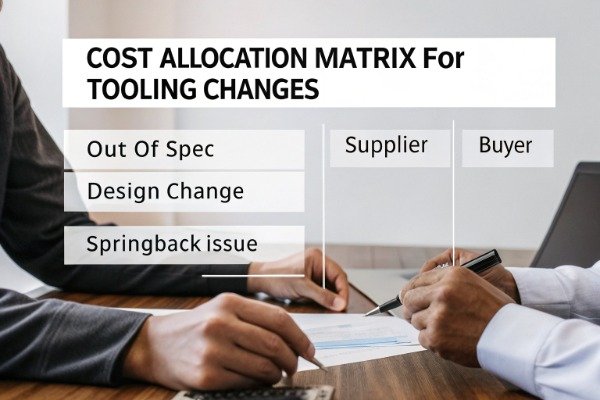
Table 2: Cost Allocation Matrix for Tooling Changes
| Scenario | Root Cause | Who Pays? | Negotiation Strategy |
|---|---|---|---|
| Out of Spec | Tooling dimensions incorrect or worn. | Lieferant | Refer to the signed drawing and QC report. Be firm. |
| Design Change | Buyer updates CAD after T1 trial. | Buyer | Ask for a breakdown of hours (machining vs. assembly) to verify costs. |
| Springback Issue | Material behavior differs from simulation. | Negotiable | often shared 50/50 if not defined, or Supplier fixes if they guaranteed the outcome. |
| Material Change | Buyer changes material grade/thickness. | Buyer | New material requires different clearances; this is a major re-tooling event. |
The “Steel Safe” Strategy
When negotiating, ask if the tool was cut “steel safe.” This means the toolmaker left extra metal on the die inserts in critical areas. Removing metal (grinding) is cheap and fast. Adding metal (welding) is expensive, slow, and risks cracking the tool.
If the supplier did not cut the tool steel safe and now needs to weld it to fix a dimension, they might try to pass that cost to you. You can push back by arguing that a competent toolmaker should have anticipated the adjustment. By understanding these terms, you protect your budget and force the supplier to take professional responsibility.
What is the standard timeline for receiving corrected stamping part samples after a failure?
Waiting for T2 samples is frustrating. We push our floor managers to prioritize rework, but physics dictates the schedule. Rushing leads to broken dies and further delays.
Die clearance 1
The standard timeline for corrected samples ranges from one to three weeks, depending on the modification complexity. Simple grinding adjustments take a few days, while welding and re-machining hardened tool steel requires significantly more time to ensure the die integrity remains intact.
Time is money, but steel is stubborn. When a client asks us, “Can you fix this by tomorrow?” the answer is often no. It is crucial to understand the physical process of reworking a progressive die so you can set realistic expectations and pressure the supplier appropriately without causing them to cut corners.
8D Report 3
The Rework Cycle
A progressive die is not a single block of metal. It is a heavy assembly containing hundreds of components—punches, pilots, springs, and die plates. To change even one dimension, the process is labor-intensive.
- Disassembly: The die must be removed from the press (which requires a forklift or crane) and opened up on a workbench.
- Machining: The specific insert must be removed. If metal needs to be removed, it goes to a grinder or CNC machine. If metal needs to be added, it must be welded.
- Heat Treatment: Welding softens the steel. It may need to be heat-treated again to regain hardness, or it will wear out in a few hundred strokes.
- Re-assembly and Spotting: The die is put back together. The “spotting” process ensures the top and bottom halves align perfectly.
- Trial Run: The die goes back into the press for a new setup and trial run.
Why Rush Orders Fail
If you force a supplier to deliver in 2 days when the job requires 5, they will skip steps. They might skip the heat treatment after welding. This results in a “soft” tool. The samples might look good (T2 samples pass), but the tool will degrade rapidly during mass production, leading to a disaster in shipment #2 or #3.
Table 3: Typical Rework Timelines for Stamping Dies
| Modification Type | Beschreibung | Estimated Timeline | Risk of Rushing |
|---|---|---|---|
| Dimension Adjustment (Minus Metal) | Grinding a punch or die opening to make a hole larger or a flange shorter. | 2 – 4 Days | Low risk; standard procedure. |
| Dimension Adjustment (Plus Metal) | Welding and re-machining to make a hole smaller or move a feature. | 5 – 10 Days | High risk of cracking or soft tooling if heat treat is skipped. |
| Bending Angle Correction | Adjusting the form block to correct springback angles. | 3 – 7 Days | Medium risk; requires trial and error. |
| Progression Change | Moving the pitch or changing the strip layout. | 14 – 21 Days | Major surgery; essentially a partial rebuild. |
By using this table, you can evaluate the supplier’s promised timeline. If they promise a major welding repair in 2 days, be suspicious. It is better to wait 7 days for a robust tool than to receive good samples from a ruined tool.
poka-yoke 4
How can I request a root cause analysis from the supplier to prevent future defects?
We train our engineers to look beyond the symptom. If you just ask for a fix without understanding the cause, the defect will inevitably return during mass production.
Corrective and Preventive Action 5
Request a formal Root Cause Analysis using the 5 Whys or Fishbone diagram method. Ask the supplier to investigate specific variables like material grain direction, lubrication consistency, and press tonnage to ensure the fix addresses the fundamental process failure, not just the symptom.

A bad supplier fixes the part; a good supplier fixes the process. In our Singapore HQ, we review hundreds of CAPA (Corrective and Preventive Action) reports. The most useless response we see is “worker training.” Humans make mistakes. You need a process that prevents mistakes. To get this, you must demand a rigorous Root Cause Analysis (RCA).
measurement data 7
Moving Beyond “Operator Error”
When you request an RCA, explicitly state that “operator error” is not an acceptable root cause. You want to know warum the operator was able to make the error. Was there no sensor to detect the misfeed? Was the jig not “poka-yoke” (foolproof)?
For stamping specifically, the root cause often hides in the variables that change from run to run. If the T1 samples failed, was it because the steel coil had a different hardness than the prototype material? Was the grain direction of the sheet metal oriented differently, affecting the bend strength?
Root Cause Analysis (RCA) 8
The 8D Report Standard
We recommend asking for an 8D Report. This is a global standard in the automotive and aerospace industries. It forces the supplier to follow eight disciplines, moving from immediate containment (quarantining bad parts) to permanent corrective action.
When reviewing their analysis, look for these specific stamping variables:
- Lubrication: Was the oil film consistent? Lack of oil causes galling and dimension changes.
- Press Tonnage: Did the press hit the bottom of the stroke with consistent force?
- Slug Control: Did a scrap piece of metal (slug) get pulled back up onto the die surface, creating a dent?
Table 4: Common Stamping Defects and Potential Root Causes
| Defect Symptom | Lazy Root Cause (Reject This) | Deep Root Cause (Accept This) |
|---|---|---|
| Burrs on Edges | “Tool is dull, we sharpened it.” | “Die clearance was set to 10% instead of 5% for this material thickness.” |
| Inconsistent Bends | “Worker didn’t check.” | “Rolling direction of the coil was not specified, causing variable springback.” |
| Surface Dents | “Dirty die.” | “Vacuum system failed to remove slugs; slug retention groove design is insufficient.” |
| Cracked Parts | “Bad material.” | “Bend radius is smaller than the minimum recommendation for this material grade.” |
By challenging the supplier with these technical questions, you signal that you understand the process. This keeps them honest and ensures that the “improvement plan” is actually an engineering upgrade, not just a quick patch.
tolerance stack-ups 9
Fazit
Effective communication turns failed samples into robust production processes. By demanding data, clarifying costs, and enforcing root cause analysis, you ensure your custom parts meet the highest standards every time.
Non-Conformance Report (NCR) 10
Footnotes
- Manufacturer technical data explaining the importance of proper tooling clearance. ↩︎
- Technical product information from a major industrial lubricant manufacturer. ↩︎
- Overview of the 8D problem-solving methodology used in automotive industries. ↩︎
- General background information on the concept of mistake-proofing in manufacturing. ↩︎
- Official government guidance on quality system regulations regarding corrective actions. ↩︎
- Technical guide from a major steel manufacturer explaining material behavior during bending. ↩︎
- Government authority (NIST) on metrology and measurement standards. ↩︎
- Authoritative definition and methodology from the American Society for Quality. ↩︎
- Educational resource from MIT explaining the engineering principles of tolerance accumulation. ↩︎
- Links to the international standard (ISO 9001) governing non-conforming outputs. ↩︎

 English
 Español de México
 Deutsch
 Français
 Русский
 العربية