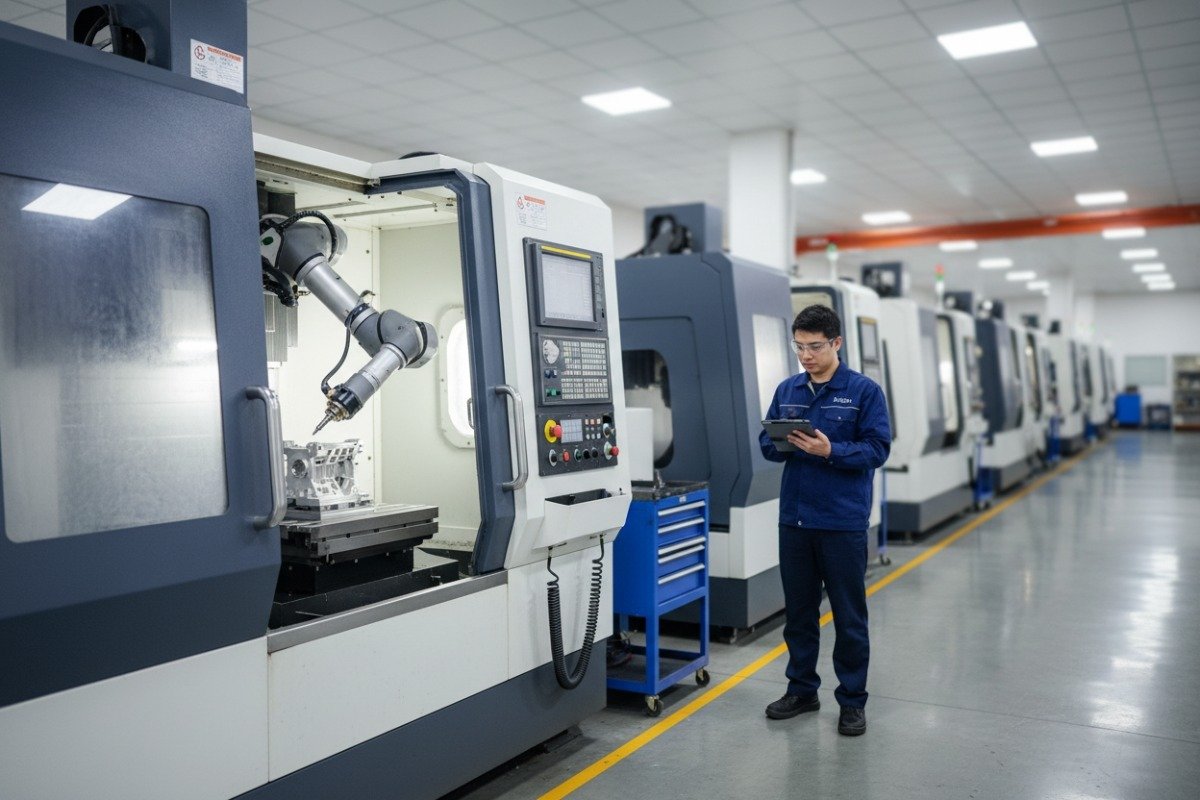
Over the past decade, our team has helped dozens of U.S. wholesale buyers source complex 5-axis CNC parts 1 from Asia. The process is not simple. One wrong supplier choice can cost you months and thousands of dollars.
Sourcing 5-axis CNC machining from China for wholesale requires vetting suppliers for certifications and equipment, setting strict quality control protocols, negotiating volume-based pricing, and planning logistics well in advance. A structured approach reduces risk and ensures consistent, high-precision parts delivery.
The questions we hear most from purchasing managers are always the same: How do I find a good partner? How do I protect quality? How do I get the best price? And how do I ship large orders without headaches? Let's break each one down.
How Do I Find a Reliable 5-Axis CNC Machining Partner in China for My Wholesale Needs?
When our sourcing engineers start a new 5-axis project, the first step is never placing an order. It is building a shortlist of qualified suppliers and then stress-testing each one before committing a single dollar.
To find a reliable 5-axis CNC machining partner in China, start by searching B2B platforms like Alibaba and Global Sources, then verify certifications such as ISO 9001 or IATF 16949, audit their equipment and engineering team, request sample parts, and check references from existing international clients.

Finding a reliable supplier sounds straightforward. In practice, it is one of the hardest parts of the entire sourcing process. China has thousands of CNC machining shops. Many claim 5-axis capability. But not all of them actually own 5-axis machines. Some subcontract the work. Others have the machines but lack the programming expertise to handle complex geometries. Here is how we approach it.
Start with Platform Research
B2B platforms like Alibaba, Global Sources, and Made-in-China are good starting points. They let you filter by capability, location, and certification. But do not stop there. Cross-reference what you find on these platforms with the supplier's own website. Look for detailed machine lists, case studies, and engineering team profiles. A supplier that invests in its online presence usually invests in its operations too.
Verify Certifications and Equipment
Certifications tell you a lot. ISO 9001 2 is the baseline. If you are in automotive, look for IATF 16949 3. Aerospace buyers need AS9100. Medical device sourcing requires ISO 13485 4. Beyond certifications, ask for a machine list. You want to see brand names like DMG Mori 5, Mazak, Haas, or Fanuc. Ask how many 5-axis machines they operate and what their spindle hours look like.
| Zertifizierung | Branchenschwerpunkt | Was es Ihnen sagt |
|---|---|---|
| ISO 9001 | Allgemeine Fertigung | Grundlegendes Qualitätsmanagementsystem vorhanden |
| IATF 16949 | Automobilindustrie | Meets strict automotive quality standards |
| AS9100 6 | Luft- und Raumfahrt | Capable of aerospace-grade precision and traceability |
| ISO 13485 | Medizinprodukte | Compliant with medical device manufacturing regulations |
Request Samples and References
Never skip this step. Ask the supplier to machine a sample part from your actual drawing. Pay for it if needed. This tells you more than any sales pitch. Evaluate dimensional accuracy, surface finish, and how well they followed your specifications. At the same time, ask for two or three references from international buyers. Call or email those references. Ask about on-time delivery, communication quality, and how the supplier handles problems.
Führen Sie eine Werksprüfung durch
If the order value justifies it, visit the factory or hire a third-party auditor. Our team in Vietnam and China does this regularly. We look at shop floor organization, machine condition, tooling management, and how operators handle drawings. A clean, well-organized shop floor is a strong indicator of disciplined management.
Watch for Red Flags
Be cautious if a supplier is reluctant to share their machine list, avoids video calls showing the shop floor, or offers prices far below the market average. Extremely low prices often mean corners are being cut — either in material quality, machine time, or inspection rigor.
What Quality Control Standards Should I Look for When Sourcing Precision Parts from Chinese Manufacturers?
When we calibrate inspection plans for a new 5-axis project, we always start from the end — what tolerances does the final application demand, and what failure modes would be catastrophic for the buyer's customer?
Look for suppliers with documented quality systems including incoming material inspection, in-process SPC monitoring, CMM final inspection, and full PPAP documentation. Key standards include ISO 9001 at minimum, plus industry-specific certifications. The supplier should provide FAI reports, material certs, and dimensional inspection data with every shipment.
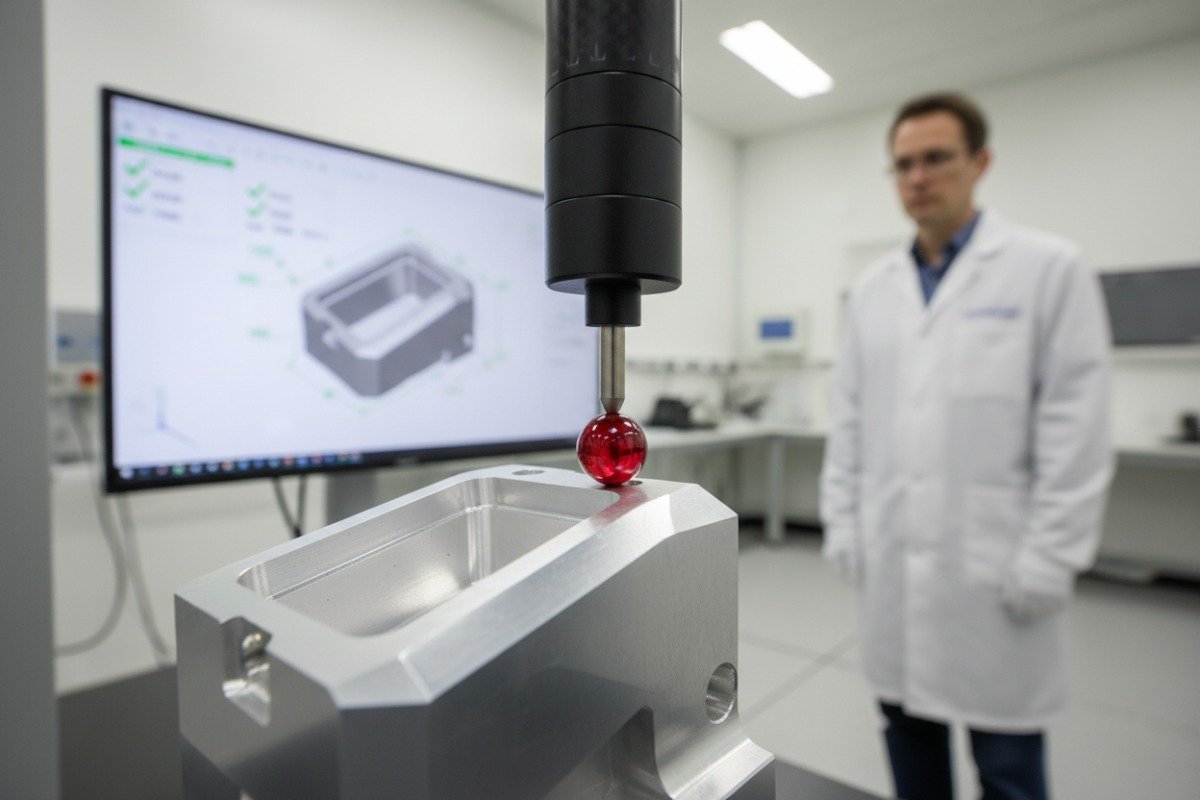
Quality control is where most sourcing relationships either succeed or fall apart. A supplier can have the best machines in the world, but without disciplined QC processes, you will get inconsistent parts. Here is what we look for and what you should demand.
Understand the QC Process Flow
A mature supplier follows a structured quality flow from raw material to shipment. This typically includes incoming material inspection, first article inspection (FAI), in-process checks, and final inspection before packing. Each stage should be documented. If a supplier cannot show you their QC flow chart, that is a warning sign.
| QC-Phase | Was passiert | Key Documents |
|---|---|---|
| Eingangsmaterialprüfung | Raw material verified against specs and certs | Material certificates, hardness test reports |
| Erstmusterprüfung (FAI) | First part measured against all drawing dimensions | FAI report (AS9102 format or equivalent) |
| In-Prozess-Prüfung | Operators check critical dimensions during production | SPC charts, in-process check sheets |
| Endkontrolle | 100% or AQL-based inspection before packing | CMM reports, dimensional inspection data |
| Inspektion vor dem Versand | Visual and packaging check before dispatch | Packing list, photos, shipping inspection report |
Demand CMM Inspection
For 5-axis machined parts, coordinate measuring machine (CMM) 7 inspection is essential. Manual measurement tools like calipers and micrometers are not sufficient for complex geometries and tight tolerances. Ask the supplier what CMM equipment they use. Brands like Zeiss, Hexagon, and Mitutoyo are industry standards. Request CMM reports with every shipment, not just the first article.
Insist on PPAP for Production Runs
If you are sourcing parts for automotive or other regulated industries, require a Produktionsprozess zur Teilefreigabe (PPAP) 8 submission. This includes dimensional results, material certifications, process flow diagrams, control plans, and capability studies. Even if your industry does not formally require PPAP, the discipline behind it ensures the supplier has thought through every step of production.
Set Clear Specifications Upfront
One of the biggest mistakes we see is buyers sending drawings without clear notes on critical dimensions, surface finish requirements, or material grades. Ambiguity leads to interpretation. Interpretation leads to non-conforming parts. Mark your critical dimensions clearly. Specify surface finish in Ra values 9. Call out material grade and heat treatment requirements explicitly. The more precise your input, the better your output.
Monitor Ongoing Quality
Quality is not a one-time event. It requires ongoing monitoring. Ask for inspection data with every shipment. Track defect rates over time. If you see a trend of increasing non-conformances, address it immediately. Our team conducts periodic audits even with long-standing suppliers because processes drift over time. People change. Tooling wears. Machines need recalibration. Continuous monitoring catches problems before they reach your warehouse.
How Can I Negotiate the Best Wholesale Pricing for My Complex 5-Axis CNC Projects?
Our commercial team has negotiated hundreds of 5-axis machining contracts across China and Vietnam, and the single biggest lesson is this: the lowest quote is almost never the best deal.
To negotiate the best wholesale pricing for 5-axis CNC projects, consolidate order volumes for leverage, provide complete and optimized drawings to reduce quoting uncertainty, request tiered pricing for different quantities, build long-term relationships for preferential rates, and always compare at least three qualified suppliers before committing.

Pricing in 5-axis CNC machining is driven by several factors: material cost, machine time, tooling, programming complexity, finishing, and inspection requirements. Understanding these cost drivers gives you real negotiating power. Here is how to approach it strategically.
Understand What Drives Cost
5-axis machining is more expensive than 3-axis work because the machines cost more, the programming is more complex, and the operators need higher skill levels. Material selection also has a huge impact. Titanium and Inconel cost far more to machine than aluminum or mild steel — not just because of material price, but because they wear tooling faster and require slower cutting speeds.
| Kostentreiber | Impact on Price | How to Optimize |
|---|---|---|
| Material type | High — exotic alloys cost 3–10x more to machine | Use standard alloys where performance allows |
| Part complexity | High — more axes of movement = more programming time | Simplify geometry where possible without sacrificing function |
| Toleranzen | Medium to High — tighter tolerances require slower cuts and more inspection | Apply tight tolerances only to critical features |
| Oberflächenbeschaffenheit | Medium — mirror polish costs much more than standard machined finish | Specify finish only where functionally required |
| Order volume | High — setup costs are amortized over more parts | Consolidate orders to increase batch size |
| Tooling and fixtures | Medium — custom fixtures add upfront cost | Design parts to use standard fixturing where possible |
Provide Complete, Optimized Drawings
Incomplete drawings lead to inflated quotes. Suppliers add a risk premium when specifications are unclear. Before sending an RFQ, make sure your drawings include all dimensions, tolerances, material callouts, surface finish requirements, and any special processing notes. If you can, have your engineer review the design for manufacturability. Removing unnecessary tight tolerances or simplifying a feature can cut machining time significantly.
Use Volume as Leverage
Volume is your strongest negotiating tool. If you can commit to annual volumes or blanket orders, most suppliers will offer better unit pricing. Even if you cannot guarantee exact quantities, providing a forecast helps the supplier plan capacity and raw material purchases, which translates into cost savings they can pass to you.
Get Multiple Quotes but Compare Apples to Apples
Always get at least three quotes. But make sure each supplier is quoting the same specifications. We have seen cases where the cheapest quote excluded surface finishing or used a lower-grade material. Line up the quotes side by side and compare material, machining, finishing, inspection, and packing costs separately. This reveals where the real differences are.
Build Relationships for Long-Term Value
In our experience working with Asian suppliers, relationship matters. A supplier who sees you as a long-term partner will prioritize your orders, offer better payment terms, and work harder to solve problems. Transactional buyers who constantly switch suppliers for a few percent savings often end up paying more in quality failures and delivery delays.
What Is the Best Way for Me to Manage Shipping and Logistics for Large CNC Machining Orders?
When we coordinate shipments from our partner factories to U.S. warehouses, the logistics planning starts the same day we confirm the production schedule — not after the parts are boxed and ready.
The best way to manage shipping for large CNC machining orders is to plan logistics during the quoting phase, choose the right freight mode based on urgency and volume, use proper packaging to prevent transit damage, work with experienced freight forwarders, and build buffer time into your delivery schedule for customs clearance and inspections.
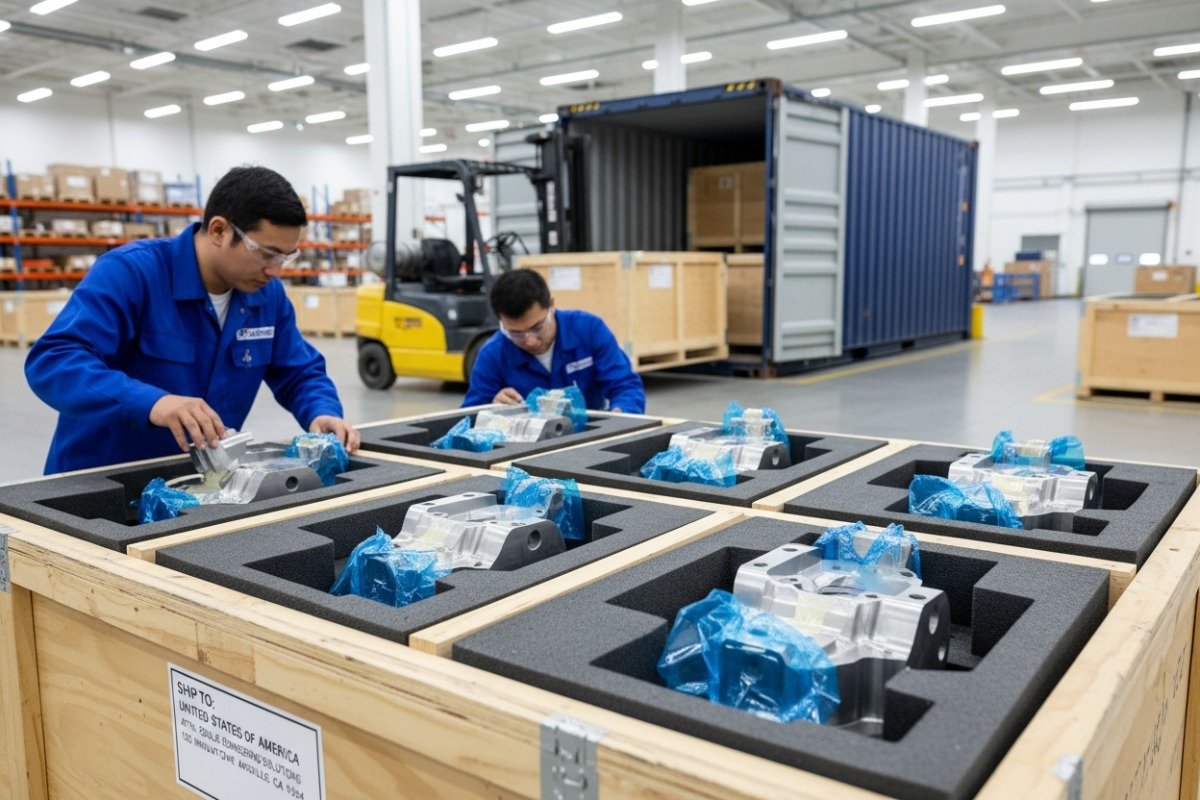
Logistics is the part of sourcing that purchasing managers often underestimate. A perfectly machined part is worthless if it arrives late, damaged, or stuck in customs. Here is how to manage shipping effectively for large 5-axis CNC orders.
Choose the Right Freight Mode
Your choice between sea freight, air freight, and express courier depends on order size, weight, urgency, and budget. For large wholesale orders of machined parts, sea freight is almost always the most cost-effective option. Air freight makes sense for urgent orders or lightweight, high-value components. Express courier is best for samples and small prototype batches.
| Frachtart | Typical Transit Time (China to U.S.) | Am besten für | Kostenstufe |
|---|---|---|---|
| Sea freight (FCL) | 25–35 Tage | Large, heavy orders filling a container | Niedrig |
| Sea freight (LCL) | 30–45 Tage | Medium orders not filling a full container | Niedrig bis mittel |
| Luftfracht | 5–10 Tage | Urgent or high-value, lightweight parts | Hoch |
| Express courier (DHL, FedEx) | 3–7 Tage | Samples, prototypes, small batches | Sehr hoch |
Plan Packaging Carefully
CNC machined parts — especially precision 5-axis components — are vulnerable to damage during transit. Surface scratches, dings, and corrosion can turn good parts into scrap. Require your supplier to use proper packaging: individual part wrapping, foam inserts or custom trays, VCI (vapor corrosion inhibitor) paper or bags for steel and iron parts, and sturdy outer cartons or wooden crates for heavy shipments. Specify packaging requirements in your purchase order. Do not leave it to the supplier's discretion.
Work with a Reliable Freight Forwarder
A good freight forwarder handles booking, documentation, customs clearance, and last-mile delivery. They also help you navigate tariff classifications, duties, and import regulations. If you are importing CNC parts regularly, establish a relationship with a forwarder who specializes in industrial goods from Asia. They will know the common pitfalls and how to avoid them.
Build Buffer Time into Your Schedule
International shipping is unpredictable. Port congestion, weather delays, customs holds, and documentation errors can all add days or weeks to your timeline. We always recommend building at least two weeks of buffer time into your delivery schedule. If you promise your customer delivery in 12 weeks, plan for the parts to arrive at your warehouse by week 10. This buffer protects your reputation and gives you time to handle any inspection or rework needs before forwarding to your end customer.
Manage Documentation and Customs Compliance
Make sure your supplier provides all required export documents: commercial invoice, packing list, bill of lading or airway bill, material certificates, and any certificates of origin needed for preferential tariff treatment. Incorrect or incomplete documentation is one of the most common causes of customs delays. Review documents before shipment, not after the container is on the water.
Consider Incoterms Carefully
Das Incoterm 10 you choose defines who is responsible for shipping costs, insurance, and risk at each stage. FOB (Free on Board) is common for sea freight — the supplier delivers to the port and you handle the rest. CIF (Cost, Insurance, and Freight) means the supplier arranges shipping and insurance to your destination port. For large ongoing orders, DDP (Delivered Duty Paid) can simplify your operations, but it usually costs more because the supplier builds in a margin for logistics management. Choose the Incoterm that matches your logistics capability and risk tolerance.
Fazit
Sourcing 5-axis CNC machining from China is a powerful strategy for wholesale businesses — but only when you vet suppliers thoroughly, enforce strict quality control, negotiate smartly, and plan logistics early.
Footnotes
1. Explains the fundamentals and applications of 5-axis CNC machining. ↩︎
2. Provides comprehensive information on the ISO 9001 quality management system standard. ↩︎
3. Official information regarding the IATF 16949 automotive quality management standard. ↩︎
4. Details the ISO 13485 standard for quality management systems in medical devices. ↩︎
5. Official website of a leading manufacturer of CNC machine tools. ↩︎
6. Replaced with the official AS9100 standard page from SAE International, the organization that developed the standard, ensuring an authoritative source. ↩︎
7. Explains what a CMM is and its role in precision measurement. ↩︎
8. Describes the PPAP methodology for validating production processes and parts. ↩︎
9. Defines Ra values as a key parameter for measuring surface roughness. ↩︎
10. Official rules and definitions for international commercial terms. ↩︎

 English
 Español de México
 Deutsch
 Français
 Русский
 العربية