We often see vague requests delay projects for weeks. Frustrated buyers struggle with wildly different prices because their initial documents lacked specific stamping details, forcing us to make guesses.
A professional stamping RFQ must include comprehensive 2D and 3D drawings with GD&T, precise material grades with thickness tolerances, and clear Estimated Annual Usage (EAU). You should also define secondary operations, quality standards like PPAP, and specific tooling ownership terms to ensure accurate, comparable quotes.
To help you source custom parts more effectively, we have outlined the critical elements you need to include in your Request for Quotation.
Request for Quotation 1
What Technical Specifications and Drawings Must I Include in My Stamping RFQ?
When we review incoming drawing packages, missing dimensions often force our engineers to guess. This uncertainty creates risk, inflating your costs and slowing down the quoting process significantly.
You must provide latest-revision 2D drawings containing critical dimensions, tolerances, and datum structures, alongside 3D models for complex geometries. Clearly identify critical-to-function features and specific edge conditions, such as acceptable burr heights, to allow manufacturers to select the correct press tonnage and tooling design.
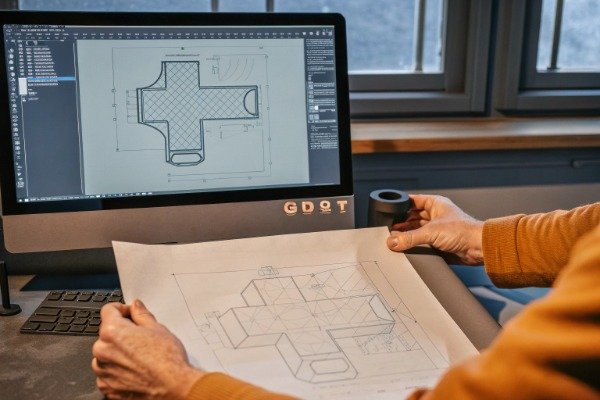
To get a precise quote, you must treat your drawing package as the primary communication tool. A simple sketch is not enough for industrial metal stamping. Manufacturers need to understand the full geometry and functional requirements to design the die correctly.
industrial metal stamping 2
industrial metal stamping 2
The Role of 2D and 3D Files
While 3D models (STEP or IGES format) are excellent for visualizing complex shapes and designing the tool path, the 2D drawing (PDF) remains the legal contract. The 2D drawing must specify the tolerances that the 3D model cannot convey. If you only send a 3D file, we do not know if a hole needs to be within +/- 0.05mm or +/- 0.5mm. This difference can change the tooling cost by thousands of dollars.
Geometric Dimensioning and Tolerancing (GD&T)
For stamped parts, flatness and position are often critical. You should clearly apply GD&T symbols to features that interact with other components. For example, if a stamped bracket must mount flush against a motor, you must specify a flatness tolerance. Without this, a supplier might assume standard commercial flatness is acceptable, leading to parts that rock or fail during assembly.
Edge Conditions and Burrs
Stamping naturally creates a burr on one side of the part. If your RFQ does not define "acceptable burr height," suppliers will quote based on their own internal standards. If you require a completely burr-free edge, we must add a deburring process (like tumbling) or design the die to coin the edge. Both options add cost. Being specific prevents surprise price increases later.
Critical-to-Quality (CTQ) Features
Not all dimensions are created equal. You should identify which dimensions are critical to the function of the part. We call these CTQ features. By highlighting these, you tell the manufacturer where to focus their quality control efforts and where they might have more flexibility to reduce costs.
| Specification Element | Why It Matters for Stamping | Risk of Omission |
|---|---|---|
| 2D Drawing (PDF) | Defines legal tolerances and notes. | Supplier assumes standard tolerances; parts may not fit. |
| 3D Model (STEP) | Essential for complex die design. | Tooling design takes longer; potential for interpretation errors. |
| Burr Direction | Affects assembly mating surfaces. | Parts may scratch mating components or fail to seat properly. |
| Flatness Spec | Critical for mounting surfaces. | Parts may bow after stamping due to springback. |
How Do I Define Material Requirements and Tolerances to Avoid Production Errors?
Our production team frequently halts runs because generic material specs clash with tight tolerances. This mismatch leads to high scrap rates and unavoidable delivery delays for your shipment.
Define the exact material grade, temper, and thickness tolerance, as these directly dictate press force and springback compensation. You must also specify acceptable cosmetic standards and surface finishes, ensuring the supplier accounts for raw material variations that could otherwise cause functional failures or assembly issues.

Material selection in stamping is about more than just choosing "steel" or "aluminum." The physical properties of the raw material dictate how the metal flows into the die, how much it springs back after bending, and how quickly the tool wears out.
springs back after bending 3
Specific Material Grades
You must specify the exact industry standard grade. Asking for "Stainless Steel" is too vague. Do you need SS304 for corrosion resistance or SS430 for magnetic properties? In carbon steel, do you need SPCC (commercial quality) or a drawing quality steel that can withstand deep forming without cracking? The price difference between these grades is significant, and their formability varies wildly.
Thickness and Temper
Thickness tolerance is a hidden cost driver. If your design requires a thickness of 1.0mm +/- 0.01mm, you are asking for precision strip material, which is much more expensive than standard mill-run coil. Standard coil might vary by +/- 0.05mm or more. If your design can handle standard variations, say so. It will save you money. Similarly, "temper" (hardness) affects springback. Harder materials spring back more, requiring complex die adjustments.
Surface Finish and Cosmetics
If the stamped part is visible to the end-user (an "A-surface"), you must define the cosmetic requirements. Stamping dies can leave marks, and handling can cause scratches.
- Industrial Finish: Scratches and die marks are acceptable as long as they don't affect function.
- Cosmetic Finish: Requires special handling, protective films, or regular die polishing.
If you don't specify this, a supplier will quote the cheaper industrial finish. When you receive the parts and reject them for scratches, you will face a dispute.
Secondary Operations
Many stamped parts require plating (Zinc, Nickel, Chrome) or heat treatment. You must specify the thickness of the plating (e.g., Zinc Plating 5-8 microns) and the required salt spray test hours (e.g., 48 hours to white rust). This ensures the supplier factors in the cost of outside service providers and logistics.
| Vague Request | Professional Specification | Impact on Quote & Production |
|---|---|---|
| "Material: Steel" | "Material: CRS SAE 1010, 1/4 Hard" | Ensures correct strength and forming characteristics. |
| "Thickness: 2mm" | "Thickness: 2.0mm ± 0.1mm" | Allows use of standard coil stock, reducing material cost. |
| "Finish: Zinc Plated" | "Finish: Clear Zinc Plating, 8µm min, RoHS compliant" | Ensures environmental compliance and corrosion resistance. |
| "No scratches" | "No visible scratches on Side A when viewed at arm's length" | Sets an objective standard for quality inspection. |
What Details Regarding Estimated Annual Usage and Batch Sizes Help Suppliers Quote Accurately?
We cannot optimize a production line without knowing your volume expectations. Without clear forecasts, we might quote expensive progressive dies for low-volume parts, wasting your budget.
Suppliers need your Estimated Annual Usage (EAU) and typical order frequency to determine the most cost-effective manufacturing method. High volumes justify investing in progressive dies with automation, while lower volumes may require single-stage tooling, significantly affecting both the upfront tooling investment and the per-unit piece price.

The volume of parts you intend to buy is the single most important factor in determining the manufacturing strategy. In stamping, there is a direct trade-off between tooling investment and piece price.
Progressive Die 4
The Tooling Trade-Off
- Low Volume (e.g., 1,000 – 5,000 parts/year): We would likely recommend "Stage Tooling" or "Single-Hit Tooling." You might have three separate dies: one for blanking, one for forming, and one for punching. An operator manually moves parts between presses.
- Result: Low tooling cost, high piece price (high labor).
- High Volume (e.g., 50,000+ parts/year): We would recommend a "Progressive Die." A metal strip feeds automatically through a single complex tool that performs all operations in one stroke.
- Result: High tooling cost, low piece price (high speed, low labor).
If you do not provide an EAU, suppliers will guess. One might quote a cheap tool with a high part price, while another quotes an expensive tool with a low part price. You cannot compare these quotes fairly.
salt spray test 5
Batch Sizes and Logistics
Beyond the annual total, the size of each shipment matters.
- Setup Costs: Every time we run a job, we have to stop the machine, swap the heavy die, and calibrate it. This takes time and money. If you order 50,000 parts once a year, we set up once. If you order 1,000 parts every week, we set up 50 times.
- Cash Flow: Ordering smaller batches more frequently helps your cash flow but increases unit costs due to setup charges.
- Raw Material: Knowing the EAU allows us to buy raw material in bulk or lock in prices with steel mills, protecting you from market fluctuations.
Economic Order Quantity (EOQ)
Ask the supplier to suggest an EOQ. Sometimes, increasing your order size slightly (e.g., from 4,000 to 5,000) matches the raw material coil size perfectly, reducing scrap and lowering the price.
Volume Strategy Table
| Annual Volume | Recommended Tooling Strategy | Tooling Cost | Piece Price | Production Speed |
|---|---|---|---|---|
| < 5,000 | Laser Cutting or Single Stage Dies | Niedrig ($) | Hoch ($$$) | Slow |
| 5,000 – 50,000 | Compound Dies or Manual Transfer | Mittel ($$) | Mittel ($$) | Moderat |
| > 50,000 | Progressive Die (Auto-feed) | Hoch ($$$) | Niedrig ($) | Very Fast |
Should I Request Information About Tooling Ownership and Maintenance in My Initial Inquiry?
In our experience exporting custom parts, disputes over mold ownership arise when terms aren't defined early. Ignoring maintenance responsibilities can lead to unexpected repair costs later.
carbon steel 6
Yes, your RFQ should explicitly request details on the number of mold cavities, guaranteed tool life cycles, and specific return conditions. Clarifying ownership and maintenance responsibilities upfront prevents future disputes and ensures the supplier calculates the correct amortization and upkeep costs in their proposal.
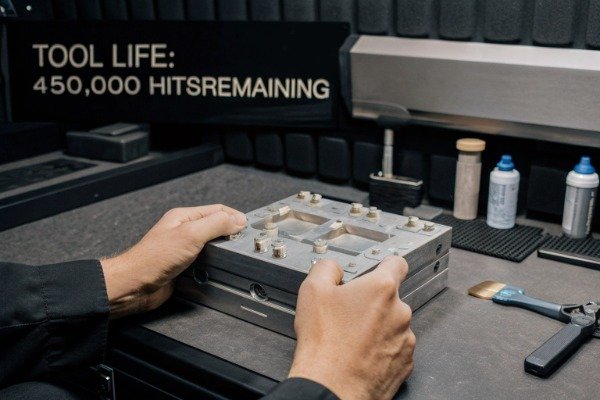
Tooling (dies/molds) is a major asset in stamping. Unlike buying a standard screw, you are paying for a custom asset that resides in the supplier's factory. You must clarify the "rules of engagement" for this asset in your RFQ.
deburring process 8
Cavities and Capacity
You should ask the supplier to specify the "number of cavities" in the quote. A 1-cavity tool produces one part per stroke. A 2-cavity tool produces two. A multi-cavity tool costs more to build but doubles or triples production speed. Knowing this helps you understand if the supplier has enough capacity to meet a sudden spike in demand.
Tool Life and Maintenance
Every stamping die wears out. Punches get dull; springs break.
- Tool Life: Ask for a guaranteed tool life (e.g., "500,000 hits").
- Maintenance: Typically, if you pay for the tool, the supplier should cover routine maintenance (sharpening, cleaning) as part of the piece price. However, major replacements after the guaranteed life is exceeded might be your cost. Clarify this now.
- Spare Parts: Professional suppliers will stock spare punches and die buttons to minimize downtime. Ask if they include a spare parts kit in the tooling price.
Ownership and Transfer
This is the most critical legal point. Your RFQ must state: "Tooling is the property of the Buyer upon full payment."
However, you must also ask about Return Conditions. If you decide to move production to a different supplier in the future, how will the current supplier behave?
- Will they package the tool for export?
- Will they provide the latest 2D/3D tool designs?
- Is there a "retrieval fee"?
By asking these questions in the RFQ, you signal that you are a sophisticated buyer. Suppliers will be less likely to cut corners on tool build quality if they know they might have to hand the tool over one day.
flatness tolerance 9
flatness tolerance 9
Checklist for Tooling RFQ Section
- Tool Type: Progressive, Transfer, or Single Stage?
- Cavities: How many parts per stroke?
- Guaranteed Life: Total shots before major rebuild.
- Maintenance: Who pays for sharpening and minor repairs?
- Ownership: Confirmation that payment equals ownership.
- Exportability: Can the tool be easily moved to another press, or is it customized to the supplier's specific machine?
Fazit
Writing a detailed RFQ ensures accurate quotes and smooth production. By specifying technical, material, and commercial details upfront, you minimize risks and secure the best manufacturing partners.
GD&T symbols 10
deburring process 8
Footnotes
1. Defines the standard procurement document discussed in the article. ↩︎
2. Provides a comprehensive overview of the manufacturing process. ↩︎
3. Explains the elastic recovery of metal affecting die design. ↩︎
4. Describes the high-volume stamping method recommended for large orders. ↩︎
5. Explains the standard corrosion resistance testing method. ↩︎
6. Details the properties of the specific steel type mentioned. ↩︎
7. General information on the alloy family mentioned in the text. ↩︎
8. Details the finishing method used to remove edge imperfections. ↩︎
9. Explains the specific geometric tolerance critical for mounting surfaces. ↩︎
10. Authoritative resource from ASME explaining the dimensioning standard. ↩︎

 English
 Español de México
 Deutsch
 Français
 Русский
 العربية