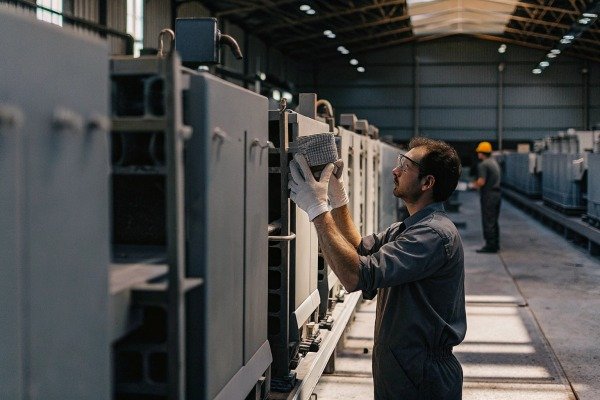
After shipping hundreds of blow molding orders 1 from our partner factories across Vietnam and Taiwan, we’ve learned one painful truth. Mold failures kill profit margins faster than any other production issue ejector systems 2. A single cracked mold core can halt your entire product line for weeks.
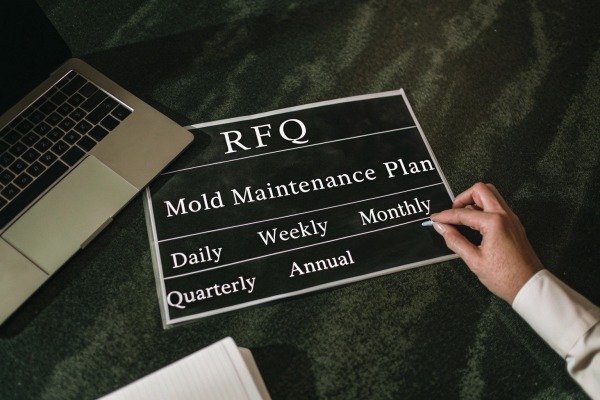
To request a mold maintenance plan 3, send a formal RFQ that specifies daily cleaning protocols, weekly lubrication schedules, monthly inspections, quarterly overhauls, and annual rebuilds. Require detailed documentation, qualified technician assignments, and clear warranty terms covering expected cycle life and repair responsibilities.
This guide walks you through exactly what to request, how often maintenance should happen, and what proof you need preventative maintenance 4. Let’s dive into the specifics that protect your investment.
What specific details should I look for in a supplier's mold maintenance schedule?
When our quality team audits blow molding facilities, the maintenance schedule tells us everything about a factory's reliability thermal stress accumulation 5. Vague promises mean nothing. You need specifics that you can verify during inspections.
Look for itemized task lists covering mold surfaces, cooling channels, ejector systems, guide pins, hydraulic cores, and electrical components. The schedule should specify cleaning methods, lubrication types, inspection criteria, and replacement intervals for wear parts like seals and O-rings.
Daily and Weekly Tasks Matter Most
The small daily tasks prevent big failures. Your supplier's schedule should list debris removal from parting lines after every shift. Mold sliders need greasing every day during production runs. Water cooling lines require temperature checks to stay within 5°F of target settings.
Weekly tasks go deeper. Filters in hydraulic systems 6 need cleaning or replacement. Lubrication points on guide pins and bushings require fresh grease. Operators should log any unusual sounds, vibrations, or visual wear.
Monthly and Quarterly Deep Checks
Monthly inspections catch problems before they become disasters. The schedule should include:
- Alignment verification between mold halves
- Hydraulic pressure testing
- Cooling channel flow rate measurements
- Surface condition assessment for pitting or corrosion
Quarterly checks involve partial disassembly. Extruder gearboxes need oil analysis. Platens and tiebars require torque verification. Anti-rust treatments should be applied to exposed steel surfaces.
What the Schedule Must Include
| Task Category | Specific Items | Frequency | Documentation Required |
|---|---|---|---|
| Cleaning | Parting line debris, cavity surfaces, vents | Daily | Shift log entry |
| Lubrication | Guide pins, sliders, ejector pins | Daily/Weekly | Grease type and quantity logged |
| Inspection | Cooling channels, hydraulics, alignment | Monthly | Photo documentation |
| Overhaul | Full disassembly, seal replacement, polishing | Annually | Complete service report |
Ask your supplier to name the specific lubricants they use. Generic terms like "industrial grease" are red flags. Premium blow molding operations use temperature-rated synthetic lubricants designed for the thermal cycling these molds endure.
Critical Components Unique to Blow Molding
Blow molds differ from injection molds in several ways. The cooling system works harder because the parison must cool uniformly. Ask specifically about:
- Water channel descaling procedures
- Cooling insert maintenance
- Blow pin seal replacement intervals
- Mold venting system cleaning (sandblasting frequency)
Our experience shows that suppliers who can detail these blow-molding-specific tasks run more professional operations. They understand the equipment they're working with.
How frequently should I require preventative maintenance for my blow molding tools?
During our supplier audits in Vietnam and Taiwan, we've seen both extremes. Some factories only fix molds after they break. Others obsess over daily maintenance to the point of inefficiency. The right frequency balances cost against risk.
Require daily cleaning and lubrication, weekly filter and fluid checks, monthly component inspections, quarterly system overhauls, and annual full rebuilds. This schedule extends mold life to 15-20 years while reducing unplanned downtime by up to 50% compared to reactive-only maintenance.

The Cost of Getting Frequency Wrong
Too little maintenance destroys molds fast. We've seen aluminum molds fail within one year under 24/7 production with no maintenance plan. Steel molds last longer but develop problems like:
- Core bending from accumulated stress
- Oil leaks contaminating the hydraulic system
- Venting blockages causing part defects
- Cooling channel scaling reducing efficiency
Too much maintenance wastes money. Disassembling a mold weekly when monthly would suffice increases labor costs and introduces handling damage risks.
Recommended Maintenance Intervals
| Interval | Tasks | Time Investment | Impact on Mold Life |
|---|---|---|---|
| Daily | Surface cleaning, debris removal, basic lubrication | 15-30 minutes | Prevents 60% of common failures |
| Weekly | Filter checks, fluid levels, wear inspection | 1-2 hours | Catches issues before escalation |
| Monthly | Alignment verification, pressure testing, deep cleaning | 4-8 hours | Maintains dimensional accuracy |
| Quarterly | Partial disassembly, seal inspection, anti-rust treatment | 1-2 days | Extends component life 30-40% |
| Annually | Full overhaul, worn part replacement, cavity polishing | 3-5 days | Resets mold to near-new condition |
Adjusting Frequency for Your Situation
Production volume changes everything. A mold running one shift per day needs less frequent maintenance than one running 24/7. Ask your supplier to adjust the schedule based on:
- Expected cycle count per month
- Material type (some plastics are more abrasive)
- Part complexity (intricate molds need more attention)
- Environmental conditions (humidity affects rust formation)
High-volume HDPE bottle production might need weekly slider greasing instead of daily. Low-volume technical parts might need less frequent but more thorough inspections.
The ROI Argument for Proper Frequency
Consider a $50,000 blow mold. Without proper maintenance, it might last 10 years producing 5,000 parts annually. That's $1.00 per part in tooling cost.
With proper maintenance costing $2,000 annually, the same mold lasts 20 years. Total cost: $50,000 + $40,000 maintenance = $90,000 over 20 years for 100,000 parts. That's $0.90 per part.
The maintenance investment saves $0.10 per part while also reducing scrap rates and unplanned downtime. Factories using proper schedules report 20-30% better ROI on their tooling investments.
What documentation do I need to verify the factory is following the maintenance protocol?
Our team has learned to trust documentation over promises. When we audit factories, the maintenance records reveal the truth. A clean logbook with consistent entries indicates discipline. Gaps and generic notes suggest neglect.
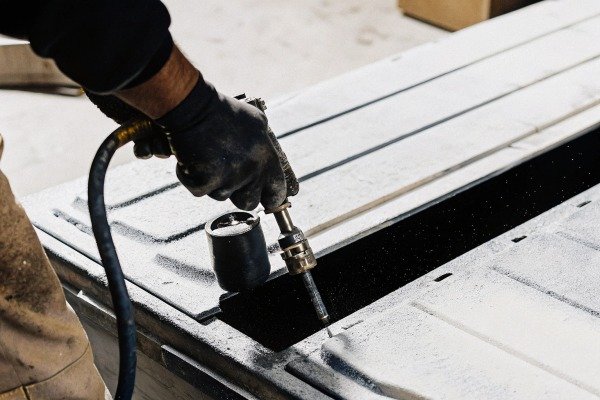
Request shift-by-shift maintenance logs, photographic inspection records, calibration certificates for measuring equipment, parts replacement receipts, and a complete mold history file. Digital systems with timestamps provide the strongest verification and enable predictive analytics for future planning.
Essential Documentation Types
Every maintenance event should generate a record. The basic documentation package includes:
Daily logs showing who performed cleaning and lubrication, what products were used, and any anomalies observed. These logs should have timestamps and signatures.
Inspection reports with photos comparing current condition to baseline. Close-up images of wear points, cooling channel interiors, and parting line surfaces provide objective evidence.
Repair records documenting what failed, why it failed, what was replaced, and who authorized the repair. Include part numbers and supplier information for replacement components.
Digital vs. Paper Systems
Modern blow molding facilities increasingly use digital maintenance tracking. Apps on tablets let technicians log activities in real-time with photos and timestamps that can't be backdated.
| Documentation Type | Paper System | Digital System | Verification Strength |
|---|---|---|---|
| Daily logs | Handwritten entries | Timestamped app entries | Digital stronger |
| Photos | Printed and filed | Cloud-stored with metadata | Digital stronger |
| Parts tracking | Manual inventory | Barcode/RFID scanning | Digital stronger |
| Trend analysis | Labor-intensive | Automated dashboards | Digital far superior |
| Audit access | On-site only | Remote viewing possible | Digital more convenient |
Ask if your supplier can integrate maintenance data with your ERP or CMMS system 7. Real-time visibility into mold condition helps you plan production and anticipate problems.
Red Flags in Documentation
Watch for these warning signs when reviewing maintenance records:
- Long gaps between entries
- Generic descriptions like "routine maintenance performed"
- Missing signatures or technician identification
- No photos despite claims of visual inspections
- Replacement parts with no receipts or part numbers
- Inconsistent formatting suggesting records created after the fact
How to Request Documentation Access
Include specific documentation requirements in your purchase agreement. State that you will conduct quarterly record reviews, either on-site or via secure file sharing. Define consequences for missing or incomplete records.
Sample contract language: "Supplier shall maintain complete maintenance records for all molds used in Buyer's production. Records shall be available for Buyer review within 48 hours of request. Failure to provide complete records shall constitute a material breach."
Using Documentation for Continuous Improvement
Good records do more than verify compliance. They enable trend analysis that improves future performance. Track metrics like:
- Time between failures for each mold component
- Most common failure modes
- Correlation between maintenance frequency and defect rates
- Seasonal variations in cooling system performance
This data helps you negotiate better terms with suppliers and make informed decisions about mold design improvements.
How does a defined maintenance plan help extend the lifespan of my custom molds?
When we commission custom molds for our clients' projects, we emphasize maintenance planning from day one. A mold represents significant engineering investment. Protecting that investment through systematic care delivers measurable returns over the tool's entire production life.
A defined maintenance plan extends mold lifespan from the typical 5-10 years without maintenance to 15-20 years with proper care. Preventive tasks eliminate the cascading failures that cause catastrophic damage, while regular inspections catch wear before it affects part quality or causes emergency shutdowns.

How Neglect Destroys Molds
Blow molds fail through predictable mechanisms. Understanding these helps you appreciate why maintenance matters.
Thermal stress accumulation: Every heating and cooling cycle stresses the mold material. Without proper cooling system maintenance, hot spots develop. These concentrate stress and eventually cause cracking.
Lubrication breakdown: Moving components like sliders and ejector pins generate friction. Old, degraded lubricant causes metal-to-metal contact. This accelerates wear exponentially.
Contamination damage: Hydraulic systems are especially vulnerable. A single contaminated seal can release particles that damage pumps, valves, and cylinders throughout the system.
Corrosion progression: Steel molds left without anti-rust treatment between production runs develop surface corrosion. Pitting starts small but grows into cavities that transfer to molded parts.
The Cascade Effect
Small problems become big ones. A clogged cooling channel raises local temperature by 10°F. This causes the parison to stick slightly. The operator increases ejection force to compensate. The extra force stresses the ejector pins. One pin bends. The bent pin scores the mold cavity. Now every part has a surface defect.
Proper maintenance breaks this cascade at the first link. Clean cooling channels mean correct temperatures. Correct temperatures mean no sticking. No sticking means normal ejection force. Normal force means straight pins. Straight pins mean perfect parts.
Material-Specific Maintenance Considerations
| Mold Material | Typical Life Without Maintenance | Typical Life With Maintenance | Key Maintenance Focus |
|---|---|---|---|
| Aluminum | 1-3 years | 5-8 years | Surface protection, gentle cleaning |
| P20 Steel | 5-8 years | 12-15 years | Anti-rust treatment, lubrication |
| H13 Steel | 8-12 years | 18-22 years | Precision inspection, cooling system |
| Stainless Steel | 10-15 years | 20+ years | Descaling, polish maintenance |
Aluminum molds cost less initially but require more careful maintenance because the softer material wears faster. Steel molds tolerate more abuse but still benefit enormously from proper care.
Building Maintenance into Your Sourcing Agreement
Don't treat maintenance as an afterthought. Include it in your initial supplier negotiations. Specify:
- Who owns the maintenance responsibility
- What specific tasks are required at what intervals
- How costs are allocated (separate line item vs. embedded in part price)
- What happens if maintenance is neglected (warranty implications)
- How mold condition is verified during production
Some buyers prefer supplier-managed maintenance because it simplifies accountability. If parts have defects, the supplier can't blame maintenance neglect. Other buyers prefer in-house or third-party maintenance for greater control.
Planning for End-of-Life
Even well-maintained molds eventually wear out. A good maintenance plan includes provisions for:
- Tracking cumulative cycle count against expected life
- Monitoring key dimensions that change with wear
- Planning replacement mold production before failure
- Salvaging reusable components from retiring molds
This forward planning prevents the panic of emergency mold replacement when a critical tool fails unexpectedly.
Fazit
Requesting a comprehensive mold maintenance plan protects your tooling investment and ensures consistent part quality. Start with detailed specifications, verify through documentation, and build maintenance requirements into every supplier agreement.
Need help developing mold maintenance requirements for your next blow molding project? Contact our team at sa***@*******ch.com. We help buyers across the United States source quality plastic parts with proper tooling care from vetted Asian suppliers.
Footnotes
1. Provides a foundational understanding of the blow molding manufacturing process. ↩︎
2. Explains the purpose and operation of ejector systems in plastic molding processes. ↩︎
3. Details essential procedures and methods for effective mold maintenance in manufacturing. ↩︎
4. Defines preventative maintenance and its benefits for equipment reliability and lifespan. ↩︎
5. Explains how thermal stresses develop in molded products due to cooling variations. ↩︎
6. Replaced with an authoritative and accessible explanation of how hydraulic systems work from HowStuffWorks. ↩︎
7. Describes a Computerized Maintenance Management System for managing and optimizing maintenance activities. ↩︎

 English
 Español de México
 Deutsch
 Français
 Русский
 العربية