
Every week, our project team reviews quotes from injection molding suppliers 1 on behalf of our clients. The pattern we see is troubling. Many buyers pick a supplier based on price alone, then face months of delays, failed first articles, and costly rework DFM-Feedback 2.
The best injection molding service for your business is one that matches your volume needs, holds relevant certifications like ISO 9001 or ISO 13485, offers DFM feedback early, delivers on time, and communicates proactively throughout the project lifecycle.
Picking the right injection molding partner is not just about finding the lowest price. It is about finding a team that understands your drawings, respects your tolerances, and ships on schedule. Below, we break down the key factors you need to evaluate before signing any contract.
What Key Factors Should I Prioritize When Evaluating Potential Injection Molding Partners?
Our engineers have reviewed hundreds of supplier profiles over the years, and we have learned that the flashiest website does not always mean the best partner. Many buyers regret rushing this decision.
When evaluating injection molding partners, prioritize their technical capabilities, machine tonnage range, mold-building expertise, material options, DFM support, communication responsiveness, certifications, and track record of on-time delivery with consistent quality.
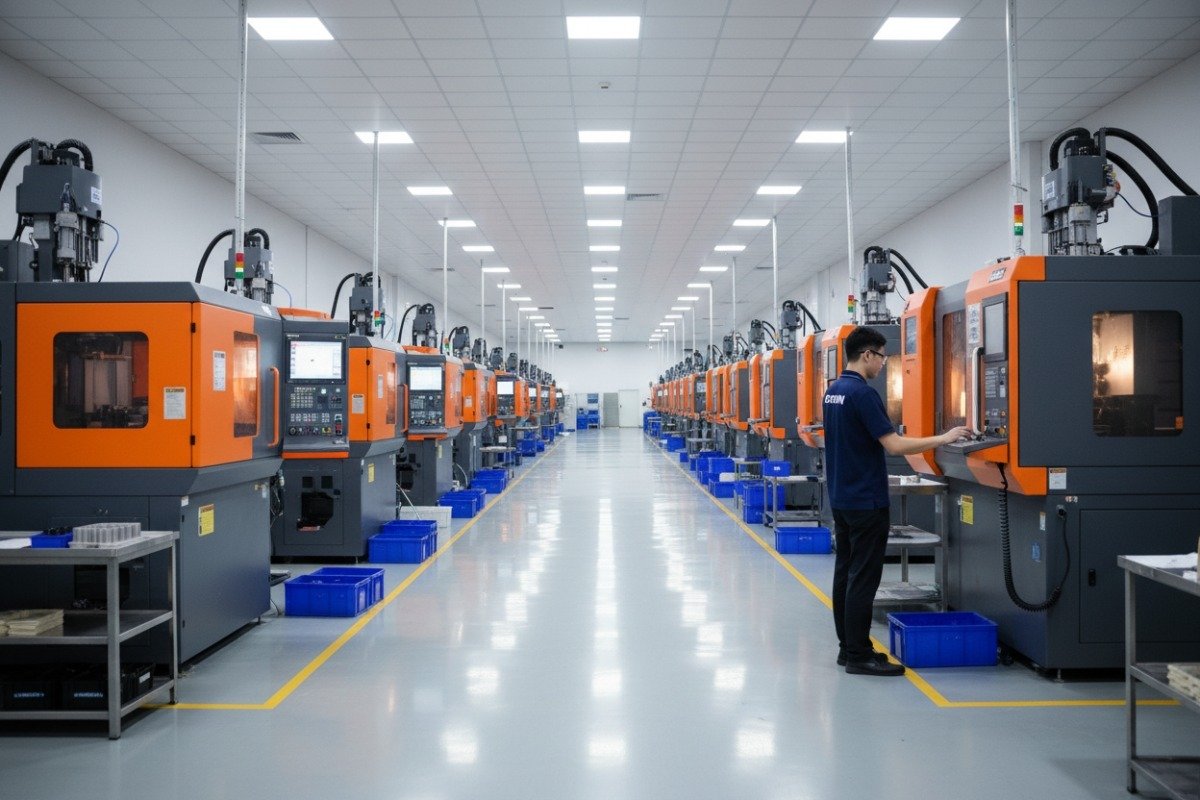
Choosing an injection molding partner is a multi-step process. You cannot rely on a single data point. Let us break it down into the areas that matter most.
Technical Capabilities and Equipment
First, look at what the supplier can actually do. Not every molder handles complex geometries, tight tolerances, or multi-cavity tools. Ask about their machine tonnage range 3. A shop with presses from 28 tons to 500 tons can handle a wider variety of parts than one with only small machines.
Check if they offer advanced processes like two-shot molding, insert molding, overmolding, or scientific injection molding (SIM) 4. SIM uses data-driven process control to achieve near-zero variation. This matters a lot for medical and aerospace parts.
Kommunikation und Projektmanagement
This is where many suppliers fail. A good molder responds to emails within 24 hours. They flag drawing issues before quoting, not after tooling is cut. They provide regular updates during mold build and first article runs.
In our experience coordinating between U.S. buyers and Asian manufacturers, communication gaps cause more project failures than technical shortcomings. If a supplier cannot answer your questions clearly during the quoting phase, expect worse during production.
Comparing Key Evaluation Criteria
| Faktor | Worauf zu achten ist | Warnsignal |
|---|---|---|
| Machine Tonnage | Range from 28–500+ tons | Only one or two press sizes |
| Mold Building | In-house tooling capability | Outsources all tooling with no oversight |
| DFM Support | Proactive design feedback before tooling | No DFM review offered |
| Lieferzeit | Clear timeline with milestones | Vague promises like "a few weeks" |
| Kommunikation | Dedicated project manager, fast replies | Slow responses, no single point of contact |
| Material Range | Wide selection of thermoplastics, elastomers | Limited to only a few commodity resins |
Volumenflexibilität
Some molders specialize in prototyping. Others focus on high-volume production. The best partners can bridge both. Companies like Quickparts support Class 103 to Class 105 molds, covering everything from short prototype runs to millions of cycles.
Ask about minimum order quantities. Ask about bridge tooling options if you need to validate a design before committing to a production mold. A flexible partner saves you money and time in the long run.
Werkzeugbesitz
Always clarify who owns the mold. In many cases, you pay for the tool, so you should own it. Get this in writing. If you ever need to move production to another supplier, you want to take your mold with you. Suppliers who resist this conversation may not have your best interests in mind.
How Can I Ensure My Chosen Supplier Meets My Industry's Specific Quality Standards?
When we onboard a new supplier for a client project, the first documents we request are quality certifications and process control records. Without these, everything else is just talk.
To ensure your supplier meets industry quality standards, verify their ISO 9001 certification as a baseline, then check for industry-specific certifications like ISO 13485 for medical, IATF 16949 for automotive, or ITAR registration for defense applications.
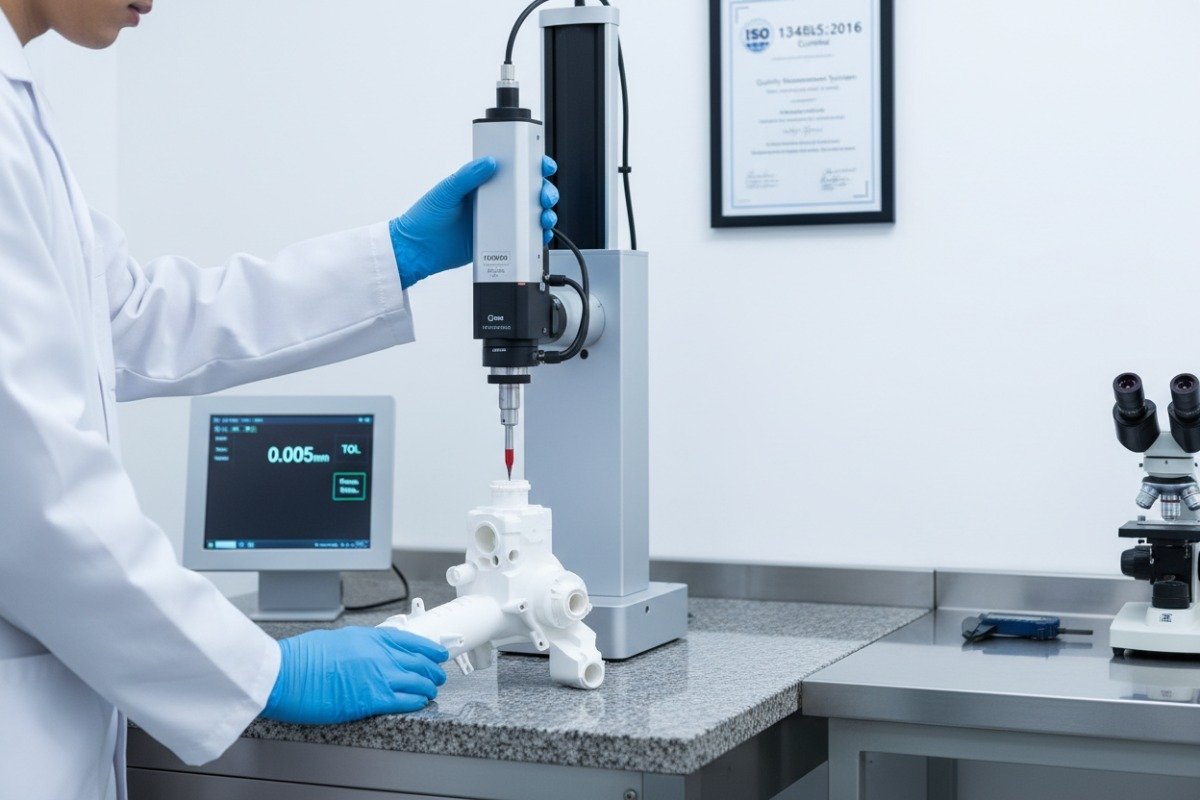
Quality is not optional in injection molding. A single non-conforming batch can shut down your production line, trigger customer complaints, or even create legal liability. Here is how to verify that your supplier takes quality as seriously as you do.
Zertifizierungen, die zählen
Different industries demand different certifications. ISO 9001 is the universal baseline. It means the supplier has a documented quality management system. But for regulated industries, you need more.
| Branche | Erforderliche Zertifizierung | Was es abdeckt |
|---|---|---|
| Allgemeine Fertigung | ISO 9001 | Quality management system fundamentals |
| Medizinprodukte | ISO 13485 5, FDA Registration | Design controls, traceability, cleanroom capability |
| Automobilindustrie | IATF 16949 6 | Process control, PPAP, FMEA, SPC |
| Defense / Aerospace | ITAR, AS9100 | Export controls, advanced quality planning |
| Food Contact | FDA 21 CFR, EU 10/2011 | Material safety, migration testing |
Do not just take a supplier's word for it. Ask for copies of current certificates. Check expiration dates. Verify the certifying body is accredited.
Process Control and Inspection
Certifications prove a system exists. But you also need to see how the supplier controls quality on the shop floor. Ask about their inspection methods. Do they use CMM (coordinate measuring machines) 7? Do they perform first article inspection reports (FAIR)? Do they monitor cavity pressure during molding?
Companies like Aprios use scientific injection molding to achieve repeatable results. Ironwood Plastics uses laser scanning and mold flow analysis 8. These are not marketing buzzwords. They are real tools that catch problems before parts ship.
PPAP and First Article Process
For automotive and high-reliability applications, ask if the supplier can deliver a full PPAP (Production Part Approval Process) 9 package. This includes dimensional reports, material certifications, process flow diagrams, control plans, and capability studies.
At our company, we manage the PPAP process on behalf of our clients. We have seen suppliers who claim PPAP capability but cannot produce a proper Cpk study. Test them early. Request a pilot run and a complete first article report before approving mass production.
Rückverfolgbarkeit und Dokumentation
For medical and aerospace parts, traceability is non-negotiable. Every lot of resin must be traceable to its source. Every part must be linked to a specific production run, machine, operator, and inspection record. Ask the supplier how they handle lot tracking. If they cannot explain it clearly, move on.
Sustainability and Compliance
Sustainability is no longer a nice-to-have. Many U.S. and European buyers now require suppliers to track energy usage, waste rates, and recycled material content. Companies like All-Plastics actively monitor eco-metrics alongside production KPIs. If your customers care about ESG, your molder should too.
What Questions Should I Ask to Determine if a Manufacturer Can Handle My Project's Technical Complexity?
During our supplier audits in Vietnam and across Asia, we always bring a detailed technical questionnaire. The answers reveal more about a supplier's true capability than any sales presentation ever could.
Ask about their experience with similar part geometries, tolerance capabilities, mold flow analysis practices, material expertise, secondary operations, and whether they provide DFM feedback before cutting steel to prevent costly tooling revisions.
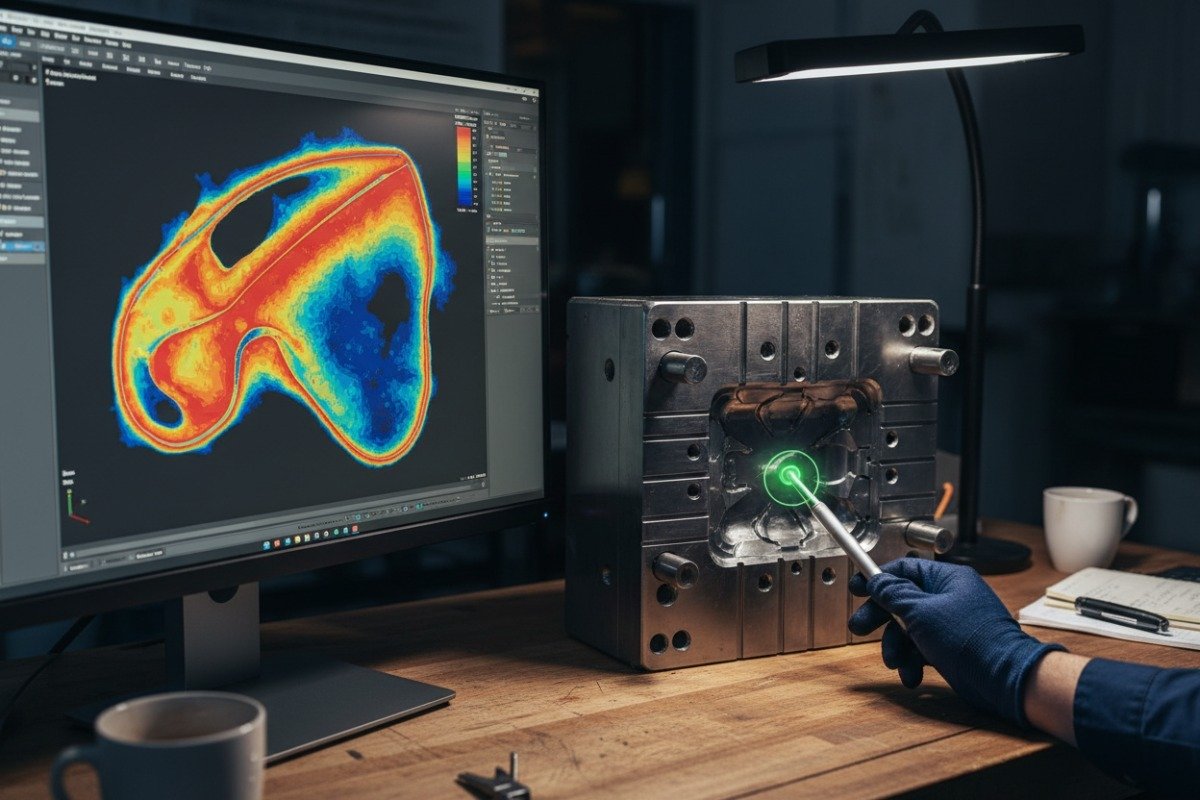
Not all injection molding projects are equal. A simple single-cavity box is very different from a multi-cavity, tight-tolerance medical housing with overmolded seals. The questions you ask upfront determine whether you end up with a capable partner or a costly mistake.
Essential Questions Checklist
Here are the questions we recommend asking every potential injection molding supplier:
What is the tightest tolerance you can hold consistently? Good molders achieve ±0.025 mm (±0.001 inch) or better on critical dimensions. Ask for evidence, not just claims.
Do you perform mold flow analysis before building the tool? Mold flow simulation predicts fill patterns, weld lines, sink marks, and warpage. Suppliers who skip this step are gambling with your money.
Can you share examples of similar parts you have produced? Ask for case studies or reference parts. If they have never molded anything close to your design, proceed with caution.
What secondary operations do you offer in-house? Pad printing, sonic welding, assembly, insert installation, and surface finishing all add value. In-house capabilities reduce lead time and handling damage.
Who owns the tooling, and where is it stored? This question reveals a lot about the supplier's business practices.
What is your process for handling engineering changes? Changes happen. A good supplier has a formal ECN (Engineering Change Notice) process that tracks revisions and updates documentation.
Matching Complexity to Capability
| Project Complexity | Required Supplier Capability | Beispielprozess |
|---|---|---|
| Simple single-material parts | Standard injection molding, basic QC | Single-cavity or multi-cavity aluminum molds |
| Tight tolerance components | SIM, CMM inspection, process monitoring | Cavity pressure sensing, Cpk tracking |
| Multi-material or overmolded parts | Two-shot molding, insert molding | Overmolded grips, sealed housings |
| High-volume production (1M+ cycles) | Hardened steel molds (Class 101), automation | Robotic part removal, inline inspection |
| Prototype to production bridge | Rapid tooling, bridge molds (Class 103–104) | Aluminum or soft steel molds for validation |
DFM Review: The Most Underrated Step
Design for Manufacturability review is where a good supplier earns their fee. A proper DFM review catches wall thickness issues, draft angle problems, undercut challenges, and gate location concerns before any steel is cut.
We have seen projects where skipping DFM cost the buyer $30,000 or more in tooling rework. Always request a written DFM report. If the supplier does not offer one, that is a warning sign.
Pilot Runs and Validation
Before committing to full production, insist on a pilot run. This is a short production run using the final mold, final material, and final process parameters. Measure the parts. Compare them to your drawing. Check cosmetics, fit, and function.
A pilot run costs a fraction of what a failed production run costs. It is the cheapest insurance you can buy.
How Do I Balance Cost and Lead Times to Find the Best Value for My Business?
When we help clients source custom injection-molded parts from Asia, the conversation always starts with price. But within a few weeks, the conversation shifts to lead time and quality. That shift is where real value lives.
To balance cost and lead times, focus on total cost of ownership—including tooling, piece price, shipping, quality risk, and potential rework—rather than unit price alone. Faster lead times from reliable suppliers often save more money than the cheapest quote.

The cheapest option is rarely the best value. A low quote that arrives three weeks late with 15% rejects is far more expensive than a slightly higher quote that arrives on time with zero defects. Here is how to think about cost and lead time together.
Understanding Total Cost of Ownership
Most buyers compare piece prices. Smart buyers compare total cost. Total cost includes:
- Werkzeugkosten — upfront investment for the mold
- Piece price — cost per part in production
- Shipping and logistics — freight, duties, customs clearance
- Quality cost — inspection, testing, potential rejects and rework
- Delay cost — lost sales, production line downtime, expedited shipping fees
- Communication cost — time your team spends managing the supplier
When you add all of these up, the "cheap" supplier often costs 20–40% more than the "expensive" one.
Domestic vs. Offshore: A Realistic Comparison
There is an ongoing debate about domestic U.S. molding versus offshore sourcing. Both have merits. The key is matching the right approach to your specific situation.
| Faktor | U.S.-Based Supplier | Offshore Supplier (Asia) |
|---|---|---|
| Stückpreis | Höher | Lower (often 30–50% less) |
| Werkzeugkosten | Höher | Niedriger |
| Lead Time (Tooling) | 6–10 Wochen | 4–8 Wochen |
| Lead Time (Shipping) | 1–5 days | 4–6 weeks (ocean freight) |
| Kommunikation | Same time zone, same language | Time zone gaps, potential language barriers |
| IP-Schutz | Stronger legal framework | Varies by country and supplier |
| Quality Consistency | Generally high with ISO shops | Varies widely; requires audits |
| Zahlungsbedingungen | Net 30–60 common | Often requires deposits or L/C |
For clients who need parts fast and cannot risk delays, domestic U.S. suppliers like Protolabs or UPTIVE offer turnaround in days. Protolabs can deliver prototypes in as fast as one day. But you pay a premium for that speed.
For high-volume production where cost matters most, offshore sourcing makes sense—if you have the right partner managing quality and logistics. That is exactly what our team does. We bridge the gap between low Asian manufacturing costs and the quality standards U.S. buyers expect.
Strategies to Optimize Both Cost and Speed
Here are practical ways to get better value without sacrificing quality or delivery:
Use bridge tooling. Start with a Class 103 or 104 aluminum mold for initial production. This costs less and builds faster than a hardened steel mold. Once your design is validated and volumes justify it, invest in a Class 101 production mold.
Consolidate secondary operations. Choose a supplier who can mold, assemble, print, and pack under one roof. Every time parts move between facilities, you add cost and time.
Negotiate payment terms. Cash flow matters. We offer 60–90 day open account terms to qualified clients. This means you can receive and even sell parts before paying for them. Not every supplier offers this, but it is worth asking.
Plan ahead. Rush orders always cost more. If you can forecast demand 8–12 weeks out, you give your supplier time to optimize scheduling, buy resin at better prices, and avoid overtime charges.
On-Demand Platforms vs. Traditional Suppliers
Platforms like Xometry and Protolabs offer instant online quotes and fast turnaround through networks of vetted manufacturers. They are great for prototyping and low-volume runs. But for high-volume, complex, or regulated parts, a direct relationship with a dedicated supplier usually delivers better results.
The trade-off is simple. Platforms give you speed and convenience. Direct suppliers give you customization, deeper technical support, and often better pricing at scale.
Fazit
Choosing the right injection molding partner comes down to capabilities, quality systems, technical depth, and total value. Ask the hard questions early, verify certifications, and always prioritize long-term reliability over short-term savings.
Footnotes
1. Explains the fundamental process of injection molding and its applications. ↩︎
2. Details how Design for Manufacturability (DFM) optimizes injection molding processes. ↩︎
3. Explains the importance and calculation of injection molding machine tonnage. ↩︎
4. Describes scientific injection molding as a data-driven approach for consistent quality. ↩︎
5. Explains the ISO 13485 standard for medical device quality management systems. ↩︎
6. Provides an overview of the IATF 16949 quality management system for the automotive sector. ↩︎
7. Explains how Coordinate Measuring Machines (CMMs) are used for precise dimensional inspection. ↩︎
8. Explains how mold flow analysis simulates plastic flow to optimize mold design. ↩︎
9. Describes the Production Part Approval Process (PPAP) for ensuring part quality in manufacturing. ↩︎
10. Provides an overview of ISO 9001 quality management system certification. ↩︎

 English
 Español de México
 Deutsch
 Français
 Русский
 العربية