Over the years, our engineering team has reviewed hundreds of aluminum part drawings from U.S. buyers—and the number one regret we hear is picking the wrong machining partner Pulverbeschichtung 1.
The best CNC machining service for aluminum parts combines deep alloy expertise, carbide tooling standards, proven deformation-prevention techniques, rigorous quality control with CMM inspection, and scalable production capacity. Evaluating these capabilities upfront prevents costly rework, missed deadlines, and out-of-spec components.
Choosing a CNC partner for aluminum is not the same as choosing one for steel or stainless. Aluminum has unique properties—softness, stickiness, thermal behavior—that demand specific know-how. Below, we break down exactly what to look for, question by question.
What Specific Capabilities Should I Look for in a CNC Shop to Ensure High-Quality Aluminum Parts?
When we audit CNC shops across Vietnam and Taiwan for our clients, the gap between a capable aluminum machinist and an average one shows up fast—usually in the first sample run.
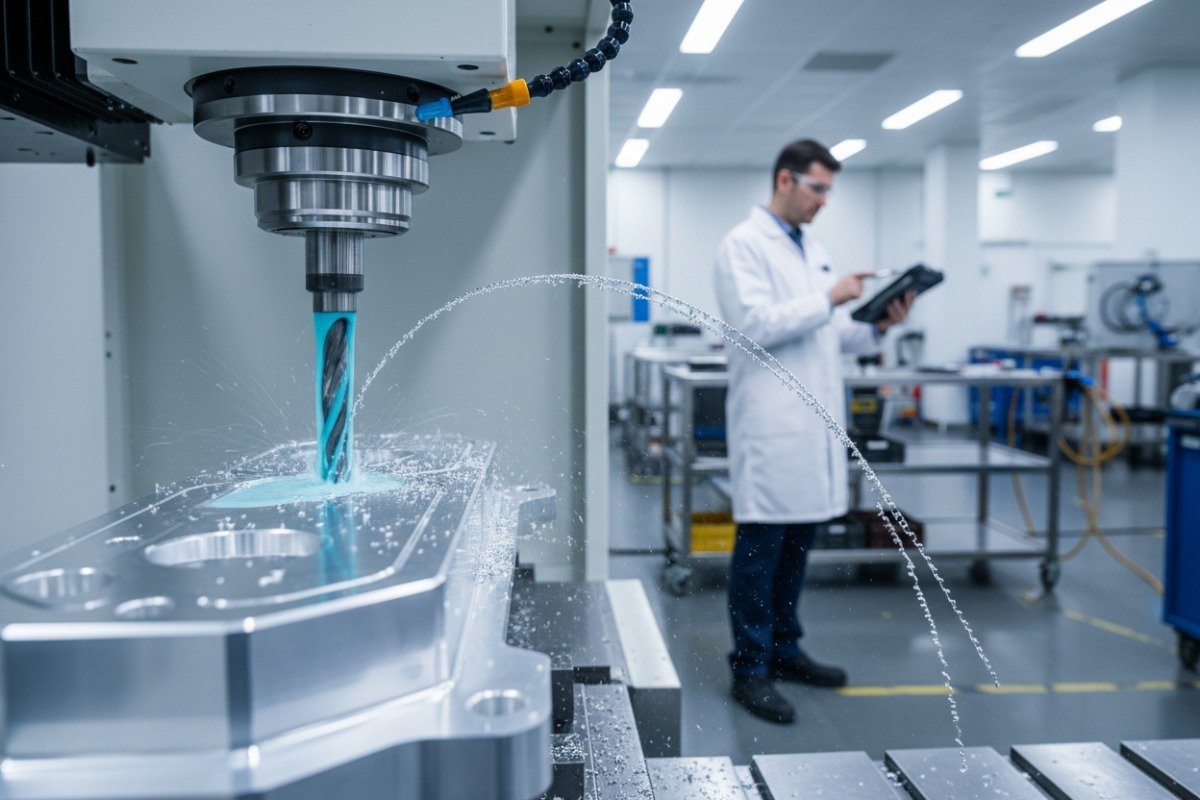
Look for carbide tooling as standard, proper coolant systems to manage aluminum's stickiness, multi-axis machining capability, advanced workholding fixtures for thin-walled parts, and in-house CMM inspection. These capabilities directly determine whether your aluminum parts come out right the first time.
Why Tooling Choice Is the First Thing to Check
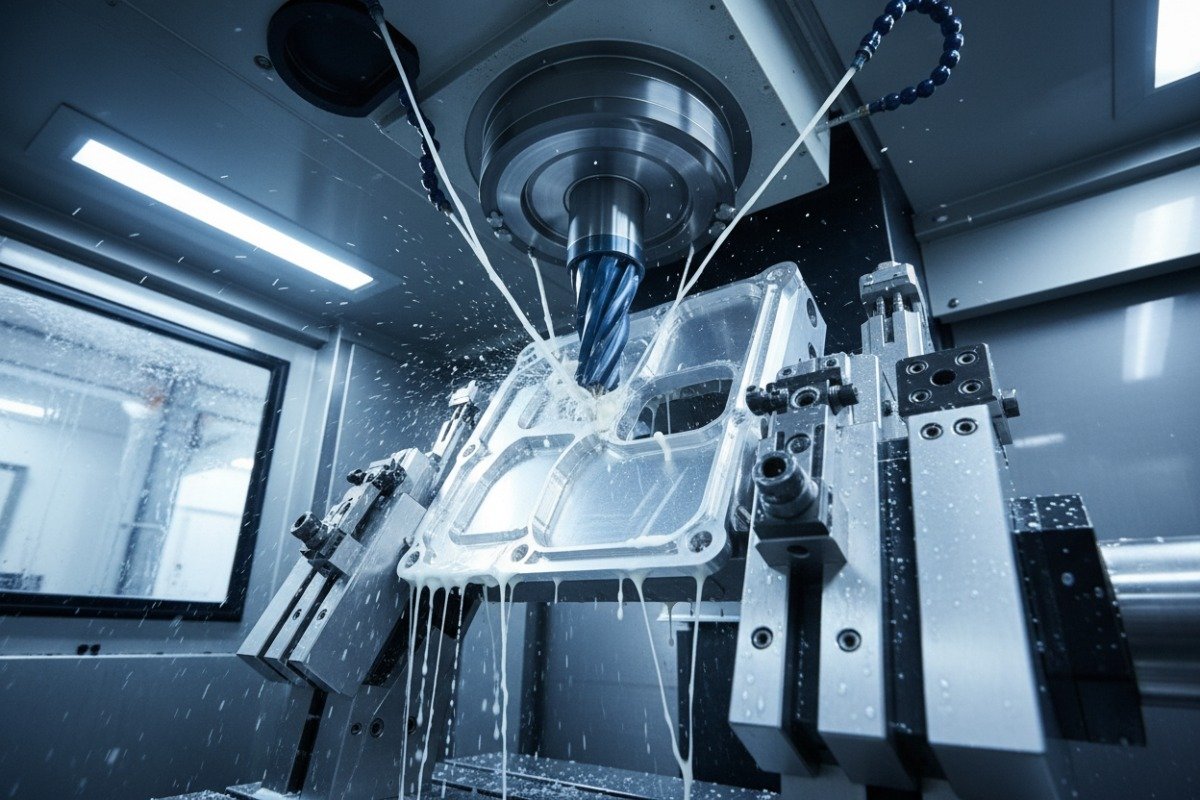
Carbide end mills 2 are the industry standard for aluminum CNC machining. They maintain sharp cutting edges at high speeds, resist heat buildup, and allow aggressive feed rates without rapid wear. A shop that defaults to carbide tools for aluminum production work is signaling they take quality seriously. Cheaper high-speed steel tools wear faster, generate more heat, and produce inferior surface finishes.
But the type of carbide end mill matters too. Two-flute end mills provide maximum chip clearance and smooth cuts. Three-flute cutters balance strength and speed for deeper passes. High-helix tools pull chips upward instead of packing them into the cut. A good shop selects tool geometry based on your part's specific features—not a one-size-fits-all approach.
The Stickiness Problem
Aluminum welds onto cutting tools at high speeds. This built-up edge ruins surface finish and shortens tool life. Experienced shops solve this with titanium carbonitride (TiCN) coatings 3 and proper coolant strategies. If a potential supplier cannot explain how they handle aluminum's stickiness, that is a red flag.
Workholding and Fixturing
Aluminum is soft and malleable. Clamp it too hard, and it deforms. For thin-walled components, a standard three-jaw chuck causes distortion. Better shops use axial end-face compression methods with high stiffness to hold parts without warping them. This is especially critical for aerospace brackets, heat sinks, and enclosures with wall thicknesses under 2 mm.
Inspektionsausrüstung
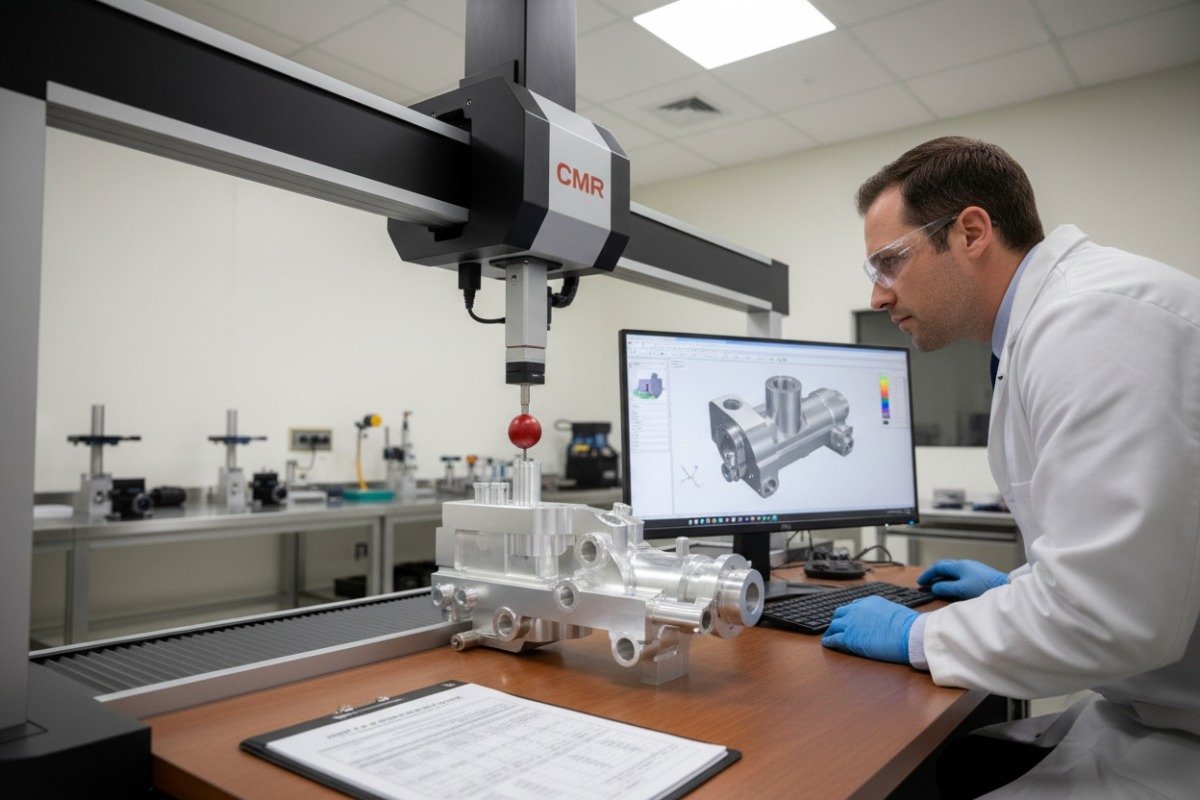
Quality control is not optional. The shop should have Koordinatenmessgeräte (KMGs) 4, surface roughness testers, and optical comparators. They should be able to produce First Article Inspection Reports (FAIR) and maintain Statistische Prozesskontrolle 5 (SPC) data for production runs.
| Fähigkeit | Warum es wichtig ist | Red Flag If Missing |
|---|---|---|
| Carbide tooling as default | Better finish, longer tool life, tighter tolerances | Shop uses HSS tools for production runs |
| Mehrachsige CNC-Maschinen | Handles complex geometries in fewer setups | Only 3-axis machines for complex parts |
| Proper coolant system | Prevents aluminum welding to tools | Dry machining or minimal coolant |
| KMG-Inspektion | Verifies dimensional accuracy objectively | Relies only on hand tools for QC |
| Thin-wall fixturing expertise | Prevents deformation on delicate parts | Uses standard vise for all parts |
Zu beachtende Zertifizierungen
ISO 9001 6 is the baseline. For aerospace aluminum parts, AS9100 is expected. For automotive, IATF 16949 7. These certifications do not guarantee perfection, but they confirm the shop has documented processes, traceability, and corrective action systems in place.
Our team always requests a shop's control plan and inspection procedure before placing a trial order. The way a shop documents its process tells you more than any sales pitch.
How Can I Verify That a Supplier Can Handle the Tight Tolerances Required for My Aluminum Components?
When we run supplier audits in Asia, we always bring sample drawings with tight tolerances—±0.01 mm or tighter—and watch how the shop reacts. Their response tells us everything.
Verify tight-tolerance capability by requesting First Article Inspection Reports with CMM data, reviewing the shop's machine maintenance records, asking about their tool wear monitoring process, and running a paid sample order before committing to production. Paper claims mean nothing without measured proof.
Start with a Paid Sample
The most reliable verification method is simple: pay for samples. Do not accept free samples as proof of capability. Free samples often get extra attention that production parts will never receive. A paid sample order—treated as a normal job—shows you what real production quality looks like.
When the samples arrive, measure them independently. Use a third-party inspection lab or your own CMM. Compare the results against the supplier's inspection report. If the numbers match, you have a trustworthy partner. If they do not, walk away.
Ask About Machine Calibration
CNC machines drift over time. Thermal expansion, spindle wear, and ballscrew backlash all erode accuracy. A shop that holds tight tolerances consistently will have a documented calibration schedule. Ask to see it. Good shops calibrate their machines quarterly or more often, using laser interferometers or ballbar testing.
Understand Their Process Control
Holding ±0.01 mm on one part is different from holding it on 1,000 parts. For production runs, the shop needs Statistical Process Control. They should track Cpk values and adjust processes before parts drift out of tolerance—not after.
| Tolerance Range | Typische Anwendung | Verifizierungsmethode |
|---|---|---|
| ±0,05 mm | Allgemeine mechanische Teile | Caliper and micrometer |
| ±0,02 mm | Precision assemblies, housings | CMM measurement |
| ±0,01 mm | Optical mounts, aerospace fittings | CMM with temperature-controlled room |
| ±0,005 mm | Medical implants, high-precision instruments | CMM + roundness tester + surface profilometer |
Umweltfaktoren
Aluminum expands about 23 µm per meter per degree Celsius. For tight-tolerance work, the shop's inspection room should be temperature-controlled at 20°C ±1°C. If they measure parts on the shop floor next to running machines, their readings are unreliable.
Tool Wear Monitoring
Dull tools produce oversized features and poor finishes. Quality shops inspect tools regularly and replace them on a schedule—not when parts start failing. Some advanced shops use in-process tool wear monitoring systems that detect changes in cutting force or vibration. Ask your potential supplier how they know when a tool needs replacing.
Our experience working with dozens of CNC shops across Vietnam and China has taught us one thing: the shops that invest in measurement infrastructure are the ones that deliver consistent parts. A $500,000 CNC machine means nothing if the shop measures parts with a $50 caliper.
What Questions Should I Ask to Determine If a Machining Service Is Experienced with My Specific Aluminum Alloy?
During our co-development projects, we have seen suppliers confidently accept orders for 7075-T6 aluminum 8—then machine it with the same parameters they use for 6061. The results are always disappointing.
Ask the supplier which aluminum alloys they machine most frequently, how they adjust cutting parameters for different alloys, what coolant strategies they use for high-silicon versus low-silicon aluminum, and whether they can recommend the best alloy for your application. Genuine experience shows in specific, detailed answers—not vague generalities.

Why Alloy Knowledge Matters
Not all aluminum is the same. The difference between machining 6061-T6 and 7075-T6 is significant. The difference between machining wrought 6061 and cast A356 is even bigger. Each alloy has different hardness, chip formation behavior, thermal conductivity, and tendency to stick to tools. A shop that treats all aluminum the same will produce inconsistent results.
Wichtige Fragen, die Sie stellen sollten
Here are specific questions that reveal real experience:
"What spindle speed and feed rate do you use for 7075-T6 versus 6061-T6?" An experienced shop will explain that 7075 is harder and requires slightly lower speeds with adjusted feed rates. They will mention that 7075 produces different chip types and may need different coolant concentrations.
"Have you machined cast aluminum like MIC 6 or A356?" Cast aluminum machines differently from wrought alloys. MIC 6 9 is stress-relieved and extremely stable—ideal for precision plates and fixtures. A shop familiar with MIC 6 understands its advantages for flatness-critical applications.
"How do you prevent built-up edge when machining high-silicon aluminum alloys?" Aluminum alloys with more than 8% silicon are abrasive and sticky. They require different tool coatings, lower cutting speeds (100–250 m/min versus 220–600 m/min for low-silicon alloys), and more aggressive coolant application.
Common Aluminum Alloys and Their Machining Characteristics
| Alloy | Key Properties | Typische Anwendungen | Machining Notes |
|---|---|---|---|
| 6061-T6 | Good strength, excellent machinability, corrosion resistant | General mechanical parts, frames, brackets | Most forgiving alloy; ideal for most CNC work |
| 7075-T6 | High strength, moderate machinability | Aerospace fittings, structural components | Harder than 6061; requires adjusted parameters |
| 2024-T3 | High strength, poor corrosion resistance | Aircraft structures, fasteners | Produces long chips; needs good chip evacuation |
| MIC 6 (cast) | Extremely flat, stress-relieved | Precision plates, fixtures, optical bases | Very stable; machines cleanly with minimal distortion |
| A380 (die cast) | Good castability, moderate strength | Housings, enclosures, brackets | Porosity issues; requires careful surface finishing |
Listen for Specifics, Not Generalities
When a shop says "we can machine any aluminum," that is not a useful answer. When a shop says "for your 7075-T6 bracket, we would use a 3-flute carbide end mill with TiCN coating, run at 180 m/min with a 0.08 mm/tooth feed rate, and use high-pressure coolant to manage chip evacuation"—that is experience talking.
We always ask suppliers to walk us through their process plan for a specific part. The level of detail in their response directly correlates with the quality of parts they deliver. A supplier who asks smart questions about your alloy, temper, and application is far more valuable than one who simply says "no problem."
Material Sourcing and Traceability
An experienced shop will also ask about your material requirements. Do you need domestic-origin aluminum? Do you require mill test certificates? For aerospace and medical applications, full material traceability from mill to finished part is mandatory. A shop that does not ask about these requirements probably does not understand your industry.
How Do I Evaluate the Lead Times and Scalability of a CNC Partner for My Long-Term Aluminum Production Needs?
When we onboard a new CNC supplier for a client's aluminum program, the first thing we check is not their price—it is their capacity plan. A shop that quotes a great price but cannot scale is a liability, not a partner.
Evaluate lead times by reviewing the supplier's current machine utilization rate, shift schedule, and order backlog. Assess scalability by confirming their number of machines, workforce depth, raw material sourcing reliability, and willingness to dedicate capacity for your program. A true partner plans for your growth, not just your first order.
Understanding Lead Time Components
Lead time is not just machining time. It includes material procurement, programming, setup, machining, inspection, surface treatment, and shipping. For aluminum parts, material availability is usually good—but not always. Specialty alloys like 7075 in thick plate or MIC 6 in large formats can have 4–8 week lead times from the mill.
A transparent supplier will break down their lead time into components so you can see where time is spent. If they just say "4 weeks," ask them to itemize it. Here is what a typical breakdown looks like:
| Lead Time Component | Typische Dauer | Was schiefgehen kann |
|---|---|---|
| Materialbeschaffung | 1–5 days (stock) / 4–8 weeks (specialty) | Alloy not in stock; mill delays |
| Programming and setup | 1–3 Tage | Complex parts need more programming time |
| CNC-Bearbeitung | 2–10 days | Machine breakdown; operator error |
| Deburring and finishing | 1–3 Tage | Manual processes are labor-intensive |
| Surface treatment (anodizing, etc.) | 3–7 Tage | Outsourced processes add transit time |
| Inspection and packaging | 1–2 Tage | Rework if parts fail inspection |
| Shipping to your facility | 3–30 days | Depends on air vs. sea freight |
How to Assess Scalability
Scalability means the supplier can increase volume without sacrificing quality or delivery. Here is what to look for:
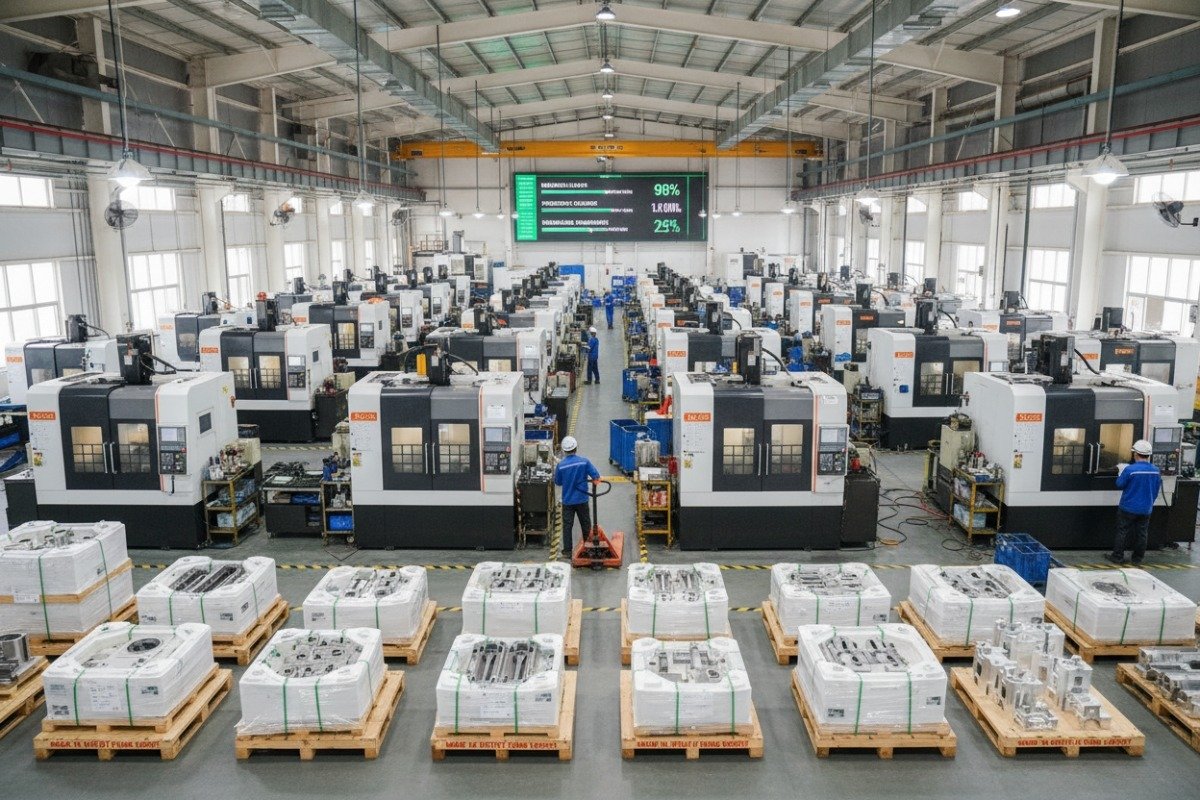
Machine count and type. A shop with three CNC machines is fundamentally limited. If one breaks down, they lose a third of their capacity. Look for shops with at least 8–10 machines for production work, including a mix of 3-axis, 4-axis, and 5-axis capabilities.
Shift schedule. A shop running one shift has room to grow by adding second and third shifts. A shop already running three shifts is at maximum capacity—any new order competes with existing ones.
Workforce depth. Skilled CNC operators are hard to find. Ask how many machinists they have and what their training program looks like. A shop that depends on one or two key operators is fragile.
Raw material strategy. Does the supplier keep common aluminum alloys in stock? Do they have relationships with multiple material distributors? A supply chain disruption should not shut down your production.
Plan for the Long Term
If you need 500 parts per month now but expect to need 2,000 per month in two years, tell your supplier upfront. A good partner will plan capacity accordingly—reserving machine time, training additional operators, and securing material supply agreements.
We always negotiate capacity commitments with our CNC partners. This means the supplier agrees to reserve a certain percentage of machine time for our client's program. In return, the client commits to minimum order volumes. This arrangement protects both sides and prevents the scramble that happens when demand spikes unexpectedly.
Pünktliche Lieferhistorie
Ask for their on-time delivery rate. Good shops track this metric and share it openly. An OTD rate above 95% is strong. Below 90% is a warning sign. But do not just take their word for it—ask for references from existing customers and follow up.
In our experience managing supply chains across Asia, delivery delays are the single biggest pain point for U.S. buyers. The root cause is almost always poor planning—not poor machining. A supplier who invests in production planning software, maintains realistic lead time quotes, and communicates proactively about delays is worth more than one who quotes the shortest lead time but misses it repeatedly.
Surface Finishing and Post-Processing Capacity
For aluminum parts, surface treatment is often required—anodizing, chemical conversion coating 10, powder coating, or polishing. If the CNC shop outsources these processes, it adds transit time and coordination complexity. Shops with in-house finishing capabilities or tightly integrated subcontractors can offer shorter and more predictable lead times.
Fazit
Choosing the right CNC machining service for aluminum parts comes down to verified capability, alloy-specific expertise, disciplined quality control, and honest capacity planning. Do your homework before committing—your parts depend on it.
Footnotes
1. Highlights the benefits and applications of powder coating as a finishing process. ↩︎
2. Explains end mills, a common cutting tool, and materials like carbide. ↩︎
3. Explains properties and benefits of TiCN coating for cutting tools. ↩︎
4. Replaced HTTP 404 with an authoritative Wikipedia page. ↩︎
5. Defines SPC and its application in monitoring and controlling production quality. ↩︎
6. Explains the international ISO 9001 standard for quality management systems. ↩︎
7. Details the global quality management system standard for the automotive industry. ↩︎
8. Provides detailed properties and applications of 7075-T6 aluminum alloy. ↩︎
9. Explains the characteristics and uses of MIC 6 cast aluminum tooling plate. ↩︎
10. Explains the process and purpose of chromate conversion coating for metals. ↩︎

 English
 Español de México
 Deutsch
 Français
 Русский
 العربية